
Inbound Calls
How Do Businesses Stop Missing Inbound Calls?
Learn why businesses miss inbound calls, what that costs, and how AI receptionists such as Voicetta help answer calls, qualify inquiries, and create structured operational visibility.
In 2026, the phone remains the final conversion point for high-intent leads in real estate, hospitality, and service businesses. A prospective hotel guest, a buyer ready to tour a property, or a homeowner with a broken HVAC system—they all pick up the phone when they’re ready to act.
Many small businesses struggle to answer calls due to busy lines or limited staff, resulting in missed opportunities when calls go unanswered or are sent directly to voicemail.
The problem? Most businesses miss these calls more often than they realize. And every unanswered ring quietly erodes revenue, wastes marketing spend, and hands qualified leads directly to competitors. How missed calls impact small businesses goes beyond lost conversations—they can mean losing potential clients and valuable business opportunities.
This guide breaks down exactly why missed calls happen, what they’re actually costing you, and how to fix the problem—starting today with quick wins and scaling up to AI voice agents powered by artificial intelligence that ensure every inbound call gets answered.
Why Missed Inbound Calls Are a 2026 Revenue Emergency
Here’s a reality check: research shows only 38% of small businesses successfully answer their inbound calls. For small business owners, managing incoming calls can be especially challenging due to limited staff, busy schedules, and competing priorities. Another 37.8% go to voicemail, and 24.3% receive no response at all. That means nearly two-thirds of potential customers hang up without ever speaking to a person.
The compounding problem is that 85% of callers will not call back after a missed connection, highlighting the critical need for effective call management solutions. They don’t leave a voicemail—80% of callers who reach voicemail simply hang up. Instead, they call the next result on Google, the next listing on Zillow, or the next hotel that shows availability.
From Voicetta’s perspective, this is especially painful because most customer calls arrive after someone has already clicked a paid ad, viewed a listing, or searched on an OTA. The marketing worked. The lead is hot. But when the phone rings out, that entire acquisition cost becomes wasted spend.
The three main consequences of missed calls:
-
Lost revenue from unbooked appointments, reservations, or sales that never happen
-
Poor customer experience that damages reviews and word-of-mouth referrals
-
Operational blindness where unanswered calls never log to your CRM or PMS, making performance impossible to track
This article will show you both immediate fixes you can implement this week and long-term system changes—including AI voice agents—that make “no missed calls” a realistic goal.
What Missed Inbound Calls Are Really Costing Your Business
Let’s make this concrete. Consider a property management firm or hotel group missing 20 calls per week. Each missed call could be a potential client, and failing to capture these inquiries can significantly impact business growth. Using industry data showing the average value of a qualified inbound lead ranges from $300 to $600 per transaction, that translates to roughly $312,000 to $624,000 in annual revenue exposure.
Even with conservative assumptions—say a 20% contact rate on follow-up and a 15% close rate—you’re still looking at substantial lost revenue that compounds month over month.
Breaking down the impact:
| Impact Area | What Happens | Long-Term Effect |
|---|---|---|
| New Revenue | Lost bookings, inquiries, and service requests go to competitors | Immediate revenue loss |
| Repeat Revenue | Existing customers who call for service or rescheduling encounter voicemail and churn | Lower lifetime value |
| Reputation | Callers who can’t reach you leave negative reviews or tell others | Higher acquisition costs |
| Operational Visibility | Calls that don’t log to CRM/PMS create reporting gaps | Can’t diagnose or fix the problem |
| Customer behavior in 2024–2026 makes this worse. Callers expect immediate response—77% say so explicitly. When they hit voicemail, they typically call the next Google result or listing portal ad within minutes. The timeline isn’t hours; it’s measured in seconds. |
Quick cost calculation formula:
- (Missed Calls per Month) × (Contact Rate: ~30%) × (Close Rate: ~20%) × (Average Deal Value) = Monthly Revenue Loss
For example: 100 missed calls × 30% contact rate × 20% close rate × $1,000 average deal = $6,000 monthly loss, or $72,000 annually.
These costs compound because every missed service call or booking also means lower lifetime value and fewer referrals. A customer who has a poor first contact experience rarely becomes a loyal repeat customer.
The Impact of Missed Calls on Customer Relationships
Missed calls don’t just represent lost revenue—they can quietly erode the foundation of your customer relationships. When a customer’s call goes unanswered, it sends a clear message: their time and business may not be valued. This perception can quickly lead to decreased customer satisfaction and a negative view of your company, especially if it happens more than once.
Research shows that 85% of customers won’t bother to call back after a missed call. Instead, they’ll turn to a competitor who answers promptly, resulting in lost revenue and missed opportunities to build loyalty. Over time, these missed connections can damage your reputation and reduce the likelihood of repeat business or positive word-of-mouth referrals.
Effective call management is essential to prevent these issues. By ensuring that all incoming calls are answered quickly and professionally—whether by staff, an answering service, or an AI voice agent—your business demonstrates a commitment to excellent customer service. This not only improves the immediate customer experience but also strengthens long-term relationships, turning first-time callers into loyal customers and advocates for your brand.
In today’s competitive landscape, every call is a chance to deliver outstanding service and reinforce your company’s value. Don’t let missed calls undermine the trust and satisfaction you’ve worked hard to build.
Why Teams Keep Missing Inbound Calls (Even When They Care)
Missed calls are almost never about lazy staff. They’re system and workflow issues that show up most when marketing actually starts working. The more calls your campaigns generate, the more your infrastructure gets stressed.
Here are the most common reasons businesses miss incoming calls:
Single-line or non-concurrent call handling
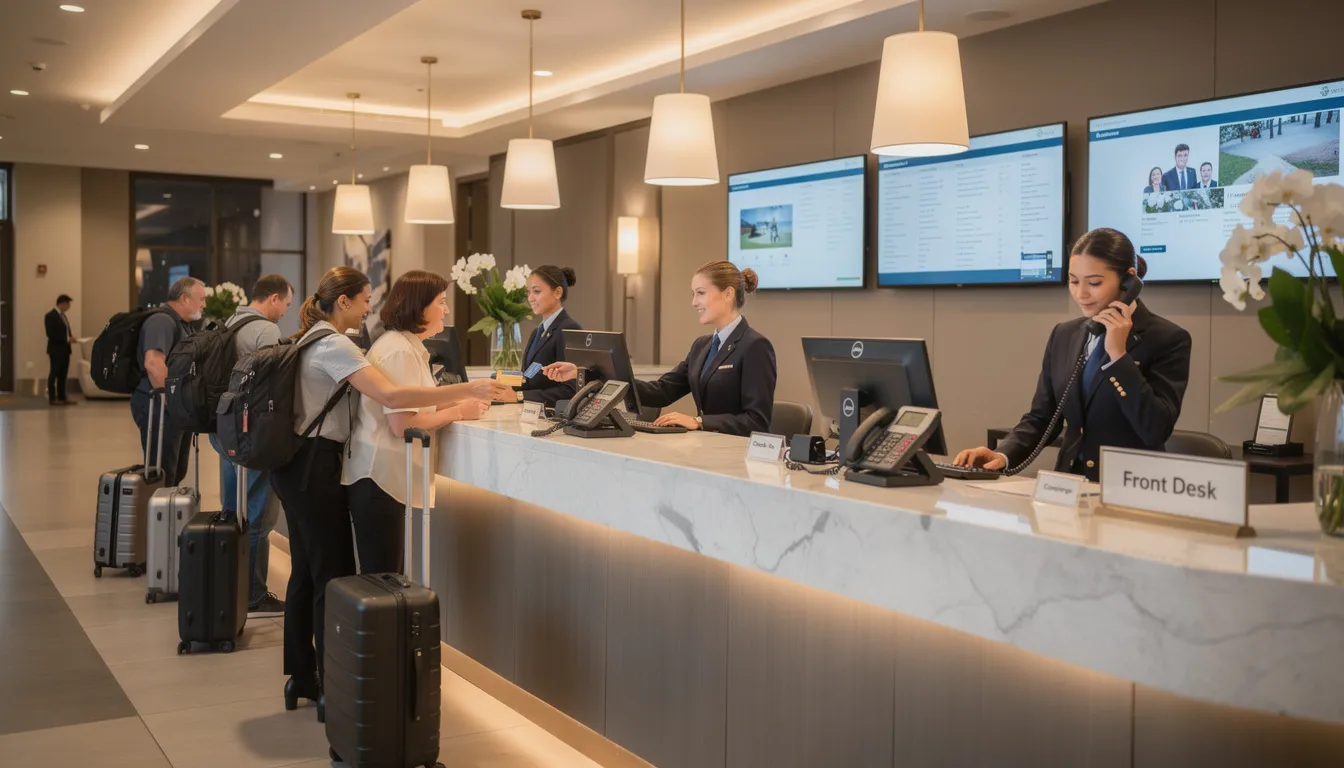
Many small businesses operate with a single main phone number that can’t accept multiple simultaneous calls. When one customer is on the phone, subsequent callers get a busy signal or go directly to voicemail. A leasing agent on a property tour, a front desk handling a check-in, an owner-operator on a job site—they simply can’t answer. Maintaining reliable phone lines is critical to prevent missed calls and revenue loss. Using shared phone lines can increase call coverage by allowing multiple team members to answer calls simultaneously.
No overflow or hunt groups
Without call forwarding rules or ring groups, there’s no secondary answer point. If the primary receptionist is on break or busy, calls simply fail. The phone rings out and no one picks up.
Staff multitasking and divided attention
The same employees who answer phones are also checking in guests, conducting tours, handling maintenance issues, or serving existing customers. This includes sales reps as part of the remote or mobile team, who need accessibility and management tools to stay responsive. During peak hours when many calls come in, phone answering gets deprioritized because staff are already occupied.
After hours and weekend demand
Peak periods and after-hours windows show the highest missed-call risk. A prospective guest calling at 10 PM to book a room, a service customer calling early Sunday to schedule a job—these calls have nowhere to go. And callers rarely leave voicemail messages.
Fragmented tools without phone integration
When your PMS, CRM, and phone system aren’t integrated, call data never logs automatically. A receptionist might take notes on paper or in a separate system, but it never reaches the CRM. No automatic follow-up triggers, no task assignments, no visibility.
Zero visibility into missed calls
This is perhaps the most dangerous issue: many businesses don’t know how many calls they miss daily because their system doesn’t log unanswered, abandoned, or after-hours calls in a central place. Without analytics, you can’t distinguish between “we answered 10 calls today” and “we had 40 attempts and answered 10.”
Traditional PBX systems and basic mobile numbers were designed for an era when phones rang slower and customers were more patient. Modern high-velocity marketing plus always-on customer expectations have exposed these systems as inadequate.
Fast Ways to Stop Missing Calls This Week
Before upgrading systems or adding AI, there are fixes you can implement within hours or days to reduce the worst leakage immediately.
Enable basic call forwarding
Set up your main business number to ring multiple destinations in sequence—receptionist desk, owner’s mobile, another team member’s phone. Most VoIP providers offer this at no additional cost. This single change can reduce missed calls by 20–30%. However, keep in mind that when calls are forwarded to personal devices instead of using built-in VoIP features, you may lose tracking, recording, and analytics capabilities.
Create simple ring groups
Configure your system so calls ring to 2-3 phones simultaneously or sequentially. Group them by function: sales, reservations, maintenance. If one person is busy, the call reaches the next available agent. Effective tools like Ring Groups help minimize wait times and improve response rates by ensuring calls are answered quickly and efficiently.
Extend phone hours around known peaks
If you know calls spike during lunch hours or Monday mornings, add coverage 30 minutes before and after those windows. Even a part-time staff member can catch the overflow. Live answering services can also handle overflow calls during high call volume periods and provide after-hours support, often more cost-effectively than expanding your in-house team.
Set clear voicemail with callback promises
Update your voicemail message with specifics: “We return calls within 30 minutes during business hours, or before 9 AM the next business day.” This manages customer expectations and creates accountability. But remember—80% of callers won’t leave messages anyway. Voicemail-to-email features allow for faster, more organized responses to voice messages, and transcription ensures quick visibility and response.
Assign explicit call ownership per time block
Create a simple rotation showing who handles phones during each window:
-
9–11 AM: Person A answers phones
-
11 AM–1 PM: Person B answers phones
-
1–3 PM: Person C answers phones
When “everyone” is responsible, no one answers. Explicit ownership solves this.
Use your current tools better
-
Turn on missed-call notifications (SMS or email alerts)
-
Ensure staff use mobile apps from your VoIP provider
-
Enable calendar-based routing if available
-
Automate text responses for missed calls to acknowledge inquiries and direct callers to alternative contact methods
These quick fixes won’t fully solve the problem at scale. But they immediately reduce leakage while you evaluate long-term solutions like AI voice agents.
Offering omnichannel support can further help businesses stop missing inbound calls by deflecting traffic from phone lines. Providing alternatives such as live chat and social media messaging gives customers more ways to reach you and reduces the wait they experience on the phone. Reducing wait times not only prevents revenue loss but also significantly improves customer satisfaction.
After Hours Call Handling: Never Miss a Call Outside Business Hours
Customers expect to reach your business when it’s convenient for them—not just during standard business hours. Missed calls after hours can be especially damaging, as they often represent urgent needs or high-intent inquiries. If these calls go unanswered, the result is not only lost revenue but also a weakened customer relationship.
Implementing robust after-hours call handling is a critical part of modern call management. Solutions like answering services, automated call routing, or AI voice agents ensure that every call is acknowledged, no matter the time of day. Calls can be routed to available agents, directed to a professional voicemail with clear instructions, or handled by an automated system that captures essential information and schedules follow-ups.
By providing 24/7 call handling, your business can meet customer expectations, capture more leads, and prevent lost revenue. This approach also helps maintain customer satisfaction by ensuring that callers always feel heard and valued—even outside of regular hours. With the right call routing and management strategies in place, you can turn after-hours inquiries into new business and set your company apart from competitors who still let calls slip through the cracks.
Designing a Call Flow That Doesn’t Drop Leads
A modern call flow should ensure every inbound call has a defined next step, even when staff are unavailable. The goal: no dead ends where callers simply ring out, hit voicemail, and never receive follow-up.
What a “no-dead-end” call flow includes:
-
Intelligent main number that can route based on time of day, caller input, or caller identity
-
Routing rules that send calls to appropriate teams based on reason (new booking vs. existing customer vs. emergency), and use CRM data to recognize and direct calls to specific clients or account managers for a more personalized experience
-
Overflow behavior that catches calls when all staff are busy—routing to AI voice agent, queue with hold music, or callback scheduling. Call queues can manage high call volumes by placing callers in a virtual waiting room rather than disconnecting them, ensuring no inbound calls are missed during peak times.
-
Clear outcomes where every call ends in one of three states: connected to human, handled by AI with data logged, or scheduled callback confirmed
-
Backup system where AI integration acts as a safeguard to ensure continuous coverage during unexpected call surges or emergencies, supplementing human agents to prevent missed calls
Bad call flow example:
Single phone on front desk → rings out → voicemail (if lucky) → no follow-up
Good call flow example:
Main number → brief menu (“Press 1 for new reservations, 2 for existing guests, 3 for group sales”) → routing by category → ring group (desk + manager mobile + backup) → if no answer within 3 rings, route to AI voice agent → all data logged to PMS
Practical elements to include:
-
Service Line: Allows for managing business calls more effectively than a standard phone number by providing advanced routing and tracking features.
-
Ring Groups: Enable multiple users to be grouped under a single routing rule, reducing wait times and ensuring calls are answered quickly.
-
Call queues: Manage incoming calls by placing them in a virtual line, preventing disconnections and improving caller experience during high volume periods.
-
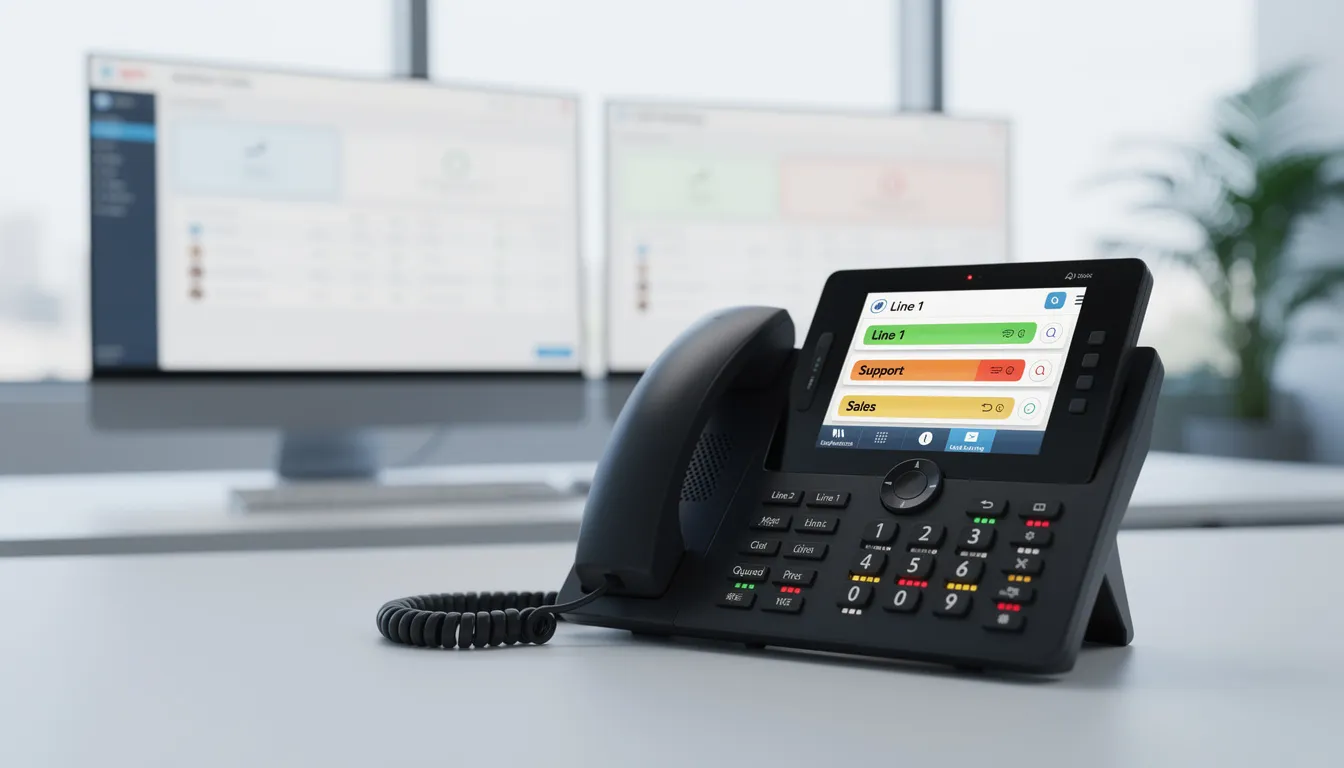
VoIP systems with simultaneous ringing: Enhance call answering capabilities by ringing multiple devices at once, so calls are less likely to be missed.
-
Interactive Voice Response (IVR): Lets callers resolve queries or route themselves to the right department automatically.
-
Intelligent Call Routing: Directs callers to the appropriate department or agent based on their needs or agent availability.
-
Automated AI-driven solutions: Ensure no inbound calls are missed by using intelligent call routing and backup systems to handle overflow and after-hours inquiries.
| Element | Purpose |
|---|---|
| Business hour vs. after-hour routing | Different paths for when staff are available |
| Short menus (3–4 options max) | Prevent caller frustration and abandonment |
| No call loops | Prevent bouncing between extensions |
| Repeat caller recognition | Route VIPs or known customers differently |
| For a hotel, this might mean routing “new bookings,” “in-house guests,” and “group sales” to different teams. For a brokerage, route “buyer inquiries” vs. “seller inquiries” vs. “current clients” appropriately. For a service business, route “schedule a service call” vs. “emergency” differently. |
Using AI Voice Agents to Answer Every Inbound Call 24/7
An AI voice agent in 2026 is a conversational system that answers phone calls using natural speech recognition and text-to-speech technology. Unlike legacy IVR systems that frustrate callers with endless button presses, modern AI voice agents understand context, handle follow-up questions, and feel natural to speak with.
Voicetta’s AI voice agents serve as the always-on first layer that picks up 100% of inbound calls, regardless of time or staff availability. The agent qualifies intent, answers FAQs, captures structured data, and either resolves the inquiry or routes to the right person with full context.
Key capabilities:
-
24/7 answering: Every call picked up within 2-3 rings, even at 3 AM on Sunday
-
Natural dialogue handling: Multi-turn conversations where callers can interrupt, ask follow-ups, and receive adaptive responses
-
Lead qualification: Captures budget, dates, property type, party size, urgency, and custom fields relevant to your business
-
Instant CRM/PMS logging: Structured data pushed automatically to your systems—no manual entry required
-
Warm handoffs and scheduled callbacks: High-value leads transferred immediately to available staff, or callbacks scheduled at specific times
Industry-specific scenarios:
Hotel AI agent:
Caller: “I need a room for next weekend.” AI: “Great, how many nights are you looking for?” Caller: “Two nights, Friday and Saturday.” AI: “Perfect. How many guests?” Caller: “Four—two adults and two kids.” AI: “I have a suite available for both nights at $350 per night. Would you like me to hold that for you?”
The entire interaction takes 2 minutes, the guest has a confirmed booking, and the PMS has a complete record.
Real estate AI agent: The AI captures buyer criteria (price range, bedrooms, timeline), creates a lead record tagged with all details, and schedules a callback with the appropriate sales representative within 2 hours.
Service business AI agent: The AI logs the customer’s address, issue type, and urgency, checks technician availability, and confirms an appointment—sending SMS and email confirmations automatically.
The goal isn’t to replace staff. It’s to protect their time. AI handles repetitive, high-volume inquiries so your team can focus on complex issues, relationship building, and closing deals.
The Benefits of Answering Services for Modern Businesses
For businesses facing high call volumes or unpredictable spikes in incoming calls, answering services offer a powerful solution to stop missed calls and improve overall call management. By partnering with a professional answering service, you ensure that every call is answered promptly and handled with care, regardless of the time of day or how busy your team is.
Answering services can do more than just pick up the phone—they can route calls to the right person, take detailed messages, provide basic information, and even handle simple customer requests. This level of support helps track missed calls, identify call patterns, and optimize your call handling processes. With features like voicemail, message taking, and intelligent call routing, your business can maintain a high standard of customer satisfaction and minimize lost revenue.
Additionally, answering services provide valuable data and insights into your call management. By analyzing when and why calls are missed, you can adjust staffing, refine your call routing, and improve the overall customer experience. In a world where every call counts, leveraging an answering service is a smart way to ensure your business never misses an opportunity to connect with a customer.
Smarter Routing and Overflow With AI + Human Teams
The most effective inbound strategy blends AI voice agents as first response with intelligent routing to humans based on intent, value, and urgency. AI isn’t the end point—it’s the smart filter that ensures calls are triaged efficiently.
How call triage works:
| Call Type | AI Handles | Routes to Human |
|---|---|---|
| Simple FAQs | ✓ Fully resolved | No transfer needed |
| Qualified leads, urgent issues | ✓ Captures details | Priority routing to sales/support |
| Complex or lower-priority | ✓ Logs information | Scheduled callback |
| Routing rules examples: |
-
VIP or repeat customers: Recognized via caller ID plus CRM data, routed directly to senior staff or dedicated account manager
-
High-intent leads from paid campaigns: Calls attributed to recent ad clicks flagged for priority handling
-
Emergency calls: Bypass queues entirely, connect immediately to on-call technician
Peak-time overflow management:
When all human agents are busy, AI continues handling new calls. It captures booking details, qualifies inquiries, and offers options: schedule a callback at a specific time, send confirmation via SMS or email, or hold for the next available agent.
This ensures that high call volumes don’t result in lost opportunities. The AI keeps working while your team catches up.
Voicetta integrates with existing systems—PMS, CRM, scheduling tools—so routing decisions are based on real data, not just the phone number dialed. A returning guest gets different treatment than a first-time caller. A high-value property inquiry gets prioritized over a general question.
The Importance of Visibility into Call Handling
You can’t fix what you can’t see. Gaining visibility into your call handling processes is essential for understanding how many calls are being missed, how calls are routed, and where breakdowns occur. Without clear call analytics and reporting, many businesses underestimate the true impact of missed calls on revenue and customer satisfaction.
Call analytics tools allow you to track missed calls, monitor call volumes, and identify peak hours or high call volumes that strain your team. By analyzing call patterns, you can pinpoint the most common reasons for missed calls—whether it’s understaffing during busy periods, ineffective call routing, or gaps in after-hours coverage.
Armed with this data, business owners and managers can make informed decisions to improve call management. This might mean adjusting employee schedules, implementing smarter call routing, or investing in additional training. The result is a more responsive, efficient call handling process that reduces lost revenue and enhances customer satisfaction.
Visibility into call handling isn’t just about numbers—it’s about empowering your team to deliver better service, capture more opportunities, and ensure that every customer interaction is a positive one. In today’s fast-paced business environment, having the right insights is the key to staying ahead of the competition and building a reputation for reliability and excellence.
Capturing and Structuring Every Lead in CRM or PMS
A “handled” call has limited value if the details never make it into your systems. Unlogged calls are practically invisible—they create no follow-up tasks, no accountability, and no data for reporting.
Voicetta’s AI voice agents capture structured fields during every conversation:
-
Name and contact details
-
Inquiry type (booking, support, sales)
-
Dates and timeframes
-
Budget or price range
-
Property/room type or service needed
-
Urgency level
-
Custom fields relevant to your business
This data is automatically pushed to your CRM or PMS, creating complete contact records and tasks without manual entry.
Example flow:
Inbound call → AI agent engages → structured form populated → CRM lead created (or PMS reservation request) → follow-up task assigned to human agent
Benefits of structured data capture:
-
No more handwritten notes that get lost
-
Better follow-up sequences triggered automatically
-
Accurate reporting by channel, campaign, or time period
-
Clear accountability for who followed up, when, and how
-
Training insights from real conversation transcripts
For a hotel, the PMS shows complete reservation requests with guest preferences. For a brokerage, the CRM shows leads tagged with property type, budget, and timeline. For a service company, tickets appear in the scheduling system with priority flags and customer details.
Call Analytics: Finding When and Why You Miss Calls
Once every call is answered—by humans or AI—you can use call analytics to continuously improve instead of guessing.
Key metrics to track:
| Metric | What It Reveals |
|---|---|
| Total inbound calls | Volume by day, hour, and source |
| Answer rate (human vs AI) | Split between routine and complex inquiries |
| Time-of-day patterns | When calls are heaviest |
| Abandonment rate | Where callers drop off in your flow |
| Conversion outcomes | Appointments, bookings, tours scheduled |
| Hold time and queue depth | Capacity constraints during peaks |
| Patterns revealed by analytics: |
You might discover that Monday mornings spike with 50% more calls than the rest of the week—staff should be added 8–11 AM. Or that after 5 PM, calls are mostly FAQ-type questions an AI could handle entirely. Or that calls from Google Ads close at 35% versus 10% from other sources.
Voicetta provides transcript-level insight, letting managers review real conversations for training rather than relying on vague feedback. You can hear exactly what questions callers ask, what objections they raise, and how responses could improve.
Concrete changes based on data:
-
Shift staff schedules to match call patterns
-
Simplify IVR menus if abandonment is high
-
Refine AI prompts when transcripts show misunderstandings
-
Prioritize high-value inquiry types for faster routing
-
Test changes and measure impact before full rollout

Building a 24/7 Inbound Strategy for 2026 and Beyond
A mature inbound strategy treats the phone as strategic revenue infrastructure, not just a support function. The architecture should handle future growth without proportionally scaling staff costs.
Components of a 24/7 strategy:
-
AI voice agents as first responders: Always-on, answering 100% of calls regardless of time or availability
-
Clear escalation paths: True emergencies bypass AI and reach on-call staff immediately
-
Defined callback SLAs: 30 minutes for VIP customers, 1 hour for high-value leads, 4 hours for routine inquiries
-
Consistent scripts: Both AI and humans follow the same playbooks for inquiry types
-
Multi-location standardization: Calls answered consistently across sites, languages, or time zones
Compliance and record-keeping:
-
Store call recordings and transcripts securely
-
Provide consent notices where required (some states require two-party consent)
-
Use archives for QA, training, and dispute resolution
For regional or multi-location businesses, AI helps maintain consistency. A hotel chain can route calls from different regions appropriately while handling some inquiries centrally. A brokerage with multiple offices ensures every location answers calls the same way.
A mature inbound strategy turns the phone from a “problem channel” into a predictable revenue engine that scales with marketing investment.
By 2027–2028, AI voice agents will likely be table stakes for any business with significant call volume. Early adopters now will have a 12–18 month head start to refine systems, train teams, and capture operational insights competitors haven’t recognized.
How to Get Started With Voicetta to Stop Missing Calls
Missed calls are fixable. Quick wins exist that you can implement today. And AI voice agents make “no missed call” realistic at scale—without hiring additional staff for every shift.
Getting started path:
-
Discovery: Audit your current phone setup and missed-call volume. How many calls came in last month? How many were answered? At what times did you miss the most?
-
Map your desired call flow: Define what should happen when a customer calls. What routing rules apply? What data should be captured? What outcomes are acceptable?
-
Configure and train your AI voice agent: Set up prompts, questions, and routing rules based on your specific business scenarios. Train on industry-specific language.
-
Integrate with CRM/PMS and go live: Connect to your existing systems so data flows automatically. Test, gather feedback, refine, and roll out.
Before your first conversation with Voicetta:
Audit the last 30 days of calls. Answer these questions:
-
How many inbound calls came in?
-
How many reached a live person?
-
How many went to voicemail or received no answer?
-
At what times were calls missed most frequently?
These numbers let you calculate expected improvement and frame your goals clearly.
The bottom line:
If your business spends money on marketing—Google Ads, listing portals, social media—you’re already generating demand. The question is whether you’re capturing it. Every missed call represents marketing spend that drove a lead to your door, only to watch them walk away.
Schedule a consultation with Voicetta to discuss your phone setup, review recent call data, and model the revenue impact of ensuring every call gets answered.
Every day without a solution means more qualified leads walking to competitors.
Was this useful?
If this article helped, add Voicetta as a preferred source in Google Search. Your results can then highlight our writing.
Add as preferred source