

Blog
Proven Ways to Reduce Call Center Costs in 2025
Running a call center is expensive. Want to reduce call center costs without compromising customer satisfaction? This listicle provides eight practical strategies to...
Slash Your Call Center Expenses Without Sacrificing Customer Happiness
Running a call center is expensive. Want to reduce call center costs without compromising customer satisfaction? This listicle provides eight practical strategies to streamline operations and boost your bottom line. Learn how to leverage self-service, cloud solutions, optimized scheduling, remote agents, AI, strategic outsourcing, knowledge management, and performance analytics to transform your call center into a cost-effective powerhouse.
1. Implement Self-Service Options
One of the most effective ways to reduce call center costs is by empowering customers to help themselves. Implementing self-service options allows your customers to resolve common issues and find information independently, reducing the need for agent assistance. This approach leverages technology to provide convenient, 24/7 support, ultimately streamlining operations and enhancing the customer experience. By offering readily available solutions for straightforward inquiries, you free up your agents to handle more complex or emotionally sensitive issues that require a human touch. This not only optimizes resource allocation but also contributes to greater agent job satisfaction.

Self-service encompasses a range of technologies designed to cater to different customer preferences and needs. These include Interactive Voice Response (IVR) systems that guide callers through menu options, comprehensive knowledge bases and FAQs that address frequently asked questions, AI-powered chatbots that offer instant support and guidance, mobile applications with integrated self-help features, and dedicated customer portals that provide personalized access to information and account management tools. Features like these provide a robust foundation for a successful self-service strategy.
The benefits of effectively implemented self-service are numerous. Studies have shown a reduction in call volume for routine inquiries by 20-40%, directly impacting cost savings. The 24/7 availability eliminates the limitations of traditional call center hours and avoids the costs associated with after-hours staffing. Furthermore, self-service scales effortlessly with customer base growth, making it a sustainable solution for businesses of all sizes. When done well, it can even improve customer satisfaction by providing quick and convenient resolutions. Finally, by handling the simpler inquiries, self-service reduces the average handle time for the remaining calls that do require agent interaction, increasing overall efficiency.
Consider the success stories: Bank of America's virtual assistant, Erica, has handled over 1 billion client requests, contributing to a 30% reduction in call center volume. Amazon's self-service return process minimizes customer service calls while maintaining high customer satisfaction. Even Domino's Pizza saw a 75% decrease in order status calls thanks to their pizza tracker. These examples highlight the transformative potential of self-service across diverse industries.
However, it's important to acknowledge the potential drawbacks. Implementing self-service requires an initial investment in the necessary technology. A poorly implemented system can frustrate customers, leading to increased call volume rather than a decrease. Ongoing maintenance and updates are essential to ensure the system remains relevant and effective. And finally, self-service isn't suitable for complex or emotionally sensitive issues, which still necessitate human interaction.
To ensure successful implementation, keep these tips in mind: Design your self-service strategy with the customer journey in mind, not just cost-cutting. Conduct thorough user testing before full deployment to identify and address any usability issues. Always provide clear and accessible paths to human assistance when needed. Analyze self-service abandonment points to identify areas for improvement and streamline the user flow. Finally, regularly update the content based on common call drivers and customer feedback. By following these best practices, you can maximize the effectiveness of your self-service strategy and achieve significant cost savings while enhancing the customer experience. This approach has been popularized and validated by industry leaders such as Gartner Research, Zendesk, Amazon Web Services, and Microsoft Customer Service, further solidifying its importance in modern call center management.
2. Cloud-Based Call Center Solutions
One of the most impactful ways to reduce call center costs is by migrating to a cloud-based solution. Traditional, on-premises call centers require significant investment in hardware like servers, phone lines, and complex PBX systems. They also demand ongoing maintenance, IT staff, and physical space. Cloud-based solutions, on the other hand, move all of this infrastructure to the internet. This means you essentially rent the services you need, paying on a subscription basis, much like you would for software. This dramatically reduces capital expenditure and shifts your expenses from a fixed cost to a variable one, allowing for greater financial flexibility. Instead of large upfront investments, you pay for what you use, enabling a more predictable and often significantly lower total cost of ownership. Cloud platforms also offer advanced features often unavailable or prohibitively expensive in traditional setups, such as advanced analytics, omnichannel integration, and AI-powered tools.

The benefits extend beyond just cost savings. Cloud solutions offer unparalleled scalability. Need to ramp up agents for a seasonal peak? No problem. A cloud platform allows you to add or remove agents quickly and easily, paying only for the capacity you need. This flexibility is a game-changer, especially for businesses with fluctuating call volumes. Additionally, cloud solutions facilitate remote work, allowing agents to work from anywhere with an internet connection. This expands your talent pool and can further reduce costs associated with physical office space. Features like automatic software updates and integrated omnichannel capabilities (email, chat, social media) further streamline operations and enhance the customer experience. For example, T-Mobile reduced their call center costs by a significant 25% after migrating to Amazon Connect. Similarly, Intuit saved $3 million annually by switching to a cloud contact center, demonstrating the substantial financial benefits of this approach. Capital One also saw a 50% reduction in infrastructure costs after migrating to the cloud. These examples highlight the transformative potential of cloud-based solutions for businesses across various industries.
This approach is ideal for businesses of all sizes looking to reduce capital expenses, improve scalability, and enhance agent flexibility. Whether you're a customer support manager in a large enterprise, a hospitality professional managing reservations, a real estate agent handling client inquiries, a healthcare provider coordinating patient care, an enterprise IT manager overseeing technology infrastructure, or a business owner looking to optimize operations, cloud-based call center solutions offer a powerful path to cost reduction and improved efficiency. However, it's important to be aware of the potential drawbacks. Reliance on a stable internet connection is critical, and data security concerns need to be addressed with proper planning and implementation. Learn more about Cloud-Based Call Center Solutions to understand pricing models and features available.
Tips for Successful Implementation:
- Conduct a thorough needs assessment: Before choosing a provider, identify your specific requirements and ensure the chosen platform meets them.
- Implement robust security measures: Protect customer data with strong encryption and access controls.
- Train agents thoroughly: Provide comprehensive training on the new system to ensure a smooth transition and maximize efficiency.
- Consider hybrid solutions: During transition periods, a hybrid approach combining on-premises and cloud solutions can ease the migration process.
- Negotiate contract terms carefully: Pay close attention to scalability provisions and ensure they align with your future needs.
While migrating to the cloud can be incredibly beneficial, it's essential to carefully weigh the pros and cons. Concerns about internet dependency and data security can be mitigated with proper planning and the right provider. While potential staff retraining may be required, the long-term benefits far outweigh the initial adjustment period. And while subscription costs can accumulate over time, they often remain significantly lower than the ongoing expenses of maintaining on-premises infrastructure. Popular platforms like Amazon Connect, Five9, NICE inContact, Genesys Cloud, and Talkdesk offer a range of options to suit different business needs. By carefully considering your requirements and choosing the right provider, you can leverage the power of the cloud to significantly reduce your call center costs and enhance your customer experience.
3. Workforce Optimization and Scheduling
One of the most significant expenses in running a call center is staffing. Overstaffing drains resources, while understaffing leads to long wait times, frustrated customers, and lost business. That's where workforce optimization and scheduling (WFM) comes in. This powerful strategy leverages sophisticated software to fine-tune staffing levels, ensuring you have the right number of agents at the right time, ultimately reducing call center costs without sacrificing service quality. WFM helps predict call volumes and create optimized schedules, allowing you to effectively manage your workforce and minimize wasted resources. This approach is essential for any business looking to reduce call center costs while maintaining, or even improving, customer satisfaction.

WFM software utilizes AI-powered forecasting to analyze historical call data, identify trends, and predict future call volumes with remarkable accuracy. These forecasts then inform automated scheduling algorithms that generate optimized agent schedules, matching staffing levels to predicted demand. This dynamic approach minimizes overstaffing during slower periods and ensures adequate coverage during peak times. Furthermore, modern WFM tools incorporate real-time adherence monitoring, allowing supervisors to track agent activity and ensure schedules are being followed. Many platforms also offer flexible shift bidding, empowering agents to choose preferred shifts, which can drastically improve agent morale and retention. Finally, skills-based routing integration allows calls to be routed to the most qualified agent, maximizing first-call resolution rates and customer satisfaction. This comprehensive approach offers a suite of features designed to streamline operations and significantly reduce call center costs.
Companies across various industries have seen remarkable success with WFM. American Express, for instance, reduced staffing costs by an impressive 17% after implementing advanced WFM software. Delta Airlines improved agent scheduling efficiency by 22%, optimizing staffing levels to meet fluctuating demand. Comcast also reaped substantial benefits, reducing overtime costs by 30% through optimized scheduling. These examples demonstrate the tangible cost savings and efficiency gains achievable through effective WFM implementation.
Here are some actionable tips for implementing WFM in your call center:
- Involve your agents: Gain agent buy-in by involving them in the WFM implementation process. Their feedback is invaluable and will help ensure a smoother transition.
- Data is key: Combine historical call data with predictive analytics for the most accurate forecasts.
- Account for shrinkage: Factor in shrinkage accurately (training, breaks, vacations) to avoid understaffing.
- Phased implementation: Implement WFM gradually, starting with pilot teams to identify and address any issues before a full rollout.
- Agent wellbeing: Balance efficiency goals with agent wellbeing. Flexible scheduling options can significantly improve job satisfaction.
Pros of Workforce Optimization and Scheduling:
- Cost reduction: Reduces overstaffing costs by 10-15%.
- Improved agent utilization: Maximizes agent productivity and efficiency.
- Fewer abandoned calls: Ensures adequate staffing to handle call volumes.
- Enhanced agent satisfaction: Offers preferred schedules and improves work-life balance.
- Consistent service levels: Maintains service levels even during peak periods.
Cons of Workforce Optimization and Scheduling:
- Complex implementation: Requires careful planning and execution.
- Data dependence: Relies on accurate historical data for forecasting.
- Change management: Can present challenges in terms of agent adoption.
- Ongoing recalibration: Needs regular adjustments as business needs change.
Workforce optimization and scheduling deserves a prominent place on this list because it offers a direct path to reducing call center costs while simultaneously improving service levels and agent satisfaction. By leveraging the power of AI-powered forecasting and automated scheduling, businesses can gain a significant competitive advantage in today's demanding customer service landscape. Popular WFM software providers like Verint, NICE, Calabrio, Genesys, and Aspect Software offer robust solutions to help organizations of all sizes optimize their workforce and achieve significant cost savings.
4. Remote/Work-From-Home Agent Models
One of the most impactful ways to reduce call center costs is by transitioning to remote or work-from-home (WFH) agent models. This approach fundamentally shifts the operational landscape, allowing businesses to significantly cut down on traditional overhead expenses associated with physical call centers. By leveraging technology, companies can create a virtual call center environment that's not only cost-effective but can also lead to improved agent performance and increased flexibility. This strategy works by utilizing cloud-based communication platforms and digital tools to connect agents with customers, regardless of their physical location. This eliminates the need for expensive office spaces, reduces utility costs, and minimizes investment in on-site infrastructure. It also opens up your hiring pool to a much wider geographic area, enabling you to find the best talent, not just the best talent within commuting distance.
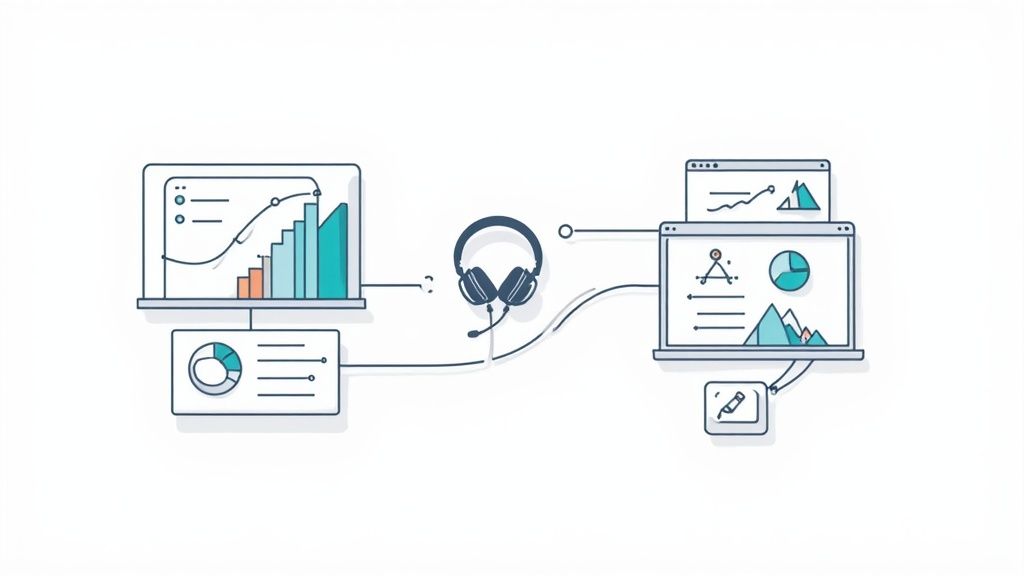
This model deserves a prominent place on this list because it offers a substantial return on investment. The cost savings alone can be dramatic, with facility costs often reduced by 60-80%. But beyond the financial advantages, a remote model also offers significant operational benefits, making it an attractive option for businesses of all sizes. Features like cloud-based technology infrastructure, secure remote access systems, virtual training programs, remote monitoring and quality assurance, digital collaboration tools, and distributed workforce management software are all key components of a successful remote agent model. These tools empower agents to perform their duties effectively from anywhere, while managers retain oversight and control.
Companies like American Express, Sykes Enterprises, and TTEC have demonstrated the significant benefits of transitioning to remote call center models. American Express, for instance, moved 25,000 call center agents to remote work, saving millions in facility costs. Sykes Enterprises reported a 35% improvement in agent retention after implementing WFH models, showcasing the positive impact on employee satisfaction. Similarly, TTEC reduced its real estate footprint by a staggering 65% through remote agent programs.
Pros:
- Reduces facility costs by 60-80%: Eliminating or downsizing physical office space drastically cuts expenses related to rent, utilities, and maintenance.
- Expands talent pool beyond geographic limitations: Recruit top talent from anywhere,不受位置限制.
- Improves agent retention (typically 30-40% better): Increased flexibility and work-life balance contribute to higher job satisfaction and lower turnover.
- Reduces absenteeism: WFH models often lead to a decrease in unscheduled absences.
- Increases schedule flexibility and coverage hours: Expand operational hours by tapping into different time zones and offering flexible scheduling options.
- Greater business continuity during disruptions: Remote models are more resilient to unforeseen events like natural disasters or pandemics.
Cons:
- Requires robust security protocols: Protecting sensitive customer data requires significant investment in security measures.
- Potential team cohesion challenges: Maintaining team spirit and collaboration requires proactive effort in a virtual environment.
- More complex onboarding and training processes: Adapting training programs for remote delivery requires careful planning and execution.
- Technology requirements for agents (internet, workspace): Ensuring agents have the necessary equipment and reliable internet access is crucial.
- Management adaptation needed: Managers need to adjust their leadership style and adopt new strategies for remote team management.
Tips for Implementing a Remote Agent Model:
- Establish clear performance expectations and metrics: Define clear goals and track performance consistently.
- Invest in secure technology infrastructure: Prioritize security to protect sensitive data and ensure compliance.
- Create virtual engagement opportunities for team building: Foster a sense of community through online social events and team-building activities.
- Develop remote-specific training and onboarding: Tailor training programs to address the unique challenges of remote work.
- Consider hybrid models for optimal balance: A hybrid approach combining remote and on-site work can offer the best of both worlds.
- Implement robust monitoring tools with respect for privacy: Monitor agent performance effectively while respecting employee privacy.
Implementing a remote/WFH model is a strategic move that can significantly reduce call center costs while enhancing operational efficiency and employee satisfaction. While it requires careful planning and investment in the right technology and infrastructure, the potential benefits make it a compelling strategy for businesses looking to optimize their call center operations and thrive in today's dynamic market.
5. AI and Automation for Call Handling
In the quest to reduce call center costs, leveraging the power of Artificial Intelligence (AI) and automation has become less of a luxury and more of a necessity. This powerful approach tackles the challenge head-on by automating various aspects of call handling, from routing and categorization to resolution and post-call work. This not only streamlines operations but also significantly impacts the bottom line, making it a crucial consideration for any business looking to optimize their call center.
Imagine a call center where AI seamlessly handles routine inquiries, freeing up human agents to focus on complex issues and providing personalized support. That's the promise of AI-powered automation. Conversational AI, a key component of this strategy, enables natural and engaging interactions with customers through chatbots and virtual assistants. These AI-powered agents can understand customer intent, answer frequently asked questions, and even resolve simple issues without human intervention.
Predictive intent recognition further enhances this capability by anticipating customer needs based on their interaction history and other data points. This allows the system to proactively offer relevant information and solutions, further reducing handle times and improving customer satisfaction. Automated call categorization and routing ensures that calls are directed to the most appropriate agent or department, minimizing transfers and wait times. Meanwhile, real-time agent assistance provides agents with the information and resources they need to resolve complex issues quickly and efficiently.
The benefits of implementing AI and automation in call handling are substantial. Studies show that average handle time can be reduced by 15-40%, while first-call resolution rates see a significant boost. Agent training time for complex issues is also decreased, as AI can handle the more routine inquiries. Furthermore, automation enables consistent compliance with procedures and scales efficiently with growing interaction volumes, future-proofing your call center for increased demand.
But what does successful implementation look like in the real world? TD Bank provides a compelling example. By implementing AI assistant technology, they reduced handle times by 20% and increased customer satisfaction (CSAT) by 15%. Similarly, Vodafone’s TOBi AI assistant handles a staggering 70% of customer queries without any human intervention. And on the back-end, Humana’s call center RPA automation saved a remarkable $16 million annually by automating post-call processes.
While the potential rewards are high, it's crucial to be aware of the challenges. Implementing AI and automation requires a significant upfront investment and complex integration with existing systems. Continuous training and refinement of the AI models are also necessary to ensure optimal performance. Perhaps most importantly, agent resistance can arise if the implementation is poorly managed. Finally, customer acceptance of AI-driven interactions can vary by demographic, requiring careful consideration of your target audience.
So, how can you ensure a successful implementation? Start small. Focus on specific, high-volume use cases to demonstrate value and gain buy-in. Involve your agents in the development process to ensure the solutions are practical and address their needs. Implement a gradual rollout with thorough testing and create clear escalation paths for when automation fails. Continuously monitor performance and adapt based on customer feedback, always striving for a balance between automation and human touchpoints.
Learn more about AI and Automation for Call Handling
AI and automation deserve a prominent place on this list because they offer a transformative approach to call center management. By streamlining operations, improving efficiency, and enhancing customer experience, these technologies empower businesses to significantly reduce call center costs while simultaneously providing better service. From conversational AI and predictive analytics to robotic process automation, the tools are available to revolutionize your call center and drive substantial cost savings. Popular platforms like IBM Watson, Google Contact Center AI, Automation Anywhere, UiPath, and LivePerson are leading the charge, providing robust solutions for businesses of all sizes.
6. Strategic Outsourcing and Offshoring: A Powerful Lever to Reduce Call Center Costs
For businesses seeking to significantly reduce call center costs, strategic outsourcing and offshoring presents a compelling opportunity. This isn't simply about chasing the lowest labor costs; modern approaches focus on building strategic partnerships and leveraging tiered service delivery models that align resource levels with interaction complexity. Done right, it's a powerful way to optimize expenses while maintaining, and even enhancing, customer experience.
Strategic outsourcing involves entrusting specific call center functions, or even entire operations, to external providers. Offshoring takes this a step further by relocating these functions to geographically dispersed locations with lower labor costs. Think of it as a customized approach: you decide which pieces of the puzzle to outsource, based on your specific needs and priorities. Perhaps you choose to offshore routine tasks like order processing or first-level technical support while keeping complex customer interactions handled by in-house teams. This tiered model allows you to leverage the cost benefits of offshore locations for simpler tasks, while retaining control over crucial customer touchpoints.
How does it work? Companies partner with Business Process Outsourcing (BPO) providers who specialize in call center operations. These providers manage the recruitment, training, and infrastructure necessary to handle your chosen functions. Modern BPO partnerships emphasize outcome-based contracting, focusing on performance metrics and service level agreements (SLAs) rather than simply headcount. This ensures accountability and aligns incentives towards delivering quality service.
Real-world success stories abound: American Express utilizes a tiered approach, routing premium customers to onshore agents while offshoring routine transactions. Microsoft leverages specialized outsourcing partners for technical support across multiple countries, accessing expertise and multilingual capabilities. Chevron achieved a remarkable 35% cost reduction while improving customer satisfaction through strategic BPO partnerships. These examples demonstrate the potential of this approach to deliver both cost savings and improved service.
When and why should you consider this approach?
- High call volumes: If you're struggling to manage high call volumes, outsourcing can provide the scalability you need to handle peaks and fluctuations without overstaffing internally.
- Focus on core competencies: Offloading non-core functions allows your internal teams to focus on strategic initiatives and high-value customer interactions.
- Need for specialized skills: Access niche expertise, language capabilities, or specific technical skills without the overhead of building these capabilities in-house.
- 24/7 support goals: Global follow-the-sun coverage enables extended service hours without the premium costs associated with overtime pay.
- Pressure to reduce operating expenses: Labor cost savings of 40-70% with offshore models can free up significant resources for other business priorities.
Features and Benefits of Strategic Outsourcing and Offshoring:
- Tiered service delivery models: Customize your approach to match interaction complexity with the appropriate resource level.
- Selective function outsourcing: Outsource only what makes sense for your business, retaining control over strategic functions.
- Global follow-the-sun coverage: Provide extended service hours without incurring premium costs.
- Hybrid onshore/offshore structures: Blend onshore and offshore resources for optimal cost-effectiveness and customer experience.
- Outcome-based contracting: Focus on performance and results, not just cost.
- Specialized expertise partnerships: Access niche skills and technologies through specialized providers.
Pros:
- Substantial labor cost savings (40-70% with offshore models).
- Scalability and flexibility to handle peak periods.
- Access to specialized skills and cutting-edge technology.
- Extended service hours without premium pay.
- Reduced management overhead for non-core functions.
Cons:
- Potential challenges with quality control and cultural alignment.
- Increased complexity in management and oversight.
- Data security and compliance considerations.
- Potential negative customer perception if poorly executed.
- Initial knowledge transfer and transition costs.
Actionable Tips for Success:
- Develop clear SLAs with measurable quality metrics, not just cost savings targets.
- Retain control of strategic customer touchpoints and interactions.
- Invest in cultural training and alignment for offshore teams.
- Implement robust security protocols and compliance monitoring.
- Create seamless customer handoffs between different locations.
- Start with pilot programs to test and refine your approach before full implementation.
Popular BPO Providers: Teleperformance, Concentrix, TTEC, Sitel Group, Accenture
Strategic outsourcing and offshoring deserves its place on this list because it offers a potent combination of cost reduction and strategic advantage. By taking a thoughtful, tiered approach, businesses can leverage global resources to optimize their call center operations, enhance customer experience, and achieve significant cost savings. This makes it a crucial consideration for any organization looking to reduce call center costs in today's competitive landscape.
7. Knowledge Management and Agent Enablement: Empower Your Agents, Slash Your Costs
One of the most effective strategies to reduce call center costs lies in empowering your agents with the right information at the right time. This is where Knowledge Management and Agent Enablement comes in. This approach focuses on building a centralized repository of information that agents can quickly access, enabling them to resolve customer issues efficiently and effectively. By providing agents with the tools they need to handle inquiries independently, you can significantly reduce handle times, training costs, and ultimately, your overall call center expenses. This makes it a crucial element in any cost-reduction strategy.
Imagine a scenario where a customer calls with a complex technical issue. Instead of putting the customer on hold and escalating to a supervisor, the agent can quickly search a knowledge base, find the relevant troubleshooting steps, and guide the customer to a resolution. This not only saves time and resources but also improves customer satisfaction. This is the power of effective knowledge management.
How it Works:
Knowledge Management and Agent Enablement revolves around creating a single source of truth for all relevant information. This includes FAQs, product documentation, troubleshooting guides, and best practices. AI-powered search functionality allows agents to quickly locate the information they need, even within vast databases. Furthermore, guided workflows and decision trees can provide step-by-step instructions for resolving specific customer issues.
Features that Drive Results:
- Centralized knowledge repository: A single source of truth for all information.
- AI-powered search and recommendation: Intelligent search capabilities surface relevant information quickly.
- Guided decision trees and workflows: Step-by-step instructions for handling specific scenarios.
- Contextual information delivery: Presents the most relevant information based on the customer's issue.
- Collaborative content creation and maintenance: Allows agents to contribute to and improve the knowledge base.
- Performance support tools: Provides real-time assistance and guidance to agents.
Reap the Rewards (Pros):
- Reduces average handle time by 20-35%: Faster resolution leads to lower costs.
- Decreases training time for new agents by 40-60%: Equips new hires with the knowledge they need quickly.
- Improves first-call resolution rates: Fewer transfers and follow-ups save time and money.
- Ensures consistent, accurate information delivery: Provides a consistent customer experience.
- Reduces escalations to supervisors and specialists: Frees up senior staff for more complex tasks.
Navigating the Challenges (Cons):
- Requires consistent maintenance and updates: Keeping the knowledge base current is essential.
- Initial content creation is time-intensive: Building a comprehensive repository requires upfront effort.
- Change management challenges with agent adoption: Encouraging agent buy-in is crucial for success.
- Technology integration complexities: Integrating with existing systems can be challenging.
Real-World Success Stories:
- Cisco reduced new agent training time by 50% and improved customer satisfaction (CSAT) by 13% with advanced knowledge management.
- PayPal decreased handle times by 30% using AI-powered agent assistance tools.
- Fidelity's knowledge platform reduced errors by 35% while cutting costs.
Actionable Tips for Implementation:
- Focus on user experience: Make finding information faster than asking a colleague.
- Implement a governance process for content accuracy and updates: Ensure information is reliable.
- Integrate directly into the agent desktop for seamless access: Eliminate the need to switch between applications.
- Use analytics to identify knowledge gaps based on customer issues: Continuously improve the knowledge base.
- Involve agents in content creation and improvement: Leverage their frontline expertise.
- Start with high-volume, high-impact topics: Prioritize the most common customer issues.
Popular Platforms:
Some popular Knowledge Management platforms include ServiceNow, Salesforce, KMS Lighthouse, Bloomfire, and Guru.
When to Use This Approach:
Knowledge Management and Agent Enablement is particularly valuable for organizations with:
- High call volumes
- Complex products or services
- A large and distributed agent workforce
- A focus on improving customer satisfaction and reducing costs
By investing in Knowledge Management and Agent Enablement, businesses across various sectors, from customer support and hospitality to healthcare and IT, can empower their agents, streamline operations, and significantly reduce call center costs. This strategy represents a powerful way to enhance efficiency, improve customer experience, and boost your bottom line.
8. Performance Analytics and Continuous Improvement
In the relentless pursuit to reduce call center costs, performance analytics and continuous improvement emerge as a powerful, data-driven strategy. This approach goes beyond simply tracking metrics; it leverages advanced analytics to dissect call center operations, pinpoint inefficiencies, and drive ongoing enhancements. For businesses striving to optimize their call centers, this data-driven methodology provides a roadmap for sustainable cost reduction while simultaneously elevating the customer experience. This approach deserves its place on this list because it offers a sustainable, long-term solution to cost reduction, moving beyond quick fixes to address the root causes of inefficiency.
So, how does it work? Performance analytics utilizes a suite of tools, including speech and text analytics, process mining, customer journey mapping, and predictive modeling, to gain a comprehensive understanding of call center dynamics. Imagine being able to analyze every customer interaction, identify recurring call drivers, and predict future trends. Learn more about Performance Analytics and Continuous Improvement to delve deeper into the technical aspects.
This data-rich environment allows you to:
- Pinpoint specific cost-saving opportunities: Instead of broad cost-cutting measures, analytics highlights areas ripe for optimization, allowing for targeted interventions with minimal investment.
- Create a culture of sustainable improvement: By constantly analyzing and refining processes, you foster a culture of proactive problem-solving and ongoing efficiency gains.
- Reduce repeat calls by addressing root causes: Instead of simply treating the symptoms of call center inefficiencies, analytics helps identify the underlying issues driving customer contacts, leading to long-term reductions in call volume.
- Optimize existing resources before adding costs: Before investing in additional staff or technology, analytics can reveal opportunities to maximize the effectiveness of your current resources.
- Facilitate evidence-based decision making: Decisions are no longer based on gut feelings; they are backed by concrete data, leading to more effective and impactful changes.
Features that empower this analytical approach include:
- Speech and text analytics: Unearth valuable insights from customer conversations to understand their needs, pain points, and the effectiveness of agent responses.
- Process mining and workflow analysis: Visualize and analyze call center workflows to identify bottlenecks, redundancies, and areas for streamlining.
- Predictive call driver modeling: Anticipate future call volumes and drivers, allowing for proactive resource allocation and optimized staffing.
- Real-time operational dashboards: Monitor key performance indicators and identify emerging issues in real-time, enabling swift intervention.
- Agent performance optimization: Provide targeted coaching and training to agents based on data-driven insights, improving their efficiency and effectiveness.
- Root cause analysis frameworks: Systematically identify the underlying causes of call center inefficiencies, enabling targeted solutions.
Real-world examples demonstrate the transformative power of this approach:
- Sprint: Reduced call volume by a staggering 33% by leveraging analytics to pinpoint and address the top call drivers.
- British Gas: Achieved annual savings of £12 million through process improvements driven by speech analytics.
- Blue Cross Blue Shield: Reduced average handle time by 40 seconds across all calls through targeted process optimization based on analytical insights.
While the benefits are substantial, it’s important to acknowledge the potential challenges:
- Requires analytical expertise and resources: Implementing and interpreting advanced analytics requires skilled analysts and the right tools.
- Benefits emerge gradually: While the long-term gains are significant, the results of implementing performance analytics are not always immediate.
- Data quality and system integration: Accurate and reliable data is crucial, and integrating various systems can present challenges.
- Change management: Implementing findings often requires changes to existing processes and workflows, necessitating effective change management strategies.
For customer support managers, hospitality professionals, real estate agents, healthcare providers, enterprise IT managers, business owners, CEOs, and CTOs seeking to reduce call center costs, consider these actionable tips:
- Focus on high-volume processes: Prioritize analyzing and optimizing processes with the highest call volume for maximum impact.
- Create cross-functional teams: Assemble teams from different departments to ensure diverse perspectives and effective implementation of findings.
- Establish regular review cycles: Regularly review progress, identify areas for improvement, and ensure accountability with clear ownership.
- Align metrics: Connect key performance indicators to both cost reduction goals and customer experience objectives.
- Start with quick wins: Begin with smaller, achievable projects to build momentum and demonstrate the value of the approach.
- Develop a closed-loop process: Continuously validate improvements and make adjustments based on ongoing data analysis.
By embracing performance analytics and continuous improvement, businesses can transform their call centers from cost centers into strategic assets, driving efficiency, enhancing customer satisfaction, and achieving sustainable cost reductions.
8-Point Strategy Comparison for Reducing Call Center Costs
| Strategy | Implementation Complexity 🔄 | Resource Requirements ⚡ | Expected Outcomes ⭐ | Ideal Use Cases 📊 | Key Advantages 💡 |
|---|---|---|---|---|---|
| Implement Self-Service Options | Moderate – initial tech setup and iterative updates | Medium – requires technology and maintenance | Reduces call volume by 20-40% and boosts customer satisfaction | Routine inquiries and self-guided transactions | 24/7 availability, scalability, reduced agent workload |
| Cloud-Based Call Center Solutions | Moderate to Low – rapid deployment but internet reliant | Low to Medium – subscription model minimizes hardware needs | Cuts capital expenditure by 40-60% and enables flexible scaling | Organizations seeking cost reduction and remote support | Fast feature deployment and lower IT maintenance |
| Workforce Optimization and Scheduling | High – complex planning and data integration | Medium – demands accurate historical data | Improves scheduling efficiency and cuts overstaffing costs | High volume centers needing optimized agent allocation | Better utilization and reduced abandoned calls |
| Remote/Work-From-Home Agent Models | Moderate – needs secure tech and process adaptation | Low – reduces facility costs with added tech investments | Achieves major facility cost reductions (60-80%) and boosts agent retention | Businesses expanding talent pool and cutting overhead | Increased flexibility and improved business continuity |
| AI and Automation for Call Handling | High – complex system integration and ongoing training | High – significant AI technology investments | Cuts handle times by 15-40% while enhancing first-call resolution | High-volume centers focusing on automation for routine tasks | Consistent process, scalable automation, and compliance maintenance |
| Strategic Outsourcing and Offshoring | High – intensive management and cross-cultural alignment | Low – leverages external resources for cost savings | Yields labor cost savings of 40-70% and extends service hours | Organizations reducing non-core operational costs | Access to specialized expertise and flexible scalability |
| Knowledge Management and Agent Enablement | Moderate – requires content creation and system integration | Medium – ongoing updates and integration efforts | Reduces handle times and training durations significantly | Centers focused on consistency and enhanced agent performance | Centralized, up-to-date information and improved resolution rates |
| Performance Analytics and Continuous Improvement | High – demands analytics expertise and sophisticated integration | Medium – investment in analytics tools and data quality measures | Provides evidence-based insights to reduce costs and boost operational efficiency | Operations aiming for data-driven, continuous process enhancements | Sustainable improvement culture and informed decision-making |
Ready to Transform Your Call Center and Reduce Costs?
We've explored eight key strategies to significantly reduce call center costs, from leveraging self-service options and embracing the cloud to harnessing the power of AI and optimizing workforce management. Remember, the most effective approach will likely involve a combination of these tactics tailored to your specific business needs. Mastering these concepts is crucial, not just for trimming expenses, but for creating a more agile, efficient, and ultimately, customer-centric call center. This translates to happier customers, more engaged agents, and a healthier bottom line.
For those seeking to streamline operations and improve ROI, understanding how to implement these strategies effectively is paramount. Looking for more in-depth guidance? Proven Tips to reduce call center costs & Boost ROI from Call Criteria offers valuable resources. For a deeper dive into optimizing your call center budget and maximizing ROI, explore this comprehensive guide on strategies to reduce call center costs.
Ultimately, reducing call center costs is an ongoing journey of optimization and adaptation. By consistently analyzing performance, embracing innovation, and prioritizing agent empowerment, you can build a call center that not only minimizes expenses but also elevates the customer experience. Ready to take your call center to the next level and unlock significant cost savings? Explore how Voicetta, an AI communication platform, can automate tasks, enhance customer interactions, and empower your team to achieve peak efficiency, ultimately helping you reduce call center costs.
Was this useful?
If this article helped, add Voicetta as a preferred source in Google Search. Your results can then highlight our writing.
Add as preferred source