
Blog
Automated Quality Management: Boost Efficiency & Compliance
Quality management has come a long way. In the beginning, it was all about manual processes. Think physical inspections and handwritten records. This traditional appr...
The Evolution of Quality Management: Manual to Automated

Quality management has come a long way. In the beginning, it was all about manual processes. Think physical inspections and handwritten records. This traditional approach worked, sure, but it had its limits. Speed, scalability, and human error were all potential issues. Imagine a factory worker carefully examining each product on the assembly line—a slow and possibly inconsistent process.
The introduction of basic software and digital tools represented a step forward. Spreadsheets replaced paper logs, and databases started tracking key quality metrics. This digitization brought improvements, but true automation was still out of reach. Data analysis, for instance, still required a lot of manual work, and getting real-time insights was difficult. But this laid the foundation for the next big advancement.
To better grasp this shift, it helps to understand the concept of Automated Quality Management. Today, automated quality management (AQM) systems are the standard. These systems use technologies like AI, machine learning, and cloud computing to improve and optimize quality processes. Many tasks that used to be manual, like data analysis, report generation, and even defect detection, are now automated.
The growth of the global quality management software market highlights this trend. In 2025, the market was valued at around $8.68 billion. It's projected to reach $20.83 billion by the end of the year, with a CAGR of 10.48%. This substantial growth demonstrates the increasing importance of quality assurance and the growing need for digital and cloud-based quality management systems. You can find more detailed statistics here.
Driving Forces Behind Automation
Several key factors have driven the move towards automated quality management. Increasingly intricate products and global supply chains demand greater precision and efficiency in quality control. Stricter regulations and higher customer expectations call for robust quality management systems. And the availability of powerful technologies like AI and machine learning has made AQM a realistic goal for organizations of any size. This evolution is not just about enhancing current processes; it's about unlocking entirely new possibilities for quality assurance.
Game-Changing Technologies Powering Quality Automation
Automated quality management (AQM) isn't some far-off dream; it's happening right now, thanks to a combination of powerful technologies. These tools are changing how businesses think about quality, making it possible to achieve speeds, accuracy, and efficiency never thought possible before.
Artificial Intelligence and Machine Learning
At the core of this shift are Artificial Intelligence (AI) and Machine Learning (ML). AI algorithms can sift through massive amounts of data, finding hidden patterns and anomalies that a human might miss. For instance, on a factory floor, AI-powered visual inspection systems can spot microscopic flaws on products with much greater precision than human eyes. This allows manufacturers to catch quality problems early, cutting down on waste and avoiding expensive product recalls.
Machine learning takes this even further. ML algorithms enable AQM systems to learn from the data, improving their performance over time. Imagine a quality inspector who gets better at their job with each inspection, becoming more skilled at identifying defects and predicting potential issues. This constant learning and improvement is a key feature of ML-driven AQM.
Blockchain for Enhanced Data Integrity
Another important technology in AQM is blockchain. Although often linked to cryptocurrencies, blockchain’s ability to create secure, tamper-proof records is incredibly valuable for quality management. Blockchain can track every step of a product's journey, from raw materials to the finished item, guaranteeing complete transparency. This is especially vital in industries with complicated supply chains or strict regulations, like pharmaceuticals or food production. The shift from manual to automated processes is a central theme in quality management. SpringVerify discusses this in their article on background screening automation.
The Power of Integration
The true strength of these technologies lies in combining them. Picture a system where AI spots a potential problem, ML predicts how likely it is to fail, and blockchain creates a permanent, auditable record of the entire process. This integrated approach allows companies to move from simply reacting to quality issues to proactively preventing them. You might be interested in How to master....
The following infographic illustrates the key differences between manual and automated quality management, focusing on three key data points: defect detection accuracy, inspection time per unit, and cost per inspection.
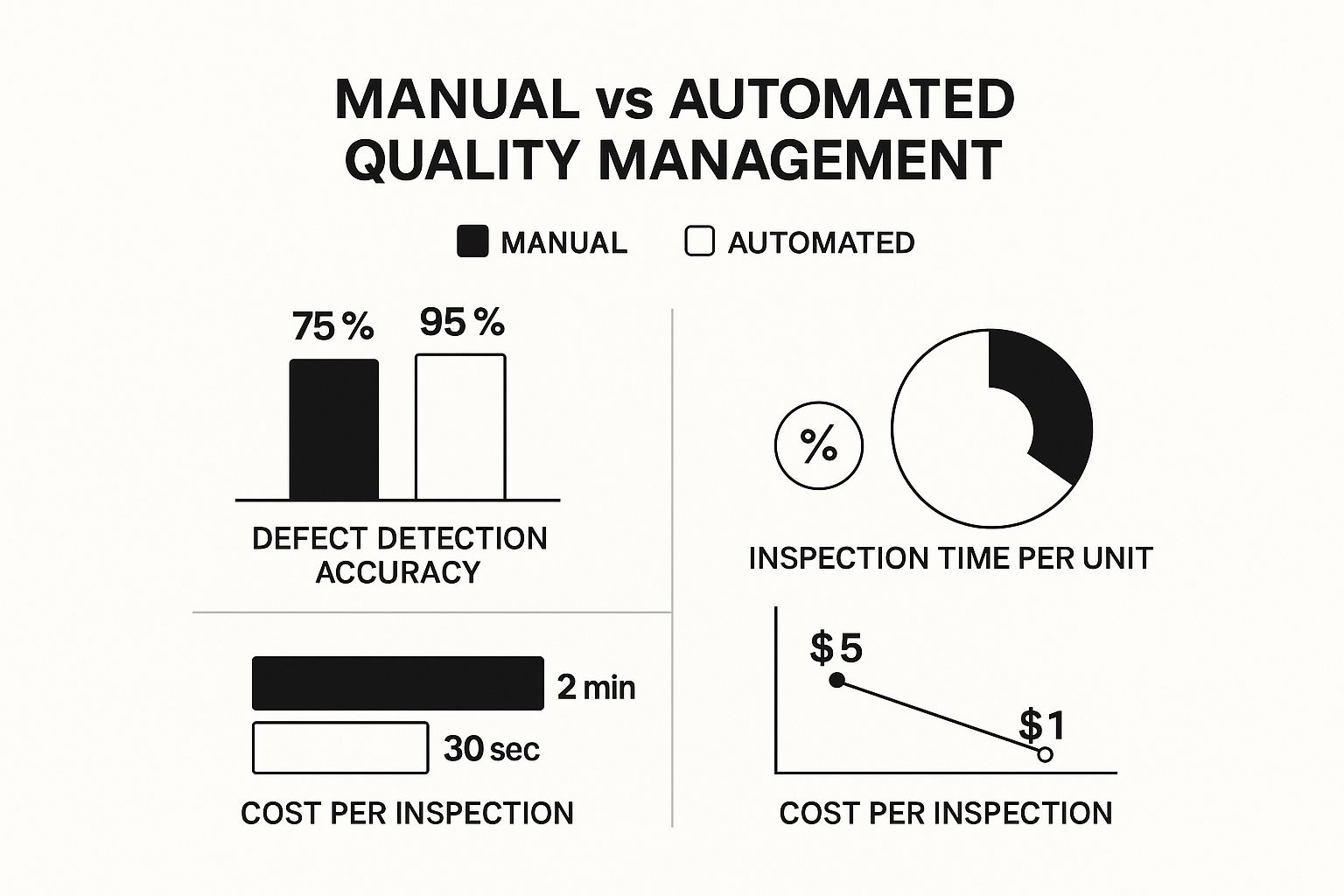
As the infographic clearly demonstrates, automated quality management outperforms manual methods by a significant margin, achieving 95% defect detection accuracy compared to 75% for manual inspections. Inspection time drops dramatically from 2 minutes per unit to just 30 seconds, and the cost per inspection goes down from $5 to $1. These improvements lead to substantial cost savings and increased efficiency.
To further understand the core technologies involved, let's take a closer look at their specific applications within automated quality management. The table below provides a comparison of these technologies, highlighting their primary functions, industry applications, implementation complexity, and potential return on investment.
Key Technologies in Automated Quality Management
| Technology | Primary Function | Industry Applications | Implementation Complexity | ROI Potential |
|---|---|---|---|---|
| Artificial Intelligence (AI) | Defect detection, predictive maintenance, pattern recognition | Manufacturing, healthcare, finance | High | High |
| Machine Learning (ML) | Adaptive learning, process optimization, predictive analytics | Retail, logistics, customer service | Medium | High |
| Blockchain | Secure data management, supply chain traceability, product authentication | Pharmaceuticals, food & beverage, luxury goods | Medium | Medium |
| Augmented Analytics | Data visualization, automated insights, reporting | All industries | Low | Medium |
This table summarizes how these technologies are driving changes in quality control and provides insights into their potential impact. As we can see, AI and ML offer significant ROI potential despite higher implementation complexity. Blockchain and Augmented Analytics, while offering moderate ROI, are generally easier to implement across diverse industries.
This integration of new technologies is reshaping quality control. Technologies like AI, ML, Augmented Analytics, and Blockchain are poised to play crucial roles in improving data analysis and quality processes. By 2025, AI and ML are predicted to be integrated into 65% of organizations using automation technologies. This not only improves predictive analytics but also boosts proactive quality control, helping companies reduce the substantial costs of product recalls. You can explore this topic further here. This shift toward technology-driven quality management is essential across all industries, especially those facing strict regulations.
The Real Business Impact of Automated Quality Systems
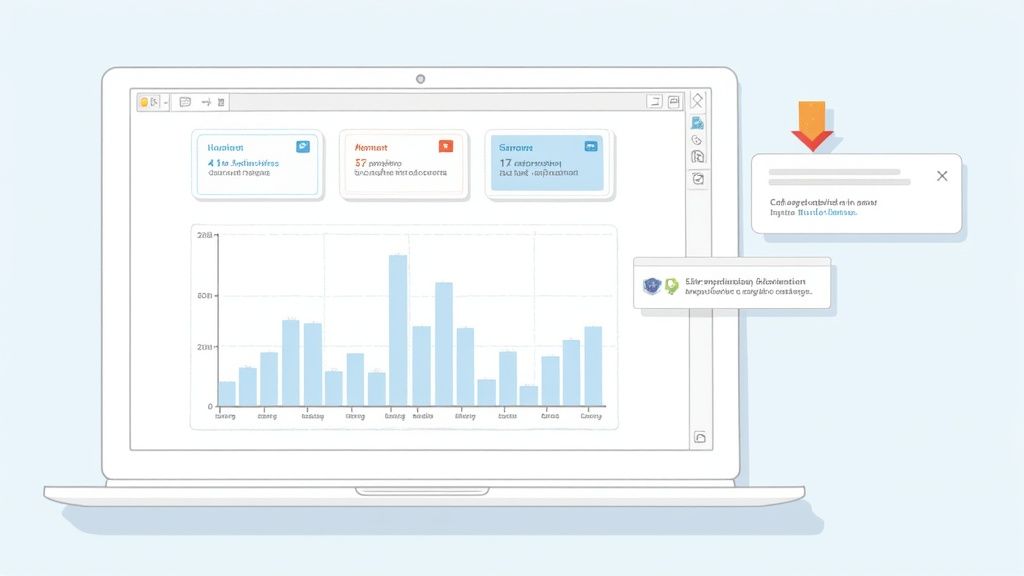
Automated quality management (AQM) is more than just a technological upgrade. It offers real, tangible benefits that impact a business's bottom line and competitiveness. Let's delve into how AQM makes a measurable difference across various industries.
Immediate Wins With AQM
Implementing AQM brings a number of immediate advantages. Cost reduction is a major motivator, as automation streamlines operations and minimizes waste. Manufacturers, for example, have seen error rates plummet by a staggering 87% after implementing AQM. This directly translates to less wasted material and lower rework expenses.
Error prevention is another significant benefit. AQM systems identify defects early in the production process, preventing small issues from snowballing into major problems. This proactive approach is especially valuable in industries like pharmaceuticals, where even minor deviations can have substantial consequences. AQM also simplifies audits, making compliance less time-consuming and more manageable. Pharmaceutical companies, for instance, have reported a 64% decrease in compliance costs after implementing AQM.
Strategic Advantages Over Time
Beyond the initial benefits, AQM cultivates long-term strategic advantages. A stronger brand reputation naturally follows from consistently delivering high-quality products and services. This heightened customer trust builds brand loyalty and strengthens market position.
AQM also provides opportunities for companies to stand out from the competition. By consistently exceeding quality benchmarks, organizations can justify premium pricing and gain a larger share of the market. Food processors, for instance, have reduced recall risks by up to 50% using automated quality control. This minimizes recalls, strengthens consumer trust, and enhances brand safety.
Measuring and Demonstrating ROI
Showing the return on investment (ROI) of AQM is essential for ongoing support and investment. Focusing on key metrics like error rates, defect rates, customer satisfaction scores, and compliance costs helps communicate the value of AQM to leadership. More information on pricing can be found in our article on Voicetta's pricing plans.
Capturing both quantitative and qualitative benefits offers a more complete picture of AQM's impact. While hard data like cost savings is easy to track, the value of improvements in employee morale and brand perception shouldn't be overlooked. This comprehensive approach gives a fuller understanding of AQM’s true value.
Realistic Timelines for Results
Understanding realistic timelines for achieving results is important for setting expectations and tracking progress. Some benefits, like lower error rates, are seen quickly. Others, such as an improved brand reputation, take time to cultivate. A phased implementation, with clear milestones and measurable goals for each stage, is crucial for showing ongoing improvement and sustaining momentum. This structured, long-term approach assists in setting expectations and reaching milestones throughout the implementation.
Implementing Automated QMS: A Blueprint for Success
Putting automated quality management (AQM) into practice is the key. This section offers a practical roadmap for integrating AQM into your organization, based on the insights of experienced quality leaders.
Securing Buy-In and Building Alignment
Implementing AQM requires a strategic approach. It begins with securing buy-in from executives. Showing them the potential return on investment (ROI) through data and case studies is essential. This involves clearly demonstrating how AQM can reduce costs, improve efficiency, and boost customer satisfaction.
Next, it’s important to build cross-functional alignment. Bring in teams from across the organization, such as IT, operations, and customer service. This collaborative approach ensures everyone understands the benefits and their respective roles in the implementation. You might be interested in: Learning more about Voicetta. Managing any resistance to change is also vital. Open communication and proactively addressing concerns can make the transition smoother.
Overcoming Implementation Challenges
Implementing AQM is not without its difficulties. Data migration can be a major obstacle. Maintaining data integrity and consistency throughout the transfer process is paramount. User adoption is another critical factor. Comprehensive training programs are needed, ones that focus on practical application and address individual user needs.
Facing these challenges head-on is essential for long-term success. This means anticipating potential roadblocks and having backup plans ready. For example, having a dedicated support team in place during the initial launch can smooth the transition and promptly address user questions.
Building a Phased Approach
A phased approach to implementation is generally the best strategy. Begin with a pilot project in a specific area of the organization. This lets you test the system, collect feedback, and refine the process before a full-scale rollout. Early success in the pilot project can generate positive momentum and demonstrate AQM's value to stakeholders.
Later phases can extend AQM to other departments or processes. This incremental strategy allows the organization to adapt to the changes and ensures a smoother transition. A structured rollout minimizes disruption and builds confidence in the new system.
Creating Effective Training Programs
Training programs are essential for successful user adoption. The emphasis should be on practical application, not just theory. Give users hands-on experience with the AQM system. Address the particular needs of different user groups. Tailor the training to their respective roles and responsibilities.
The goal is to create enthusiastic user adoption, not just reluctant compliance. This can be achieved through engaging training materials, clear communication, and ongoing support. Fostering a culture of continuous improvement within the quality management process will further enhance AQM's effectiveness.
Automated QMS Implementation Roadmap
The table below provides a phased approach to implementing AQM. It highlights key activities, critical success factors, common challenges, and expected timelines for each phase.
| Implementation Phase | Key Activities | Critical Success Factors | Common Challenges | Expected Timeline |
|---|---|---|---|---|
| Assessment & Planning | Define objectives, assess current processes, select AQM system | Executive buy-in, stakeholder alignment, clear goals | Resistance to change, lack of resources | 2-4 weeks |
| Pilot Project | Implement AQM in a limited scope, test and refine processes | User feedback, data integration, early wins | Technical issues, user adoption | 4-8 weeks |
| Phased Rollout | Expand AQM to other areas, refine training programs | Ongoing communication, change management, performance monitoring | Data migration issues, integration with existing systems | 3-6 months |
| Continuous Improvement | Monitor performance, gather feedback, optimize AQM system | Data analysis, user engagement, continuous learning | Maintaining momentum, adapting to changing needs | Ongoing |
This roadmap provides a structured method for implementing AQM and helps organizations achieve lasting success in quality management. It underscores the importance of planning, communication, and ongoing improvement throughout the implementation process.
Industry Transformations: Automated Quality in Action
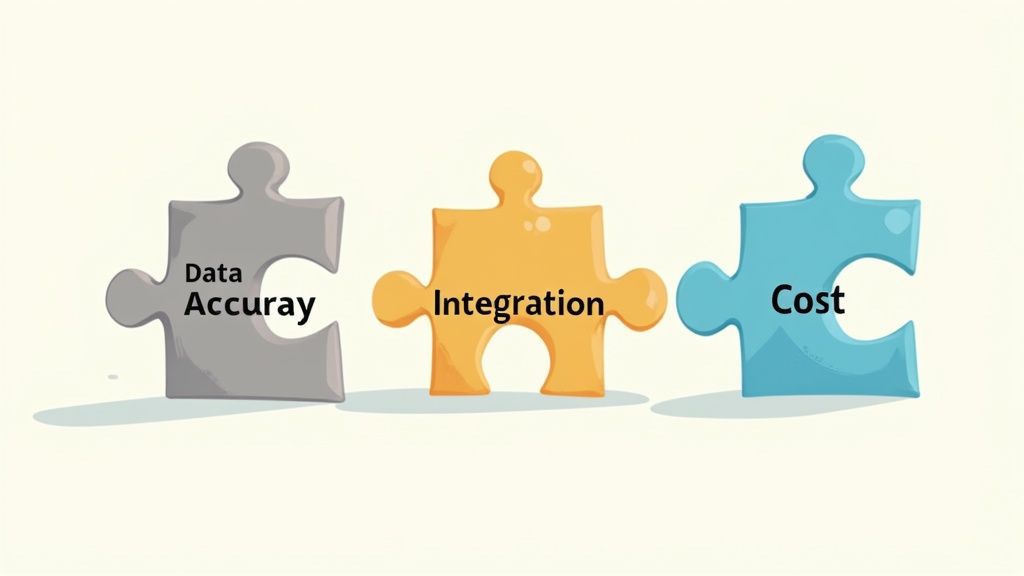
Real-world examples showcase the impact of Automated Quality Management (AQM). This section explores how various sectors use AQM to achieve impressive results. These case studies offer practical insights into AQM's versatile applications and its potential to reshape industries.
Healthcare: Enhanced Accuracy and Efficiency
Healthcare providers face constant pressure to ensure quality and patient safety. AQM offers much-needed solutions. For instance, some healthcare systems now use automated systems for medication dispensing. These systems rely on barcode scanning and robotic dispensing to reach 99.7% medication accuracy.
This drastically reduces errors, leading to better patient safety and improved outcomes. AQM can also automate documentation, freeing up medical professionals' time. Some hospitals have seen documentation time decrease by 40% thanks to AQM. This allows staff to focus on patient care, boosting efficiency and patient satisfaction.
Automotive: Precision at Production Speeds
Quality control is paramount in the automotive industry for both safety and brand reputation. AQM is crucial for maintaining high standards throughout manufacturing. Computer vision systems, powered by AI, inspect car parts for defects.
These systems can detect even microscopic flaws, invisible to the human eye, and at high production speeds. This precision ensures every vehicle meets stringent quality and safety requirements. Automation also reduces manual inspections, saving costs and speeding up production cycles. Identifying and addressing quality issues immediately minimizes waste and prevents expensive recalls.
Food and Beverage: Safety and Extended Shelf Life
Food and beverage companies use AQM to maintain safety and extend the shelf life of their products. Internet of Things (IoT) sensors monitor temperature, humidity, and other environmental factors across the supply chain.
This real-time data helps companies identify potential contamination risks and take swift corrective action. This proactive approach improves food safety, reduces waste, and helps extend shelf life. Combining IoT sensors with automated data analysis gives companies valuable operational insights and continuously improves quality control processes.
Adapting AQM to Your Industry
These examples demonstrate the wide range of AQM applications. While specific solutions differ across industries, the core principles remain the same: using technology to enhance accuracy, boost efficiency, and cut costs. By examining these real-world examples, you can see how AQM can address your organization's particular needs.
These insights help you adapt successful AQM strategies to your industry. Understanding the challenges and solutions implemented in other sectors helps businesses develop effective automated quality management programs to reach their specific quality goals.
What's Next: The Future of Automated Quality Management
The world of quality management is in constant motion. The future of automated quality management (AQM) holds exciting possibilities. By talking with industry leaders and researching current trends, we can get a glimpse into the next wave of innovations set to redefine quality assurance. These changes promise to shift quality from a reactive cost center to a proactive force driving business value.
Digital Twins: Virtualizing Quality
One fascinating development is the rise of digital twins. A digital twin is a virtual representation of a real-world product, process, or system. This technology allows for simulated tests and analyses in a safe, virtual environment. Imagine manufacturers using digital twins to simulate their entire production process, finding potential quality issues before physical production even begins. This predictive power can drastically cut development time and the expenses linked to physical prototyping and testing, leading to fewer hold-ups, less wasted material, and ultimately, products of superior quality.
Augmented Reality: Transforming Training and Maintenance
Augmented reality (AR) is also set to reshape quality management. AR overlays computer-generated information onto the real world, offering real-time guidance and assistance to quality inspectors and maintenance teams. Picture a technician wearing AR glasses displaying step-by-step repair instructions for complex machinery, or a quality inspector receiving instant feedback on potential flaws. This practical, interactive method can vastly improve training outcomes and maintenance effectiveness, leading to better quality results. Read also: explore more about AI and communication.
Edge Computing: Real-Time Quality at the Source
Edge computing brings data processing and analysis closer to where the data originates. This is especially useful for remote locations or settings with limited internet access. Think of sensors on a production line collecting and analyzing data on-site, enabling immediate quality control decisions without needing a centralized system. This quick feedback loop enables faster responses to quality concerns, stopping small issues from becoming major disruptions. Such rapid response is crucial for maintaining consistent quality in increasingly complex and distributed operations.
Predictive and Prescriptive Quality: The Next Frontier
These emerging technologies work together to build quality systems that aren't just reactive or preventive, but truly predictive and prescriptive. AI and machine learning can analyze data from digital twins, AR systems, and edge devices to foresee potential quality issues and suggest actions to prevent them. This proactive approach allows organizations to anticipate challenges and maintain quality proactively, resulting in higher efficiency, fewer risks, and happier customers.
Evolving Landscape and Customer Expectations
Rules and regulations, along with customer expectations for quality, are always changing. Customers want increasingly higher quality products and services, and regulators are enforcing stricter standards across various industries. AQM offers the flexibility and responsiveness needed to adapt to these shifts. By automating tasks, improving accuracy, and ensuring traceability, businesses can stay compliant and exceed customer expectations. This proactive approach transforms quality from an expense into a competitive edge.
From Cost Center to Competitive Advantage
More and more, organizations are recognizing the strategic importance of quality. AQM isn't just about cutting costs; it's about establishing a quality-focused culture across the entire business. Investing in AQM allows companies to strengthen their brand image, build customer loyalty, and gain a significant market advantage. This change in thinking positions quality as a catalyst for innovation and a key differentiator in today's competitive market.
Ready to transform your customer communication and enhance customer experience? Explore the innovative solutions offered by Voicetta and discover how AI can revolutionize your customer interactions.
Was this useful?
If this article helped, add Voicetta as a preferred source in Google Search. Your results can then highlight our writing.
Add as preferred source