
Blog
Call Center Workforce Management: Proven Tactics
Call center workforce management (WFM) has changed dramatically. Gone are the days of simply filling seats and relying on spreadsheets for scheduling. Today, effectiv...
The Evolution of Call Center Workforce Management

Call center workforce management (WFM) has changed dramatically. Gone are the days of simply filling seats and relying on spreadsheets for scheduling. Today, effective call center WFM is a crucial strategy for improving customer experience, increasing agent satisfaction, and boosting operational efficiency. The cornerstone of optimizing a call center lies in its approach to Workforce Management. This evolution is fueled by increasingly complex customer interactions, the growth of remote work, and the availability of powerful new technologies.
From Administrative Task to Strategic Advantage
Historically, call center WFM was seen as a purely administrative role. The primary focus was basic scheduling, ensuring enough staff were available, and tracking attendance. However, leading organizations now understand WFM to be much more than just managing schedules. It's about optimizing the entire workforce ecosystem.
This includes forecasting, scheduling, adherence, performance management, and even agent engagement and well-being. Instead of static spreadsheets, businesses are using real-time data and analytics to inform decisions about staffing levels, shift patterns, and the best way to utilize agent skills. This data-driven approach allows for greater flexibility and responsiveness to changing call volumes and customer needs.
The increasing importance of WFM is also evident in the growth of sophisticated WFM software. The call center workforce management software market is expected to grow from $6.5 billion in 2023 to $11.5 billion by 2030, representing a 9.5% CAGR. This expansion is driven by the need for operational efficiency, real-time analytics, and compliance management, especially as more companies adopt cloud-based solutions for remote work flexibility.
Key industry players like NICE Ltd. and Genesys dominate the market. They offer tools for forecasting, scheduling, and performance optimization, addressing challenges such as fluctuating call volumes and agent productivity. More detailed statistics can be found here. These investments in advanced tools highlight the strategic importance now placed on WFM.
Embracing Technology for Enhanced Performance
Technology is a vital component of this evolution. Modern WFM software solutions offer various features that streamline processes, improve accuracy, and offer valuable insights. This frees up managers to spend less time on manual tasks and more time on strategic initiatives that enhance both customer and agent experiences.
The following table outlines some of the key drivers fueling the growth of the call center WFM market:
Call Center WFM Market Growth Drivers
| Growth Driver | Impact Level | Implementation Complexity |
|---|---|---|
| AI-powered Forecasting | High | Medium |
| Real-time Adherence Monitoring | High | Low |
| Automated Scheduling | Medium | Low |
| Performance Dashboards | Medium | Low |
| Remote Work Support | High | Medium |
| Compliance Management | Medium | High |
This table summarizes some of the key factors pushing the adoption and development of WFM solutions. As you can see, areas like AI-powered forecasting and remote work support have a high impact but can be more complex to implement effectively. Features like real-time adherence monitoring and automated scheduling offer significant benefits with lower implementation hurdles.
Modern WFM software provides numerous advantages, some of which are listed below:
- AI-powered forecasting: Predicts call volumes with increased accuracy, allowing for more precise staffing.
- Automated scheduling: Creates optimized schedules that balance operational needs with agent preferences.
- Real-time adherence monitoring: Tracks agent activity and identifies deviations from schedules, allowing for quick adjustments.
- Performance dashboards: Provide visibility into important metrics, enabling data-driven decision-making.
These technological advances are helping call centers move away from reactive workforce management to a proactive and strategic approach. As customer expectations continue to change, so will the role of call center WFM in shaping the future of customer service.
Core Components That Drive WFM Success
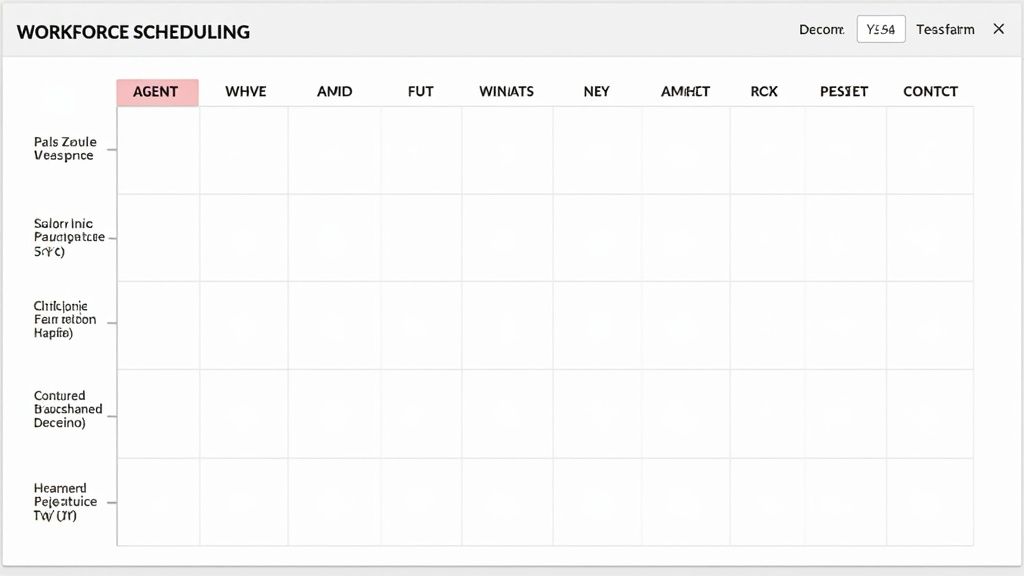
Effective call center workforce management (WFM) hinges on interconnected components working together seamlessly. Understanding these core elements is essential for crafting a system that bolsters both customer satisfaction and agent well-being. Let's explore these vital components.
Forecasting and Scheduling: The Foundation of WFM
Accurate forecasting forms the bedrock of successful WFM. It involves projecting future call volumes using historical data, emerging trends, and external influences. This empowers call centers to anticipate staffing needs and proactively modify schedules, much like a restaurant uses past reservation data and local events to anticipate the number of diners.
After accurate forecasting, scheduling takes center stage. This entails crafting optimized agent schedules aligned with projected call volumes. Modern WFM software, like Voicetta, can automate this process, factoring in agent preferences, skill sets, and required service levels. This automation minimizes manual effort and guarantees sufficient coverage while respecting agent work-life balance.
Adherence and Performance Management: Ensuring Operational Efficiency
Real-time adherence monitoring confirms agents are following their schedules and available to handle calls as planned. This provides immediate insight into agent activity, allowing managers to swiftly address any deviations. If an agent is unexpectedly late, managers can quickly adjust staffing to limit service interruptions.
Performance management complements adherence. It involves monitoring key agent performance metrics, such as average handle time and first-call resolution rate. This pinpoints areas for improvement and facilitates targeted coaching. This feedback loop assists agents in honing their skills and contributes to enhanced customer service.
Intraday Management: Adapting to the Unexpected
Even with careful preparation, unforeseen circumstances can affect call volumes. Intraday management involves dynamically adjusting staffing and schedules throughout the day to respond to real-time fluctuations. This might mean re-assigning agents, modifying break times, or requesting overtime. This adaptability is crucial for upholding service levels and reducing customer wait times. It’s like a conductor subtly adjusting the orchestra mid-performance to ensure a harmonious sound.
To further illustrate the interconnectedness of these crucial components, let's examine the following comparison:
Essential WFM Components Comparison: Analysis of the four key workforce management functions and their operational impact
| WFM Component | Primary Function | Key Metrics | Technology Requirements |
|---|---|---|---|
| Forecasting & Scheduling | Predicting call volume and creating agent schedules | Forecast accuracy, schedule efficiency | Forecasting software, scheduling tools |
| Adherence & Performance Management | Monitoring agent activity and performance | Adherence rate, average handle time, first-call resolution | Real-time adherence trackers, performance dashboards |
| Intraday Management | Adjusting staffing in real-time | Service level, customer wait time | Real-time monitoring tools, communication platforms |
This table highlights how each component relies on different metrics and technological tools to achieve its primary function.
The table clearly shows how different metrics and technologies are crucial for each WFM component. This interdependence is vital for optimizing the overall system effectiveness.
The Interplay of Components
These WFM components aren’t isolated; they're interconnected parts of a broader system. Accurate forecasting informs effective scheduling, while adherence monitoring and performance management guarantee the schedule’s proper execution. Intraday management adds the necessary flexibility to adapt and refine performance throughout the day. By grasping how these elements work together, call center managers can establish a robust WFM system that fosters success.
Solving the Biggest Call Center Workforce Challenges

Workforce management in the call center industry isn't simply about schedules and shifts. It's about understanding and addressing the human element: the agents who are the voice of your company. This means tackling significant challenges that directly affect agent well-being and, as a result, the customer experience. These challenges often represent the most pressing issues for call center leaders.
Agent Turnover and Absenteeism: A Costly Problem
High agent turnover is a persistent problem in many call centers. The constant need to hire and train new staff is a drain on resources and has a noticeable impact on overall team performance.
High absenteeism rates also disrupt carefully constructed schedules. This often forces the remaining agents to shoulder an increased workload, increasing the risk of burnout and adding to the already significant stress levels experienced by many call center agents. You might find this helpful: How to master call center workforce management with Voicetta.
The Numbers Tell the Story: Key Statistics
Call centers face persistent workforce challenges, including staggering employee turnover rates of 30–45% often attributed to stress and burnout. Absenteeism also plays a significant role and remains higher in outsourced centers (10%) compared to in-house teams (6%). On average, agents miss 8.2 days annually.
To address these issues, workforce management practices place a heavy emphasis on schedule adherence (a recommended compliance rate of 85%+) and occupancy rates (typically 80–90% in telecom). Increasingly, AI-driven tools are being employed to help balance workloads and boost agent satisfaction. More in-depth statistics can be found here. These numbers highlight the crucial need for effective workforce management strategies.
Addressing Burnout: Prioritizing Well-being
Burnout, often stemming from chronic stress, emotional exhaustion, and a diminished sense of personal accomplishment, is another major area of concern. It can lead to decreased productivity, higher absenteeism, and ultimately contributes to those high turnover rates, creating a vicious cycle that affects the entire call center operation.
The Scheduling Puzzle: Finding the Right Balance
Creating efficient schedules that meet business demands while also accommodating agent preferences can be a difficult balancing act. It requires careful consideration of various factors, including unpredictable call volume fluctuations, individual agent skill sets, required service levels, and personal time-off requests. Finding the right balance is critical for both operational efficiency and maintaining positive agent morale.
Innovative Solutions for a Thriving Workforce
Forward-thinking call centers are adopting innovative solutions to address these complex challenges. These solutions often include developing robust retention programs, proactive wellness initiatives, and increasingly flexible scheduling approaches.
-
Retention Programs: These programs can encompass a range of benefits, from competitive compensation and benefits packages to opportunities for career growth and ongoing skill development.
-
Wellness Initiatives: Promoting agent well-being through stress management programs, providing access to mental health resources, and fostering a supportive work environment is essential.
-
Flexible Scheduling: Offering options like flexible start times, compressed workweeks, and the possibility of remote work can dramatically improve agent satisfaction and work-life balance.
By proactively addressing these workforce challenges, call centers can cultivate a more engaged, productive, and resilient team. This, in turn, results in improved customer service, lower operational costs, and a healthier bottom line.
Technology That Transforms Workforce Performance

Beyond simple scheduling tools, technology is playing a critical role in modern call center Workforce Management (WFM). Several key advancements are truly changing how contact centers operate and manage their teams. These tools are empowering businesses to optimize their workforce, which ultimately leads to better customer service and happier, more productive agents.
AI-Powered Forecasting: Predicting The Future Of Call Volume
One significant advancement is the use of AI-powered forecasting. Traditional forecasting methods often struggled to accurately predict call volumes, particularly during unexpected spikes or dips in activity. AI algorithms, on the other hand, can analyze massive amounts of historical data, uncovering hidden patterns and trends that humans might easily overlook. This allows for much more precise predictions of future call volumes, enabling contact centers to optimize staffing levels and avoid the pitfalls of overstaffing or understaffing. It's similar to how meteorologists use complex weather models to predict upcoming storms with increasing accuracy.
Automated Scheduling: Balancing Needs And Preferences
Automated scheduling systems represent another major step forward in call center WFM. These systems move beyond the basics of scheduling by taking into account a variety of factors, including agent skill sets, availability, and even individual preferences. Automating this process frees managers from the tedious, manual task of creating schedules. For instance, if a particular agent excels at handling complex technical issues, the system can intelligently prioritize scheduling them for calls that require that specific expertise. This targeted approach results in a more effective deployment of agent skills and boosts overall team performance. Learn more in this article on how to master call center workforce management with Voicetta.
Real-Time Adherence Monitoring: Staying On Track Throughout The Day
In the dynamic environment of a call center, sticking to schedules is essential. Real-time adherence monitoring tools give managers up-to-the-minute visibility into agent activity. Managers can immediately see which agents are on calls, taking breaks, or currently unavailable. This real-time feedback helps identify and address any deviations from the schedule. For example, if several agents are unexpectedly late, managers can quickly adjust staffing levels or re-route calls to minimize any disruptions to customer service.
Integration Challenges And Agent Buy-In
While these technological advances offer significant benefits, implementing them does present challenges. Integrating new WFM software with pre-existing systems can be complicated and requires careful planning and execution. Furthermore, getting agents to embrace these new technologies is critical. This involves clearly communicating the advantages of the new systems and providing sufficient training to ensure agents feel comfortable using them.
Predictive Analytics: Anticipating Future Needs
Predictive analytics is another game-changing technology reshaping call center WFM. By thoroughly analyzing data, these tools can identify potential workforce challenges before they escalate into major problems. For example, if turnover rates begin to rise within a specific team, predictive analytics can alert managers early on. This allows them to proactively address the root causes and implement effective retention strategies before losing valuable employees. This proactive approach fosters a more resilient and adaptable workforce, enabling call centers to navigate changing conditions and consistently provide outstanding customer service.
Making Remote Work Actually Work for Call Centers
The rise of remote work has brought a new set of dynamics to the call center industry, creating both exciting prospects and unique hurdles. Successfully navigating this shift requires a thoughtful approach to call center workforce management, adapting established methods for a virtual setting.
Maintaining Productivity in a Remote Setting
One of the biggest questions surrounding remote work is how to maintain productivity. The focus needs to move away from simply being present to a model that prioritizes results. This means setting clear performance goals, establishing reliable communication channels, and giving agents the tools they need to thrive, no matter where they are.
Think about implementing project management software and communication platforms. These tools streamline workflows and help remote teams stay connected. Agents can collaborate effectively and keep projects moving forward, even without direct supervision. Regular feedback and recognition also play a crucial role, fostering a sense of community and driving high performance.
Building Team Cohesion Across Distances
When team members are physically separated, it can be challenging to maintain a sense of connection. In a remote call center, it's vital to be proactive about building team cohesion. This might involve scheduling virtual team-building activities, creating online forums for casual interaction, and encouraging peer-to-peer support.
Technology is also key to bridging the distance. Video conferencing can add a personal touch to interactions, while instant messaging platforms allow for quick and easy communication throughout the workday. By fostering a strong sense of belonging, remote teams can work together more effectively and ultimately deliver better customer service.
Adapting Forecasting and Coaching for Remote Teams
Traditional forecasting methods might need tweaking to reflect the unique aspects of a remote workforce. Factors like individual agent circumstances, time zone differences, and potential connectivity issues all come into play. The remote call center workforce is projected to grow by 60% between 2022 and 2024, driven by post-pandemic reliance on virtual tools and cost-saving measures. At the same time, 95% of customer interactions are expected to use sentiment analysis by 2025. Yet, 50% of managers still report a lack of sufficient automation, highlighting the need for robust technology. Learn more about these trends here.
Virtual coaching also presents its own set of challenges. While in-person observation isn't feasible, tools like screen recording and call monitoring offer valuable insights into agent performance. This data can inform targeted feedback and support, empowering remote agents to hone their skills and provide exceptional customer service.
Hybrid Models: Balancing Flexibility and Operations
Many call centers are opting for hybrid models, blending remote work with on-site operations. This approach requires careful planning and execution to manage both remote and on-site teams effectively. The benefit is increased flexibility for agents while still allowing for in-person connection when needed.
This means having the right technology to support both work styles. A unified communications platform, such as Voicetta, can simplify communication and workflows. This makes it easier for managers to oversee operations, regardless of agent location. By finding the right balance between flexibility and operational needs, call centers can create a work environment that benefits both employees and customers.
Measuring What Actually Matters in WFM
Measuring the effectiveness of your call center Workforce Management (WFM) strategy is about focusing on the right data. It's not enough to simply collect numbers; you need to track the metrics that truly reflect WFM success and give you actionable insights.
Identifying Key Metrics
While there are many metrics you could track, some are definitely more valuable than others. Certain metrics provide a limited view, while others offer a much broader perspective on overall call center performance. Conversations with analytics leaders show that the best approach uses a combination of operational and financial metrics.
-
Operational Metrics: These focus on the daily efficiency of your call center. Here are some important examples:
- Schedule Adherence: This measures how well agents stick to their planned schedules.
- Occupancy Rate: This shows the percentage of time agents are actively working on call-related tasks.
- Average Handle Time (AHT): This is the average length of a customer interaction, from the first contact to the final resolution.
- First Call Resolution (FCR): This metric tracks the percentage of customer issues resolved during the initial contact.
-
Financial Metrics: These connect WFM performance to the bottom line. Key financial metrics include:
- Cost Per Contact: This measures the total cost associated with handling each customer interaction.
- Labor Efficiency: This metric helps understand the productivity of your workforce in relation to labor costs.
Establishing Benchmarks and Ongoing Measurement
After you've chosen your key metrics, it's time to set realistic benchmarks. These should be specific to your industry and the type of call center you operate. A sales-focused call center might prioritize conversion rates, for example, while a support-focused center might focus on First Call Resolution. Consistent monitoring is essential, but don't get bogged down in endless data. Put systems in place that automate data collection and analysis, providing clear, concise reports that highlight areas for improvement.
Communicating Business Value
Finally, translate your technical metrics into reports that executives can understand and that clearly show the value to the business. Connect the dots between improvements in your WFM Key Performance Indicators and positive outcomes like:
- Improved Customer Satisfaction: Reduced wait times and better First Call Resolution rates lead to happier customers.
- Increased Revenue: Higher agent productivity and optimized staffing contribute to better sales and revenue.
- Reduced Costs: Efficient scheduling and adherence helps minimize overtime pay and maximize how effectively you use labor resources.
For a truly effective WFM strategy, you need the right metrics. Take a look at these customer service KPI examples for a comprehensive guide to optimizing your support performance. By measuring and reporting on what truly matters, you can elevate WFM from a behind-the-scenes function to a core driver of success for your entire organization. This data-driven approach will help you constantly improve your WFM strategies and deliver exceptional service to your customers.
Future-Proofing Your Call Center Workforce Strategy
The call center world is in constant flux. Is your workforce management strategy evolving with it? Staying competitive means understanding and adapting to the emerging trends reshaping how we manage our call center teams. This involves integrating new technologies and refining current strategies for a more dynamic and demanding environment.
The Rise of AI and Machine Learning in Forecasting
Artificial intelligence (AI) and machine learning are rapidly moving from futuristic concepts to essential workforce management tools. These technologies power sophisticated forecasting models that adjust in real-time to changing call volumes and customer behavior. Unlike traditional forecasting, which often relies solely on historical data, AI-powered systems analyze a broader range of factors. These include current events, social media trends, and even the weather. This translates to more accurate predictions, better staffing choices, and smarter resource allocation.
Embracing Gig Economy Principles for Scheduling Flexibility
The gig economy has undeniably transformed how industries approach work, and call centers are no exception. The principles of flexibility and on-demand work are influencing call center scheduling, allowing for more dynamic staffing models. Call centers can now quickly scale their workforce up or down, responding to real-time demand. For example, during peak call times, they can access a pool of on-demand agents for extra support. This adaptability is crucial for managing fluctuating customer needs and maintaining service levels, especially during unexpected surges.
Predictive Analytics for Proactive Management
Predictive analytics is another key trend shaping call center workforce management. By analyzing historical data and recognizing patterns, these tools empower managers to anticipate staffing requirements before they become critical. This proactive approach to scheduling and resource allocation prevents understaffing or overstaffing problems. It can also reveal potential issues like increasing agent attrition, enabling early intervention and preventative action. For a comprehensive guide to optimizing support performance, consider reviewing these essential customer service KPI examples to ensure your strategy is on track.
Skills-Based Routing and Voice Analytics
Skills-based routing, directing calls to agents with the specific expertise to handle the customer's issue, is becoming increasingly important. This targeted approach improves first-call resolution rates and boosts customer satisfaction. Coupled with skills-based routing, voice analytics, which uses AI to analyze call recordings, transforms quality management. It offers insights into agent performance and customer sentiment, enabling data-driven improvements.
Gamification and Agent Engagement
Agent engagement is paramount for high performance. Gamification techniques, such as points systems, leaderboards, and badges, introduce elements of fun and competition into the workday. This can boost agent motivation and encourage performance improvements, ultimately creating a more engaged and productive workforce. The result? Better customer service and lower agent turnover.
Preparing for the Future of WFM
To future-proof your call center workforce management strategy, focus on strategic technology investments and workforce development. Investing in robust WFM software featuring AI-powered forecasting, automated scheduling, and real-time adherence monitoring is essential. Simultaneously, prioritizing agent training and development programs enhances their skills and prepares them for the evolving demands of the call center. This dual focus enables your team to readily adapt to future changes, maximizing both agent and customer satisfaction. Ready to optimize your call center and embrace the future of customer communication? Explore how Voicetta, the AI communication platform, can revolutionize your customer service.
Was this useful?
If this article helped, add Voicetta as a preferred source in Google Search. Your results can then highlight our writing.
Add as preferred source