
Blog
Call Centers Workforce Management Tips for Better Performance
Today's call centers walk a tightrope, balancing operational efficiency with the wellbeing of their agents. This balancing act demands a modern approach to call center...
Building a Modern Call Center Workforce Management Foundation
Today's call centers walk a tightrope, balancing operational efficiency with the well-being of their agents. This balancing act demands a modern approach to call center workforce management, built on proactive planning, data-driven insights, and a real commitment to employee engagement. Traditional, reactive staffing models often struggle to keep up with the ebb and flow of call volumes and the diverse needs of customers.
This can lead to long wait times, frustrated customers, and overworked agents. That's why a strong workforce management foundation is no longer a luxury—it's a necessity.
Forecasting and Scheduling: The Cornerstones of Efficiency
Effective call center workforce management begins with accurate forecasting. By carefully analyzing historical data, identifying trends, and factoring in external influences like marketing campaigns or seasonal changes, call centers can predict future call volumes with remarkable precision. This, in turn, enables more efficient scheduling.
Instead of relying on guesswork or outdated spreadsheets, modern call centers use sophisticated scheduling software like Calabrio to optimize agent availability and minimize over or understaffing. This allows them to meet service level agreements while also respecting agent preferences and promoting a healthy work-life balance. The global contact center market has seen significant growth, directly impacting workforce management strategies. In 2020, the market was valued at approximately $340 billion, and projections suggest it will reach nearly $496 billion by 2027. This growth underscores the increasing need for robust and adaptable strategies. For a deeper dive into these statistics, check out this resource: https://digitalmindsbpo.com/blog/call-center-statistics/
Real-Time Management: Adapting to the Unexpected
Even the most accurate forecasts can't anticipate every twist and turn. Real-time management is crucial for navigating unexpected spikes in call volume, unplanned agent absences, or system disruptions. Modern call centers employ real-time dashboards and reporting tools to keep a close eye on key performance indicators (KPIs) like call wait times, agent occupancy rates, and service levels.
Having this information at their fingertips allows managers to make informed decisions on the spot, such as rerouting calls, adjusting schedules, or providing extra support to agents who need it. This ensures a consistent level of service delivery, even in the face of unexpected challenges.
Agent Empowerment: The Human Element
While technology plays a vital role in call center workforce management, the human element remains paramount. Engaged and motivated agents are the heart of exceptional customer experiences. Modern call centers invest in training and development programs to give their agents the skills they need to excel.
They also create opportunities for career advancement, recognize and reward top performers, and cultivate a positive work environment. The result? Higher job satisfaction, lower turnover rates, and improved interactions with customers. Want to learn more about mastering call center workforce management? This article offers valuable insights: How to master call center workforce management
To understand how these elements contribute to success, let's examine some key performance metrics. The following table provides industry standards, optimal ranges, and the impact of these metrics on call center operations.
Key Workforce Management Performance Metrics: Essential KPIs and benchmarks for measuring call center workforce efficiency and agent performance.
| Metric | Industry Standard | Optimal Range | Impact on Operations |
|---|---|---|---|
| Service Level | 80% in 20 seconds | 90% in 15 seconds | Measures the percentage of calls answered within a target time. |
| Agent Occupancy Rate | N/A | 75%-85% | Reflects the percentage of time agents spend handling calls. |
| Average Handle Time (AHT) | Varies by industry | Determined by internal analysis | Measures the average duration of a call. |
As you can see, these metrics offer valuable insights into agent performance and overall operational efficiency. By tracking and analyzing these KPIs, call centers can identify areas for improvement and optimize their workforce management strategies.
By focusing on these core principles—forecasting, real-time management, and agent empowerment—call centers can build a modern workforce management foundation that boosts operational efficiency, enhances customer satisfaction, and empowers agents to succeed. This creates a sustainable model for long-term success in today's competitive landscape.
Solving The Turnover Crisis That's Killing Your Operations
High agent turnover is a constant headache for call centers. It impacts everything from operational efficiency and customer satisfaction to the bottom line. Traditional approaches to keeping agents often miss the mark, failing to address the root causes of why people leave. This section explores the core issues driving turnover and offers effective call center workforce management strategies to build a loyal, stable, and thriving team.
Understanding The Root Causes of Turnover
Before we jump into solutions, we need to understand why agents are heading for the exit. It’s often more than just money. While competitive salaries are important, other factors play a significant role in agent retention.
-
Lack of Recognition and Appreciation: Call center agents handle a high volume of calls, often dealing with difficult customers and stressful situations. Feeling undervalued in this environment can quickly lead to burnout and the search for a new job.
-
Limited Growth Opportunities: A clear career path keeps agents motivated to improve their skills and contribute to the company’s success. Without opportunities for advancement, ambition fades and disengagement sets in.
-
Inadequate Training and Support: Agents need the right training and ongoing support to confidently handle a wide range of customer interactions. Insufficient preparation sets them up for failure, adding to their stress and reducing job satisfaction.
-
Poor Work-Life Balance: The demanding nature of call center work can take a toll on personal lives. Flexible scheduling and reasonable workloads are crucial for a healthy work-life balance.
-
Toxic Work Environment: A negative or unsupportive work environment quickly erodes morale. Building a culture of respect and teamwork is essential for agent well-being and retention.
Addressing these underlying issues is the foundation of any sustainable retention strategy. Employee turnover remains a significant challenge in call center workforce management worldwide. Current industry turnover rates fluctuate between 30% and 45%, highlighting the demanding and high-stress nature of these roles. This constant churn necessitates continuous recruitment and training, impacting both productivity and costs. Find more detailed statistics here.
Implementing Effective Retention Strategies
Effective call center workforce management goes beyond simply raising salaries. It's about creating a positive and supportive environment where agents feel valued and empowered.
-
Investing in Comprehensive Training: Equip your agents with the skills and knowledge they need to excel from the start. Provide ongoing training and development opportunities to keep them engaged and prepared for the ever-changing demands of customer service.
-
Implementing Robust Performance Management: Regular feedback and coaching help agents identify areas for improvement and build confidence. Focus on constructive criticism and recognize achievements to encourage a positive growth mindset.
-
Creating Opportunities for Advancement: Develop clear career paths and offer professional development opportunities. This demonstrates your commitment to their growth and fosters long-term dedication.
-
Promoting Work-Life Balance: Offer flexible scheduling options whenever possible and ensure manageable workloads. This reduces stress and allows agents to maintain a healthy life outside of work.
-
Building a Positive Work Culture: Cultivate a culture of respect, teamwork, and open communication. Recognize and reward agent contributions to reinforce positive behaviors and boost morale.
Measuring The Impact of Retention Initiatives
Tracking key metrics provides valuable insights into the effectiveness of your retention strategies. Monitor these indicators to gauge progress and pinpoint areas for improvement:
-
Turnover Rate: Track the percentage of agents leaving the company over a specific period. A declining turnover rate signals positive progress.
-
Agent Satisfaction: Conduct regular surveys and feedback sessions to gain insights into agent morale and identify areas needing attention.
-
Performance Metrics: Look for improvements in key performance indicators, such as average handle time and customer satisfaction scores. These can indicate increased agent engagement and effectiveness.
By implementing these strategies and consistently monitoring progress, call centers can reduce turnover, enhance operational efficiency, and ultimately deliver superior customer experiences. Investing in a loyal and dedicated team is a crucial step toward long-term success.
Mastering Remote Workforce Management Excellence

The rise of remote work has undeniably changed how we think about call center workforce management. Managing remote teams requires a new approach to communication, collaboration, and maintaining quality service across different locations. Traditional in-office management strategies often don't translate well to remote settings, demanding fresh strategies for communication, performance monitoring, and team building. Let's explore how successful organizations are adapting to this new reality and building effective remote workforce management strategies.
One key aspect of this shift is the significant growth in the number of remote call center agents, largely fueled by technological advancements and the impact of the pandemic. Between 2022 and 2024, the number of remote call center agents is projected to grow by a staggering 60%. This increase demonstrates a strategic move by companies to embrace remote work technology, offering employees more flexibility and reducing operational costs, all while upholding high customer service standards. This shift to remote work necessitates new management techniques for effectively monitoring agent productivity and performance, such as improved digital communication tools and cloud-based systems. Explore this topic further.
Building a Connected Remote Team
Keeping a team unified when members are geographically dispersed requires proactive communication and dedicated relationship-building efforts. Managers need to move beyond sporadic emails and implement strategies that encourage regular, meaningful interaction. Virtual team-building activities, regular video conferencing check-ins, and dedicated online communication channels can help bridge the physical distance and foster a sense of shared purpose.
Embracing the Right Technology Stack
Effective remote workforce management heavily depends on using the right technological tools. Cloud-based solutions are vital for scheduling, performance tracking, and real-time communication. Furthermore, advanced analytics platforms can offer valuable insights into agent performance and overall call center trends. These tools enable managers to effectively monitor performance, identify areas for improvement, and provide targeted support to their remote agents.
Read also: How to improve agent productivity
Performance Management in a Remote Setting
Managing performance in a remote setting necessitates a change in approach. Traditional performance reviews can often feel impersonal and ineffective for remote workers. A better approach is to focus on regular feedback, coaching, and cultivating a culture of continuous improvement. This involves establishing clear expectations, providing consistent feedback, and offering opportunities for skill development. Doing so builds accountability and empowers remote agents to take ownership of their performance.
Addressing Common Remote Management Pitfalls
Remote management presents its own set of unique challenges. The lack of face-to-face interaction can sometimes lead to misunderstandings or communication breakdowns. However, by proactively addressing these challenges, organizations can cultivate strong, high-performing remote teams. Key strategies include establishing clear communication protocols, providing adequate technical support, and fostering a sense of trust and autonomy among remote employees.
Advanced Scheduling That Actually Works For Everyone
Forget generic scheduling solutions. This section explores sophisticated scheduling methodologies for call center workforce management that cater to both operational needs and agent preferences. This creates a mutually beneficial situation, improving both efficiency and morale. We'll delve into how historical data and predictive analytics can be used to create more accurate forecasts, eliminating persistent overstaffing and understaffing problems.
Leveraging Data and Predictive Analytics
Effective scheduling begins with accurate forecasting. By analyzing historical call data, recognizing trends, and considering external influences (such as marketing campaigns or holidays), call centers can predict future call volumes more accurately. This enables proactive scheduling, ensuring sufficient agent availability at peak times. This data-driven approach helps manage labor costs while consistently meeting service level agreements. For instance, if data reveals a regular surge in calls every Monday morning, schedules can be adjusted to provide ample staffing during that period.
Furthermore, predictive analytics enhances forecasting by utilizing statistical algorithms to anticipate fluctuations in future call volume. This allows call centers to be even more proactive in adjusting staffing levels. Consider it akin to weather forecasting – the more data available, the more accurate the predictions. This translates to shorter wait times for customers and a less stressful work environment for agents.
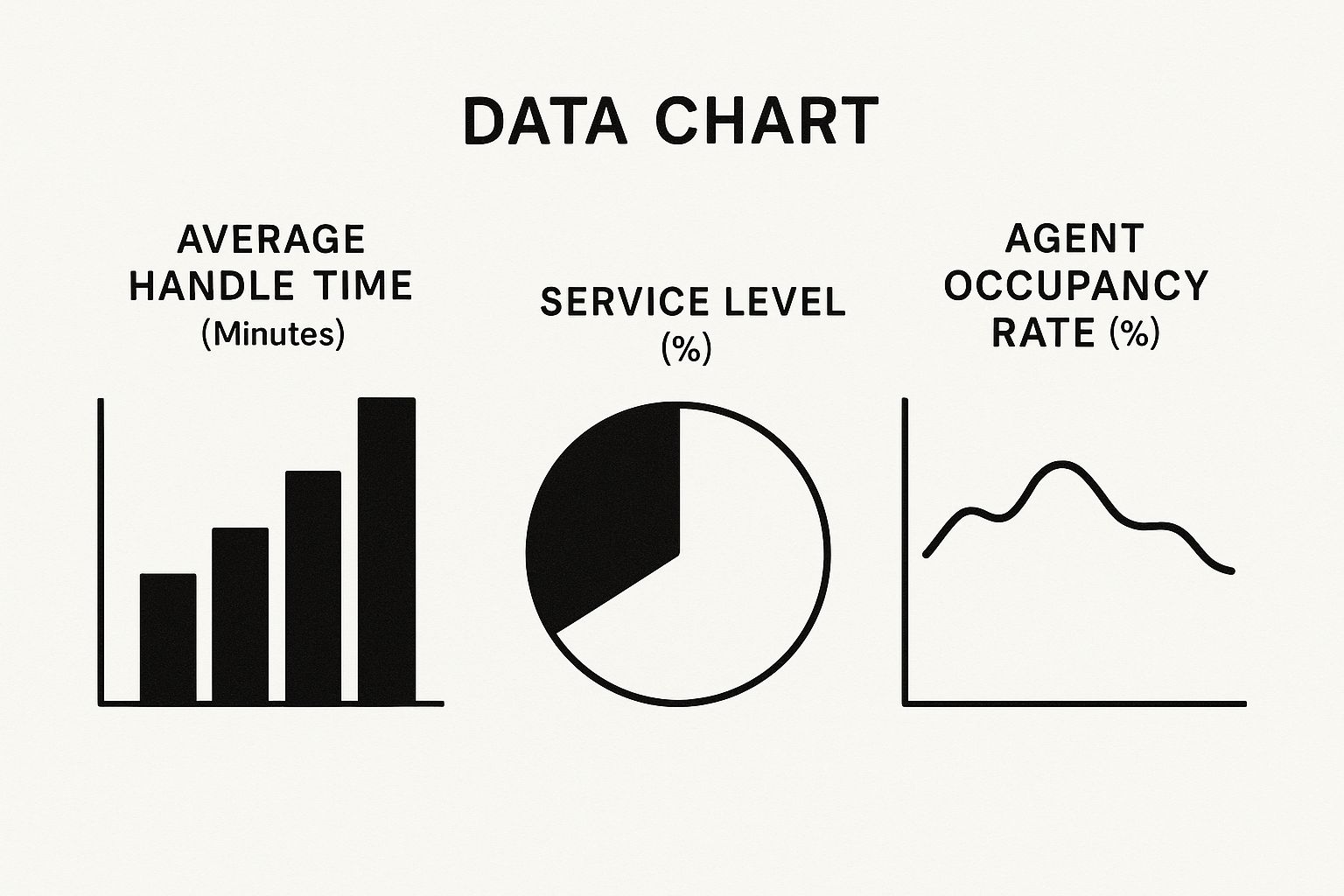
The infographic above illustrates key call center metrics, including average handle time, service level percentage, and agent occupancy rate trends. Notice how, while average handle time remains consistent, the service level has dipped slightly, coinciding with a rise in agent occupancy. This suggests potential agent overworking and a need for schedule adjustments. You might find this helpful: How to master call center metrics with dashboards.
Building Schedules That Work For Everyone
Effective schedules require more than just predicting call volume. They necessitate considering agent preferences and fostering work-life balance. This can involve offering flexible scheduling options such as part-time shifts, compressed workweeks, or the ability to swap shifts with colleagues. Such flexibility can be instrumental in attracting and retaining talented individuals in a competitive job market.
However, managing schedule changes and time-off requests equitably requires well-defined policies and procedures. This promotes transparency and mitigates conflict among team members. Implementing a system for advance time-off requests and establishing clear shift-swap guidelines can simplify this process.
Optimizing Schedules For Maximum Efficiency
Various scheduling approaches can optimize call center efficiency. To help illustrate the differences, the following table compares several methods, highlighting their flexibility, complexity, impact on employee satisfaction, and operational efficiency:
To understand the different approaches to workforce scheduling and their varied impacts, let's look at the following comparison:
Workforce Scheduling Approaches Comparison Comparison of different scheduling methodologies and their impact on operational efficiency and employee satisfaction
| Scheduling Method | Flexibility Level | Implementation Complexity | Employee Satisfaction | Operational Efficiency |
|---|---|---|---|---|
| Fixed Schedule | Low | Low | Low | High |
| Rotating Shifts | Medium | Medium | Medium | Medium |
| Flexible Scheduling | High | High | High | Medium |
| Demand-Based Scheduling | Medium | High | Medium | High |
As you can see, each method presents unique advantages and disadvantages. Selecting the right approach depends on the specific needs and priorities of the call center. Fixed schedules, for example, offer predictability but limited flexibility. Demand-based scheduling, on the other hand, optimizes staffing levels based on real-time call volume, maximizing efficiency but potentially affecting agent work-life balance. Finding the right balance is essential for sustained success. Leading call centers are adopting advanced forecasting and scheduling tools like Calabrio or NICE to anticipate fluctuations in call volume and proactively adjust staffing, ensuring optimal service levels while minimizing operational expenses.
Technology Integration That Drives Real Results
Advanced scheduling and forecasting are just the beginning. This section dives into the practical impact of technology in modern call center workforce management. We'll move beyond the hype and explore how AI, machine learning, and advanced analytics can tangibly improve team management.
AI-Driven Coaching and Performance Enhancement
Imagine a dedicated virtual coach available to every agent around the clock. AI-powered coaching tools are making this a reality. These tools provide real-time performance analysis and targeted feedback during live calls. For instance, if an agent encounters difficulty with a complex customer issue, the AI can instantly offer helpful resources and suggestions. This immediate support accelerates agent development, leading to greater efficiency and improved customer satisfaction. These tools can also identify individual agent behavior patterns and recommend personalized training modules.
This personalized approach to agent development has a significant impact. Imagine seeing a 20% increase in first-call resolution rates simply by giving agents the information they need, when they need it.
Sentiment Analysis: Understanding the Customer Experience
Sentiment analysis uses AI to gauge the emotional tone of customer interactions. This provides invaluable insights into the overall customer experience. By identifying frustration, satisfaction, or confusion in real time, call centers can proactively address emerging trends. This proactive intervention can significantly reduce escalations and improve customer satisfaction. Agents can even receive real-time alerts when a customer's sentiment shifts negatively, allowing them to address the issue immediately. Think of the possibilities: a negative interaction turned positive, a frustrated customer becoming a loyal advocate.
Automated Scheduling Optimization: Balancing Needs and Preferences
Advanced call center workforce management software optimizes scheduling in a whole new way. Using machine learning, these tools analyze historical call data, agent performance, and even external factors like weather patterns to create the most efficient schedules. This eliminates manual guesswork and ensures appropriate staffing levels while accommodating agent preferences, leading to cost savings from reduced overstaffing and increased agent satisfaction through improved work-life balance. Imagine reducing scheduling overhead by 50% and simultaneously boosting agent morale. That's the power of intelligent automation.
Evaluating and Integrating Workforce Management Software
Choosing the right workforce management software requires careful consideration. Prioritize solutions that integrate seamlessly with your existing CRM and other business systems. This streamlined data flow gives a comprehensive overview of agent performance. More importantly, select software that delivers actionable insights, not just raw data. Platforms like Voicetta provide robust integrations, streamlining communications and offering a holistic operational view.
Driving Adoption and Maximizing ROI
Implementing new technology is more than simply purchasing software; it's about ensuring effective utilization. Successful technology adoption hinges on a thorough training program for both managers and agents. This ensures everyone understands how to use the new tools and the benefits they offer. This training is a direct investment in maximizing ROI and realizing the full potential of these technologies. Addressing concerns and showcasing the positive impact on agent performance and customer experience fosters a culture of acceptance, not resistance.
Overcoming common technology adoption challenges often means addressing change resistance. Open communication and active team member involvement throughout the implementation process are crucial. Involving agents in the decision-making process and providing ongoing support builds buy-in and promotes a smooth transition. This collaborative approach creates a more engaged and productive workforce, ultimately maximizing your technology investment. Voicetta, with its user-friendly interface and 24/7 support, exemplifies a platform designed for easy adoption and substantial impact.
Performance Management That Develops Instead Of Destroys
Traditional performance management in call centers often feels like a system of punishment. It tends to focus on highlighting agent shortcomings instead of helping them grow. This can really hurt agent morale and, by extension, customer satisfaction. This section explores proven methods for call center workforce management that nurture agent capabilities while still delivering strong business results. We'll explore how to move away from criticism and towards a culture of continuous improvement.
Designing Effective Performance Metrics
Effective performance metrics form the bedrock of any successful performance management system. These metrics need to reflect business goals while remaining fair and achievable for agents. For example, focusing only on average handle time (AHT) might encourage agents to rush through calls, which could negatively impact customer satisfaction.
A more well-rounded strategy includes metrics like first call resolution (FCR) and customer satisfaction (CSAT) scores. These give us a more complete picture of agent performance. This balanced scorecard approach can be implemented by assigning weights to different metrics based on their relative importance.
A 70/30 split between CSAT and AHT, as an example, prioritizes customer satisfaction while still encouraging efficiency. This helps ensure agents focus on delivering great service while managing call times effectively. For further reading, check out this article: How to master call center quality assurance.
Coaching For Growth, Not Reprimand
Coaching should be an ongoing process aimed at developing agent skills and addressing performance gaps constructively. Instead of dwelling on past errors, productive coaching sessions look towards future improvement. This might involve role-playing difficult scenarios or giving specific feedback on communication techniques.
Imagine an agent who struggles to show empathy during customer interactions. Instead of simply criticizing, a coach could work with the agent to develop active listening skills and practice responding effectively to customer emotions. This focused approach empowers agents to improve specific skills, which builds confidence and leads to better customer interactions.
Identifying and Developing High-Potential Agents
High-potential agents are the future leaders of your call center. Recognizing and developing these individuals is crucial for creating a strong internal leadership pipeline and minimizing turnover. This goes beyond simply acknowledging top performers. It means identifying those with excellent communication and problem-solving skills, along with a positive attitude. These qualities are fundamental for leadership roles.
Once identified, high-potential agents should be offered opportunities for growth and development. This could include mentorship programs, specialized training, or chances to work on projects outside their usual responsibilities. Such initiatives show you're invested in their future and encourage long-term commitment to the company.
Recognition and Reward Systems That Drive Positive Behavior
Recognition and reward systems play a vital role in reinforcing positive behaviors and creating a culture of continuous improvement. These systems should extend beyond just monetary rewards. Public acknowledgment of accomplishments, opportunities for advancement, or even small tokens of appreciation can have a big impact on morale.
Consider setting up a "Wall of Fame" to showcase top performers or a monthly "Agent Spotlight" to highlight exceptional contributions. These initiatives not only recognize individual achievements but also foster a positive and motivating work environment. This creates a virtuous cycle where agents are inspired to improve and contribute to the team's success.
By implementing these strategies, call centers can transform performance management from a source of dread into a valuable tool for agent development and business growth. This shift creates a more positive and productive work environment, ultimately leading to improved customer satisfaction and a healthier bottom line.
Looking for a way to improve your call center's communications and customer experience? Explore Voicetta, an AI-powered communication platform designed to enhance customer interactions and streamline operations. Learn more about Voicetta.
Was this useful?
If this article helped, add Voicetta as a preferred source in Google Search. Your results can then highlight our writing.
Add as preferred source