
Blog
Master Customer Journey Optimization for Growth
The traditional customer journey used to be a simple, straight line. Think of it like a funnel: customers entered at the top with awareness, moved down through consid...
The Evolution of Customer Journey Optimization
The traditional customer journey used to be a simple, straight line. Think of it like a funnel: customers entered at the top with awareness, moved down through consideration, and finally emerged at the bottom with a purchase.
But things have changed. Today’s customer journey is much more dynamic and complex. It's less like a funnel and more like a spiderweb, with customers interacting with brands across many different touchpoints, often in unpredictable ways. This shift calls for a fresh approach to customer journey optimization.
For example, a customer might first see a product on social media, then do some research on the company website. Later, they might compare prices on a review site, and ultimately, buy the product in a physical store. And even after the purchase, they could return to online platforms for support or to leave reviews. This interconnectedness creates both hurdles and exciting new opportunities for businesses.
Understanding the Modern Customer Journey
To succeed in this evolving environment, businesses need to grasp the key components of the modern customer journey:
-
Awareness: This is the first step. Potential customers become aware of a brand or product, often through online searches, social media, or advertising.
-
Consideration: Now, customers actively weigh their options. They research products, compare features and benefits, and look at what others are saying in reviews.
-
Purchase: This is the moment of truth, where the customer decides to buy. The purchase could happen online, in-store, or through another channel.
-
Retention: The journey doesn't end with the sale. Businesses now focus on keeping existing customers engaged and happy. This might involve providing excellent customer service, offering loyalty programs, and building relationships.
-
Advocacy: This is the ultimate goal. Satisfied customers become brand champions, recommending the product or service to their network. This often happens through online reviews, social media posts, or word-of-mouth.
This evolution in customer behavior has fueled significant growth in the customer journey analytics market. Valued at USD 15.0 billion in 2024, the market is projected to reach USD 52.2 billion by 2033. North America, particularly the United States, is a major driver of this growth. The U.S. market is anticipated to hit USD 10.66 billion by 2032. For a deeper dive into the statistics, check out this report: https://www.imarcgroup.com/customer-journey-analytics-market-statistics.
This growth highlights the growing importance of understanding and optimizing the customer experience. Companies are investing heavily in tools and strategies that let them map, analyze, and improve every step of the customer journey. Want to improve your customer conversations? Check out How to master customer conversations at Voicetta. Journey mapping is no longer a one-time project, but an ongoing process of continuous improvement. By understanding the nuances of each stage, businesses can tailor their interactions to meet customer needs and build lasting relationships.
Journey Mapping: The Foundation of Measurable Growth
Understanding the different stages of the customer journey is essential. But true customer journey optimization relies on effective journey mapping. Many businesses see journey mapping as a one-time activity. However, leading organizations are transforming it into a dynamic engine for growth. This means moving beyond static visualizations. They create actionable plans to improve the customer experience and drive business results.
Uncovering Hidden Friction Points
Effective journey mapping reveals hidden friction points. These impact both revenue and customer loyalty. Imagine a customer trying to buy a product on your website. They abandon their cart because the checkout process is confusing. This is a friction point. Journey mapping can help you identify and resolve these issues.
For instance, a streamlined checkout process could be the answer. Fewer steps, multiple payment options, and clear shipping information can dramatically improve conversion rates. Collecting customer feedback at this crucial point can provide valuable insights. It helps you understand the obstacles customers face.
Practical Approaches to Journey Mapping
There are various approaches to journey mapping. These cater to different levels of organizational maturity. For businesses just beginning, simple analog techniques can be surprisingly effective. Think sticky notes on a whiteboard to visualize the customer journey! This allows for collaborative brainstorming. It also helps quickly identify key touchpoints.
As organizations grow, they can use more sophisticated tools. Digital tools can track customer behavior across multiple touchpoints. These provide granular data on customer interactions. This gives a deeper understanding of customer needs and preferences.
From Mapping to Measurable ROI
Companies using journey-driven optimization see a significant increase in marketing ROI. A well-defined journey map provides a framework. This helps target customers with the right message at the right time. This targeted approach results in more effective marketing campaigns. It also strengthens customer engagement.
Studies show that 87% of retailers report that customer journey mapping increases sales and marketing ROI. Well-developed journey maps help businesses understand and address customer pain points. This leads to more effective marketing strategies and better customer engagement. You can find more detailed statistics here: https://www.numberanalytics.com/blog/10-stats-journey-mapping-retail-ecommerce. No matter your industry or company size, the principles of customer journey optimization remain the same. Understand your customer, map their journey, and continuously refine their experience.
Leveraging Journey Maps for Different Business Functions
Journey maps offer valuable insights across different business functions. They help marketing teams create more personalized campaigns. Sales teams can tailor their approach to individual customer needs. Product teams can develop features that address specific pain points.
This cross-functional alignment creates a more unified and effective organization. Everyone focuses on the customer experience. The following table shows how different departments can benefit from journey mapping initiatives.
To illustrate the advantages across departments, let's look at a breakdown:
Customer Journey Mapping Benefits Across Business Functions
| Business Function | Key Benefits | Potential ROI Metrics |
|---|---|---|
| Marketing | Personalized Campaigns, Improved Targeting | Increased Conversion Rates, Higher Engagement |
| Sales | Tailored Sales Approach, Improved Customer Relationships | Increased Sales, Higher Customer Lifetime Value |
| Product Development | Customer-Centric Product Design, Improved User Experience | Increased Product Adoption, Higher Customer Satisfaction |
As shown in the table, each department benefits uniquely from journey mapping data. These insights allow for data-driven decisions that improve the overall customer experience and drive business growth.
By using these journey mapping strategies, businesses can transform a static exercise into a dynamic tool. It moves from visualization to actionable growth. This focus on the customer journey builds a more customer-centric approach. This leads to increased customer loyalty, improved revenue, and a stronger competitive edge. This focus prepares us for putting this collected data into action.
Turning Journey Data Into Action
Many businesses today find themselves swimming in customer data. But it's the ability to extract actual insights from this raw information that presents the real challenge. This section explores how to transform that data into actionable strategies for customer journey optimization and achieve real, measurable improvements. This involves understanding the different stages of journey analytics and how they can inform your optimization efforts.
From Data to Insights: The Maturity Model of Journey Analytics
There's a natural progression in how effectively businesses analyze customer journey data. The first level is descriptive analytics. This simply tells you what happened in the past.
For example, you might notice that 50 customers abandoned their carts at the checkout page. While this is valuable information, it doesn't tell you why they left.
The next step up is predictive analytics. This utilizes historical data to try and forecast future customer behavior. For example, based on past activity, you might predict which customers are most likely to cancel their subscriptions. This proactive approach allows you to intervene and try to keep those customers.
Finally, the most sophisticated level is prescriptive analytics. This goes a step beyond prediction. It actually recommends actions you can take to optimize the customer journey. For instance, it might suggest offering a personalized discount to customers who are predicted to abandon their carts. This type of targeted approach maximizes the impact of your optimization efforts.
Connecting the Dots: Integrating Data Sources for a Holistic View
One major challenge in customer journey optimization is connecting data that lives in different systems. Marketing data might be in one platform, sales data in another, and customer service data in yet another. This fragmentation makes it difficult to get a complete, unified view of the customer journey.
But there are practical ways to address this without needing massive technology investments. Start by identifying the crucial data points you need to track across the entire customer journey. Then, explore how you can integrate those data points from different systems. Even simple solutions, like exporting data to spreadsheets and combining them, can be surprisingly effective.
Measuring What Matters: Establishing Meaningful Journey Metrics
Establishing the right metrics is essential for measuring the success of your customer journey optimization initiatives. These metrics should be tailored to each specific touchpoint in the journey.
For example:
- Awareness Stage: Track website traffic and social media engagement.
- Consideration Stage: Track product page views and downloads.
- Purchase Stage: Track conversion rates and average order value.
Learn more in our article about How Voicetta helps optimize your customer journey.
By tracking these metrics, you can see how your optimization efforts are directly affecting customer behavior at each stage. This data-driven approach helps you focus on the areas that will have the most significant impact on your business. This means ensuring your metrics are aligned with your overall business goals. Additionally, feedback loops are essential. Use the insights you gain from your customers to inform future optimization efforts, creating a continuous cycle of improvement. This ongoing analysis and optimization are key to navigating today's complex customer journeys.
Finding and Fixing Your Customer's Breaking Points
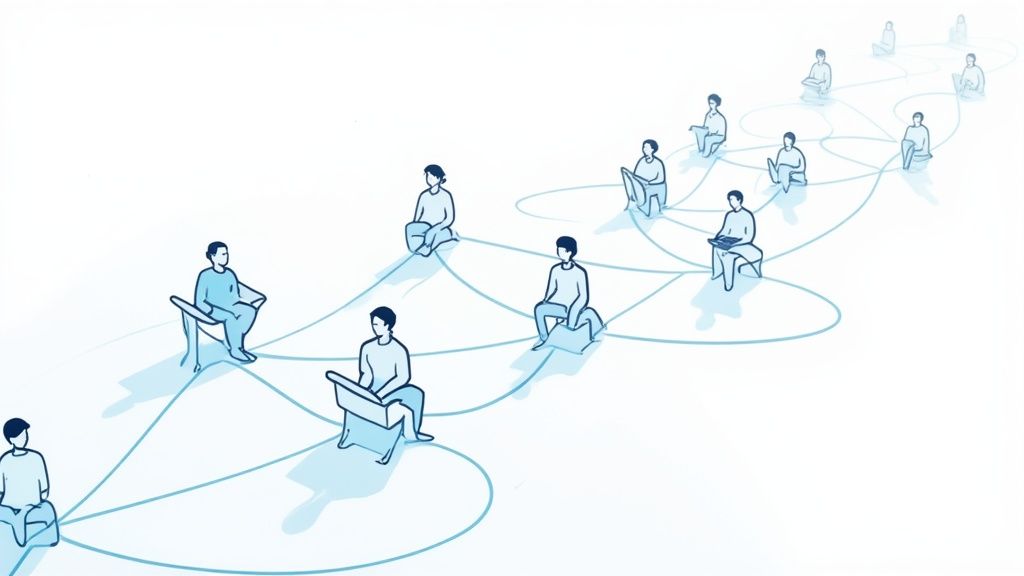
Every customer journey has its ups and downs, moments that can either solidify a relationship or send a customer packing. Unfortunately, these crucial turning points are often overlooked. This section offers a practical guide to identifying, prioritizing, and resolving the pain points that truly affect your customers and, ultimately, your bottom line. This goes beyond simple data collection; it's about understanding the why behind customer behavior.
Identifying Friction Points: Where Are Customers Getting Stuck?
The first step in customer journey optimization is understanding exactly where the friction lies. This requires a blend of data from different sources. Analytics data, from tools like Google Analytics, can highlight where customers are dropping off, like abandoned shopping carts or high exit rates on specific pages. But it's the Voice of Customer (VoC) data, gathered through surveys and reviews, that adds the crucial context – why are they leaving?
For example, your analytics might show a high cart abandonment rate on the payment page. VoC feedback could then reveal that customers are struggling with limited payment options or confusing instructions. Combining quantitative and qualitative data like this paints a powerful picture of customer behavior. You might be interested in learning more about collecting VoC data: How to master customer conversations and gather VoC data with Voicetta.
Prioritizing Pain Points: Focusing on What Matters Most
Not all pain points are equal. Some have a far bigger impact on the customer experience and your business objectives than others. It's crucial to prioritize which issues to tackle first. A practical framework for prioritization involves weighing two key factors: customer impact and implementation complexity.
High-impact, low-complexity pain points are your quick wins. Think of clarifying confusing language on a product page. This small change could significantly boost conversion rates with minimal effort. On the other hand, high-impact, high-complexity issues, such as overhauling an outdated checkout system, require more significant investment and planning. A well-defined prioritization strategy allows for focused and impactful improvements.
Resolving Pain Points: Turning Insights into Action
Once you've pinpointed and prioritized your pain points, it's time to build solutions. This often involves a mix of strategies. Sometimes, small tweaks, like simplifying website navigation or streamlining the checkout process, can make a big difference. Other times, larger initiatives, like implementing new technologies or redesigning core user experiences, can be addressed in incremental steps.
Fast-cycle testing is key here. This means trying out solutions with a smaller group of customers before launching them to everyone. A/B testing different website designs or experimenting with new messaging are great examples. This approach allows you to validate your solutions and ensure they have the desired effect before committing major resources. This iterative testing process helps organizations build momentum. Early wins demonstrate the value of customer journey optimization, encouraging further investment and a wider embrace of a customer-centric approach.
Personalization That Drives Journey Optimization
Personalization in customer journey optimization goes beyond simply adding a customer's name to an email. It's about crafting experiences that genuinely connect with individual customer needs and preferences at every point of interaction with your brand. This involves understanding the different stages of personalization maturity and their strategic application.
The Stages of Personalization Maturity
The most fundamental level is segmentation. This groups customers based on common characteristics like demographics or purchase history. Imagine sending different promotional emails to new customers versus loyal, returning customers. This basic approach forms the base for more sophisticated personalization tactics.
Segmentation is followed by contextual personalization. This considers the customer's present situation, such as location or the device being used. For example, a customer browsing on their mobile phone might see different content compared to someone on a desktop. This real-time adjustment provides more relevant experiences.
The most advanced stage is anticipatory personalization. This uses data and AI to predict customer needs and proactively offer solutions. Think of a streaming service like Netflix recommending movies based on viewing history. This proactive approach anticipates needs and delivers value before the customer even asks.
Balancing Personalization and Complexity
As personalization advances, so does the complexity of its implementation. Finding the sweet spot between personalization depth and required resources is crucial. Begin with simpler strategies and gradually introduce more complex ones as your capabilities grow. Learn more in our article about How Voicetta helps with personalization. This measured approach ensures your personalization strategy is both effective and sustainable.
Testing and Measuring Personalization Impact
To get the most out of personalization, continuous testing and measurement across different journey stages is vital. A/B testing different personalized messages can reveal what resonates best with specific customer segments. Track key metrics such as conversion rates, click-through rates, and customer satisfaction to quantify the value of your efforts. This data-driven approach allows you to refine strategies and demonstrate the ROI of personalization.
To illustrate the key metrics to track across the customer journey, let's look at the following table:
Customer Journey Optimization Metrics by Funnel Stage: Key performance indicators to track journey optimization success at each stage of the customer funnel
| Funnel Stage | Key Metrics | Industry Benchmarks | Optimization Techniques |
|---|---|---|---|
| Awareness | Brand impressions, Reach, Website traffic | Varies by industry | Content marketing, SEO, Social media marketing |
| Interest | Engagement rate, Time on site, Content downloads | Track against competitors | Personalized content, Retargeting campaigns |
| Consideration | Lead generation, Demo requests, Product page views | Compare to past performance | Lead nurturing, Email marketing, Personalized offers |
| Conversion | Sales, Sign-ups, Purchases | Industry averages, Internal targets | A/B testing, Conversion rate optimization |
| Retention | Customer lifetime value, Repeat purchase rate, Churn rate | Benchmark against best-in-class | Loyalty programs, Personalized communication |
This table provides a framework for understanding the metrics that matter most at each stage of the customer journey. By tracking these metrics, you can gain valuable insights into how well your personalization efforts are performing.
Prioritizing Touchpoints for Personalization
Not all touchpoints are equal. Some present greater opportunities for personalization. Concentrate on those with the most potential to influence customer behavior and drive business results. For example, personalizing the checkout process may yield a higher return than personalizing a generic email newsletter. Strategic prioritization ensures your personalization investment delivers maximum impact.
Navigating Privacy Concerns
Customer data privacy is paramount. Balancing personalized experiences with respecting customer boundaries and regulations is essential. Be transparent about data collection and usage. Give customers control over their privacy preferences, ensuring your data practices comply with relevant laws. This ethical approach builds trust and strengthens customer relationships.
Driving Revenue Through Strategic Personalization
Many businesses successfully use personalization to boost their bottom line. E-commerce companies personalize product recommendations, increasing sales and average order value. Financial institutions personalize financial advice, improving customer engagement and retention. These examples demonstrate how businesses use personalization to drive revenue growth. By adopting a strategic approach, businesses can create truly personalized experiences that foster customer loyalty and deliver measurable benefits.
Creating Seamless Cross-Channel Experiences
The biggest hurdle in customer journey optimization isn't technology, but crafting experiences that feel connected across multiple touchpoints. This is tough for organizations with siloed teams, where marketing, sales, and customer service operate independently. Let's explore cross-channel optimization in these environments.
Building Bridges: Breaking Down Organizational Silos
Creating a seamless cross-channel experience starts with breaking down interdepartmental barriers. This means fostering communication and collaboration. Imagine marketing sharing customer insights with sales, leading to personalized interactions. Or customer service feedback shaping product development to better meet customer needs. This cross-functional approach unifies everyone around the customer experience.
Consistent Messaging Across Channels
Maintaining a consistent message while respecting each channel's nuances is key. Your brand voice should remain constant, whether on social media, your website, or email. This doesn't mean identical content everywhere. A tweet differs from a blog post, yet both should reinforce your brand.
Tools for Cross-Functional Collaboration
Practical tools can help. Shared dashboards give real-time visibility into customer journey metrics. Project management software helps coordinate optimization initiatives across departments. Even simple communication channels, like Slack, can improve information exchange. These tools break down silos and encourage a unified approach.
Governance Frameworks: Balancing Consistency and Flexibility
Effective governance ensures consistency while allowing channel-specific excellence. Establish clear guidelines for brand messaging, customer interaction, and data sharing. But also empower teams to adapt these guidelines to their channels. For personalized approaches, explore proven customer experience best practices. This balances consistency with agility.
Journey-Focused Operating Models: Aligning Teams Around Customer Outcomes
Leading organizations are adopting journey-focused models. The focus shifts from channel metrics to customer experience outcomes. Teams align around improving the entire customer journey, not just their silos. This holistic approach creates a more seamless and satisfying experience, regardless of engagement method. This is a major competitive advantage. A customer-centric approach boosts satisfaction, loyalty, and growth.
Want to optimize your customer journey? Learn more at https://voicetta.com.
Was this useful?
If this article helped, add Voicetta as a preferred source in Google Search. Your results can then highlight our writing.
Add as preferred source