
Blog
8 Essential Customer Service Guidelines for 2025
In today's hypercompetitive market, generic platitudes about customer service are no longer enough. Enterprise support teams face complex challenges that demand more t...
In today's hyper-competitive market, generic platitudes about customer service are no longer enough. Enterprise support teams face complex challenges that demand more than just a friendly voice; they require a structured, strategic framework for every interaction. This is where robust customer service guidelines become a critical asset, transforming support from a cost centre into a powerful engine for loyalty and growth.
These aren't just rules; they are the pillars of a customer-centric culture that anticipates needs, solves problems efficiently, and builds lasting relationships. As customer expectations evolve, so must our approach to service delivery. The outdated mantra of ‘the customer is always right’ fails to capture the nuance required to navigate modern support scenarios. True excellence lies in understanding, validating, and effectively resolving issues with precision and empathy, creating a positive experience even from a negative situation.
The following guidelines move beyond the basics, offering actionable, enterprise-ready strategies to elevate every touchpoint. We'll explore the frameworks that separate merely good service from truly exceptional, memorable experiences. This guide is designed to be a practical blueprint for support managers and business leaders aiming to build a resilient, high-performing service operation. We will delve into specific protocols for active listening, first contact resolution, proactive communication, and more, providing the tools needed to build a team that consistently delivers outstanding results. Let's explore the essential principles that will define your organisation's commitment to the customer.
1. Active Listening and Empathy
At the very heart of exceptional customer service lies a principle so fundamental it often gets overlooked in the rush for quick resolutions: truly hearing the customer. This goes far beyond simply not speaking when they are; it's about a dedicated effort to understand the full context of their issue, including the emotions attached to it. Active listening combined with genuine empathy forms the bedrock of all positive customer service guidelines, transforming a transactional interaction into a relationship-building experience. It’s a practice popularised by thought leaders like Stephen Covey, who emphasised seeking first to understand, then to be understood.
The Power of Being Heard
When a customer contacts support, they are often already frustrated or confused. The agent’s primary role is not just to fix the problem but to de-escalate the situation and restore the customer's confidence in the brand. This starts with listening intently, acknowledging their feelings, and validating their concerns. It means resisting the urge to interrupt with a solution, even if you know the answer immediately. By allowing them to tell their full story, you gather crucial details you might have otherwise missed and, more importantly, you show them respect.
Consider the legendary approach of Zappos, where representatives are famous for spending hours on a single call if that's what it takes to connect with and help a customer. This isn't about inefficient service; it's a strategic investment in loyalty. Similarly, Ritz-Carlton famously empowers its staff to spend up to $2,000 per guest to resolve an issue without seeking approval. This policy isn’t about the money; it’s about entrusting employees to listen empathetically and act decisively to restore a guest's happiness.
The following chart illustrates the direct impact of embedding active listening and empathy into your support workflows.
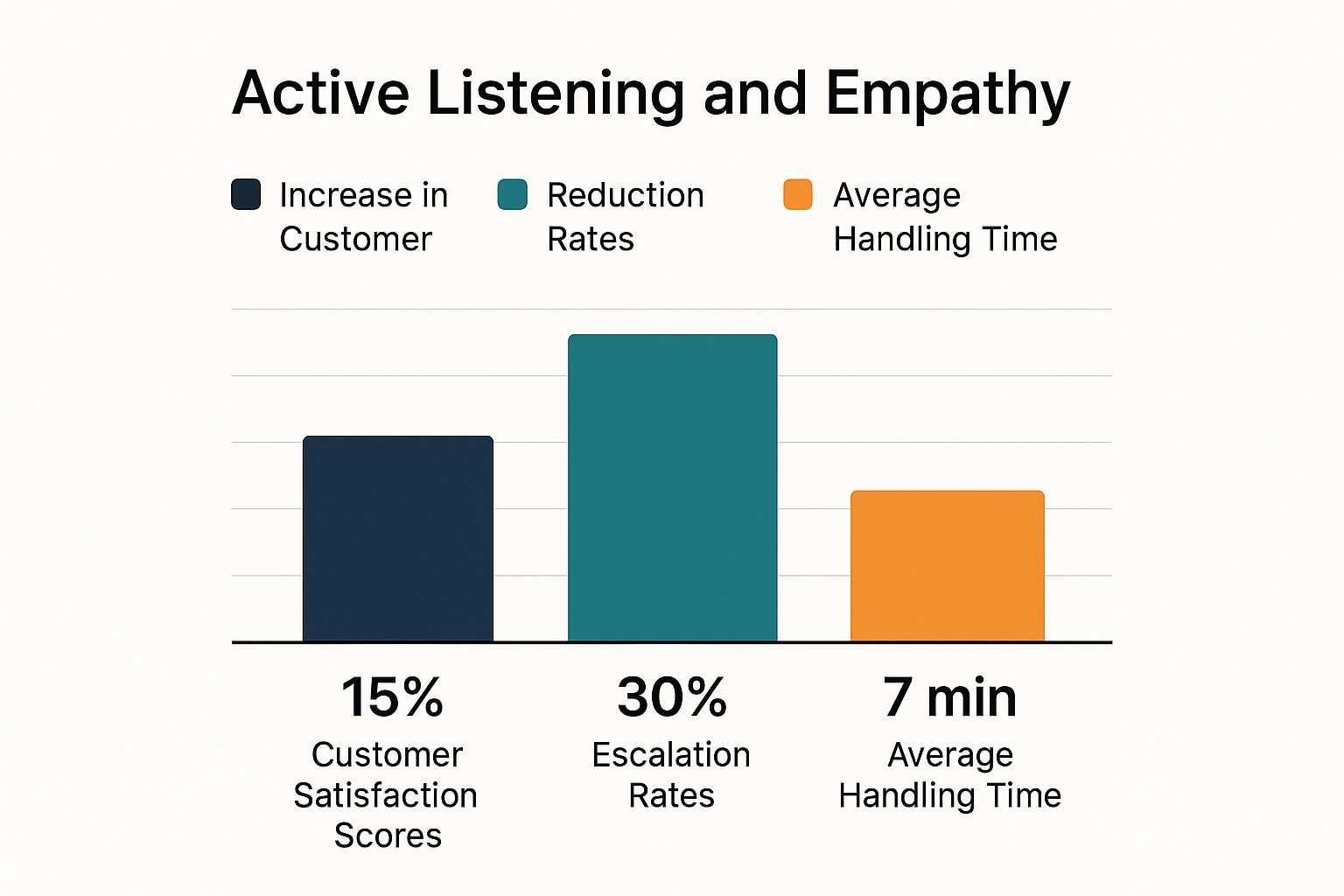
The data clearly shows that while empathetic conversations might seem longer, they lead to significant reductions in escalations and measurable boosts in customer satisfaction scores.
How to Implement Active Listening
Putting this principle into practice requires conscious effort and training. Here are actionable tips for your team:
- Use Reflective Phrases: Start responses with phrases like, "What I'm hearing is..." or "It sounds like you're feeling frustrated because..." This confirms you're listening and gives the customer a chance to correct any misunderstandings.
- Take Detailed Notes: This isn't just to remember facts. Actively taking notes signals to the customer (especially on video calls) that you are engaged and value what they are saying.
- Ask Open-Ended Questions: Avoid simple "yes" or "no" questions. Instead, ask "Can you walk me through what happened when you tried to log in?" to encourage detailed explanations.
- Mirror Communication Style: Subtly match the customer's pace and tone. If they are speaking slowly and deliberately, rushing them will only increase their anxiety.
By prioritising this foundational skill, you can effectively raise customer satisfaction and build a reputation for a support team that truly cares.
2. First Contact Resolution (FCR)
The ultimate goal of any customer interaction is to solve their problem efficiently and effectively. First Contact Resolution (FCR) is a core customer service guideline that champions this principle by aiming to resolve an issue completely within a single interaction. This eliminates the need for follow-up calls, emails, or chats, which are a major source of customer frustration. More than just a metric, FCR is a philosophy that empowers agents to be problem-solvers, not just message-takers. This approach, heavily promoted by research firms like SQM Group, is a cornerstone of a truly customer-centric operational model.
The Power of Getting It Right the First Time
When a customer's issue is resolved on the first try, it signals competence and respect for their time. This single interaction can dramatically alter their perception of your brand, turning a moment of friction into one of unexpected delight. It reduces customer effort, a key driver of loyalty, and significantly lowers operational costs by preventing repeat contacts for the same underlying problem.
Look at Amazon, where Jeff Bezos's customer-obsessed culture has empowered representatives to issue refunds or credits on the spot, bypassing lengthy approval chains. Similarly, Apple’s Genius Bar is built on the FCR principle; technicians are equipped with the authority and resources to diagnose and often replace a device in one visit. This doesn't just fix a phone; it reinforces the customer’s decision to invest in the Apple ecosystem, demonstrating a commitment to seamless support.
How to Implement First Contact Resolution
Achieving a high FCR rate requires a strategic alignment of training, tools, and authority. Here are actionable tips for your team:
- Provide Comprehensive Training: Agents must have deep knowledge of all products, services, and common issues. Regular training ensures they are prepared for a wide range of scenarios.
- Equip with the Right Tools: Give representatives unified access to customer history, order details, and technical databases. A single, powerful dashboard prevents them from having to switch between multiple systems.
- Establish Clear Authority Levels: Empower agents to make decisions, such as processing a refund or offering a discount, up to a certain threshold without needing a manager’s approval.
- Build a Robust Knowledge Base: Create and maintain an easily searchable internal database with step-by-step solutions to common problems, allowing agents to find answers quickly.
By focusing on FCR, you can reduce customer churn and build a support organisation recognised for its efficiency and effectiveness.
3. Proactive Communication
The gold standard of modern customer service guidelines is no longer just reacting efficiently to problems; it's about anticipating them and communicating first. Proactive communication is the practice of reaching out to customers before they realise they need to contact you. This strategic approach involves providing timely updates, pre-empting potential issues, and sharing relevant information, effectively transforming the customer experience from a reactive, problem-solving one into a guided, reassuring journey. It’s a concept masterfully executed by digital-native companies like Amazon and Uber, who have built their empires on keeping customers informed at every step.

The Power of Anticipation
When you reach out first, you fundamentally change the dynamic of the customer relationship. Instead of a customer discovering a flight delay on the airport departures board, they receive an SMS from the airline while still at home. Instead of wondering where a package is, they get automatic shipping updates from FedEx. This foresight not only reduces customer effort and anxiety but also demonstrates that your organisation is organised, considerate, and in control.
Consider how banks now send instant alerts for suspicious account activity. This single proactive step prevents immense potential frustration and financial loss, building profound trust. Similarly, utility companies that notify residents about planned maintenance outages turn a potential source of angry calls into a manageable inconvenience. This shift from a reactive to a proactive model reduces inbound support volume and frees up agents to handle more complex issues, directly improving operational efficiency and customer sentiment.
How to Implement Proactive Communication
Building a proactive strategy requires leveraging data and technology to anticipate customer needs. Here are actionable tips to get started:
- Segment Your Audience: Don't send every message to every customer. Use data to segment customers based on their purchase history, location, or communication preferences to ensure messages are always relevant.
- Use a Multi-Channel Approach: Reach customers where they are most active. Combine email for detailed updates, SMS for urgent alerts, and in-app notifications for contextual information.
- Time Your Messages Thoughtfully: A notification about a service update at 3 a.m. is more likely to annoy than help. Schedule communications based on the customer's time zone and the urgency of the information.
- Provide Clear Next Steps: A proactive message should never be a dead end. Always include a clear call to action, whether it's "Track your parcel here," "Reschedule your appointment," or "Learn more about this update."
- Offer Opt-Out Options: Respect your customers' inboxes by making it easy for them to opt out of non-essential communications. This prevents message fatigue and ensures your most critical alerts are seen.
By integrating proactive outreach into your customer service guidelines, you can significantly reduce customer churn and build a reputation for being a brand that looks after its customers.
4. Omnichannel Consistency
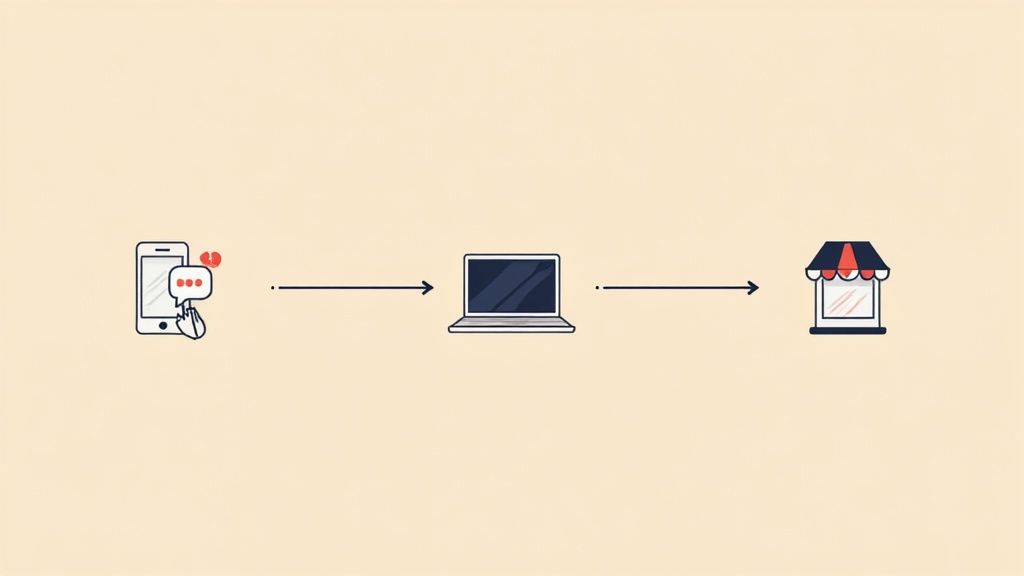
In today's interconnected world, customers interact with brands across a multitude of platforms. Omnichannel consistency ensures that this journey is seamless, integrated, and uniform, regardless of the touchpoint. It’s the principle that a customer should receive the same high standard of service and access the same information whether they are using a mobile app, speaking to a representative on the phone, interacting via live chat, or visiting a physical store. This unified approach, championed by innovators like Disney and Apple, is a cornerstone of modern customer service guidelines, transforming disparate interactions into a single, cohesive brand experience.
The Power of a Unified Experience
When channels operate in silos, the customer journey becomes fractured and frustrating. A customer might have to repeat their issue multiple times to different agents or find conflicting information on a company's website versus its social media page. An omnichannel strategy eliminates this friction. By integrating systems and standardising protocols, you create an effortless experience that builds trust and fosters loyalty. The goal is to make the transition between channels so smooth that the customer doesn't even notice it.
Consider the benchmark set by Disney. A family can plan their trip on the website, manage reservations via the My Disney Experience app, and use that same app in the park for wait times, dining, and PhotoPass access. Every touchpoint is synchronised, creating a magical, hassle-free experience. Similarly, Starbucks integrates its rewards program flawlessly across its mobile app, website, and in-store purchases, ensuring customers feel recognised and valued everywhere they engage with the brand. This level of integration doesn't just happen; it's the result of a deliberate, customer-centric strategy.
How to Implement Omnichannel Consistency
Building a truly unified experience requires a strategic fusion of technology and training. Here are actionable tips for your organisation:
- Invest in an Integrated CRM: A Centralised Customer Relationship Management (CRM) system is non-negotiable. It should provide a single view of the customer, consolidating their history, preferences, and previous interactions across all channels.
- Standardise Responses and Knowledge: Develop a central knowledge base and standardised response templates for common queries. This ensures that information provided via email, chat, and phone is consistent and accurate.
- Cross-Train Your Teams: Don't confine your agents to a single channel. Training staff on multiple platforms gives them a holistic understanding of the customer journey and prepares them to handle seamless handoffs.
- Establish Clear Handoff Protocols: Create clear procedures for when an issue needs to be moved from one channel to another, for instance, from a social media message to a phone call. The transition should be frictionless for the customer.
By organising your support structure this way, you can significantly boost customer engagement with an omnichannel communication platform and demonstrate a deep commitment to the customer's convenience.
5. Personalization and Customer Recognition
In today's hyper-competitive market, generic, one-size-fits-all service is a recipe for customer churn. Recognising customers as individuals with unique histories and preferences is no longer a luxury but a core expectation. Personalization involves leveraging customer data, from past purchases to previous support tickets, to deliver a tailored and context-aware experience. This practice, powerfully demonstrated by digital giants like Amazon and Netflix, transforms routine interactions into memorable moments of feeling seen and valued, forming a crucial pillar of modern customer service guidelines.

The Value of Being Known
When a customer contacts your business, they are not just a ticket number. They are an individual who has invested their time and money in your brand. Acknowledging this relationship by showing you know who they are can instantly diffuse tension and build rapport. It signals competence and care, reassuring the customer that they aren't starting from scratch every single time they need help.
Take, for example, Nordstrom's legendary personal shopper service, where stylists keep detailed notes on their clients' preferences, sizes, and past purchases to provide truly bespoke recommendations. Similarly, American Express excels by offering distinct service tiers based on card type and customer history, ensuring that its most loyal members feel uniquely recognised. These companies understand that personalization is a powerful loyalty driver; it makes customers feel like insiders, not just consumers. This organised approach is key to making customers feel valued.
How to Implement Personalization
Integrating personalization requires a commitment to using your customer data thoughtfully and respectfully. Here are actionable tips for your team:
- Use Their Name: The simplest yet most effective form of personalization. Use the customer’s name naturally throughout the conversation.
- Reference Past Interactions: Acknowledge their history with a simple phrase like, "I can see you contacted us last month about..." This shows you've done your homework.
- Acknowledge Loyalty: If your system tracks customer tenure or status, use it. Saying, "As a gold member for over five years, your satisfaction is our top priority," validates their long-term commitment.
- Tailor Solutions: Offer recommendations and solutions that align with their past behaviour and stated preferences. If a customer always buys eco-friendly products, suggest solutions that fit this value system.
- Customise Communication: Honour their preferred contact methods and frequency. Don't send promotional emails daily to a customer who has opted for monthly updates.
6. Speed and Efficiency Without Rushing
In today's fast-paced digital world, customers expect quick answers and rapid resolutions. However, the pursuit of speed can often undermine the quality of service, leaving customers feeling like just another number in a queue. This is where a critical customer service guideline comes into play: balancing speed and efficiency with thorough, unhurried care. It’s about optimising processes, not rushing people. This principle, popularised by pioneers of fast service like McDonald's and Southwest Airlines, focuses on being methodical and prepared so that interactions are both quick and genuinely helpful.
The Power of Being Efficient
When a customer faces an issue, their time is valuable. A swift response acknowledges this and immediately lowers their stress levels. The goal is not just to close a ticket quickly but to deliver the right solution on the first contact, which is the true measure of efficiency. Rushing through a conversation to meet a target like a low Average Handling Time (AHT) can lead to misunderstandings, repeat contacts, and ultimately, a frustrated customer. True efficiency is about having the systems and training in place to resolve issues effectively on the first try.
Consider the operational genius of Chick-fil-A's drive-through, which moves long lines of cars with remarkable speed while still incorporating personal touches, like agents walking the line with tablets. They are efficient in their process, which allows them to be personal in their interaction. Similarly, Amazon built an empire on the promise of speed, but its one-click ordering and streamlined returns process are marvels of efficiency, designed to make the customer's life easier, not just to move products faster. These examples show that speed is a result of a well-organised system, not a rushed attitude.
How to Implement Efficient Service
Achieving this balance requires a strategic approach to your support operations. Here are actionable tips for your team:
- Acknowledge Immediately: Send an instant automated or personal reply to let the customer know their query has been received and is being looked into. This simple step manages expectations and buys your team valuable time to investigate properly.
- Use Templates and Scripts Wisely: For common, repetitive questions, well-crafted templates save immense time. However, empower agents to personalise them to fit the specific context of the conversation, so they don't sound robotic.
- Prepare Your Toolkit: Ensure agents have all necessary information, links, and tools readily accessible in a single dashboard or knowledge base. Fumbling for information is a primary cause of delays.
- Set Realistic Expectations: If a problem requires investigation, be upfront about it. Tell the customer, "This may take me 15-20 minutes to resolve. I will get back to you by [time]," rather than leaving them in limbo.
By focusing on process efficiency, your team can deliver prompt service without sacrificing the personal connection that builds loyalty. This approach is fundamental, especially when incorporating automation to handle initial queries, a strategy further explored when considering a virtual assistant for customer service.
7. Solution-Oriented Problem Solving
Beyond simply resolving a ticket, truly elite customer service guidelines champion a proactive, can-do mindset. Solution-oriented problem solving is the practice of focusing all your energy on what can be done, rather than explaining what cannot. It's a fundamental shift from a defensive posture to an offensive, creative one, where the primary goal is to find a path forward for the customer. This approach was famously championed by leaders like Sir Richard Branson, whose Virgin Group instilled a 'yes, if' culture to replace the all-too-common 'no, because' response.
The Power of Finding a Way
When a customer encounters a problem, they aren't looking for an explanation of company policy; they are looking for a solution. Adopting this mentality means your team becomes a partner in solving their issue, not a gatekeeper of rules. It empowers agents to think creatively and go beyond the standard script, transforming a potentially negative interaction into a memorable moment of brand loyalty. It is the core principle that separates merely adequate service from legendary service.
This philosophy is embodied by organisations like Nordstrom, famous for its liberal return policy and stories of employees going to extraordinary lengths to satisfy customers. Similarly, The Ritz-Carlton's empowerment of employees to spend up to $2,000 to resolve a guest's issue isn't about the money. It's about a deep-seated trust in their team's ability to find the best possible solution without bureaucratic delays, reinforcing the brand's commitment to exceptional care.
How to Implement a Solution-Oriented Mindset
Building this problem-solving reflex requires a shift in both individual habits and organisational culture. Here are actionable tips for your team:
- Reframe Your Opening: Instead of starting with "That's not possible," train your team to begin with, "Let me see what I can do for you." This simple change in language immediately signals collaboration.
- Offer Multiple Options: Whenever feasible, present the customer with two or three potential solutions. This gives them a sense of control and shows that you have thoroughly explored the possibilities on their behalf.
- Escalate for Solutions, Not Rejections: If an agent truly cannot find a solution within their authority, the process should be to escalate to someone who can, not to simply deliver a final 'no'.
- Follow Up Proactively: After a solution has been implemented, a quick follow-up call or email to ensure it worked effectively closes the loop and solidifies the customer's positive experience.
By embedding this proactive approach, you can significantly improve first-contact resolution rates and the overall effectiveness of your call centre quality assurance programme.
8. Continuous Learning and Improvement
In the dynamic landscape of customer expectations and evolving products, static knowledge is a liability. Exceptional customer service is not a fixed destination but a journey of constant refinement. This principle champions the idea that excellence requires ongoing education, skill development, and systemic process improvement. It's about creating a culture where learning is not a one-time event but an integral part of the daily workflow. This philosophy is deeply rooted in concepts like W. Edwards Deming's cycle of continuous improvement and the kaizen methodology popularised by the Toyota Production System.
The Power of Evolving Expertise
When a support team stops learning, service quality begins to decline. Customers expect agents to be experts not just on the product as it was last year, but as it is today. A commitment to continuous learning ensures that the team remains agile, knowledgeable, and capable of handling new challenges with confidence. This proactive approach prevents knowledge gaps and empowers agents to provide accurate, efficient, and up-to-date solutions, which is a cornerstone of effective customer service guidelines.
Consider the rigorous training at Apple's Genius Bar, where employees receive extensive and continuous education on new products, software updates, and advanced troubleshooting techniques. This ensures they can address a vast range of complex issues with authority. Similarly, Amazon's famed "Customer Obsession" leadership principle is not just a slogan; it is integrated into all training, encouraging employees to perpetually seek new ways to delight customers by learning from every interaction.
How to Implement Continuous Learning
Embedding this principle into your organisation’s culture requires a structured and intentional approach. Here are actionable tips to foster a learning environment:
- Schedule Regular Training: Dedicate consistent time for sessions on new product features, policy changes, and soft skill enhancements. Don't let training be an afterthought.
- Create Feedback Loops: Systematically channel customer feedback, both positive and negative, directly to service teams. Use these insights as real-world case studies for improvement.
- Encourage Peer-to-Peer Knowledge Sharing: Foster a collaborative atmosphere where experienced agents mentor newer staff. This can be done through formal mentorship programmes or informal knowledge-sharing channels.
- Monitor Industry Trends: Keep an eye on what competitors are doing and stay current with emerging best practices in customer experience to ensure your service remains competitive.
By institutionalising continuous improvement, you build a resilient and highly skilled support team that not only solves problems but also anticipates customer needs and consistently raises the bar for service excellence.
Customer Service Guidelines Comparison
| Guideline | Implementation Complexity 🔄 | Resource Requirements ⚡ | Expected Outcomes 📊 | Ideal Use Cases 💡 | Key Advantages ⭐ |
|---|---|---|---|---|---|
| Active Listening and Empathy | Moderate to High due to time and emotional effort | High time investment per interaction | Builds strong trust, reduces escalations, increases satisfaction | Best for low-volume, high-touch support environments | Strong rapport, deeper understanding, frustration reduction |
| First Contact Resolution (FCR) | High due to training and access requirements | Extensive training and system access needed | Improves satisfaction, reduces repeat contacts, lowers costs | Complex products/services needing single-call resolution | High customer loyalty, cost savings, confident reps |
| Proactive Communication | Moderate to High with automation & analytics | Requires data analytics & automation | Prevents complaints, reduces inbound volume, builds trust | Services benefiting from anticipatory updates (shipping, alerts) | Reduces frustration, trusted transparency, upsell opportunities |
| Omnichannel Consistency | Very High; complex tech and coordination needed | Significant tech investment and training | Seamless experience, higher satisfaction, cross-channel loyalty | Large organizations with multi-channel customer interactions | Unified experience, brand trust, comprehensive interaction data |
| Personalization and Customer Recognition | High due to data management and privacy concerns | Extensive data collection & management | Increased revenue and loyalty, stronger emotional connections | Businesses with detailed customer data aiming for tailored service | Customer feels valued, better upselling, differentiation |
| Speed and Efficiency Without Rushing | Moderate; balance process efficiency and quality | Efficient systems and well-prepared reps | Quick service without frustration, higher capacity | High-volume, fast-paced environments needing quality without rush | Meets speed expectations, reduces anxiety, scalable service |
| Solution-Oriented Problem Solving | Moderate to High; training and empowerment required | Training for creative thinking and authority | Transforms experience positively, increases loyalty | Customer issues needing flexible, creative resolutions | Customer retention, empowered staff, positive word-of-mouth |
| Continuous Learning and Improvement | Ongoing and High; requires consistent investment | Regular training and feedback systems | Sustained service quality, adapts to market changes | Organizations focused on long-term service excellence | Competitiveness, improved skills, quality consistency |
From Guidelines to Growth: Weaving Excellence into Your Service DNA
We've journeyed through eight foundational pillars of exceptional customer service, from the nuanced art of active listening to the strategic necessity of continuous improvement. It's tempting to view these as a simple list of tasks to be ticked off a corporate to-do list. However, their true power is unlocked when you realise they are not merely individual actions, but interconnected threads. You cannot achieve true First Contact Resolution without mastering solution-oriented problem-solving. Similarly, delivering genuine personalisation is impossible without first practising empathy and active listening. These are not isolated rules; they are the very DNA of a customer-centric organisation.
Adopting these customer service guidelines is a transformative act that moves your support function from a cost centre to a powerful engine for growth and loyalty. It represents a fundamental shift in perspective. Instead of viewing customer interactions as problems to be managed, you begin to see them as opportunities to be seized. Each call, email, or chat becomes a chance to reinforce your brand's values, to understand your customers on a deeper level, and to build a relationship that transcends a simple transaction. This cultural integration is the most challenging, yet most rewarding, part of the process.
Synthesising the Principles for Lasting Impact
The guidelines we have explored represent a holistic framework. Let's briefly revisit their combined strength:
- The Human Core: Active Listening and Empathy form the emotional foundation. They ensure customers feel heard and respected, which is often more important than the resolution itself.
- The Operational Engine: First Contact Resolution (FCR) and Speed and Efficiency provide the mechanical power. They respect the customer's time and demonstrate your company's competence and reliability.
- The Strategic Framework: Proactive Communication and Omnichannel Consistency build the architecture of a seamless experience. They anticipate needs and ensure a customer’s journey is smooth, regardless of how they choose to contact you.
- The Growth Mindset: Personalisation and Continuous Learning are the elements that drive evolution. They turn a good service into a great one by showing you know your customer and are always striving to be better for them.
Implementing these principles requires a commitment that goes beyond a single training session. It demands embedding them into your daily operations, your performance metrics, and your hiring criteria. It means empowering your agents with the autonomy to make decisions and equipping them with the tools they need to succeed.
From Aspiration to Action: Your Next Steps
The journey from understanding these concepts to mastering them is a marathon, not a sprint. The ultimate goal is to create a seamless, self-reinforcing system where technology and human talent work in perfect harmony. This is where you can move beyond simply reacting to customer needs and start proactively shaping exceptional experiences.
While human expertise in empathy and complex problem-solving remains irreplaceable, technology is a critical ally in consistently applying these customer service guidelines at scale. Intelligent automation can handle the predictable, routine inquiries 24/7, freeing your skilled human agents to dedicate their time and emotional energy to the complex, high-stakes interactions where they create the most value. By strategically blending these robust guidelines with smart technology, you don’t just answer questions. You build unwavering loyalty, prevent revenue loss from missed opportunities, and turn every customer contact into a powerful testament to your brand's commitment to excellence.
Ready to elevate your service and embed these guidelines with powerful technology? Voicetta provides intelligent AI voice agents that handle routine customer inquiries with 24/7 efficiency, freeing your human team to focus on high-value interactions. Discover how you can automate to innovate by visiting Voicetta today.
Was this useful?
If this article helped, add Voicetta as a preferred source in Google Search. Your results can then highlight our writing.
Add as preferred source