
Blog
6 ERP Integration Challenges to Conquer in 2025
Integrating your ERP system can be a gamechanger, but it's not without its difficulties. This listicle identifies six common ERP integration challenges that can derai...
Streamlining Your Systems: An Overview of ERP Integration Challenges
Integrating your ERP system can be a game-changer, but it's not without its difficulties. This listicle identifies six common ERP integration challenges that can derail your project and impact your bottom line. We'll explore obstacles like data migration, system compatibility, and cost management, providing actionable strategies to overcome these hurdles. Understanding these ERP integration challenges is crucial for a smooth, successful implementation, whether you're in customer support, hospitality, real estate, healthcare, or enterprise IT. Read on to avoid common pitfalls and ensure your ERP integration delivers maximum value.
1. Data Migration and Synchronization
One of the most significant hurdles in any ERP integration project is the often-daunting task of data migration and synchronization. This critical phase involves transferring data from existing legacy systems (which can range from outdated ERP software to simple spreadsheets) to the new ERP platform. The challenge lies not just in moving the data, but in ensuring its integrity, accuracy, and consistency across all interconnected systems throughout the process and beyond. This requires meticulous planning, careful mapping of data fields between disparate systems, handling variations in data formats, and implementing robust synchronization mechanisms, either in real-time or near real-time. A successful data migration is the foundation upon which a successful ERP implementation is built, making it a top contender on the list of ERP integration challenges.
Imagine a healthcare provider switching to a new ERP system. Patient records, billing information, appointment schedules, and inventory data scattered across various systems need to be consolidated into the new platform seamlessly. Or consider a real estate agency transitioning from a legacy system. Property listings, client data, transaction histories – all this information needs to be migrated accurately and efficiently. This illustrates why data migration and synchronization is such a crucial, yet challenging, aspect of ERP integration.
This complex process involves several key features: intricate data mapping between different system schemas; robust real-time or batch data synchronization mechanisms; stringent data validation and cleansing processes to ensure accuracy; master data management capabilities to establish a single source of truth; and essential rollback mechanisms to mitigate risks in case of failed migrations. These features work together to create a secure and reliable data migration process.
The benefits of successful data migration are substantial. It eliminates data silos, a common problem with legacy systems, and establishes a single source of truth for business data, improving data consistency across the organization. This, in turn, enables better reporting and analytics, empowering businesses to make data-driven decisions. Moreover, it reduces manual data entry and the associated errors, freeing up valuable time and resources.
However, the process is not without its drawbacks. Data migration can be a time-intensive endeavor requiring extensive planning and resources. There’s a risk of data loss or corruption during the migration process if not handled carefully. Potential for extended system downtime during the transition can disrupt business operations. And the costs associated with data cleansing and mapping can be significant.
Large-scale ERP implementations often highlight the complexities of data migration. Coca-Cola’s global SAP implementation, involving data migration from over 200 legacy systems, stands as a testament to the scale and intricacy involved. Similarly, General Motors' migration from multiple ERP systems to a unified SAP platform, and Johnson & Johnson's consolidation of over 100 business units into a single ERP system, demonstrate the massive undertaking that data migration can be.
To navigate these challenges, businesses should consider the following tips: Conduct thorough data audits before migration begins to understand the scope and complexity of the data landscape. Implement data governance policies early in the process to ensure data quality and consistency. Utilize automated data validation tools to ensure accuracy and identify discrepancies. Plan for parallel running of both old and new systems during the transition period to minimize disruption and validate the migrated data. And crucially, create comprehensive backup and recovery procedures to safeguard against data loss.
Data migration and synchronization is a critical and often complex part of ERP integration. While the potential benefits are significant, organizations need to approach this process with careful planning, meticulous execution, and a thorough understanding of the challenges involved. By following best practices and implementing robust strategies, businesses can overcome these hurdles and unlock the full potential of their new ERP system.
2. System Compatibility and Technical Architecture
One of the most formidable hurdles in achieving seamless ERP integration is the challenge of connecting disparate systems with varying technical architectures. Imagine trying to fit puzzle pieces from different sets together – it requires significant effort, and sometimes, the pieces just don't align. This is often the case when integrating an ERP system with existing legacy systems, third-party applications, or even different modules within the ERP suite itself. These systems might be built on different platforms (Windows, Linux, Unix), use different programming languages (Java, .NET, C++), and rely on different database structures (SQL Server, Oracle, MySQL). This technological diversity creates a complex web of dependencies that can significantly complicate the integration process. It’s not just about connecting systems; it’s about ensuring they communicate effectively and exchange data seamlessly. This involves grappling with outdated protocols, varying API capabilities, and incompatible data formats, often requiring extensive technical workarounds and custom development.
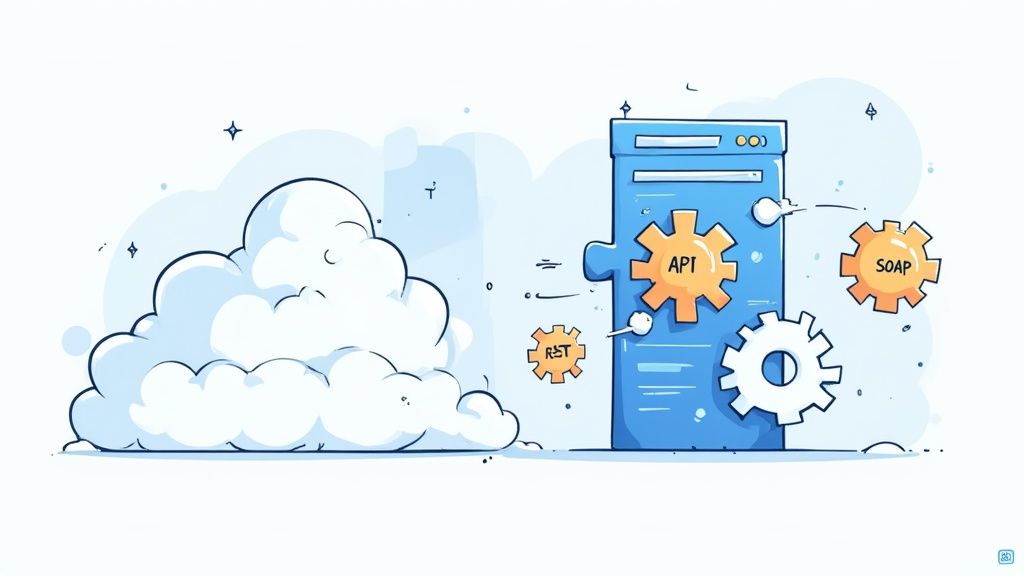
This challenge is particularly pertinent for large enterprises that have grown through acquisitions or have organically developed a complex IT landscape over time. For example, a manufacturing company might have a modern ERP system for financials but still rely on a legacy system for shop floor operations. Connecting these two systems, with their different architectures and data formats, is a significant undertaking. This is why system compatibility and technical architecture deserve a prominent place on the list of ERP integration challenges. Ignoring these aspects can lead to project delays, cost overruns, and ultimately, a failed integration initiative.
Several key features are essential to addressing these compatibility issues. Multi-platform connectivity requirements must be met to ensure the ERP system can interact with systems running on different operating systems. Robust API and web services integration capabilities are crucial for enabling real-time data exchange between applications. In many cases, legacy system adapter development is necessary to bridge the gap between older technologies and the modern ERP system. Database connectivity solutions and middleware play a critical role in translating data between different formats and ensuring consistent data flow. Finally, for organizations adopting cloud-based ERP solutions, cloud-to-on-premise integration bridges are essential for connecting existing on-premise systems with the cloud environment.
The benefits of successfully navigating these technical challenges are substantial. It allows organizations to leverage their existing technology investments, avoiding the costly and disruptive process of replacing entire systems. It also provides flexibility in system architecture choices, allowing companies to choose the best-of-breed solutions for different business functions. This approach also supports gradual system modernization, enabling companies to migrate to newer technologies incrementally rather than through a big-bang approach. Finally, it allows for hybrid cloud-on-premise deployments, giving organizations the flexibility to choose the optimal deployment model for different applications.
However, there are also downsides to consider. A complex technical architecture inevitably increases maintenance overhead, requiring specialized skills and resources. Performance bottlenecks can occur at integration points, impacting the overall system performance. Security vulnerabilities across multiple systems become a concern, requiring robust security measures to protect sensitive data. Finally, relying on multiple technology vendors can create dependencies and complicate troubleshooting efforts.
Real-world examples demonstrate the complexities and rewards of tackling these challenges. Ford Motor Company's integration of SAP with legacy manufacturing systems, Walmart's connection of multiple retail systems with their ERP backbone, and Boeing's integration of engineering systems with manufacturing ERP platforms are all examples of large-scale integration projects that required addressing significant system compatibility issues.
So, how can organizations overcome these challenges? First, conduct comprehensive technical architecture assessments to identify potential compatibility issues early in the project. Investing in enterprise integration platforms (EIP) can provide a standardized approach to integration, simplifying the process and reducing complexity. Implementing API management solutions offers better control over API interactions and enhances security. Middleware solutions can bridge the gap between incompatible systems, acting as translators between different data formats and protocols. Finally, it’s crucial to plan for system retirement and modernization roadmaps to avoid being trapped by outdated technologies in the future. Gartner's Enterprise Integration Patterns, IBM's ESB concepts, and MuleSoft's API-led connectivity are valuable resources for understanding and implementing best practices in this area. By proactively addressing these challenges, organizations can pave the way for successful ERP integration and unlock the full potential of their technology investments.
3. Business Process Alignment and Change Management
One of the most significant ERP integration challenges revolves around aligning diverse business processes and managing the resulting organizational change. Successfully integrating an ERP system isn't simply about plugging in new software; it requires a fundamental shift in how different departments, and often different organizations, operate. This involves analyzing existing workflows, identifying redundancies and bottlenecks, and redesigning processes to leverage the full potential of the integrated system. It's about creating a harmonious symphony of operations, rather than just automating existing inefficiencies. This challenge often necessitates a complete overhaul of established procedures, demanding careful management of potential resistance from stakeholders accustomed to the status quo. Ultimately, the goal is to ensure the integrated ERP system supports optimized business processes, driving efficiency and growth.
This aspect of ERP integration deserves a prominent place on the list of challenges because it directly impacts the system's success and the organization's ability to realize its anticipated ROI. Without proper business process alignment and change management, even the most sophisticated ERP system can become a costly, underutilized tool. Consider a healthcare provider implementing a new ERP to streamline patient data management. If the various departments—from patient intake to billing—aren't operating under standardized, integrated processes, the system won't be able to effectively share information, potentially leading to errors, delays, and frustrated staff.
This challenge hinges on several key features: cross-functional process mapping and analysis to understand existing workflows and identify areas for improvement; workflow automation and optimization tools to streamline processes and eliminate manual tasks; change management frameworks and methodologies to navigate the transition smoothly; comprehensive training and user adoption programs to equip employees with the skills and knowledge to utilize the new system effectively; and performance measurement and KPI tracking to monitor progress and identify areas for further optimization. Learn more about Business Process Alignment and Change Management.
The benefits of successful business process alignment are substantial. It eliminates process redundancies and inefficiencies, reducing operational costs and improving productivity. It fosters improved cross-departmental collaboration by breaking down data silos and facilitating seamless information sharing. Furthermore, it standardizes best practices across the organization, ensuring consistency and quality in service delivery, whether you're a hospitality professional managing multiple properties or a real estate agent coordinating transactions across a large team. Finally, it enhances visibility into end-to-end business processes, enabling better decision-making and more agile responses to market changes. This is crucial for roles like Customer Support Managers, Enterprise IT Managers, CEOs, and CTOs, who rely on accurate, real-time data to drive strategic initiatives.
However, navigating this challenge also presents certain drawbacks. A significant hurdle is often resistance from employees comfortable with existing processes, especially if they perceive the new system as a threat to their job security or established routines. There's also the potential for temporary productivity loss during the transition as employees adapt to new workflows and software. Moreover, successful implementation requires extensive training and support resources, which can strain budgets and internal resources. In some cases, it may even necessitate organizational restructuring to align roles and responsibilities with the optimized processes.
Real-world examples illustrate the power of effective business process alignment during ERP integration. Procter & Gamble's global process standardization during its SAP rollout streamlined operations across its vast network. Nestlé's business process reengineering across more than 80 countries demonstrates the scalability of this approach. Similarly, Siemens’ integration of lean manufacturing principles with its ERP systems showcases how process optimization can drive efficiency and cost savings.
To successfully address this challenge, consider these actionable tips: Engage stakeholders early in process design discussions to foster buy-in and address concerns proactively. Use process mining tools to gain a deep understanding of current workflows and identify areas for improvement. Implement change management best practices from day one, communicating the benefits of the new system and addressing employee concerns. Create process champions within each department to advocate for the changes and provide peer-to-peer support. Finally, provide comprehensive training and ongoing support to ensure employees feel confident and competent using the new system. By proactively addressing these challenges, organizations can maximize the value of their ERP investment and achieve true digital transformation.
4. Cost Management and Budget Overruns
One of the most significant ERP integration challenges revolves around cost management and the pervasive issue of budget overruns. ERP implementations are notorious for exceeding initial budget estimates, often by a staggering 200-300%. This isn't merely a minor inconvenience; it can derail entire projects, impacting timelines, functionality, and ultimately, the return on investment. The problem stems from a confluence of factors, including underestimated hidden costs related to customization, data migration, training, system downtime, consultant fees, and ongoing maintenance. These critical elements are often overlooked or minimized during the initial planning phases, leading to significant financial strain down the line. Failing to adequately address cost management from the outset can jeopardize the entire ERP integration project.
This challenge is particularly relevant for our target audience, which includes Customer Support Managers, Hospitality Professionals, Real Estate Agents, Healthcare Providers, Enterprise IT Managers, business owners, CEOs, and CTOs. For these professionals, staying within budget is paramount. Whether it's a hospital trying to optimize patient care while managing tight finances, a real estate agency scaling its operations, or a tech startup trying to disrupt the market, unexpected cost overruns can severely hamper progress and even threaten the viability of the business. Therefore, a robust cost management strategy is not just advisable; it's essential for ERP integration success.
Effective cost management for ERP integrations involves employing various tools and techniques. Comprehensive cost estimation models are crucial for developing realistic budgets from the start. These models should account for all potential expenses, from software licenses and hardware upgrades to consultant fees and training materials. Budget tracking and monitoring systems provide real-time visibility into project spending, enabling stakeholders to identify potential overruns early on and take corrective action. ROI measurement and analysis tools help justify the investment in ERP integration by demonstrating the tangible benefits it brings to the organization. Furthermore, actively managing vendor and consultant costs, including negotiating favorable contracts and clearly defining deliverables, can significantly impact the overall budget. Finally, calculating the Total Cost of Ownership (TCO) provides a comprehensive view of the long-term financial implications of the ERP system, including ongoing maintenance and support costs.
The benefits of robust cost management are numerous. Better financial planning and resource allocation lead to more predictable project outcomes. Improved project accountability and governance ensure that resources are used effectively and efficiently. Enhanced ROI visibility helps justify the investment in ERP integration to stakeholders. Moreover, the lessons learned from meticulous cost tracking contribute to more accurate future project estimations. However, it's crucial to acknowledge the inherent challenges. Predicting all the complexities of an ERP integration upfront can be difficult, especially in larger, more complex organizations. The pressure to cut costs might lead to compromises in system quality, potentially affecting functionality and long-term performance. Budget constraints can also limit the scope of necessary customizations, hindering the system's ability to meet specific business needs. Finally, ongoing maintenance costs are frequently underestimated, leading to unexpected expenses down the line.
History is replete with examples of both successful and unsuccessful ERP implementations, highlighting the importance of cost management. Lidl's infamous €500 million SAP project cancellation due to cost overruns serves as a cautionary tale. Conversely, Hewlett-Packard achieved $160 million in savings during their ERP implementation through diligent cost management practices. Nike also demonstrated success in ERP cost control through a phased implementation approach, breaking the project into smaller, more manageable segments. Learn more about Cost Management and Budget Overruns for further insights.
To mitigate the risk of budget overruns, consider these actionable tips: Include a 20-30% contingency buffer in initial budgets to account for unforeseen expenses. Break large projects into smaller, manageable phases to improve cost control and visibility. Regularly review and adjust budgets based on actual progress, ensuring that the project stays on track financially. Whenever possible, negotiate fixed-price contracts with vendors and consultants to minimize the risk of escalating costs. Finally, diligently track both direct and indirect costs throughout the project lifecycle to gain a comprehensive understanding of spending and identify potential areas for savings. By implementing these strategies, organizations can significantly improve their chances of a successful and cost-effective ERP integration.
5. User Adoption and Training
One of the most significant ERP integration challenges, and often the most overlooked, is user adoption and training. A flawlessly executed technical integration can quickly unravel if your team doesn't embrace the new system. This challenge encompasses overcoming resistance to change, delivering effective training across diverse user groups, ensuring the system truly meets user needs, and fostering sustained high adoption rates throughout the organization. Ignoring this crucial aspect can derail your entire ERP project, leading to wasted investment and frustrated employees. This is why user adoption and training deserves its place amongst the top ERP integration challenges.
Imagine investing significant time and resources into a state-of-the-art ERP system, only to find it underutilized because your team struggles to navigate its complexities or clings to familiar, albeit less efficient, older processes. This scenario is all too common when organizations underestimate the importance of a comprehensive training strategy. Effective user adoption isn’t simply about teaching employees how to use the system, it’s about cultivating a culture of acceptance and demonstrating the value the new ERP system brings to their individual roles and the organization as a whole.
Several key features contribute to a successful user adoption strategy. These include role-based training programs and curricula tailored to specific job functions, user experience (UX) optimization tools to ensure the system is intuitive and easy to navigate, adoption metrics and monitoring systems to track progress and identify areas for improvement, readily available support desks and comprehensive help documentation, and even gamification and incentive programs to encourage engagement and mastery.
The benefits of prioritizing user adoption and training are substantial. High system utilization leads to a greater return on investment (ROI), as the full capabilities of the ERP system are leveraged. Reduced support costs and decreased user frustration contribute to a more positive work environment. Improved data quality, resulting from proper system usage, empowers better decision-making. Finally, enhanced employee productivity and satisfaction boost overall organizational performance.
However, achieving high user adoption rates isn’t without its challenges. It requires a significant investment of time and resources in developing training materials, conducting sessions, and providing ongoing support. Training users with varying technical skills can be complex, demanding tailored approaches to ensure everyone feels comfortable and confident. Ongoing training needs arise as the system evolves and new features are added. Furthermore, resistance from long-term employees comfortable with older systems can be a significant hurdle to overcome.
Many companies have successfully navigated these challenges and achieved impressive ERP adoption rates. McDonald's, for example, implemented a comprehensive global training program that played a crucial role in the successful adoption of their ERP system. Starbucks took a user-centric approach to training and support, ensuring the system met the specific needs of their diverse workforce. 3M implemented a gamification strategy to incentivize ERP user adoption and make the learning process more engaging. These examples demonstrate the power of a well-executed user adoption strategy.
So, when and why should you focus on user adoption and training? The answer is simple: from the very beginning. Training shouldn't be an afterthought, but rather an integral part of the entire ERP integration process.
To maximize your chances of success, consider the following actionable tips:
- Start training programs well before the system go-live: This allows users to familiarize themselves with the new system and reduces anxiety around the transition.
- Create role-specific training materials and scenarios: Tailoring training to individual job functions ensures relevance and maximizes impact.
- Utilize super-users and champions as peer trainers: Leveraging internal expertise fosters a sense of ownership and provides valuable support.
- Provide multiple training formats (online, in-person, video): Catering to different learning styles increases accessibility and engagement.
- Measure and track adoption metrics regularly: Monitoring progress allows you to identify areas for improvement and ensure sustained high adoption rates.
Learn more about User Adoption and Training which can be beneficial in understanding how to approach training programs effectively. This is particularly relevant for customer-facing roles and can offer valuable insights into crafting engaging and impactful training experiences. Addressing the ERP integration challenges head-on, particularly user adoption, is crucial for realizing the full potential of your new system. By investing in a comprehensive training strategy, you're not just implementing new software; you're empowering your team to embrace change, improve their skills, and drive organizational success.
6. Security and Compliance Integration
One of the most critical ERP integration challenges is ensuring robust security and regulatory compliance across all connected systems. This isn't merely a technical hurdle; it's a business imperative. Failing to adequately address security and compliance during ERP integration can expose your organization to data breaches, regulatory penalties, reputational damage, and financial losses. In today’s interconnected world, where data is a valuable asset, "security and compliance integration" deserves a prominent place on any list of ERP integration challenges.
Integrating disparate systems inevitably creates new entry points for malicious actors and increases the complexity of managing user access and data security. Imagine connecting your CRM, supply chain management, and financial systems to your core ERP. Each system has its own security protocols, user authentication methods, and data storage procedures. Integrating them seamlessly while upholding stringent security standards requires careful planning, specialized expertise, and robust security tools. This involves securing data transmission between systems, managing user access across integrated platforms, ensuring comprehensive audit trails, and meeting industry-specific compliance requirements like GDPR, SOX, HIPAA, and others.
This challenge manifests in various ways. For instance, you might need to establish multi-system authentication and authorization to ensure that only authorized personnel can access sensitive data across different integrated platforms. Encrypted data transmission protocols are crucial to safeguard data in transit between systems, preventing interception and unauthorized access. Implementing robust audit trail and logging capabilities enables tracking user activity and data modifications, crucial for identifying potential security breaches and demonstrating compliance to auditors. Compliance reporting and monitoring tools are essential for generating reports and demonstrating adherence to specific regulatory requirements. Finally, Role-based access control (RBAC) systems are invaluable for streamlining user access management by assigning permissions based on roles and responsibilities.
The benefits of successfully navigating this challenge are significant. Enhanced data security across all integrated systems reduces the risk of breaches and safeguards sensitive information. Simplified compliance reporting and auditing streamline the process of demonstrating adherence to regulatory requirements. A well-integrated security architecture reduces the risk of data breaches and the associated financial and reputational penalties. Centralized security management and monitoring offers a unified view of security posture across all systems, enabling proactive threat detection and response.
However, achieving this level of security and compliance comes with its own set of challenges. A complex security architecture, while necessary, can increase the implementation time and complexity of the integration project. Performance can also be impacted by the overhead of security measures such as encryption and authentication. Investing in specialized security tools and compliance features often incurs higher costs. Moreover, implementing and managing these complex systems often requires specialized security expertise, which can be a significant investment for some organizations.
Several organizations have successfully addressed security and compliance integration within their ERP landscapes. JPMorgan Chase, for example, has implemented robust security measures to integrate its complex trading systems with its ERP, ensuring the confidentiality and integrity of sensitive financial data. Johnson & Johnson has successfully integrated its ERP systems across Europe while adhering to the stringent data privacy requirements of GDPR. General Electric has demonstrated its commitment to financial compliance by implementing SOX compliance measures across its integrated systems. These examples highlight the importance and feasibility of prioritizing security and compliance during ERP integration.
To navigate these challenges effectively, consider the following actionable tips. Conduct thorough security assessments before and after integration to identify vulnerabilities and ensure the effectiveness of security controls. Implement zero-trust security architecture principles, assuming no implicit trust and verifying every access request. Use encryption for all data transmission and storage to protect data at rest and in transit. Regular security audits and penetration testing can help identify and address potential vulnerabilities proactively. Finally, training users on security best practices and protocols is essential to fostering a security-conscious culture and minimizing human error.
Choosing the right approach depends on the specific needs and context of your organization. Factors to consider include the industry you operate in, the sensitivity of the data being processed, the regulatory landscape, and the budget available for security and compliance measures. Learn more about Security and Compliance Integration
For businesses operating in highly regulated industries like healthcare or finance, robust security and compliance are non-negotiable. Even for businesses in less regulated sectors, prioritizing security and compliance during ERP integration is a smart investment that can protect your organization from costly data breaches and reputational damage in the long run. Ignoring this critical aspect of ERP integration is a risk that no organization can afford to take in today’s interconnected world.
6 Key ERP Integration Challenges Compared
| Challenge | Implementation Complexity 🔄 | Resource Requirements ⚡ | Expected Outcomes 📊 | Ideal Use Cases 💡 | Key Advantages ⭐ |
|---|---|---|---|---|---|
| Data Migration and Synchronization | High due to complex data mapping and validation | High: data cleansing, validation tools, backup | Consistent, accurate data; minimized errors | Migrating legacy system data into new ERP | Single data source; reduces manual entry |
| System Compatibility and Architecture | Very high: multi-platform connectivity, middleware | High: integration platforms, APIs, adapters | Flexible hybrid systems; gradual modernization | Integrating diverse tech stacks and legacy systems | Leverages existing tech; scalable architecture |
| Business Process Alignment and Change Management | High: process redesign, change frameworks | High: training, stakeholder management | Optimized, standardized workflows; less redundancy | Complex, multi-departmental workflow integration | Improved collaboration and process efficiency |
| Cost Management and Budget Overruns | Medium-High: cost tracking, ROI tools | Medium: budgeting tools, monitoring | Better financial control; reduced overruns | Large ERP projects with budget sensitivity | Improved accountability and future planning |
| User Adoption and Training | Medium: training programs, UX optimization | High: diverse training methods, support | Increased usage; higher productivity | Organizations needing high user engagement | Enhanced satisfaction and reduced support costs |
| Security and Compliance Integration | High: multi-system security, compliance tools | High: specialized security tools and expertise | Secure data; regulatory compliance | Highly regulated industries integrating multiple systems | Centralized security; reduced breach risks |
Smooth Sailing Ahead: Ensuring Successful ERP Integration
Navigating the sometimes turbulent waters of ERP integration can feel daunting. We've explored six key ERP integration challenges—data migration and synchronization, system compatibility, business process alignment, cost management, user adoption, and security and compliance—each posing unique hurdles on the path to a unified system. From ensuring seamless data flow between systems to managing the human element of change, understanding these potential pitfalls is the first step towards overcoming them. Mastering these concepts, as we've discussed, isn't just about ticking boxes; it's about unlocking the true potential of your ERP investment. A successful integration empowers your organization to streamline operations, improve decision-making, boost collaboration, and ultimately, drive significant business growth. Whether you're a Customer Support Manager looking for seamless customer data access, a Healthcare Provider aiming for improved patient care coordination, or a CTO driving digital transformation, addressing these ERP integration challenges head-on is crucial for success.
Remember, a smooth transition isn't just desirable; it's achievable. By proactively addressing these challenges and implementing the strategies outlined, you can transform potential roadblocks into stepping stones towards a more efficient and connected future. Looking for a streamlined way to manage communication and collaboration throughout your ERP integration process? Explore how Voicetta can empower your team with advanced communication tools to navigate these challenges effectively. Visit Voicetta today and discover how we can help you achieve a seamless and successful ERP integration.
Was this useful?
If this article helped, add Voicetta as a preferred source in Google Search. Your results can then highlight our writing.
Add as preferred source