
Blog
Boost Business Success: How to Improve Operational Efficiency
Want to boost your bottom line and improve operational efficiency? This listicle delivers seven proven strategies to streamline your operations, whether you're in cus...
Unlocking Operational Excellence
Want to boost your bottom line and improve operational efficiency? This listicle delivers seven proven strategies to streamline your operations, whether you're in customer support, hospitality, real estate, healthcare, IT, or any other industry. We'll cut through the jargon and get straight to the point, exploring powerful concepts like Lean Management, Six Sigma, and Business Process Reengineering (BPR). Learn how to eliminate waste, maximize resources, and achieve true operational excellence with techniques like Robotic Process Automation (RPA), Total Quality Management (TQM), Agile Management, and the Theory of Constraints (TOC). These concepts are critical for any business looking to thrive in a competitive market. Let's dive in.
1. Lean Management
In the relentless pursuit to improve operational efficiency, Lean Management stands as a cornerstone methodology. This systematic approach, born from the Toyota Production System (TPS), focuses on maximizing customer value by ruthlessly eliminating waste and streamlining processes. Lean thinking identifies eight key areas of waste: defects, overproduction, waiting, non-utilized talent, transportation, inventory, motion, and excess processing. The core philosophy is to create more value with fewer resources, establishing a continuous flow throughout the entire value stream. This makes it a powerful tool for any organization looking to boost their bottom line and enhance customer satisfaction, from bustling hospital emergency rooms to fast-paced e-commerce fulfillment centers.

Lean Management achieves its goals through a suite of powerful tools and techniques. Value stream mapping visually represents all steps in a process, highlighting areas ripe for waste reduction. Pull-based production systems, often implemented using Kanban, ensure that resources are used only when needed, minimizing overproduction and inventory costs. Just-in-time inventory management further streamlines the supply chain, reducing storage costs and the risk of obsolescence. The 5S methodology (Sort, Set in order, Shine, Standardize, Sustain) creates an organized and efficient workplace, minimizing wasted time searching for tools or navigating cluttered spaces. Finally, the Kaizen philosophy of continuous improvement encourages ongoing evaluation and refinement of processes, fostering a culture of innovation and efficiency.
The benefits of Lean Management are numerous. By eliminating unnecessary steps, operational costs decrease significantly. Focusing on value-adding activities naturally improves quality. Lead times shorten, productivity increases, and employee engagement is enhanced through active problem-solving. A culture of continuous improvement becomes embedded within the organization, driving ongoing efficiency gains. Real-world examples abound, showcasing the transformative power of Lean. Toyota's production system, the origin of Lean, revolutionized manufacturing. Virginia Mason Medical Center applied lean principles to healthcare, reducing costs by 30% while simultaneously improving patient outcomes. Amazon's fulfillment centers rely heavily on lean principles to optimize order processing, and Boeing used lean methods to slash production time for its 737 airplanes by an impressive 50%. Learn more about Lean Management.
However, adopting Lean Management is not without its challenges. Implementing Lean often requires a significant cultural shift, which can be met with resistance from employees comfortable with the status quo. Initial productivity may dip during the transition period as teams adapt to new processes. Sustaining Lean over the long term requires constant reinforcement and dedication. Over-optimization can also lead to process fragility, making the system vulnerable to disruptions.
For those looking to improve operational efficiency, Lean Management is a powerful and proven approach. To maximize success, start with small pilot projects to demonstrate value and build momentum. Invest in thorough training for all employees to ensure buy-in and proper implementation. Focus on maximizing customer value, not just cost reduction. Use visual management tools to make problems visible and easily understood. Finally, celebrate small wins to keep the team motivated and reinforce positive change. This approach is particularly valuable for Customer Support Managers, Hospitality Professionals, Real Estate Agents, Healthcare Providers, Enterprise IT Managers, business owners, CEOs, and CTOs looking to optimize their operations and achieve sustainable growth. Lean Management deserves its place on this list because it offers a holistic, systematic, and proven path towards achieving and maintaining operational excellence.
2. Six Sigma: Achieving Operational Excellence Through Data-Driven Process Improvement
In the quest to improve operational efficiency, Six Sigma stands out as a powerful methodology for minimizing defects and maximizing value. At its core, Six Sigma is a data-driven approach that strives to reduce process variation, achieving a near-perfect quality level of just 3.4 defects per million opportunities (DPMO). This translates to consistent, high-quality outputs that consistently meet customer specifications, ultimately boosting customer satisfaction and driving bottom-line results. Six Sigma employs statistical methods and structured frameworks, making it a robust system for achieving operational excellence across diverse industries, from manufacturing and healthcare to customer service and IT. This approach is particularly beneficial for businesses seeking to improve predictability, reduce waste, and enhance overall performance.
The infographic above illustrates the DMAIC cycle, the core of Six Sigma for improving existing processes. It visualizes the five crucial phases: Define, Measure, Analyze, Improve, and Control. This cyclical process ensures continuous improvement by systematically identifying problems, collecting data, finding root causes, implementing solutions, and establishing controls to maintain gains. The sequential nature of these interconnected steps emphasizes the importance of a structured, data-driven approach to problem-solving and process optimization.
Six Sigma offers two primary frameworks for process improvement: DMAIC (Define, Measure, Analyze, Improve, Control) for optimizing existing processes and DMADV (Define, Measure, Analyze, Design, Verify) for developing new ones. Both methodologies are rooted in statistical analysis and a rigorous focus on customer needs, captured through Voice of the Customer (VOC) integration. A unique feature of Six Sigma is its belt-based certification system (Yellow, Green, Black, Master Black Belts), which establishes clear roles and responsibilities within improvement initiatives and ensures a standardized approach to problem-solving. Features like Statistical Process Control (SPC) and advanced data analysis equip teams with the tools to identify variations, track performance, and implement effective solutions.
The benefits of successful Six Sigma implementation are substantial. Companies like Motorola, GE, Bank of America, and Honeywell have reported billions of dollars in savings and significant improvements in customer satisfaction. These success stories highlight the potential of Six Sigma to deliver measurable financial results and foster a culture of data-driven decision-making.
However, implementing Six Sigma is not without its challenges. It requires significant investment in training and tools, and the emphasis on statistics can be intimidating for some. It's important to be aware that a rigid focus on metrics can sometimes stifle innovation, and the structured approach may not be ideal for highly creative or variable processes. There is also a risk of creating unnecessary bureaucracy around improvement initiatives.
When and Why to Use Six Sigma to Improve Operational Efficiency:
Six Sigma is particularly effective when:
- Defects and errors are impacting the bottom line: If your organization is struggling with high error rates, rework, or waste, Six Sigma can provide the tools and framework to identify the root causes and implement sustainable solutions.
- Process variation is leading to inconsistent results: Inconsistent outputs can negatively impact customer satisfaction and operational efficiency. Six Sigma helps reduce variation and achieve predictable outcomes.
- Data-driven decision-making is lacking: If decisions are based on gut feeling rather than data, Six Sigma can help establish a culture of measurement and analysis.
- A structured approach to process improvement is needed: Six Sigma provides clear frameworks and methodologies for tackling complex problems and driving sustainable change.
Tips for Successful Six Sigma Implementation:
- Secure executive sponsorship to ensure buy-in and resource allocation.
- Choose high-impact projects with clear financial returns to demonstrate value and maintain momentum.
- Build a balanced team with both technical expertise in statistics and business acumen to effectively apply Six Sigma principles to real-world challenges.
- Communicate outcomes and celebrate successes to foster engagement and reinforce the value of the methodology.
- Focus on sustainability through control plans and documentation to ensure long-term benefits.
By understanding the principles, benefits, and challenges of Six Sigma, organizations can leverage this powerful methodology to significantly improve operational efficiency, enhance customer satisfaction, and drive sustainable growth.
3. Business Process Reengineering (BPR)
If incremental improvements aren't cutting it and you're looking for a way to dramatically improve operational efficiency, Business Process Reengineering (BPR) might be the answer. Think of it as hitting the reset button on how your business operates. Instead of tweaking existing processes, BPR involves a fundamental rethinking and radical redesign of core business processes to achieve significant improvements in key areas like cost, quality, service, and speed. This approach is not for the faint of heart; it requires a commitment to sweeping change and a willingness to challenge long-held assumptions about how work gets done.
BPR takes a clean-slate approach. Imagine wiping the whiteboard clean and asking, "If we were starting this business today, knowing what we know now, how would we design this process from the ground up?" This clean-slate thinking allows you to eliminate outdated practices, incorporate modern technology, and optimize the entire process from beginning to end, rather than focusing on isolated departmental tasks. It’s a cross-functional approach that breaks down organizational silos, enabling a truly integrated and streamlined workflow. Heavy reliance on information technology is a key enabler of BPR, allowing for automation, data analysis, and improved communication.
Why does BPR deserve a place on this list? Because when done right, it can deliver breakthrough performance improvements, sometimes in the range of 50-90%. Consider these real-world examples: Ford reengineered its accounts payable process and reduced headcount by a staggering 75%. IBM Credit slashed loan processing time from 7 days to a mere 4 hours. Walmart's supply chain reengineering led to the creation of their highly efficient vendor-managed inventory system. And Progressive Insurance reengineered their claims process to enable same-day settlements, a significant advantage in a competitive market.
However, BPR is not without its risks. In fact, studies show that 50-70% of BPR initiatives fail. The reasons are varied, from lack of executive commitment and poor change management to resistance from employees accustomed to the old ways of doing things. The process is often disruptive, frequently leading to downsizing and requiring significant investment. There’s also the risk of losing valuable institutional knowledge if not carefully managed.
So, when should you consider BPR? It's best suited for situations where your current processes are significantly hindering your ability to compete, where there's a clear need for dramatic improvement, and where you have strong executive sponsorship and a willingness to embrace change. It’s not a band-aid solution for minor inefficiencies; it’s a major undertaking that requires careful planning and execution.
Here are some tips for successful BPR implementation:
- Secure strong executive sponsorship and commitment: This is crucial for driving the change and overcoming resistance.
- Focus on customer outcomes first, not internal efficiencies: BPR should ultimately improve the customer experience.
- Invest heavily in change management and communication: Keep employees informed and engaged throughout the process.
- Use technology as an enabler, not the driver of change: Technology should support the redesigned processes, not dictate them.
- Create multidisciplinary teams with both insiders and outsiders: Leverage both internal expertise and external perspectives.
BPR, as popularized by thinkers like Michael Hammer, James Champy, Thomas Davenport, and Peter Drucker, and implemented by leading consulting firms like McKinsey, BCG, and Bain & Company, can be a powerful tool for achieving operational excellence. However, it's essential to understand the risks and commit to a thorough and well-planned approach to maximize the chances of success. By focusing on customer value, embracing technology strategically, and managing change effectively, organizations can leverage BPR to achieve dramatic improvements in operational efficiency and gain a competitive edge.
4. Robotic Process Automation (RPA)
In the quest to improve operational efficiency, Robotic Process Automation (RPA) has emerged as a powerful tool. Imagine having a tireless digital workforce capable of handling tedious, repetitive tasks with unwavering precision. That's precisely what RPA delivers. It uses software "robots" or "bots" to automate rule-based digital tasks, mimicking human actions like clicking, typing, and navigating software interfaces, but with greater speed, accuracy, and consistency. This makes it a valuable asset for businesses across various sectors, from customer support and hospitality to healthcare and IT.
RPA excels at streamlining workflows without requiring complex system overhauls. Unlike traditional IT projects that often involve lengthy and costly integrations, RPA's non-invasive nature allows it to work directly with your existing systems. Visual process designers, often featuring drag-and-drop interfaces, empower even non-coders to create automation scripts. These bots can handle both structured and semi-structured data, and orchestration capabilities allow you to manage entire bot workforces, ensuring smooth and coordinated operation. Furthermore, built-in analytics and monitoring tools provide valuable insights into automation performance, enabling continuous improvement.
The benefits of RPA are compelling. Implementation is typically much faster than traditional IT projects, often taking weeks rather than months. This translates into a rapid return on investment (ROI), generally within 3-12 months. Error rates plummet, approaching near-100% accuracy in many cases. RPA is inherently scalable, adapting to fluctuations in volume without requiring significant manual intervention. Perhaps most importantly, it liberates employees from monotonous, repetitive work, allowing them to focus on higher-value tasks that require creativity and critical thinking.
Real-world examples demonstrate the transformative power of RPA. Telefónica O2 deployed over 160 robots, processing a staggering 400,000-500,000 transactions monthly and achieving a remarkable 650-800% ROI. American Express leveraged RPA for credit card processing, slashing processing time from 20 minutes to a mere 2 minutes. Deutsche Bank automated 30% of its compliance operations, while Walmart used RPA to expedite supplier onboarding from weeks to days.
However, RPA isn't a magic bullet. It does have limitations. Bots are susceptible to disruptions caused by changes in the user interface (UI) of the underlying applications they interact with. RPA is most effective for processes with clear rules and structured data. If not properly governed, it can create technical debt. Scaling RPA initiatives requires a well-defined operating model. Finally, the prospect of automation can sometimes create anxiety among employees about job displacement. Learn more about Robotic Process Automation (RPA) for a deeper understanding of its nuances.
To maximize your chances of success with RPA, consider these tips:
- Start small: Target simple, high-volume processes for quick wins and to build momentum.
- Establish governance: Create a Center of Excellence to oversee automation initiatives, ensuring consistency and best practices.
- Standardize processes: Before automating, streamline and standardize your processes to eliminate inefficiencies.
- Manage your bots: Implement robust bot management and maintenance protocols to ensure smooth operation.
- Address employee concerns: Develop a workforce strategy that addresses potential anxieties about job displacement and emphasizes the opportunities created by automation.
RPA deserves its place on this list because it offers a practical and effective way to improve operational efficiency. By automating routine tasks, businesses can reduce costs, improve accuracy, and free up their employees to focus on more strategic work. It's a key technology for any organization looking to stay competitive in today's fast-paced business environment.
5. Total Quality Management (TQM)
In the quest to improve operational efficiency, Total Quality Management (TQM) stands as a powerful, albeit demanding, methodology. TQM isn't a quick fix; it's a comprehensive management approach that permeates every facet of your organization, focusing on continuous quality improvement to achieve optimal operational efficiency. It operates on the fundamental principle that quality is everyone's responsibility, from the CEO to the frontline staff. TQM emphasizes meeting and exceeding customer requirements, minimizing errors, and fostering a culture where quality is ingrained in every process. This methodology blends technical tools with a robust management philosophy to create an organization-wide commitment to excellence.
How TQM Works to Improve Operational Efficiency:
TQM tackles operational efficiency by addressing its root causes of inefficiency: errors, rework, customer dissatisfaction, and inconsistent processes. By focusing on preventing problems rather than reacting to them, TQM creates a smoother, more efficient workflow. It achieves this through several key features:
- Customer-Focused Approach: Every decision, from product development to service delivery, is made with the customer in mind. This ensures resources are aligned with customer needs, improving efficiency and satisfaction.
- Employee Involvement: TQM empowers employees at all levels to identify areas for improvement and contribute to solutions. This fosters ownership and boosts morale, leading to increased productivity and operational efficiency.
- Process-Centered View: Work activities are viewed as interconnected processes, allowing for the identification of bottlenecks and areas for streamlining. This process-oriented approach optimizes workflows and eliminates redundancies.
- Integrated System Approach: TQM integrates all organizational functions, breaking down silos and fostering collaboration. This unified approach ensures everyone is working towards the same quality goals, improving overall efficiency.
- Fact-Based Decision Making: Decisions are driven by data and statistical analysis, enabling objective identification of areas for improvement and measurement of progress. This data-driven approach ensures resources are allocated effectively.
Success Stories:
The impact of TQM on operational efficiency is evident in numerous success stories:
- Toyota: Their renowned quality system, rooted in TQM principles, drastically reduced defects, minimized waste, and established them as a leader in automotive manufacturing.
- Xerox: Facing near bankruptcy in the 1980s, Xerox adopted TQM to revitalize its operations. The result was a dramatic improvement in product quality and a return to profitability.
- Federal Express: TQM played a pivotal role in achieving their impressive 99.6% service quality levels, a testament to the methodology's effectiveness in improving operational efficiency.
Actionable Tips for Implementing TQM:
- Leadership Commitment: Secure buy-in from top management. TQM requires a sustained commitment from leadership to drive the cultural change necessary for success.
- Define Clear Metrics: Establish measurable quality metrics aligned with customer needs and business objectives. These metrics will provide a benchmark for progress and identify areas requiring attention.
- Cross-Functional Teams: Implement quality improvement teams comprised of members from different departments. This fosters collaboration and a holistic approach to problem-solving.
- Utilize Quality Tools: Leverage tools like control charts, Pareto analysis, and cause-effect diagrams to identify root causes of problems and implement effective solutions.
- Recognize and Reward: Acknowledge and reward employees for their contributions to quality improvement. This reinforces the importance of quality and motivates continued participation.
When and Why to Use TQM:
TQM is particularly beneficial for organizations seeking to achieve sustainable improvements in operational efficiency. It’s ideal for companies facing challenges such as:
- High defect rates and rework
- Inconsistent product or service quality
- Low customer satisfaction
- Inefficient processes and workflows
Pros and Cons:
While the benefits of TQM are substantial, it's crucial to be aware of the challenges:
Pros:
- Consistently improves product and service quality
- Increases customer satisfaction and loyalty
- Reduces waste, rework, and operational costs
- Enhances employee morale and engagement
- Creates a sustainable competitive advantage
Cons:
- Requires significant time and resources for full implementation
- Demands a substantial organizational culture shift
- Needs unwavering management commitment
- Can be perceived as bureaucratic if implemented incorrectly
- Short-term benefits may be difficult to quantify
TQM deserves its place on this list because it provides a structured, comprehensive approach to improving operational efficiency. It's not a band-aid solution, but a long-term investment in building a culture of quality that permeates every aspect of your organization. By embracing TQM principles, businesses can achieve sustained improvements in quality, customer satisfaction, and ultimately, operational efficiency. For customer support managers, hospitality professionals, real estate agents, healthcare providers, enterprise IT managers, business owners, CEOs, and CTOs, TQM offers a powerful framework for achieving operational excellence and building a truly customer-centric organization.
6. Agile Management
In today's fast-paced business environment, adapting quickly to change is crucial for survival, let alone success. Agile management offers a dynamic and iterative approach to improve operational efficiency, making it a valuable asset for organizations across various industries. It’s a way of working that embraces change and focuses on delivering value quickly and efficiently. Instead of rigid, sequential processes, Agile breaks down projects into smaller, manageable increments called sprints, typically lasting 1-4 weeks. This allows teams to respond to evolving needs, customer feedback, and market shifts with greater agility.
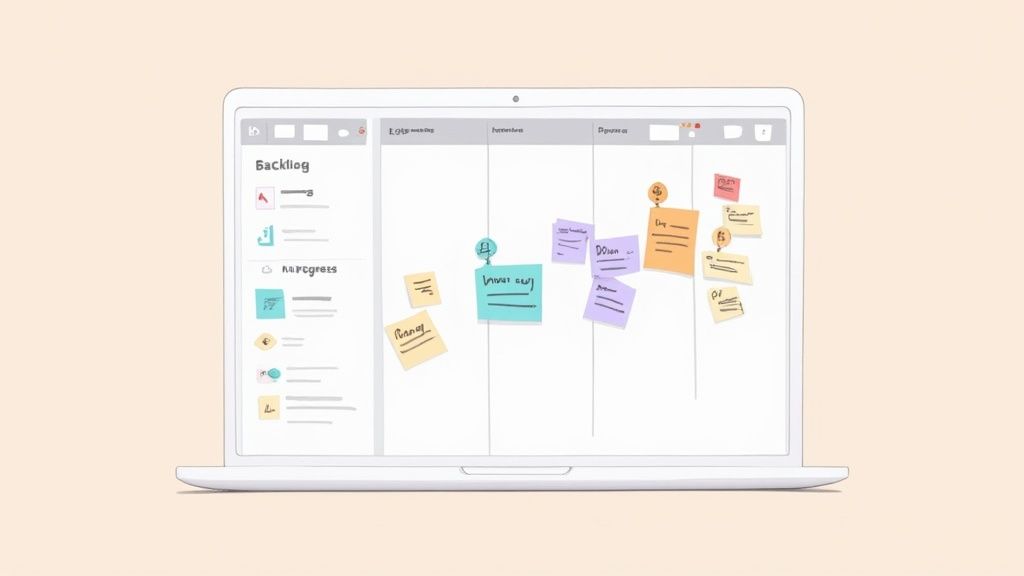
Agile management isn't just about speed; it’s about building a culture of collaboration, continuous improvement, and customer-centricity. Teams hold daily stand-up meetings to synchronize their efforts, utilize visual management tools like Kanban boards to track progress, and conduct retrospectives to identify areas for optimization. This iterative process fosters transparency and ensures everyone is on the same page.
This approach deserves a place on this list because it directly addresses several key factors that impact operational efficiency. By focusing on delivering working solutions quickly and incorporating continuous feedback, Agile minimizes wasted effort and maximizes value creation. The emphasis on self-organizing teams empowers individuals and streamlines decision-making, leading to faster response times and improved problem-solving. From customer support workflows to product development cycles, Agile offers a framework for streamlining processes and boosting overall performance.
Features of Agile Management:
- Iterative delivery in short cycles (sprints): Work is broken down into manageable chunks, allowing for frequent reassessment and adaptation.
- Continuous customer/stakeholder feedback integration: Regular feedback loops ensure alignment with customer needs and expectations.
- Daily stand-up meetings: These brief meetings facilitate team coordination and address any roadblocks.
- Visual management tools (Kanban boards, burndown charts): These tools provide a transparent overview of project progress and help identify bottlenecks.
- Retrospectives: Regular reflection and analysis help teams continuously refine their processes and improve performance.
Pros:
- Faster time-to-market with minimal viable products (MVPs)
- Higher customer satisfaction through regular feedback
- Increased flexibility to adapt to changing requirements
- Improved team collaboration and engagement
- Early identification and mitigation of risks
Cons:
- Can be challenging to scale across large organizations
- Difficult to predict long-term timelines and budgets
- Requires skilled facilitators and team members
- Documentation may be deprioritized in favor of delivery
- Not ideal for highly regulated environments without modification
Examples of Successful Implementation:
- Spotify's "Squad" model revolutionized how teams organize around products, fostering autonomy and ownership.
- ING Bank transformed its business operations using Agile methodologies, improving efficiency and customer service.
- Microsoft adopted Agile for Windows and Office development, enabling faster releases and better responsiveness to market demands.
- Amazon's "two-pizza teams" approach ensures teams remain small and agile, facilitating communication and collaboration.
Tips for Implementation:
- Start small: Begin with a pilot team and expand based on successes.
- Invest in training: Ensure all team members understand Agile principles and practices.
- Focus on outcomes: Prioritize delivering value over simply completing tasks.
- Adapt and tailor: Modify Agile practices to fit your specific organizational context.
- Balance autonomy with alignment: Empower teams while ensuring they remain aligned with strategic objectives.
Learn more about Agile Management
Whether you're a customer support manager looking to streamline ticket resolution, a hospitality professional aiming to personalize guest experiences, a real estate agent seeking to optimize client interactions, a healthcare provider striving to improve patient care, an enterprise IT manager managing complex projects, a business owner scaling your operations, a CEO driving strategic change, or a CTO implementing new technologies, Agile management offers a powerful framework to improve operational efficiency and achieve your business goals. By embracing its principles and adapting them to your unique needs, you can unlock the potential for greater agility, innovation, and customer satisfaction.
7. Theory of Constraints (TOC)
Looking to significantly improve operational efficiency? The Theory of Constraints (TOC) might be the answer. TOC is a powerful management paradigm that helps organizations identify and systematically eliminate bottlenecks that restrict their ability to achieve their goals. Imagine your operation as a chain; its strength is determined by its weakest link. TOC focuses on finding that weakest link – the constraint – and strengthening it to boost the entire system's performance. This approach is especially relevant for Customer Support Managers, Hospitality Professionals, Real Estate Agents, Healthcare Providers, Enterprise IT Managers, business owners, CEOs, and CTOs—anyone responsible for overseeing and improving a complex system.
TOC operates on the principle that any manageable system, from a manufacturing plant to a customer service department, is limited by a small number of constraints. Rather than spreading improvement efforts thinly across all areas, TOC advocates for a laser focus on the constraint. By maximizing the output of the constraint, you maximize the output of the entire system. This focused approach often generates significant results with minimal investment, aligning operational decisions with system-wide goals.
The TOC process involves five focusing steps:
- Identify: Pinpoint the system's current constraint. This could be a physical limitation (like a machine's capacity), a policy (like approval processes), or even a market constraint (like limited demand).
- Exploit: Maximize the constraint's current capacity without significant capital investment. This might involve optimizing schedules, reducing downtime, or improving the quality of inputs to the constraint.
- Subordinate: Ensure all other processes support the constraint and don't overwhelm it. This might mean adjusting other departments' schedules or resource allocation.
- Elevate: If the constraint still limits the system after exploitation and subordination, invest in increasing its capacity. This could involve purchasing new equipment, hiring more staff, or streamlining processes.
- Repeat: Once the original constraint is addressed, the system's performance will be limited by a new constraint. Return to step one and begin the process again. This creates a cycle of continuous improvement.
TOC isn't just a theoretical concept; it has delivered tangible results for organizations across various sectors. Mazda, for instance, used TOC to dramatically reduce its production lead time from 15 days to a mere 2 days. The Israeli Air Force leveraged TOC to increase aircraft availability by an impressive 60%, while Dr. Reddy's Laboratories saw a 20% increase in throughput in pharmaceutical production. Even giants like Boeing have benefitted, reducing inventory by $1 billion after applying TOC principles. These examples demonstrate TOC's power to improve operational efficiency across diverse industries.
Actionable Tips for Implementing TOC:
- Use current reality trees (a TOC tool) to identify the core constraint. This involves systematically analyzing cause-and-effect relationships to pinpoint the root cause of the system's limitations.
- Focus on maximizing throughput (sales minus totally variable cost), rather than traditional efficiency metrics. This aligns with the goal of increasing the system's overall output.
- Create buffers around the constraint to protect it from disruptions. This could involve maintaining a small inventory buffer or scheduling extra time for critical tasks.
- Exploit the constraint to its fullest potential before investing in elevating its capacity. This ensures you're getting the most out of your existing resources.
- Ensure company policies and performance metrics don't inadvertently create artificial constraints.
Pros and Cons of TOC:
Pros:
- Provides a clear focus for improvement efforts.
- Generates significant results with minimal investment.
- Aligns operational decisions with system-wide goals.
- Improves flow and reduces inventory/work-in-progress.
- Creates a systematic approach to continuous improvement.
Cons:
- Requires a shift in thinking from a cost-focused mindset to a throughput-focused one.
- May create temporary excess capacity in non-constraint areas.
- Success depends on accurately identifying the actual constraint.
- Can be challenging to implement in highly complex environments with numerous variables.
- Requires commitment from all levels of the organization to avoid local optimization.
Learn more about Theory of Constraints (TOC) This link provides further information about TOC and its applications.
TOC deserves its place on this list because it offers a focused, systematic approach to improving operational efficiency. By identifying and addressing the constraint, organizations can unlock significant performance gains and achieve their goals more effectively. It's a valuable tool for anyone striving to optimize their operations and achieve sustainable growth.
7 Strategies for Operational Efficiency Comparison
| Strategy | Implementation Complexity 🔄 | Resource Requirements ⚡ | Expected Outcomes 📊 | Ideal Use Cases 💡 | Key Advantages ⭐ |
|---|---|---|---|---|---|
| Lean Management | Medium - requires cultural change and continuous reinforcement | Moderate - training and employee engagement | Reduced waste, shorter lead times, increased productivity | Manufacturing, healthcare, fulfillment centers | Waste elimination, continuous improvement, employee empowerment |
| Six Sigma | High - intensive training and statistical rigor | High - specialized tools and certified experts | Defect reduction, consistent quality, financial gains | Processes needing defect reduction and variability control | Data-driven decisions, measurable financial impact, clear roles |
| Business Process Reengineering (BPR) | Very High - radical redesign, high disruption | High - technology and executive commitment | Dramatic performance improvements (50-90%) | Large scale process overhaul, technology leverage | Breakthrough improvements, technology enablement, customer alignment |
| Robotic Process Automation (RPA) | Low-Medium - rapid deployment, minimal coding needed | Moderate - software licenses and bot management | Fast ROI, error reduction, task automation | High-volume, rule-based repetitive digital tasks | Quick implementation, scalability, error-free processing |
| Total Quality Management (TQM) | High - long-term cultural shift required | Moderate-High - employee involvement and management commitment | Consistent quality improvement, customer satisfaction | Organization-wide quality focus | Organization-wide quality culture, waste reduction, employee morale |
| Agile Management | Medium - requires skilled teams and adaptation | Moderate - training and tools for iterative workflows | Faster market delivery, flexibility, risk mitigation | Software development and adaptive business operations | Customer collaboration, adaptability, team empowerment |
| Theory of Constraints (TOC) | Medium - mindset change with focused efforts | Low-Moderate - analysis tools and process adjustments | Improved throughput, reduced bottlenecks, better flow | Systems constrained by key bottlenecks | Focused improvement, system-wide alignment, minimal investment |
Driving Growth Through Efficiency
We've explored a range of powerful methodologies designed to improve operational efficiency, from the targeted improvements of Lean Management and Six Sigma to the transformative potential of Business Process Reengineering and Robotic Process Automation. We've also touched upon the overarching frameworks of Total Quality Management, Agile Management, and the Theory of Constraints. Each of these approaches offers unique insights and tools, but they all share a common goal: to eliminate waste, optimize processes, and unlock the full potential of your resources. Mastering these concepts is not just about doing things better; it's about building a more resilient, adaptable, and ultimately more profitable business. These improvements ripple outwards, impacting not only your bottom line but also employee satisfaction, customer experiences, and your ability to innovate and grow. For further insights into maximizing your resources and streamlining processes, explore this comprehensive guide on operational efficiency from LeaveWizard.
The journey towards operational excellence is ongoing, requiring constant evaluation and refinement. By embracing a culture of continuous improvement and leveraging the right tools, you can transform operational efficiency from a goal into a driving force behind your success. Ready to take your operational efficiency to the next level? Explore how Voicetta can empower your business with AI-driven solutions designed to streamline workflows and optimize performance.
Was this useful?
If this article helped, add Voicetta as a preferred source in Google Search. Your results can then highlight our writing.
Add as preferred source