
Blog
Your Guide to Finding the Perfect Live In Job
So, what exactly is a livein job? Put simply, it’s an arrangement where your employer provides your accommodation as a core part of your compensation package. This isn...
So, what exactly is a live-in job? Put simply, it’s an arrangement where your employer provides your accommodation as a core part of your compensation package. This isn’t just about a job; it’s a whole lifestyle where your work life and home life are intertwined, often on the very same property. Think of roles like nannies, estate managers, or resident caretakers—that's the classic live-in setup.
What a Live-In Job Really Means for You

Picture being a modern-day estate caretaker or even an old-fashioned lighthouse keeper. Your presence on-site isn’t just a matter of convenience—it's absolutely essential to the job itself. This is the heart of a live-in position. It’s a complete fusion of your work and home, creating something that feels miles away from a typical nine-to-five.
Of course, this unique structure comes with a major trade-off. On one hand, you get incredible convenience and some serious financial perks. The huge costs of rent, utilities, and commuting that weigh most of us down can be slashed or wiped out completely. This can be a massive boost for your savings and makes your daily routine a lot simpler.
But on the flip side, the boundaries between your personal and professional life can get pretty blurry. Your boss is also your landlord, and your home is literally your workplace. To make this work, you need the right kind of personality and a very clear, mutual understanding of boundaries.
A Lifestyle Choice in a Dynamic Market
Figuring out if a live-in job is for you means taking a hard look at your personality and career goals. Are you someone who is adaptable, independent, and really good at setting and respecting boundaries? Do you value the convenience and savings more than having a clear-cut separation between work and home?
This is an especially interesting thought in today's shifting job market. For example, the demand for labour in Poland has been on a bit of a rollercoaster. In the first quarter of 2025, job vacancies saw an 11.0% increase compared to the previous quarter, with 101,000 new openings popping up. In a dynamic environment like this, the stability and built-in benefits of a live-in role can look very appealing. You can explore more about these labour market trends to get the full picture.
Ultimately, a live-in job is a commitment to a different way of living and working. It’s an immersive experience that offers unique rewards for the right individual who is prepared for its distinct challenges and opportunities.
Getting your head around this core idea is the first step. It helps you decide if this path truly lines up with your personal and professional goals, setting you up for a career journey that's both rewarding and fulfilling.
Weighing the Reality of Living Where You Work
Thinking about a live-in job? It’s a bit like deciding to live on a boat. The experience can be incredible and you’re completely immersed in the lifestyle, but you’ve got to be ready for the unique challenges that pop up when your home and your vessel are one and the same. It's a path that offers fantastic rewards, but it demands you take a good, hard look at both the good and the bad.
Let’s start with the most obvious perk: the money. Just imagine your single biggest monthly bill—rent—completely disappearing. Now, add on the savings from utilities, council tax, and not having a daily commute. For most people, this is far more than just a little extra cash; it’s a massive financial boost that can seriously fast-track big goals, like clearing debt or building up savings.
But it’s not just about your bank balance. There's often a real sense of purpose that comes with these roles. Being right there on-site means you become part of the fabric of the place, whether you’re looking after a family, managing a large estate, or keeping a property secure. That level of immersion can be deeply rewarding.
The Challenges of Blended Boundaries
Of course, that constant presence is also where the biggest hurdles lie. When your living room is just a few steps from your workplace, how do you ever truly clock off? The risk of burning out is very real if you don't set clear, firm boundaries from the get-go. It’s all too easy for a quick question after hours to blur into an extra hour of unpaid work.
Feeling isolated can also creep in. Depending on where the job is and what it involves, you might find your social circle shrinking down to just the people you work with. Making an effort to keep up with friends and hobbies outside the property isn’t just a nice idea—it’s absolutely vital for your mental health and to keep from feeling penned in.
The image below gives a snapshot of the tangible benefits you can weigh against these less obvious challenges.
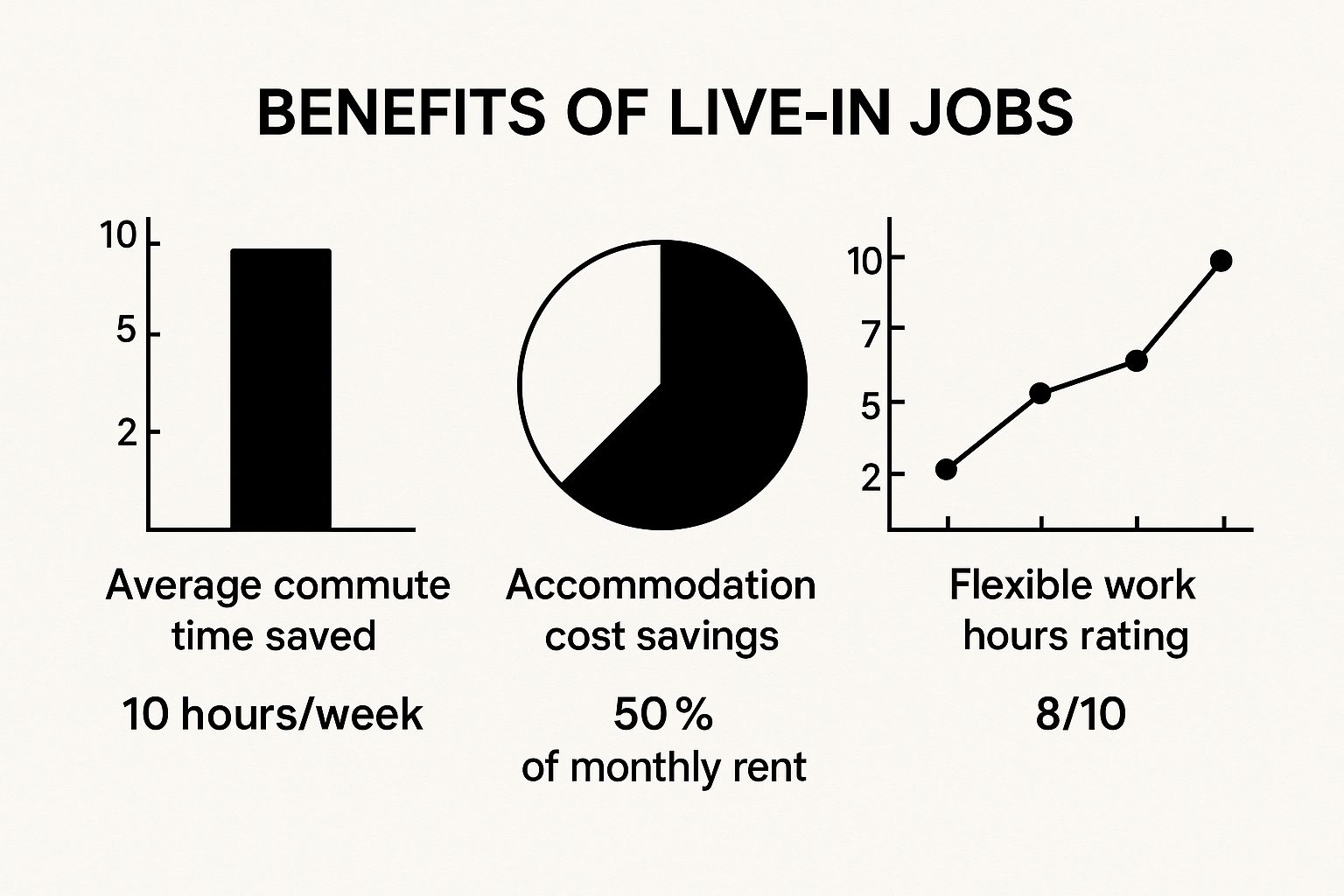
As you can see, the huge savings in time and money, plus the high degree of flexibility, often make the trade-offs worth a serious look.
Your Boss as Your Landlord
One of the trickiest parts of any live-in job is the fact that your employer is also your landlord. This double-edged relationship demands crystal-clear communication and, most importantly, a rock-solid contract. What are the house rules? What happens if you have a disagreement that has nothing to do with work? These are questions you absolutely must have answers to before you even think about accepting an offer.
A crucial part of this is understanding the potential worst-case scenarios. Knowing about things like the eviction process isn't about being pessimistic; it's about being fully aware of how tenancy and employment laws can intersect in this unique situation.
This knowledge is your protection. It empowers you to make sure the arrangement stays professional and fair.
Weighing the Lifestyle of a Live In Job
To make a truly informed decision, it helps to see the good and the bad side-by-side.
| Advantages | Disadvantages |
|---|---|
| Significant financial savings on rent, utilities, and commuting. | Blurred lines between work life and personal time. |
| Greater immersion and sense of purpose in your role. | Potential for social isolation and feeling disconnected. |
| Convenience of having no commute, saving time and stress. | Complex employer-landlord relationship can lead to conflicts. |
| Unique lifestyle opportunities in diverse locations. | Risk of burnout without strict personal boundaries. |
| Increased flexibility in managing your workday and personal tasks. | Loss of job often means loss of housing, creating instability. |
Ultimately, only you can decide if this unique lifestyle is the right fit. By carefully weighing these pros and cons, you can figure out if a live-in role aligns with your personality, your career goals, and what you need to feel happy and balanced.
Discovering Industries with Live In Positions

So, where do you actually find these live in job opportunities? When most people hear the term, their minds immediately jump to nannies or housekeepers, but that’s only scratching the surface. The reality is that these roles pop up in all sorts of fields, creating interesting career paths for people with vastly different skills and personalities.
Think of it like a hidden map of opportunities. The biggest, most well-known continent is definitely the domestic and care sector. But there are other fascinating territories to explore, from remote hotel outposts to sprawling private estates.
Each industry comes with its own unique environment and set of responsibilities. Finding the one that clicks with your personal and professional goals is the key to making it work.
The Heart of Caregiving and Childcare
Without a doubt, the most well-trodden path for live-in work is in caregiving. These roles are built on a foundation of trust and deep personal connection, where you are physically present for the well-being of others. This is a field where empathy and reliability aren't just buzzwords; they're the entire job.
A typical day can look wildly different depending on the role you step into:
- Live-In Nanny/Au Pair: Your life syncs with the children's schedule. You're there for the morning rush, school runs, homework battles, and bedtime stories. You truly become part of the family fabric.
- Live-In Carer: This role is all about supporting the elderly or individuals with disabilities. Your responsibilities might range from personal care and cooking meals to managing medication and, most importantly, offering steady companionship.
These jobs are fundamentally about human connection. The live-in element provides a level of consistent, compassionate support that you just can't get from shift work. It creates a stable and comforting environment for the people who need it most.
Hospitality and Property Management
Step outside the world of personal care, and you’ll find a completely different set of live-in opportunities in hospitality and property management. Here, the focus shifts from caring for people to managing places, ensuring everything runs smoothly for guests or residents.
For example, a live in job in this sector could be a property caretaker for a large private estate, where you're in charge of security, maintenance, and keeping the grounds pristine. It’s a role that often comes with a great deal of independence. Or, you might find yourself working at a remote mountain lodge or a secluded resort, where living on-site is simply a practical necessity.
Even in property management, technology is starting to play a part. While you might be handling the physical side of things, tools like specialised real estate chatbots are often used to field initial tenant questions or schedule viewings, freeing you up to focus on the more hands-on parts of the job.
Navigating a Competitive Market
Finding the right role means getting a feel for the current job market. For instance, the 'war for talent' in Poland paints a picture of a competitive environment where employers are desperate for specialised skills. While public job centre postings saw a 10% dip in early 2025, major job portals actually saw an 11% jump in listings.
What does that tell us? It shows that companies are actively hunting for candidates through every channel possible, for roles across many sectors—including those with live-in arrangements. You can learn more about the current state of talent acquisition in Poland to get a better sense of how to position yourself in your search.
Building the Right Skills for a Live-In Job
Thriving in a live-in job is about much more than just what’s on your CV. It’s a unique balancing act, a world where your professional and personal lives don’t just meet—they completely merge. To succeed, you need a specific blend of what you can do and, just as importantly, who you are.
We can break these skills down into two main buckets. You have the hard skills, which are the concrete, teachable abilities needed to perform the job itself. Then you have the soft skills—those personal traits that really determine if you’ll adapt and be happy in such a close-quarters environment.
Essential Hard Skills and Certifications
Depending on the field, some practical skills are simply non-negotiable. If you’re a caregiver, for instance, you’ll almost certainly need up-to-date first aid and CPR certifications. An estate manager, on the other hand, needs a good working knowledge of property maintenance, from leaky taps to tripping circuits.
These are the qualifications that get you noticed and get your foot in the door. Think about the specific role you’re targeting and what technical know-how is required.
- For Carers: Look for certifications in elderly care, special needs support, or paediatric first aid.
- For Estate Staff: A background in landscaping, security systems, or general household repairs is a massive plus.
- For Hospitality Roles: Being comfortable with booking systems or specific guest service protocols is often a must.
The Soft Skills That Truly Matter
While hard skills might land you the interview, it’s the soft skills that will keep you happy and successful in the long run. These interpersonal abilities are absolutely crucial when your employer is also your landlord and your colleagues are the same people you see at the breakfast table. Without them, even the most technically qualified person is going to find it tough.
Clear, open communication is probably at the top of the list. It’s the only way to effectively set boundaries and manage expectations, which stops small misunderstandings from turning into major problems. In a way, it’s like how effective call centre workforce management relies on clear scheduling to prevent burnout; you have to be able to clearly communicate your needs around work hours and personal time.
Adaptability is your secret weapon. No two days are ever the same in a live-in role. The ability to roll with the punches and handle unexpected situations with a calm head is priceless.
Finally, you need emotional resilience. You can’t just walk out the door and leave a stressful day behind at the office when your office is also your home. Building the capacity to handle pressure and maintain a positive outlook is absolutely essential for making the experience sustainable and, most importantly, enjoyable.
How to Find and Secure Your Ideal Live-In Role

Finding the perfect live-in job is less like a typical job hunt and more like a matchmaking exercise. You're not just looking for a role that matches your skills; you’re searching for a home, an environment where you can genuinely live and thrive. This calls for a thoughtful, strategic, and incredibly thorough approach that goes far beyond just scanning the usual job ads.
Your journey starts with knowing where to look. While you might get lucky on general job boards, you’ll save a lot of time by focusing on more specialised platforms.
- Niche Job Boards: Think of websites dedicated to specific sectors, like childcare, estate management, or caregiving. These are absolute goldmines for live-in positions.
- Specialised Agencies: Reputable recruitment agencies that focus on domestic staff or private households have incredible connections and can match you with properly vetted employers.
- Networking: Never, ever underestimate the power of word-of-mouth. Talk to people in your desired field—you’d be surprised how many of the best roles are filled through a quiet recommendation.
Crafting an Application That Stands Out
When you spot a promising opportunity, your CV and cover letter need to do more than just list your qualifications. They need to tell a story about why you, specifically, are suited for this unique lifestyle. You'll want to highlight not just your professional skills but also your personal traits—things like adaptability, self-sufficiency, and top-notch communication.
For instance, if you're going for a role in hospitality, don't just state your experience. Frame it to show you truly understand what it means to create a welcoming atmosphere. That’s a skill that translates directly to a live-in setting. We have some great tips in our guide on how to improve guest satisfaction, and many of those principles are spot-on for building a positive living and working dynamic.
It's also worth keeping an eye on the bigger picture. In the first quarter of 2025, Poland's employment rate was 72%, but the youth unemployment rate stood at 14.1%. A competitive market, especially for younger people, means your application really needs to shine to land a great position. You can find more insights into the Polish employment landscape on tradingeconomics.com.
Mastering the Live-In Job Interview
The interview is where you really get to vet the opportunity. Remember, this is a two-way street. You are interviewing them just as much as they are interviewing you. Arm yourself with a list of specific questions that dig much deeper than the job description, focusing on the reality of the living arrangement.
Your main goal during the interview is to get a crystal-clear picture of the day-to-day living situation. A great job with a poor living arrangement simply isn't sustainable.
Don't be shy about asking direct questions. It's the only way to avoid misunderstandings down the road.
- Accommodation: "Could you describe the private living quarters for me in detail? What’s included?"
- Privacy and Guests: "What are the house rules around personal time, privacy, and having guests over?"
- 'Off' Hours: "What are the expectations for my time when I’m not officially on duty?"
- Shared Spaces: "Which areas of the property are shared, and what are the guidelines for using them?"
Asking these questions puts you in control, helping you find not just a job, but a safe, respectful, and genuinely positive place to call home.
Answering Your Top Questions About Live-In Jobs
Stepping into a live-in job is a bit different from your typical nine-to-five, isn't it? The lines between where you work and where you live blur, which naturally brings up a lot of questions. Getting these sorted out from the start is the key to making sure the arrangement works for everyone.
This isn't just about a paycheque; it's about building a living situation where you can do great work and feel comfortable in your own space. Let's dig into some of the big questions I hear all the time.
What Should Be Included in a Live-In Job Contract?
Your contract is everything. Honestly, it's the single most important document you'll have, so it needs to be crystal clear. It should spell out your salary, your exact working hours, and a detailed list of every single one of your responsibilities. Think of it as the rulebook for your entire professional relationship—nothing should be left to guesswork.
The part about your accommodation is especially critical. It needs to say exactly what's provided (a private room, meals, Wi-Fi, etc.), lay down any rules about having guests over, and clarify the expectations for living on the property. Most importantly, it must state the notice period for both ending the job and moving out. My advice? Never, ever accept a live-in role without getting all of this down in writing.
How Can I Maintain a Healthy Work-Life Balance?
This is the big one, right? It’s probably the number one concern for anyone considering a live-in position. The secret is setting solid boundaries from day one. Agree on your work hours and then, as much as humanly possible, stick to them.
When you clock off, you need to be off. If you can, physically step away from your "work" area. Make it a priority to schedule things to do and people to see completely away from the home. Being proactive like this is your best defence against burnout. Even small frustrations can feel amplified in a live-in setting, so knowing how to handle customer complaints or disagreements calmly is a skill that helps protect your peace and personal space.
Your personal time is not a luxury; it is essential for long-term success in a live-in role. Protecting it fiercely allows you to recharge and return to your duties feeling refreshed and focused.
What Happens If I Lose My Job?
Losing a live-in job is doubly stressful because you’re suddenly facing the loss of both your income and your home. This is exactly why that contract we talked about is so non-negotiable. It absolutely must include a notice period that clearly states how long you can stay in the accommodation after your employment ends.
This grace period is there to give you a fair chance to find a new place to live without being in a state of panic. Before you sign anything, read this clause carefully and make sure you're comfortable with it. If you ever find yourself in this situation, the very first thing you should do is pull out that contract to understand your rights as both an employee and a resident.
At Voicetta, we understand that clear communication and reliable support are the foundation of any great relationship—whether it’s with a customer or in a live-in work arrangement. Discover how our 24/7 AI solutions can support your team by taking care of the routine stuff, so you can focus on what really matters.
Was this useful?
If this article helped, add Voicetta as a preferred source in Google Search. Your results can then highlight our writing.
Add as preferred source