
Why Your Business Can't Afford to Ignore Customer Satisfaction

Unhappy customers can significantly drain your business resources. The impact goes far beyond the occasional complaint and hits your bottom line. Acquiring new customers is much more expensive than keeping the ones you already have. So, losing customers due to dissatisfaction is a direct hit to your profits. Measuring customer satisfaction gives you valuable insights into their experience and acts as an early warning system for potential losses.
The True Cost of Customer Dissatisfaction
Losing a customer means more than just a single lost sale. It also represents the loss of potential future revenue from repeat business. Furthermore, negative word-of-mouth can seriously discourage potential new customers. A single negative online review, for example, can influence countless prospective clients. Addressing customer satisfaction is therefore vital for sustainable growth.
One crucial aspect is the high cost of a poor customer experience and how it directly affects consumer behavior. By 2025, data suggests that 73% of consumers will switch to a competitor after multiple bad experiences. This underscores the importance of constantly monitoring and improving your satisfaction scores. Customer loyalty is also heavily influenced by satisfaction. Three in four consumers (75%) are willing to spend more with companies providing excellent customer experiences. For a deeper dive into these statistics, check out: Customer Service Statistics and Trends for 2025. Clearly, focusing on customer satisfaction isn't just a nice-to-have; it's a necessity.
Turning Satisfaction Into a Competitive Edge
Savvy businesses don't just measure customer satisfaction; they use the data to gain a competitive edge. By understanding what drives satisfaction, they can fine-tune their offerings to meet and exceed customer expectations. This cultivates stronger customer relationships and fosters loyalty. For practical tips, see: How to raise customer satisfaction. Satisfied customers are also more likely to become brand advocates, promoting your business organically through positive word-of-mouth and reviews.
From Measurement to Strategic Intelligence
The real power of measuring customer satisfaction lies in using it to inform strategic decision-making. By analyzing satisfaction data, businesses can pinpoint areas for improvement across their entire organization. This data-driven approach enables focused interventions to address the root causes of customer dissatisfaction. The result? Improved customer experiences, increased loyalty, and ultimately, a stronger bottom line.
Finding The Right Tools For Measuring Customer Satisfaction
Measuring customer satisfaction is no simple task. It's not a one-size-fits-all approach. The ideal tools depend on your unique business needs and objectives. Picking the right method is crucial for collecting accurate and insightful data. This means selecting tools aligned with your business, not just following the latest trends. Let's explore popular options and discuss finding the perfect fit for your situation.
Key Measurement Methods: A Quick Overview
Several well-established methods offer valuable insights into customer satisfaction. Here’s a quick breakdown:
- CSAT (Customer Satisfaction Score): This direct approach asks customers how satisfied they are with a specific product, service, or interaction. It offers immediate feedback on particular touchpoints in the customer journey.
- NPS (Net Promoter Score): This metric gauges customer loyalty by asking how likely they are to recommend your business. It identifies your promoters (loyal enthusiasts) and detractors (unhappy customers).
- CES (Customer Effort Score): This method focuses on how easy it is for customers to interact with your business. It helps identify pain points and areas for improvement to create a smoother customer experience.
Choosing the Right Tool for the Job
Each method has its strengths and weaknesses. Selecting the most effective combination hinges on your goals:
- For evaluating specific interactions: CSAT surveys are perfect for measuring satisfaction with individual transactions or support interactions.
- For assessing overall loyalty: NPS provides a broad overview of customer loyalty and brand advocacy.
- For identifying areas to improve ease of use: CES helps pinpoint friction in the customer journey and prioritize improvements for a better user experience.
The infographic below visualizes key customer satisfaction data, showing average CSAT scores, survey response rates, and NPS distribution across promoters, passives, and detractors.
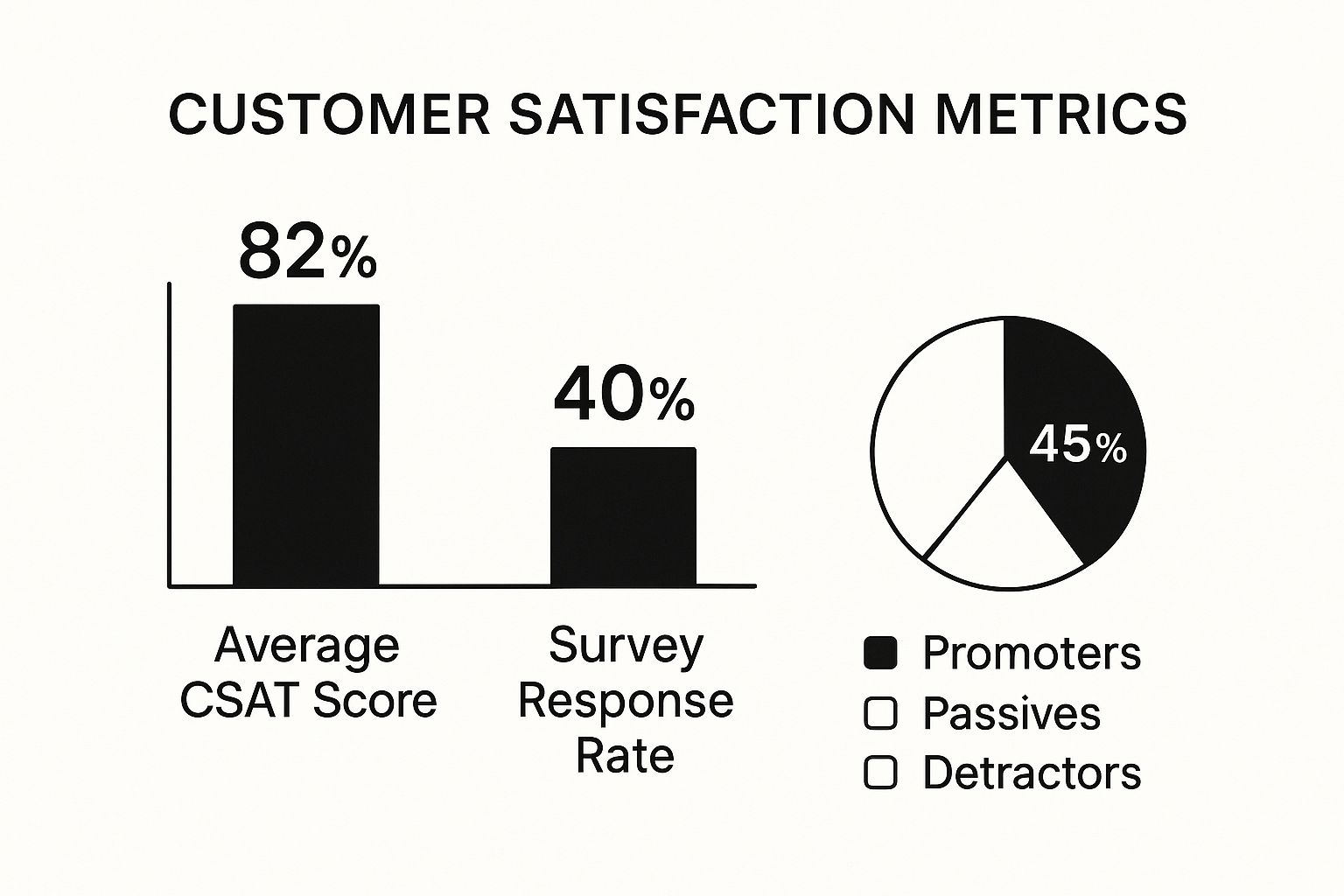
As the infographic reveals, while the average CSAT score of 82% suggests a generally positive customer experience, the 40% survey response rate indicates room for improvement in participation. The NPS distribution, with 45% promoters, 30% passives, and 25% detractors, highlights the importance of turning passives into promoters and addressing the concerns of detractors.
To help you better understand the differences between these methods, we've compiled a comparison table:
Customer Satisfaction Measurement Methods Comparison: A detailed comparison of popular customer satisfaction measurement tools including their strengths, limitations, and best use cases.
| Method | Best Use Case | Response Scale | Key Benefits | Implementation Difficulty |
|---|---|---|---|---|
| CSAT | Post-interaction feedback on specific products or services | Typically 1-5 (Very dissatisfied to Very Satisfied) or 1-7 | Easy to understand and implement; provides immediate feedback | Low |
| NPS | Measuring overall customer loyalty and likelihood to recommend | 0-10 (Not at all likely to Extremely likely) | Provides a single, trackable metric for benchmarking; identifies promoters and detractors | Low to Medium |
| CES | Identifying friction points in the customer journey | Typically 1-5 (Very difficult to Very easy) or 1-7 | Focuses on improving ease of use and reducing customer effort | Medium |
This table summarizes the key differences between CSAT, NPS, and CES, enabling you to choose the method best suited for your specific needs. Each offers a unique perspective on customer satisfaction, and using them strategically can lead to more actionable insights.
Practical Tips for Effective Measurement
Choosing the right tool is just the beginning. Here are a few tips for maximizing your measurement efforts:
- Survey Design: Keep surveys concise and focused to prevent survey fatigue and encourage completion.
- Timing: Send surveys immediately after interactions while the experience is fresh in your customers' minds.
- Channel Selection: Leverage the channels your customers prefer, whether it's email, SMS, or in-app notifications.
By thoughtfully selecting and implementing these tools, you can gather valuable insights into customer satisfaction, pinpoint areas for improvement, and ultimately, fuel business growth. This means adopting a strategic approach, not just collecting data without a purpose.
How Your Scores Stack Up Against The Competition

Measuring customer satisfaction is essential. But what do the numbers really mean? Knowing how your scores compare to the competition gives those numbers crucial context and transforms data points into actionable strategies. This competitive analysis allows you to identify areas for improvement and celebrate your successes. It also helps you set realistic goals, pinpoint opportunities, and demonstrate progress to stakeholders.
Benchmarking: Why It Matters
Benchmarking offers valuable external perspective on your customer satisfaction performance. Comparing your scores against industry averages and top performers reveals your position in the market. This helps you pinpoint areas where you excel and where you need to focus improvement efforts, ultimately informing strategic decisions and resource allocation.
Imagine discovering your customer satisfaction (CSAT) score is below the industry average. This signals a need for deeper investigation into the underlying causes and targeted improvements. On the other hand, if your score is above average, it validates your current strategies and highlights existing strengths you can leverage further.
Understanding industry benchmarks also helps you set realistic targets and motivate your team. Knowing what constitutes good performance within your specific sector allows you to establish achievable goals and celebrate incremental progress, fostering a sense of purpose and driving continuous improvement.
Industry Insights: Where You Stand
Analyzing customer satisfaction across various industries reveals important benchmarks and emerging trends. Industry-specific CSAT scores, typically measured on a scale of 0 to 100, often show year-over-year improvements, reflecting ongoing customer experience management efforts.
To illustrate, online search services reached a score of 80 in 2023, a 5% increase from 2022. Shipping and streaming services both saw a 4% improvement, landing at 77. E-commerce and life insurance also achieved strong scores of 80. To explore more detailed industry statistics, check out this resource: Customer Service Statistics & Benchmarks. This kind of data provides invaluable context for interpreting your own scores and setting strategic goals.
To further understand where you stand, let's look at some industry benchmarks. The following table, "Industry Customer Satisfaction Benchmarks," displays CSAT scores by industry, revealing current performance levels and year-over-year improvements. It also highlights some key success factors contributing to high scores.
| Industry | 2023 CSAT Score | 2022 CSAT Score | Improvement % | Key Success Factors |
|---|---|---|---|---|
| Online Search Services | 80 | 76 | 5% | Personalized results, fast response times, comprehensive knowledge base |
| Shipping Services | 77 | 74 | 4% | On-time delivery, proactive communication, easy tracking, hassle-free returns |
| Streaming Services | 77 | 74 | 4% | Diverse content library, high-quality streaming, intuitive interface, personalized recommendations |
| E-commerce | 80 | 78 | ~3% | Seamless checkout process, personalized shopping experience, robust customer support |
| Life Insurance | 80 | 76 | 5% | Clear policy information, personalized advice, proactive customer service |
As this table reveals, industries prioritize different factors to enhance customer satisfaction. Understanding these key drivers of success within your specific sector can inform your own strategies for improvement.
Using Benchmarks to Drive Improvement
Benchmarking is more than just comparing numbers; it’s about transforming insights into action. By using benchmark data, you can pinpoint areas for improvement, prioritize impactful initiatives, and communicate your progress effectively.
-
Identify Key Success Factors: Studying high-performing companies within your industry reveals their keys to success. This allows you to understand and adapt industry best practices to your organization.
-
Set Realistic Targets: Benchmark data provides a foundation for establishing achievable goals. This ensures you aim for realistic progress and don't pursue unattainable perfection.
-
Communicate Progress: Benchmark data allows you to demonstrate the impact of your efforts and communicate progress in a clear and meaningful way to stakeholders.
By actively engaging with benchmark data, you turn it into actionable intelligence that fuels continuous improvement and strengthens your competitive position. This data-driven approach empowers you to make strategic decisions that positively impact your bottom line and foster long-term customer loyalty.
When Satisfied Customers Still Leave: Understanding True Loyalty
Customer satisfaction is essential for any business. But here's the catch: even satisfied customers can, and often do, leave. This section explores the often-missed difference between customer satisfaction and true customer loyalty, showing why measuring satisfaction alone isn't enough for long-term success.
Beyond Satisfaction: The Emotional Connection
Think of it like dating. You might be satisfied with a date – good conversation, pleasant atmosphere – but that doesn't mean you're looking for a serious relationship. A customer might be satisfied with your product or service, but that satisfaction may not translate to loyalty. This emotional connection, often missing when measuring customer satisfaction, is the key to a lasting relationship with customers.
For example, a customer might consistently give high satisfaction ratings to their bank's online platform. Yet, they might still switch to a competitor offering a more personalized touch or showing stronger alignment with their values. This demonstrates the need to move past functional satisfaction and build deeper, more emotional connections.
The Behavioral Dimension of Loyalty
Loyalty is more than just a feeling; it's reflected in actions. These loyalty indicators, like repeat business, positive word-of-mouth, and engagement with your brand, offer a better understanding of true customer commitment. These actions show not only what customers say but what they do. Read also: How to master call center quality assurance.
Looking at a global view, research from Qualtrics shows a worrying trend. While overall satisfaction remains fairly steady, loyalty indicators such as customer trust and intent to repurchase have fallen. More detailed statistics can be found here: Global Satisfaction & Loyalty 2025. This difference signals a weakening of brand loyalty, even when satisfaction levels appear good.
Recognizing Warning Signs: When Satisfaction Masks Disloyalty
High satisfaction scores can sometimes hide deeper loyalty issues. For example, if customer churn remains high despite positive satisfaction ratings, it reveals a problem. This means customers might be happy with individual purchases, but they aren't forming lasting loyalty.
Businesses need to watch a range of metrics. If your measuring customer satisfaction scores are high, but repeat purchases are declining or social media sentiment is negative, it’s time for a closer look. These warning signs point to hidden issues affecting your long-term revenue and highlight areas where you can strengthen customer relationships. Addressing these underlying issues is vital for continued growth.
Turning Data Into Insights That Actually Matter

Raw customer satisfaction data, without the right analysis, isn't much use. This section explores how to transform your customer satisfaction measurements into actionable intelligence. It's about going beyond basic data collection and using smart analysis to understand the why behind the numbers. We'll uncover proven techniques to optimize your feedback process and unlock truly meaningful insights.
Optimizing Your Feedback Process
Gathering representative feedback is the cornerstone of accurate analysis. This involves strategic timing, careful channel selection, and optimizing responses to ensure you're hearing from all your customers, not just the loudest ones. Imagine taking a sample from a lake: you need a sample that represents the entire body of water, not just the surface.
-
Survey Timing: Sending surveys immediately after customer interactions, while the experience is still fresh in their minds, yields more accurate and relevant feedback. For example, a survey sent right after a customer service call captures the immediate impact of the support provided.
-
Channel Selection: Using the communication channels your customers prefer – whether it’s email, SMS, or in-app notifications – is essential. This targeted approach boosts engagement and ensures your surveys reach the right audience. Younger demographics might favor SMS, while older customers might prefer email.
-
Response Optimization: Keeping surveys concise and user-friendly helps prevent survey fatigue. Shorter surveys encourage higher completion rates, giving you a larger and more representative dataset to analyze.
By combining these strategies, you can collect meaningful data that accurately reflects your customer base as a whole. This provides a solid foundation for effective analysis.
Advanced Analytics Techniques
To truly unlock the potential of your data, you need to go beyond simple averages and percentages. Advanced techniques can uncover hidden patterns and even predict future customer behavior. This deeper analysis transforms raw data into predictive intelligence. For a deeper dive, check out this guide on How to master customer journey optimization.
-
Sentiment Analysis: This technique delves into the how of customer feedback, not just the what. By analyzing the emotional tone of responses, you can identify underlying issues even when the explicitly stated feedback seems positive.
-
Predictive Modeling: This powerful tool uses historical data to forecast future customer behavior. Analyzing past purchase patterns and customer feedback can help predict future churn risk, allowing you to proactively address potential problems.
-
Correlation Studies: These studies explore the relationships between different variables. For instance, analyzing the correlation between customer satisfaction scores and repeat purchase rates can reveal how satisfaction impacts customer loyalty.
These advanced analytics empower you to anticipate future trends instead of just reacting to past issues. This proactive approach helps you address potential problems and seize opportunities for improvement before your competitors do. By understanding the factors that drive customer satisfaction, you can make data-driven decisions that create meaningful change and elevate the customer experience.
Turning Insights into Action
Advanced analytics provide the insights you need to make a real difference. For example, if you discover a strong correlation between long wait times and low satisfaction scores, you have a clear area for improvement. Reducing wait times becomes a key step in boosting overall customer satisfaction. Similarly, sentiment analysis can reveal underlying frustration even when explicit feedback seems positive, allowing you to address hidden problems before they escalate. This transformation of data into actionable insights is where the real value lies.
Creating Change That Customers Actually Notice
Measuring customer satisfaction is essential. But collecting data without taking action is an expensive waste of time. This section explores how to transform satisfaction insights into tangible improvements. These changes strengthen your business and build stronger customer relationships. The goal is to make a difference customers can actually see and feel.
Frameworks for Prioritizing Improvements
Successful organizations use frameworks to determine which improvements to address first. These frameworks help balance a change's potential impact with the available resources. It's similar to triage in a hospital. Medical professionals treat the most critical patients first. Likewise, businesses should prioritize the changes that will most positively affect customer satisfaction.
For example, imagine your analysis reveals that long wait times are a major source of customer dissatisfaction. If you have the resources to address staffing or improve process inefficiencies, reducing wait times becomes a high priority. This focused approach ensures resources are used effectively for maximum impact.
Closing the Feedback Loop
A closed-loop feedback system demonstrates to customers that their opinions are valued. This system involves not only collecting feedback but also informing customers how their input is being used to implement change. Think of a restaurant asking for feedback on a new dish and then modifying the recipe based on customer suggestions.
This follow-up builds trust and strengthens customer relationships. When customers see that their feedback leads to real improvements, they feel heard and valued. This, in turn, fosters loyalty and encourages further feedback, creating a positive cycle of improvement.
Addressing Common Pain Points
While each business is unique, some customer pain points are common across industries. Here are some areas ripe for improvement and how to address them:
- Long Wait Times: Implement solutions like online check-in, appointment scheduling, or a callback option.
- Complex Processes: Simplify complicated procedures, such as returns or exchanges, by streamlining steps and providing clear instructions.
- Poor Communication: Keep customers informed with proactive updates, especially regarding order status, delivery delays, or service disruptions. Voicetta, for example, automates communications.
- Lack of Personalization: Tailor your communications and offerings to individual customer preferences. Address customers by name, recommend products based on past purchases, or offer personalized discounts.
These are just a few examples. The most effective strategies will depend on your customers' specific challenges.
Measuring the Impact of Your Efforts
Making changes is only the first step. Tracking whether those changes actually improve customer satisfaction is crucial. Monitor key metrics like CSAT scores, NPS (Net Promoter Score), and customer churn rate before and after implementing improvements.
This data will show if your efforts are producing the desired effect. For example, if you implement Voicetta to handle routine inquiries, track changes in resolution times and CSAT scores to measure its effectiveness. This transforms measuring customer satisfaction into a continuous improvement cycle. It ensures changes make a real difference for your customers and your bottom line.
Building A System That Grows With Your Business
Measuring customer satisfaction isn't a one-off project; it's a continuous journey. The most effective systems evolve alongside your business and changing customer expectations. This means designing a system that not only works well today but also scales effectively for the future. This section explores practical strategies for long-term success with your customer satisfaction measurement program.
Establishing Sustainable Measurement Cadences
Just like regular health checkups, consistently measuring customer satisfaction is vital. Set a regular rhythm for gathering customer feedback, whether weekly, monthly, or quarterly. This consistent cadence helps you track trends, identify emerging issues, and gauge the impact of your improvement initiatives. For example, sending short CSAT surveys after each customer support interaction offers continuous feedback on your service quality.
Consider varying your approach as well. Perhaps combine short, regular surveys with periodic, in-depth feedback sessions. This balanced approach provides both detailed and broad insights while keeping the process engaging.
Maintaining Data Quality as You Scale
As your business expands, your customer base does too. Maintaining data quality becomes increasingly important. This means ensuring you're collecting representative feedback that truly reflects all customer experiences. One strategy is to segment your customer base and tailor your measurement approach accordingly. For example, you might send slightly different surveys to new customers versus loyal, long-term customers.
Another critical factor is data integration. As you adopt new tools and technologies like Salesforce, ensure your customer satisfaction data integrates seamlessly with other business systems. This creates a holistic view of your customers, enabling more insightful analysis. You might be interested in: How to master 24/7 customer support.
Aligning Your Organization Around Customer Satisfaction
Customer satisfaction isn't solely the customer service team's responsibility; it's everyone's job. Foster a culture where every employee understands the importance of customer satisfaction and their role in creating positive experiences. Share customer feedback regularly across departments, highlighting both successes and areas for improvement. This builds shared ownership and encourages everyone to prioritize customer needs.
Stakeholder Reporting and Trend Analysis
Clear reporting is crucial for showing the value of your customer satisfaction program. Create regular reports highlighting key trends, progress toward goals, and areas requiring further attention. Tailor these reports for different stakeholders. For example, a report for executives might focus on the financial impact of increased customer satisfaction, while a report for the customer service team could highlight specific areas for service improvement.
Analyzing trends is key for identifying patterns and anticipating future customer behavior. Look for recurring themes in feedback and correlations between satisfaction scores and other metrics. If you notice a link between high satisfaction and repeat purchases, you can confidently prioritize initiatives that boost satisfaction.
Embedding Continuous Improvement
The most successful programs are built on continuous improvement. Use methodologies like Lean or Six Sigma to identify and address the root causes of customer dissatisfaction. This proactive approach ensures you're not just treating symptoms but tackling the underlying issues impacting the customer experience. This data-driven approach makes measuring customer satisfaction a dynamic process of learning and improvement, allowing you to adapt to evolving customer needs and stay competitive.
Ready to enhance your customer communication and experience? Visit Voicetta to discover how their AI-powered platform can transform customer interactions and drive business growth.