
Blog
Boost Customer Engagement with Our Omnichannel Communication Platform
It’s easy to get lost in marketing terms, but what an omnichannel communication platform truly does is quite simple yet powerful. Imagine a customer conversation as a ...
Beyond The Buzzwords: What These Platforms Actually Do
It’s easy to get lost in marketing terms, but what an omnichannel communication platform truly does is quite simple yet powerful. Imagine a customer conversation as a single, continuous thread. This thread can weave through different channels—starting on Instagram, moving to email, and finishing with a phone call—without ever breaking. The platform acts as the loom, ensuring every interaction is a natural continuation of the last. This prevents the frustrating experience where customers are forced to repeat themselves, a common reason many take their business elsewhere.
Successful businesses realise that simply being present on multiple channels isn't enough; the real value comes from connecting them in a meaningful way. This transition from a disjointed, multichannel setup to a unified omnichannel one is where the real progress is made. A multichannel approach is like a wheel with many separate spokes leading to the hub (your business). An omnichannel strategy is more like a swimming pool where the customer can move freely between lanes, enjoying a consistent experience no matter where they are.
The Clear Advantage of a Unified Approach
The main job of an omnichannel communication platform is to centralise all customer interactions into one clear view. Instead of having separate teams managing phone calls, emails, and social media messages in isolation, all data flows into a single system. This creates a complete customer profile that gives agents the full context of every previous interaction, regardless of the channel. When a customer calls, the agent already knows they were just chatting on the website about a specific order.
This shared context is the secret to creating the seamless, memorable experiences that build loyalty. Businesses using this model often report big improvements in key metrics. For example, research from Google highlights that omnichannel strategies can lead to an 80% increase in incremental store visits. The infographic below compares the performance of traditional support with that of a modern omnichannel platform.
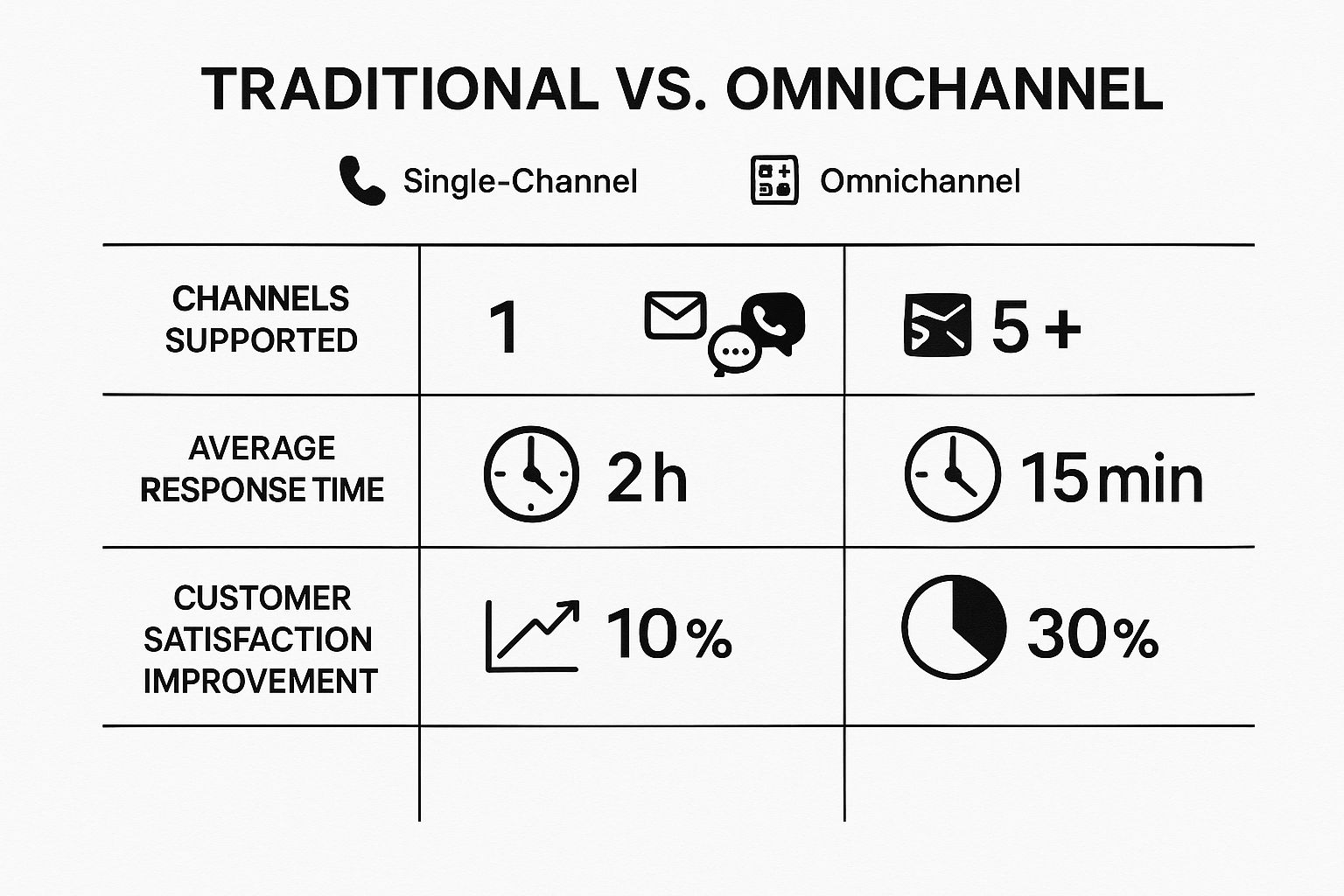
The data makes it clear that adopting an omnichannel model leads to quicker responses and a significant rise in customer satisfaction.
From Silos to Synergy: A Practical Comparison
To fully understand the difference, let’s compare the two models directly. Traditional communication operates in silos, where each channel is its own island. An omnichannel framework, however, builds bridges between these islands, creating a connected ecosystem. This change doesn’t just help the customer; it also greatly improves internal efficiency and teamwork among support agents.
To make this distinction clearer, the table below breaks down the key differences between a traditional multichannel setup and a true omnichannel communication platform.
Multichannel vs Omnichannel Communication Comparison A clear comparison showing the key differences between traditional multichannel and modern omnichannel approaches.
| Aspect | Multichannel | Omnichannel |
|---|---|---|
| Customer Experience | Disjointed and often repetitive. The customer may have to explain their issue multiple times. | Seamless and consistent. The conversation continues smoothly across channels. |
| Data & Context | Siloed per channel. Information from an email isn't available during a phone call. | Centralised and shared. All agents have access to the complete interaction history. |
| Company Focus | Centred on the channel. Success is measured by how well each individual channel performs. | Centred on the customer. Success is measured by the quality of the overall customer journey. |
| Agent Workflow | Agents switch between different systems and dashboards to handle various channels. | Agents work from one unified interface, seeing all conversations in a single view. |
As the table shows, the shift is from a channel-focused operation to a customer-focused one. By moving towards an omnichannel model, companies aren't just updating their technology; they are reorganising their entire operation around the customer's journey. This is the key to turning one-time buyers into dedicated advocates for your brand.
The Engine Behind Seamless Customer Conversations
Have you ever contacted a company and been amazed that they seem to remember every detail of your past interactions, no matter which channel you used? This isn’t a magic trick; it’s the result of the powerful technology inside an omnichannel communication platform. This system works in the background, weaving every customer conversation into a single, continuous thread, so your team always sees the complete picture.
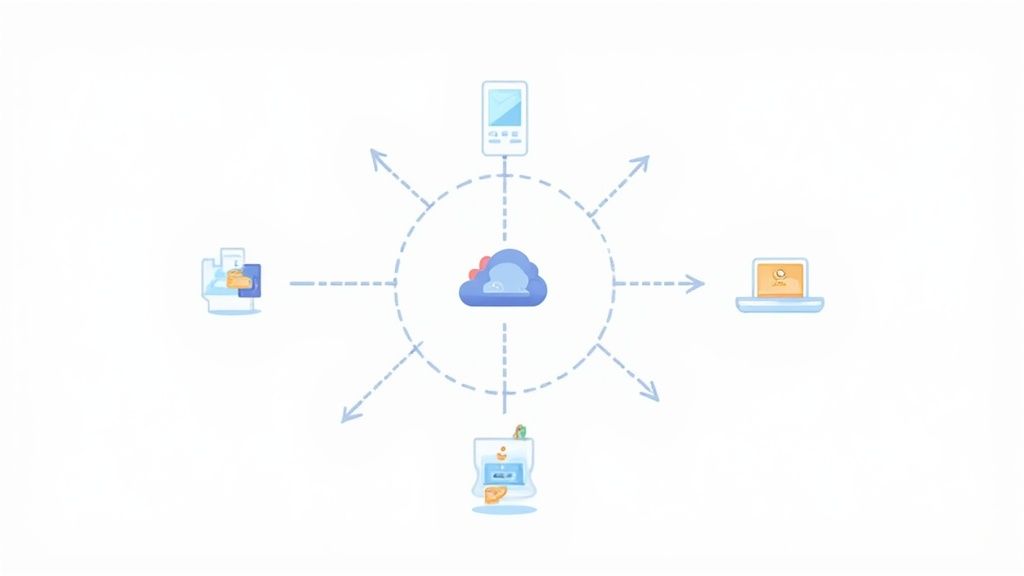
This image displays a unified agent console, where information from various channels is presented in one view. The crucial takeaway is that agents no longer need to juggle different applications. All the context and customer history are right there, which helps them solve problems much faster.
The Central Nervous System: Your Customer Data Platform
At the core of this system is something that acts like a central nervous system: the Customer Data Platform (CDP). Picture it as a highly organised memory bank for your business. The CDP’s main function is to gather, connect, and arrange customer data from every possible touchpoint. This includes:
- Past purchases and website browsing activity
- Previous support tickets from email or live chat
- Comments and direct messages on social media
- Notes and transcripts from phone calls
By linking these separate pieces of information, the CDP builds a single, detailed profile for each customer. This unified view is what enables an agent on a phone call to know that the same customer was looking at a specific product on the website just moments earlier. This deep context is essential for delivering truly personal and effective service.
The Smart Assistant: Artificial Intelligence in Action
Working alongside this data foundation is Artificial Intelligence (AI), which functions as a smart assistant for your entire support team. AI examines incoming messages to figure out the customer's intent and mood, then intelligently sends them to the most suitable agent or department. For example, an urgent request found in an email can be automatically moved to the top of the queue. This AI-driven automation is becoming indispensable; by 2025, it's predicted that 97% of companies worldwide will use AI in their customer communications, a trend clearly reflected in Poland's rapidly expanding e-commerce market. You can discover more about how businesses are adopting AI in our latest findings.
AI also equips support agents with the tools they need to perform at their best. Consider how real-time agent assistance can offer live suggestions and information during a conversation, making sure agents have the right answers at their fingertips. This blend of a unified data platform and intelligent automation is what truly characterises a modern omnichannel communication platform, transforming isolated interactions into smooth, ongoing conversations that build customer loyalty and trust.
Platform Features That Make The Real Difference
Deciding to use an omnichannel communication platform is a big move, but it's important to know that not all systems offer the same advantages. The real benefit isn't just about linking your communication channels together. It’s found in the specific features that transform a potentially complicated system into a simple, effective tool for your team. These are the capabilities that separate merely handling conversations from genuinely improving customer relationships and your financial results.
A truly valuable platform is built with features that give context, make workflows more efficient, and provide clear data. Without these essential parts, you might end up with a system that creates more problems than it solves, becoming a costly letdown instead of a transformative asset. Let's look at the key features that bring real, tangible benefits.
Unified Customer Profiles: The Digital Memory Bank
The most critical feature is the unified customer profile. Imagine this as a digital memory bank for every single customer relationship. It gathers every interaction, preference, and piece of historical data—from their first visit to your website to their most recent phone call—and organises it into one clear timeline.
This stops agents from having to ask the same questions over and over. Before they even pick up a call or join a chat, they see the customer's complete history. This allows them to offer quicker, more understanding, and highly personalised assistance, which has a direct positive effect on customer satisfaction. Companies that successfully use this feature see a significant drop in how long it takes to solve issues and a rise in positive customer feedback.
Intelligent Routing and Automation
Next up is intelligent routing. This feature works like a smart dispatcher, looking at incoming messages in real-time to figure out what the customer needs. It then automatically directs them to the agent or department best equipped to help. This makes sure a valuable sales enquiry doesn't get lost in a general support queue.
This is frequently combined with workflow automation, which takes care of repetitive jobs automatically. For instance, an automated workflow can send an order confirmation by SMS, generate a support ticket from an email, and set a follow-up call, all without needing a person to step in. To see how this works in practice, you can learn more about how to automate customer support and discover its immediate advantages. This gives your team the freedom to concentrate on more difficult, important interactions that need a human touch.
Analytics and Collaboration Tools
Finally, a leading omnichannel communication platform must offer powerful analytics and reporting. These tools do more than just track basic numbers; they give you deep insights into agent performance, how well different channels are working, and overall customer happiness. They show you what is effective and, crucially, what is not, enabling you to make continuous, data-informed improvements. This level of insight is vital for optimising your entire customer service operation for better outcomes.
To help you understand which features matter most, the table below breaks down the core components of a strong omnichannel platform. It outlines their impact on your business and what you can expect in terms of implementation and returns.
Essential Omnichannel Platform Features Matrix
A comprehensive overview of core features and their business impact across different platform tiers
| Feature | Business Impact | Implementation Complexity | ROI Timeline |
|---|---|---|---|
| Unified Customer Profiles | Increases First Contact Resolution by up to 25%. Boosts agent efficiency and customer satisfaction. | Medium | 3-6 Months |
| Intelligent Routing | Reduces average handling time by 15-20%. Connects customers to the right agent faster. | Medium-High | 6-9 Months |
| Workflow Automation | Frees up 10+ hours of agent time per week. Eliminates manual, repetitive tasks. | Low-Medium | 1-3 Months |
| Cross-Channel Reporting | Provides a single source of truth for performance. Identifies channel optimisation opportunities. | High | 9-12 Months |
| Real-Time Dashboards | Enables immediate response to queue spikes or performance dips. Improves operational agility. | Low | Immediate |
| AI-Powered Chatbots | Handles up to 40% of routine queries instantly, 24/7. Reduces operational costs. | Medium | 4-8 Months |
This matrix highlights that while some features like AI-powered chatbots or comprehensive cross-channel reporting require more effort to implement, the long-term benefits are substantial. Simpler features like workflow automation and real-time dashboards can provide immediate value, making them excellent starting points for any business adopting an omnichannel strategy. The key is to choose a platform that allows you to grow, starting with foundational features and adding more advanced capabilities over time.
Success Stories That Show What's Actually Possible

Theories and concepts are a great starting point, but the true test of an omnichannel communication platform is its performance in the real world. The following stories aren't just polished marketing tales; they're genuine accounts of businesses that faced common operational headaches and achieved remarkable outcomes. They give us a look into the practical steps, specific strategies, and even the occasional hurdle that led them to success.
From Long Waits to Loyal Advocates in Retail
Imagine a medium-sized retail business dealing with the chaos of disconnected customer support. Shoppers would take to social media to complain about email queries that went unanswered for days. When they finally called, phone agents had zero context about these previous attempts to get in touch. After putting a unified platform in place, the company merged its email, live chat, and social media messages into a single, clean dashboard.
The transformation was clear and measurable. Agents could instantly see a customer's entire conversation history, which led to a 60% reduction in first response times. More importantly, customer satisfaction scores climbed as people no longer had to repeat their problems. Their success came from a phased rollout and thorough team training, which made sure agents were confident with the new tools before the system went fully live. This approach mirrors a wider trend, as the global omnichannel retail market, valued at $6.57 billion in 2024, continues to grow.
Streamlining Compliance in Financial Services
Another compelling case comes from a financial services firm. They were under constant pressure to keep meticulous compliance records for every client conversation. This was a nightmare with their separate phone, email, and secure messaging systems. By switching to an omnichannel communication platform, they brought all interactions together into one searchable and auditable location.
This change did more than just make compliance reporting easier; it also built stronger client trust. Advisors could pull up complete, time-stamped records of any interaction, ensuring the advice they gave was consistent and properly documented. The key to their success was selecting a platform with powerful security features and customisable data retention rules. By tackling a single, major pain point—compliance—they laid the groundwork for a much-improved customer journey. For a closer look at this process, explore our insights on customer journey optimisation and how it affects business results.
Making The Switch Without Breaking Everything
Bringing a new technology platform into your business can feel like performing open-heart surgery on your operations. The good news is that moving to an omnichannel communication platform doesn’t have to be a nightmare. With a smart, phased approach, you can minimise risk while steadily unlocking the benefits.
Instead of a high-stakes, "big bang" launch where everything changes at once, consider a gradual rollout. This strategy lets you test, learn, and refine the process in a controlled way, reducing the chance of widespread disruption.
A Strategic Rollout Plan
A smooth transition is built on careful planning, not just technical skill. Think of it less like flipping a switch and more like building a sturdy bridge from where you are now to where you want to be. This involves managing your data, technology, and most importantly, your people.
Here are a few proven strategies for a smoother migration:
- Data Migration First: Your customer history is a valuable asset, so protect it. Before you do anything else, focus on moving your existing customer records accurately and without causing downtime. This is the foundation that ensures your team has the context they need from day one.
- Phased Team Onboarding: Don't try to train your entire staff at once. Begin with a small pilot group of agents who are comfortable with technology. Let them become the experts and advocates for the new system before you roll it out to the rest of the team. Their early feedback is priceless for improving your training.
- Seamless API Integration: An omnichannel communication platform should connect with the tools you already rely on, not force you to replace everything. Prioritise integrating with your core systems, like your CRM. Use solid API connections to make sure data syncs up correctly and your team can log in without any hitches.
Managing The Human Element
Technology is only half the puzzle. Your success depends on clear communication and proactive training. Prepare your staff by showing them exactly how the new platform will make their jobs easier, not more complex. At the same time, let your customers know about the upcoming improvements and highlight the new, convenient ways they'll be able to get in touch.
This careful approach is especially important as Polish e-commerce and retail sectors are adapting to new trends. Experts from the Shoper Group point out that 2025 will be a significant year for adopting AI and sales automation—key components of any omnichannel strategy. You can discover more about the 10 trends changing Polish e-commerce. By managing the switch effectively, you position your business to lead the change, not just react to it.
Measuring Success: Numbers That Actually Matter
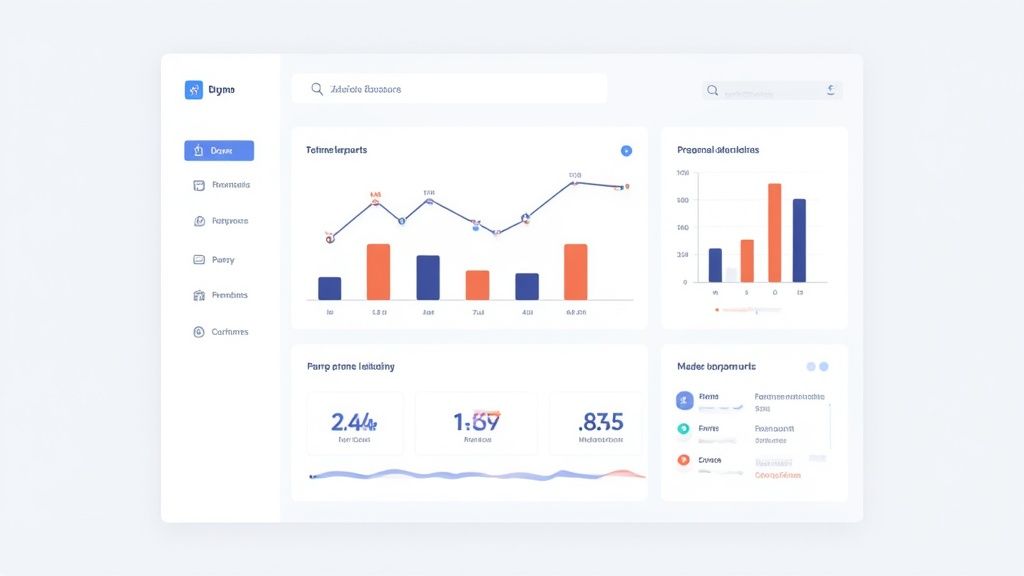 Putting an omnichannel communication platform in place is a major step for any business. But how do you know if it's truly working? The answer isn't found in impressive-looking dashboards alone. Real success is measured by numbers that tie directly to your business objectives and the quality of your customer experience. It's time to look past surface-level stats and focus on the Key Performance Indicators (KPIs) that tell the whole story.
Think of it like taking your car for a service. A shiny exterior is nice, but the mechanic checks the engine's health—oil pressure, fluid levels, and overall performance. In the same way, you need to look under the bonnet of your communication strategy. The most important numbers are the ones that show how well your operations are running and how happy your customers are.
Core Metrics for Real Progress
The most meaningful KPIs are those that connect operational efficiency with customer happiness. By tracking these, you can create a clear starting point and set achievable goals for improvement.
Here are the key metrics you should be watching:
- Customer Satisfaction (CSAT): This is the direct measure of how customers perceive their interactions with your brand. A rising CSAT score is a strong signal that your unified communication approach is creating better experiences.
- First-Contact Resolution (FCR): This metric shows how often you solve a customer's problem on the very first try, no matter which channel they used. A high FCR rate means your agents have the information they need to act decisively, which reduces customer frustration and follow-up contacts.
- Average Response Time: This tracks the speed at which your team first replies to a customer's query across all channels. A low average response time is a clear benefit of a well-organised omnichannel setup.
Monitoring these figures provides you with insights you can act on. For example, an improvement in your FCR not only makes customers happier but also directly reduces your operational costs. To learn more about this connection, have a look at our guide on measuring customer satisfaction and its impact.
Advanced Analytics for Deeper Insights
Beyond these fundamental metrics, a capable omnichannel communication platform offers advanced analytics that explain the "why" behind the data. For instance, sentiment analysis tools can review customer messages to detect their emotional state, helping you to spot and address frustration before it becomes a major issue.
Another powerful feature is customer journey mapping, which creates a visual representation of how customers move between different touchpoints. This allows you to pinpoint and eliminate friction in their experience. When you connect these operational enhancements to business outcomes like customer lifetime value and revenue growth, you build a clear and compelling case for your investment.
Building For Tomorrow's Customer Expectations
The world of customer communication is always moving, but a smart choice in your omnichannel communication platform can prepare you for success for years to come. To stay ahead, businesses need to anticipate what customers will want next. This involves looking past today’s features and preparing for tomorrow’s technology, ensuring your platform is adaptable and ready for what’s around the corner. Choosing a platform isn't just about fixing current issues; it's an investment in your company's future flexibility and its capacity to meet customer needs before they even know they have them.
Emerging Technologies Shaping the Future
The next wave of customer interaction is already forming, powered by new developments that make conversations more natural, secure, and proactive. These aren't far-off ideas; they are technologies that leading platforms are already building into their plans.
- Truly Conversational AI: The next generation of AI will evolve beyond simple chatbots to become genuinely helpful assistants. They will understand subtlety, predict customer needs based on past interactions, and offer solutions that feel human and empathetic, not robotic.
- Voice Commerce Integration: Buying things will become even simpler as voice commands become a standard way to purchase products or book services directly within a conversation. This will make the journey from asking a question to making a purchase completely smooth.
- IoT for Proactive Support: Imagine a smart fridge in a customer's home reporting a potential problem before the customer even notices it. Internet of Things (IoT) integration allows an omnichannel communication platform to automatically create a support ticket and start a resolution. This shifts support from being a reactive task to a proactive service.
Choosing a Platform Built to Last
Future-proofing your communication strategy is about choosing a partner, not just a product. The long-term success of your platform hinges on its foundational flexibility and the ecosystem that supports it. When you look at different providers, give priority to those with a strong developer community and a clear, consistent schedule of feature updates. This signals a real commitment to ongoing improvement and adaptation.
Your contract should also offer room to expand, letting you scale your services or add new channels without facing steep costs. A flexible platform and a forward-thinking provider are your best defence against being left behind by technology, making sure your customer communication strategy remains effective for years.
Ready to build a customer communication strategy that’s prepared for tomorrow? Discover how Voicetta combines today's essential features with a forward-looking vision to keep your business ahead of customer expectations.
Was this useful?
If this article helped, add Voicetta as a preferred source in Google Search. Your results can then highlight our writing.
Add as preferred source