
Blog
Outsourcing Business Process: Boost Efficiency & Growth
At its core, outsourcing is simply the practice of hiring another company to handle specific parts of your business. It's about letting your team focus on the bigpictu...
At its core, outsourcing is simply the practice of hiring another company to handle specific parts of your business. It's about letting your team focus on the big-picture, revenue-driving activities, rather than getting tied up in the weeds with repetitive but necessary tasks like admin, customer support, or payroll. Think of it as a way to sharpen your focus and bring in specialised talent exactly where you need it.
The Strategic Shift to Outsourcing Business Processes

Picture your business as a high-end restaurant kitchen. You wouldn’t have your star chef washing pots and pans, would you? Of course not. Their time and talent are far too valuable for that. While clean dishes are absolutely critical to the restaurant's success, you have a dedicated crew to handle it so the chef can focus on creating incredible food.
This is exactly what business process outsourcing does for your company. It allows your key players to concentrate on what they do best—innovating, strategising, and driving growth.
What started as a simple cost-cutting trick has blossomed into a powerful strategy for gaining a real competitive edge. When you hand over functions like IT management, accounting, or even your entire customer service operation to external experts, you're not just saving money; you're often getting a higher level of quality and efficiency in return.
Core Functions vs Outsourceable Processes at a Glance
Deciding what to keep and what to delegate is a crucial first step. The goal is to hold onto the strategic functions that define your brand and competitive advantage while outsourcing the operational tasks that support them. This table breaks down the difference.
| Business Area | Core Strategic Function (Keep In-House) | Outsourceable Process (Delegate) |
|---|---|---|
| Technology | Developing proprietary software or core product technology. | IT helpdesk support, network security, routine maintenance. |
| Finance | Financial planning, investment strategy, capital allocation. | Payroll processing, bookkeeping, accounts payable/receivable. |
| Customer Service | Defining the overall customer experience and brand voice. | Handling inbound calls, email support, live chat management. |
| Marketing | Brand strategy, core messaging, product positioning. | Social media management, content creation, SEO analytics. |
| Human Resources | Company culture development, strategic talent acquisition. | Benefits administration, payroll, initial candidate screening. |
By separating these responsibilities, you empower your internal team to excel at high-value work, knowing the essential operational tasks are in capable hands.
Gaining A Competitive Advantage
Instead of pouring time and money into building a whole department from the ground up, you can instantly plug into a team of seasoned specialists. This gives you immediate access to a deep well of expertise you likely don't have internally, allowing you to scale up or pivot much faster.
Today's sharpest companies are leaning into for a few key reasons:
- Sharpened Focus: It keeps your team’s eyes on the prize—the core activities that directly boost your bottom line.
- Instant Expertise: You get the skills of experienced pros in areas like cybersecurity, financial compliance, or customer engagement without the headaches and high costs of hiring.
- Serious Efficiency: BPO partners live and breathe this stuff. They use fine-tuned processes and technology to get things done faster and more accurately, which helps eliminate operational drag.
The modern take on outsourcing isn't about just shipping work off-site; it's about bringing world-class expertise on board. It cleverly turns fixed labour costs into flexible, variable ones, giving you the agility to navigate whatever the market throws at you.
Ultimately, making this shift makes your entire business more nimble and tough. As you start thinking about this for your own company, it’s worth looking at where the global talent pools are. This guide on the Top 10 Best Countries for Outsourcing in 2025 offers some fantastic insights.
Why Poland Is a Top Destination for BPO Services
When companies start scouting for the right place to outsource, it feels a lot like a talent search. They’re looking for a perfect mix of skill, reliability, a stable economy, and real value. And more and more, that global search is leading them straight to Poland, a country that has quietly become a true BPO powerhouse.
This isn't about finding the cheapest labour. Choosing Poland has become a strategic move for businesses that refuse to compromise on quality. It’s an investment in a partnership that delivers expertise, dependability, and a solid foundation for growth.
A Deep Reservoir of Skilled Talent
At the heart of Poland's appeal is its impressive pool of professionals. The country has a highly educated workforce with a real knack for technical and financial skills. Polish teams are known for their strong work ethic and productivity, consistently delivering results that meet, and often surpass, Western European and North American standards.
Language skills are another huge plus. It’s not just about English proficiency; you’ll find teams fluent in other key European languages like German and French. This multilingual talent makes Poland an incredibly versatile hub for managing international operations, whether it’s customer support or complex financial reporting.
A recent report from Kearney underscores this, ranking Poland 13th globally as a top location for BPO and Shared Services Centres. That puts it right at the top in Europe, just a hair behind the United Kingdom. You can find more insights into why Polish outsourcing companies are so highly rated on axendi.com.
Economic Stability and Strategic Location
Beyond its people, Poland offers a stable and welcoming business environment. As a member of the European Union, it provides the legal and economic security that businesses crave when they expand operations abroad. Its economy has proven incredibly resilient, which makes it a dependable place for building long-term partnerships.
And then there's its location. Sitting right in the centre of Europe, Poland’s time zone lines up perfectly with major Western European markets. This simple advantage gets rid of frustrating communication delays and makes collaboration feel natural, making it a low-risk, high-reward choice.
For businesses focused on optimising their operations, this blend of talent and stability is a powerful combination. You can explore how to reduce operational costs while maintaining quality by looking into smart outsourcing strategies.
Cultural Alignment and a Focus on Quality
Finally, there’s a crucial element that’s easy to overlook: cultural fit. Polish professionals share a strong cultural alignment with Western business practices. This common ground smooths out communication, reduces misunderstandings, and just makes projects run more efficiently.
This alignment also means there's a deep-seated focus on quality, not just cost-cutting. When a company decides to outsource a business process to Poland, they aren’t just offloading tasks. They’re partnering with teams genuinely committed to excellence, building stronger, more efficient operations ready for whatever comes next.
Finding Your Fit with Different Outsourcing Models
Deciding to outsource a business process isn't a one-size-fits-all affair. It’s a bit like choosing where to source a critical component for your product. Do you get it from a supplier in your own city, from a specialist in a neighbouring country, or from a mass producer halfway across the world? Each choice comes with its own set of pros and cons.
The world of outsourcing works in a similar way, generally breaking down into three models based on geography. The right one for you will come down to what you value most – cost, easy communication, tight control, or some mix of the three. Let's break them down so you can find the perfect fit.
Onshoring: The Local Expert
Onshoring is exactly what it sounds like: partnering with a company located in your own country. If your business is in Manchester, you might work with a firm in London or maybe Edinburgh. The biggest win here is proximity. You can forget about time zone gymnastics and cultural missteps, making communication feel effortless.
This model is a fantastic choice when you need a lot of hands-on collaboration or when you're dealing with sensitive data that you’d rather keep under your own country's laws. It's usually the most expensive route, but you're paying for convenience, cultural alignment, and straightforward management.
Nearshoring: The Best of Both Worlds?
Think of nearshoring as the happy medium. This is when you hand off tasks to a company in a nearby country, often one in a similar time zone. A classic example is a German tech firm outsourcing its development to a crack team in Poland.
This approach gives you a really smart balance. You get a serious cost advantage over onshoring, but without the logistical headaches that come with huge time differences. It keeps collaboration simple while still reining in labour costs, offering a great mix of value and accessibility.
This visual helps to show that trade-off between cost savings and how easy it is to work together.
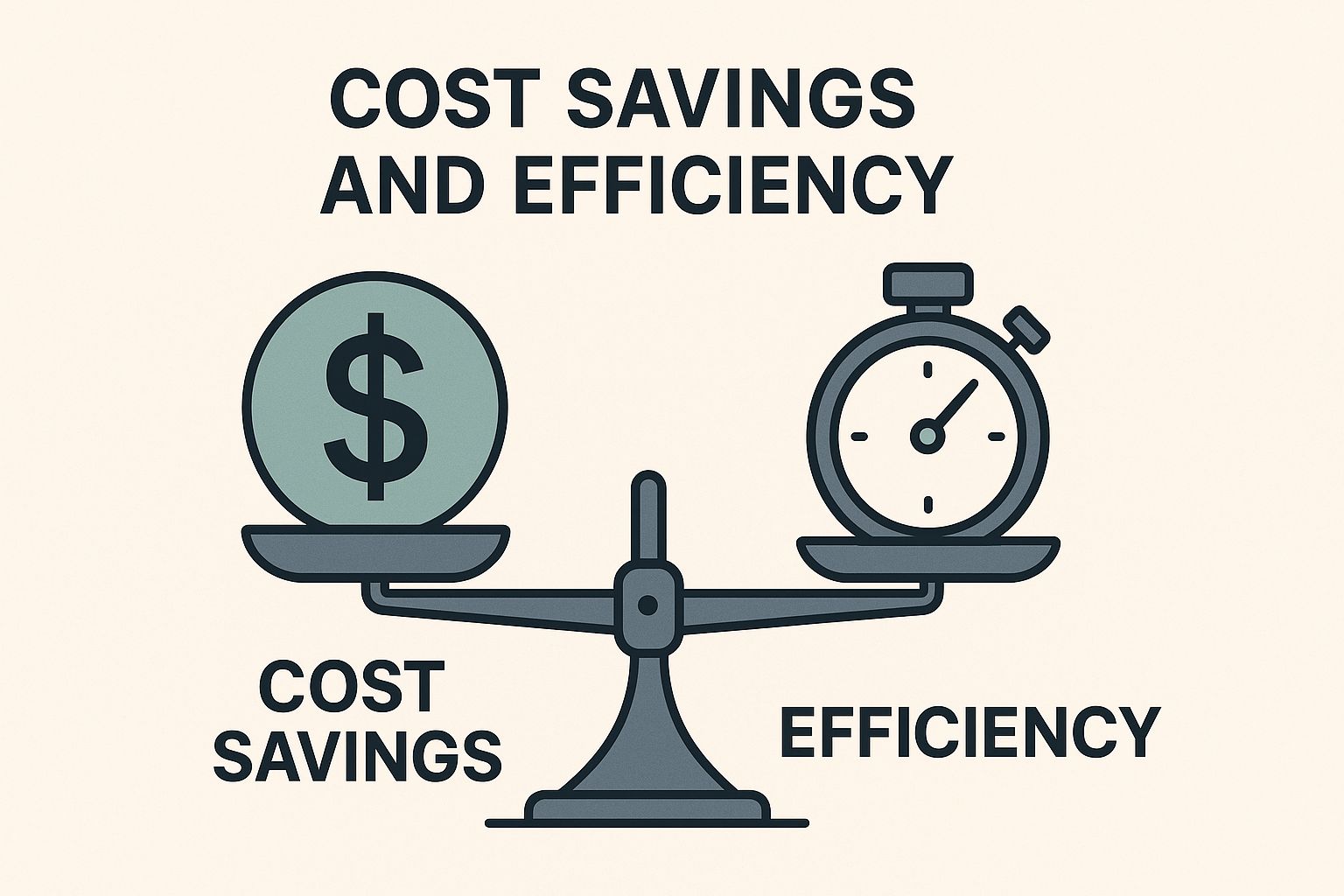
As you can see, it's all about what you prioritise: keeping expenses low or making teamwork as efficient as possible.
Offshoring: The Global Cost Leader
Finally, there's offshoring, which means you're partnering with a provider in a distant country. Think of a UK retailer hiring a call centre in the Philippines. The number one reason businesses do this is almost always significant cost reduction. Labour and operating costs can be worlds apart.
Of course, that financial upside comes with its own challenges. You have to navigate big time zone gaps, potential language barriers, and different cultural norms. Making offshoring work requires rock-solid communication plans and crystal-clear instructions to close that geographical divide.
When you get it right, though, offshoring opens the door to a massive global talent pool and can slash your operational overheads. Those savings can be funnelled right back into what your business does best, fuelling growth and innovation.
For companies looking to scale repetitive tasks, exploring options in enterprise process automation can be a powerful partner to an offshoring strategy, adding another layer of efficiency. Ultimately, the best model is the one that strikes the perfect balance between cost, control, and collaboration for your business.
Alright, let's move from the 'what' and 'why' of outsourcing to the 'where'. Now that you've got a handle on the different models, you're probably wondering which parts of your own business could be handed over to an expert.
The great thing about outsourcing is its sheer flexibility. You can start small by delegating a single, time-consuming task, or you can go all-in and outsource an entire department. It's all about strategically shedding operational weight so your core team can zero in on what truly matters: innovation and growth.
Let's dive into some of the most common and impactful areas where businesses are winning with outsourcing.
Information Technology and Development
For many companies, IT is the first and most obvious place to look. Technology changes at a blistering pace, and trying to keep a full-time, in-house team at the absolute cutting edge can feel like a never-ending financial and logistical headache.
Instead of trying to be an expert in everything, you can bring in specialists exactly when you need them. For instance, businesses looking to tighten up their development cycles and operational efficiency often find huge value in dedicated DevOps outsourcing services. This gives them instant access to deep expertise in things like cloud management, automation, and cybersecurity, all without the hefty price tag of hiring permanent staff.
Here are a few common IT functions that get handed off:
- Helpdesk and Tech Support: Offering round-the-clock assistance for your team and customers.
- Cybersecurity Management: Bringing in the pros to monitor threats and protect your digital turf.
- Cloud Infrastructure: Making sure your cloud setup is secure, optimised, and not burning a hole in your budget.
- Software Development: Tapping into a global talent pool of developers for specific projects without the long-term overhead.
Finance and Accounting
Financial tasks are the lifeblood of a business, but let's be honest—they're also highly repetitive and rule-based. This makes them a perfect fit for outsourcing. When you hand over functions like bookkeeping or payroll, you're not just cutting down on the risk of expensive mistakes; you're also gaining a team of financial pros who live and breathe compliance and can offer genuinely strategic advice.
Think about a small e-commerce shop owner. By outsourcing bookkeeping and payroll, they suddenly get hours back each week. Instead of wrestling with spreadsheets, they can focus on what they do best, like marketing their products and finding new customers.
By delegating routine financial tasks, companies can transform their finance departments from simple record-keepers into strategic advisors who analyse data to guide business decisions and drive profitability.
Human Resources and Customer Support
Two other areas practically built for outsourcing are HR and customer support. Both are absolutely critical for building a great company culture and keeping customers happy, but managing them in-house can drain a shocking amount of time and resources.
The BPO market for these services is huge for a reason. Take Poland, for example—its outsourcing sector is on track to pull in around US$3.44 billion in 2025, covering everything from customer care to complex HR and finance tasks. You can dig into more data on Poland's strong BPO market on Statista.com.
Outsourcing these functions means you can plug directly into proven systems for finding top talent, onboarding new hires, and delivering amazing customer experiences 24/7. It's a smart move that gets rid of operational bottlenecks and puts these vital functions in the hands of people whose entire job is to be the best at them.
How to Choose the Right Outsourcing Partner

Picking an outsourcing provider isn't like hiring a temp or a simple vendor. Think of it more like choosing a long-term business partner, because that’s exactly what it is. This one decision will ripple through your daily operations, your team's morale, and your customers' happiness for years.
It’s tempting to just compare price sheets, but that’s a rookie mistake. The real goal is to find a team that feels like a genuine extension of your own—people who get your mission and are just as committed to quality as you are. A cheap contract means nothing if it’s followed by shoddy work, endless miscommunications, and constant headaches.
Evaluate Expertise and Track Record
First things first: you need to be sure they actually know what they’re doing. Don't just take their marketing materials at face value. Dig deep into their history and look for a solid track record with businesses that look like yours, both in size and industry.
Ask for specific case studies that are relevant to the work you need done. And don't be shy about asking for client references. Any provider worth their salt will be eager to connect you with happy customers who can vouch for their performance and reliability. This is your due diligence, and it's absolutely critical when you outsource a business process.
A great partner does more than just tick boxes on a task list. They bring strategic insights to the table, suggesting process improvements and adding value you didn't even know to ask for.
Prioritise Communication and Cultural Fit
Technical chops are vital, but even the most skilled team will fail if communication is poor and the culture is a bad fit. Pay close attention to how they communicate from your very first conversation. Are they quick to respond? Are they transparent? Do they get ahead of problems?
Think about how their team will actually mesh with yours day-to-day.
- Language Proficiency: Make sure there are no language barriers that could cause costly misunderstandings down the line.
- Working Hours: Confirm their schedule overlaps enough with yours to allow for real-time collaboration when you need it.
- Cultural Values: A shared work ethic and a similar approach to problem-solving will make the entire relationship smoother and far more productive.
Getting this alignment right is what makes an outsourced team feel like your team, not just a line item on an invoice. For a deeper dive, our complete guide on how you can outsource a business process provides more frameworks for finding that perfect match.
Your Outsourcing Questions, Answered
Thinking about outsourcing some of your business operations is a big step, and it's natural to have questions. Let's walk through some of the most common ones that pop up when business leaders are weighing their options.
How Do We Keep Our Company Culture Alive with an Outsourced Team?
This is a huge concern for many, and rightly so. The secret isn't a secret at all: you have to treat your outsourced partners like they're part of your team, not just a service you've hired.
Pull them into your virtual company all-hands meetings. Keep them in the loop with regular business updates. Get them on the same Slack channels your in-house staff uses. Think about virtual coffee breaks or team-building games. When they truly understand your mission and values, they stop feeling like outsiders and start acting like part of the family. It’s all about fostering that sense of shared purpose.
Isn't Outsourcing Just for Big Corporations?
That’s a common myth, but it couldn't be further from the truth. In fact, outsourcing can be a game-changer for small and medium-sized businesses (SMBs) and startups. It gives you instant access to specialised talent and powerful technology without the hefty price tag of hiring full-time employees.
Think of it this way: outsourcing lets smaller companies punch well above their weight. It allows you to compete with the efficiency and expertise of much larger organisations, levelling the playing field and paving the way for serious growth.
What's the Very First Thing I Should Do to Start Outsourcing?
Before you even think about looking for a partner, you need to look inward. The essential first step is a thorough internal audit of your own operations.
Take a hard look at all your business processes. Pinpoint the ones that are repetitive, time-consuming, and not part of your core business—these are your best bets for outsourcing. Once you’ve picked a process, map it out. Clearly define the scope of the work, what a successful outcome looks like, and the key performance indicators (KPIs) you'll use to track progress. Getting this clarity upfront is absolutely critical before you start vetting potential partners.
Ready to see how intelligent automation can enhance your outsourcing strategy? Voicetta ensures no customer interaction is ever missed, handling calls and chats 24/7 to qualify leads and schedule appointments, freeing your team for high-value work. Discover how it works at https://voicetta.com.
Was this useful?
If this article helped, add Voicetta as a preferred source in Google Search. Your results can then highlight our writing.
Add as preferred source