
Picture this for a moment: you’re miles away from your ageing parents, but you can still check in on them, making sure they’re safe and well. This isn’t a scene from a futuristic film; it’s the new reality that senior care technology is bringing to families all across Poland. It’s about more than just gadgets—it’s about preserving dignity, strengthening connections, and giving everyone involved a bit more peace of mind.
The New Face of Caring for Seniors in Poland
For as long as anyone can remember, the foundation of senior care in Poland has been family. It’s a deeply held cultural value. Children and relatives have always been the ones to step up and support their elders. This tradition of informal, close-knit care is a beautiful thing, but let's be honest—it’s facing some serious headwinds in our modern world.
Today, families are often scattered across different cities, sometimes even different countries. Juggling a career, raising your own kids, and managing a personal life makes providing daily, hands-on support a real logistical puzzle. This can stretch caregivers to their breaking point, leading to stress and burnout. It’s right at this intersection of tradition and modern life that a quiet, but significant, shift is taking place.
Bridging Gaps with Compassionate Tools
Let’s get one thing straight: senior care technology isn't here to replace the irreplaceable human touch of family. It’s better to think of it as a helpful, compassionate partner. It’s a tool that bridges the geographical distances and empowers both seniors and the people who love them, allowing those traditional values to thrive in a contemporary world.
What this technology really does is make the whole journey of caregiving more sustainable. It acts as a digital set of eyes and ears, giving you reassurance when you simply can't be there in person.
The core idea is brilliantly simple: use technology to make care better, not to replace the carer. These tools are built to strengthen the support network around a senior, making it more resilient and responsive, no matter how many kilometres separate you.
The need for these solutions is especially stark when you look at Poland's unique care landscape. The entire system has historically leaned on the sheer dedication of family members. In fact, a staggering 80% of all care within Poland's long-term care system is provided informally by family. This figure really drives home the cultural weight placed on relatives. To get the full picture, you can read more about Poland's long-term care model.
A New Chapter in Family Care
This cultural backdrop is precisely why senior care technology is becoming so vital. It doesn’t try to change why we care—that deep-seated, instinctual desire to look after our own. Instead, it changes how we can do it. It offers practical tools that fit the way we live now.
- Peace of Mind: If you're an adult child living in another city, the simple knowledge that your parent has an emergency alert button, or that their smart dispenser just reminded them to take their medicine, is priceless.
- Sustained Independence: For seniors, these tools are gateways to freedom. They can stay in their own cherished homes, keep their routines, and hold onto their sense of self-sufficiency for much longer.
- Reduced Caregiver Strain: Technology can take over the nagging reminders, monitor for potential emergencies, and make communication a breeze. It helps lift some of that constant, heavy weight off a caregiver’s shoulders.
When you boil it all down, senior care technology is helping Polish families write a new chapter. It’s a story where cherished traditions and clever innovation can finally work together, ensuring that caring for our loved ones remains the loving act it’s meant to be, not an overwhelming burden.
Building a Digital Safety Net for Your Loved Ones
Thinking about technology for an older loved one can feel like a huge, complicated task. But let's simplify it. Instead of picturing complex gadgets, imagine you're building a digital safety net. This isn’t about just one device; it's about weaving together different layers of support that protect their independence while giving you precious peace of mind.
Just like a real safety net, this digital one has several interwoven strands. The first, and most urgent, is all about safety and emergency alerts. The second helps manage daily health and wellness. And the third, equally vital strand, tackles the often silent problem of social isolation. When combined, they create a strong, reassuring web of care.
The First Layer: Safety and Monitoring
This is the foundation. This layer is all about tools that act as silent guardians, ready to alert you or emergency services the moment something goes wrong. They are the first responders in your digital toolkit.
Take a personal emergency response system (PERS) pendant. For someone like Jan from Kraków, who lives alone but is still quite active, wearing a simple alert button is a massive comfort for both him and his daughter. He knows that if he ever needs help, a single press is all it takes.
But what if a fall happens and he can't press the button? That’s where automatic fall detection comes in. Modern wearables, like smartwatches, are clever enough to sense the unique impact of a fall and automatically send an alert to pre-selected contacts. It's a game-changer, turning a reactive worry into a proactive plan.
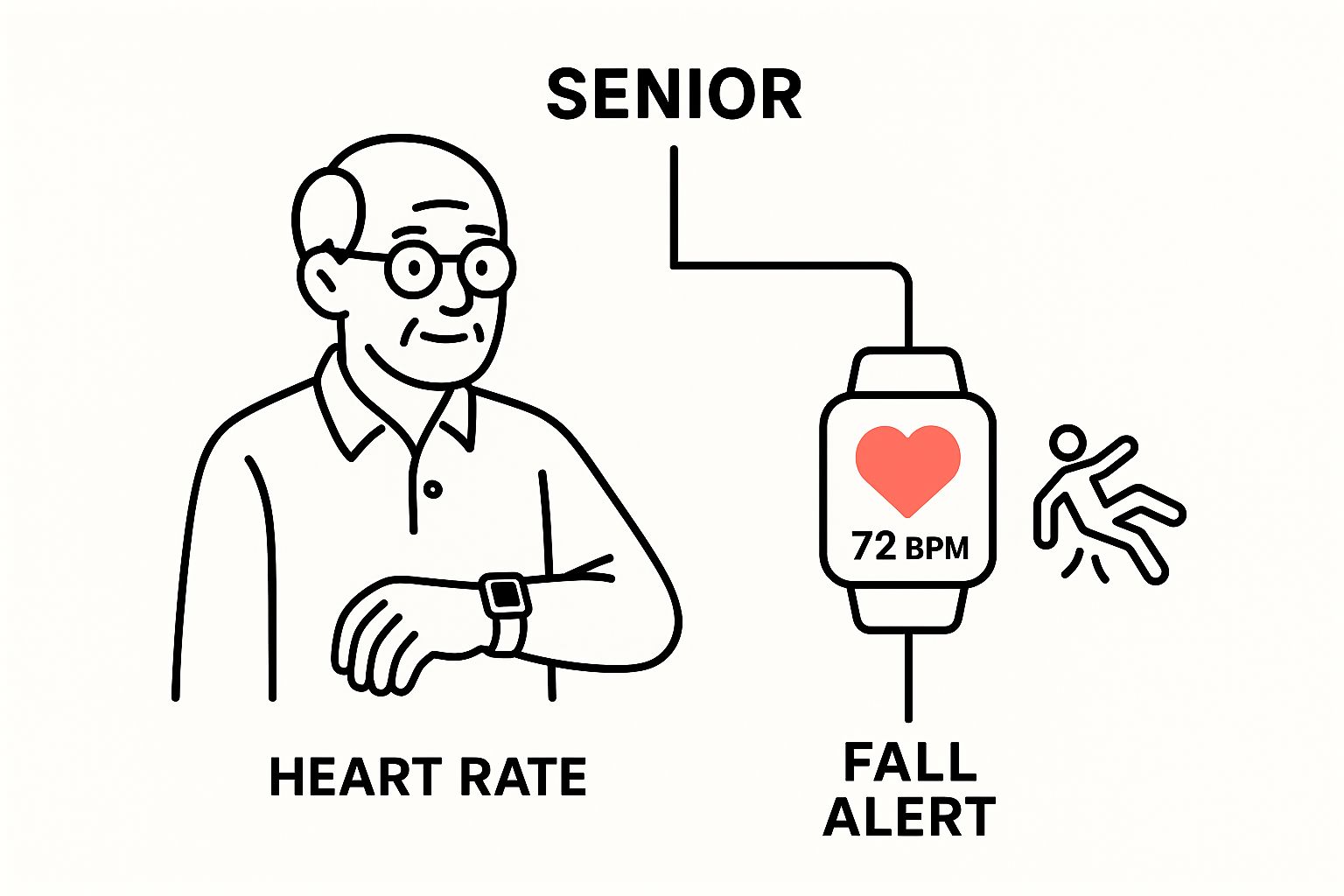
As you can see, a single device can offer several layers of protection, from tracking falls to monitoring heart rate, making it a powerful and efficient part of any digital safety net.
The Second Layer: Health and Wellness Management
With immediate physical safety covered, the next layer of our net focuses on the day-to-day rhythm of staying healthy. This is where technology helps maintain routines and manage chronic conditions right from home, cutting down on stressful clinic visits.
A common headache for many seniors is managing multiple prescriptions. A smart medication dispenser can honestly change everything. These devices can be set up to release the right pills at the right time, often with a helpful sound or light to remind them. Better yet, some models will ping a family member's phone if a dose is missed, closing a critical gap in the circle of care.
This layer of technology isn’t just about reminders; it's about empowering seniors to actively participate in their own health management, which is vital for maintaining a sense of control and dignity.
Telehealth platforms are another core piece of this puzzle, allowing for virtual chats with doctors, specialists, and therapists. This doesn’t just save time and travel; it ensures consistent access to medical advice. To really strengthen this layer, consider solutions like remote visual support, which can help you guide a loved one, step-by-step, through using a new blood pressure cuff or glucose meter over a video call.
The Third Layer: Connection and Engagement
The final layer of our safety net is arguably the most human. Its entire purpose is to fight the loneliness and social isolation that can take a serious toll on both mental and physical health. It's a bigger problem than many realise—studies show that over one-third of adults aged 45 and older feel lonely, a number that only grows with age.
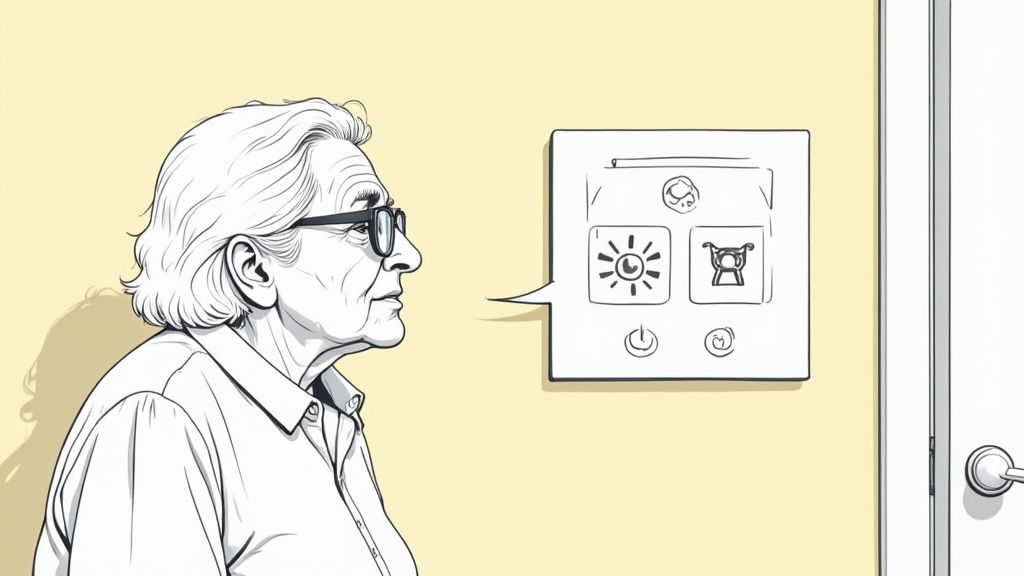
Thankfully, technology offers some beautifully simple ways to bridge that distance. Specialised video calling portals with large, easy-to-see buttons and pre-programmed contacts let seniors connect with family without fumbling through confusing menus. These tools make spontaneous, face-to-face chats possible again, shrinking the miles between generations.
It goes beyond just video calls, too. There are apps and platforms designed for social connection, offering everything from online classes and virtual book clubs to community forums. These resources provide mental stimulation and a much-needed sense of belonging. The role of voice-activated assistants is also growing; you can find out more about how virtual assistants in healthcare are helping with daily tasks and providing companionship in our detailed guide.
By weaving these three layers together—Safety, Health, and Connection—you create a truly resilient and compassionate digital safety net. It’s a system where each piece of technology works in harmony to support your loved one's independence, wellbeing, and happiness.
Poland's Quiet Revolution in Senior Care
Something remarkable is happening across Poland. We're in the midst of a digital health revolution, and it's our senior population who are finding themselves at the very heart of this change. It’s a powerful story, driven by a blend of government support and a very real, growing demand for smarter healthcare. This isn't just a case of upgrading old systems; we're fundamentally rethinking what it means to care for our elders.
The real shift is in the mindset. We’re moving away from the old, reactive model of healthcare – the one where we only step in when a problem has already become a crisis. Instead, we’re leaning into proactive, preventative, and deeply personal care. The goal is to give seniors the tools they need to live healthier, more independent lives for as long as possible.
Telehealth and Remote Monitoring are Changing the Game
Think about what it’s like for a senior with a chronic heart condition living in a more rural part of Poland. For years, managing their health involved long, often exhausting journeys to see a specialist in a big city. Telehealth is completely flipping that script. Now, regular check-ins with doctors can happen through a simple video call, right from the comfort of their own living room.
This isn't just about convenience. It dramatically reduces the physical and emotional toll on patients and their families. More importantly, it provides that consistent medical oversight crucial for managing long-term illnesses. This kind of tech-enabled care is quickly becoming the new normal.
This isn't just a passing trend; it's a deep-seated response to our country's changing demographics. We're seeing the Polish home healthcare software market poised for major growth, directly fuelled by this surge in telehealth and remote support, and it's all backed by serious national investment in digital health.
This isn't just talk. The numbers show the Polish home healthcare software market is projected to expand significantly through 2025. It’s a clear sign of growing confidence and widespread adoption of telehealth, remote patient monitoring, and mobile health apps. You can find more details about Poland's home healthcare market trends and the data behind this shift.
How AI Turns Raw Data into Life-Saving Decisions
Virtual consultations are just the beginning. The real game-changer is the integration of Artificial Intelligence (AI), which adds a whole new layer of insight to senior care. AI’s superpower is its ability to comb through massive amounts of health data and spot subtle patterns that would be nearly impossible for a human to catch. This is where care becomes truly proactive.
Imagine a remote patient monitoring device that tracks vitals like blood pressure, glucose levels, or heart rhythms. These gadgets quietly collect a constant stream of information.
- Predictive Alerts: An AI system can watch this data in real-time. If it notices a slight, negative drift in a patient's readings over a few days, it can alert a doctor long before the patient even starts to feel unwell.
- Personalised Care Plans: By learning an individual's unique health rhythms, AI helps create truly bespoke care plans. This could be as simple as a small tweak to medication or a suggestion for a specific lifestyle change, all aimed at heading off a potential health crisis.
This is what it's all about—turning simple data points into actionable, sometimes life-saving, insights. It’s the very essence of modern preventative medicine: stopping problems before they even start.
Key Types of Senior Care Technology and Their Functions
The world of senior care technology is incredibly varied, with different tools designed to tackle specific challenges. To make sense of it all, it helps to break them down into a few key categories that are making the biggest difference in Poland today.
| Technology Category | Primary Function | Common Examples |
|---|---|---|
| Telehealth Platforms | Connecting patients and doctors for virtual consultations and follow-up care. | Video calls with GPs and specialists, secure e-Prescription services. |
| Remote Patient Monitoring | Tracking vital signs and key health metrics from the comfort of home. | Smart blood pressure cuffs, connected glucometers, wearable ECG monitors. |
| Medication Management | Helping seniors stick to complex prescription schedules. | Automated pill dispensers with alerts, medication reminder apps on smartphones. |
| Emergency Alert Systems | Providing a lifeline for immediate help in case of a fall or medical emergency. | Wearable pendants with an emergency button, sensors with automatic fall detection. |
While each of these technologies solves a specific problem, their true power is unlocked when they work together. They form a digital safety net that not only helps seniors maintain their precious independence but also gives immense peace of mind to their families. It's a tangible expression of Poland's commitment to caring for its ageing population with dignity and the best tools available.
How Seniors Really Feel About New Technology
“But will my mother actually use this?”
It’s probably the most honest and common question I hear from families exploring senior care technology. We all carry this picture in our minds of older adults being completely against anything with a screen or a power button. The truth, however, is a lot more complex and, frankly, much more optimistic than that.
It's not about age; it's all about value. An older person, whether in Poland or anywhere else, will happily welcome a new device for one straightforward reason: it makes their life genuinely better. They don't adopt tech because they suddenly love gadgets. They adopt it when they see a clear, practical payoff. Does this gadget help me stay in touch with my grandchildren? Does it make me feel safer when I'm home alone? Does it make a daily chore that’s become a struggle a little bit easier? If the answer is yes, you'll find the motivation to learn is already there.
The Three Pillars of Technology Acceptance
I like to think of a senior’s willingness to try something new as a three-legged stool. If any one of those legs is shaky, the whole thing will probably topple over. For technology to be accepted, it needs to stand firmly on usefulness, simplicity, and encouragement.
This isn't just a hunch I've developed over the years; research backs it up. A recent analysis looking at healthcare technology acceptance among older adults in Poland found that it all boils down to three main things: how useful they believe it is, how easy it is to use, and social influence—like a gentle nudge from family. The data shows a powerful link between these factors and a senior's intention to use health tech, with perceived usefulness being the strongest driver of all. You can dive deeper into these findings on technology adoption in Poland.
What this tells us is that our entire approach needs to be built on this foundation. We can't just drop a box on the coffee table and walk away. We have to be their guides on this journey.
The trick is to frame the technology not as a complicated piece of electronics, but as a simple answer to a real-life problem. It’s not a “tablet”; it’s a “window to see your grandkids.” It’s not a “fall detection sensor”; it’s a “guardian angel” that watches over you.
Designing for Dignity and Ease of Use
That second leg of the stool, simplicity, is where so many products either hit a home run or fail spectacularly. A user-friendly design isn't a nice-to-have; it's an absolute must. For a senior, that usually means:
- Large, clear buttons with high-contrast text that are easy on the eyes.
- Loud, distinct audio for alerts and calls that can cut through any hearing challenges.
- Intuitive, clutter-free screens that show only what’s needed, without a hundred confusing options.
A device that makes you dig through layers of menus, uses tiny icons, or comes with a manual written in jargon is doomed to become a very expensive paperweight. The best senior care tech feels like it was designed with real empathy, thinking ahead about the user's needs and possible frustrations. Giving clear instructions and patient help is vital, a principle that holds true across many fields dealing with similar customer service challenges.
The Power of Family Encouragement
And that brings us to the third leg: the human touch. The patient, gentle support from a son, daughter, or grandchild can be the one thing that gets them over the initial hump of hesitation.
Setting up the device together, doing a few "practice runs," and just being there to answer questions can turn a scary experience into a shared, positive moment. Your hands-on help and encouragement show them this isn't something being pushed on them. Instead, it’s a gift of connection and safety from someone who loves them. It changes the technology from a foreign object into a symbol of your care and support.
When a senior knows that you are their tech support, their confidence to give it a try skyrockets.
A Practical Guide to Setting Up Tech at Home
Bringing new technology into a parent's or loved one's home can feel like a huge, intimidating project. It’s easy to get overwhelmed. But let's reframe this: think of it less as a technical installation and more as a family collaboration. With a bit of careful planning and a lot of empathy, you can introduce tools that bring genuine peace of mind and connection, rather than frustration.
This isn't about just buying gadgets. It's about starting with a simple, honest conversation to figure out what’s truly needed. That way, every piece of tech you bring in has a clear, welcome purpose.
Start by Identifying the Core Need
Before you even think about opening a new browser tab to shop, sit down and pinpoint the single biggest concern you're trying to solve. Every family's story is different, so your starting point has to be tailored to your loved one's real-life situation.
Is the most significant fear a fall when no one is around to help? Is the main daily struggle just remembering to take medication at the right time? Or is it the quiet, creeping feeling of loneliness that's become the most pressing issue?
The secret is to focus on the problem first, not the product. When you do this, the technology becomes a welcome solution to a real frustration. A device that solves a daily headache is one that will actually get used and appreciated.
Once you have that clarity, you can explore the right type of senior care technology. For example:
- For Fall Risk: A Personal Emergency Response System (PERS), especially one with automatic fall detection, is the most logical place to start.
- For Medication Management: An automated pill dispenser that gives a little audio or visual nudge is a perfect fit.
- For Social Isolation: A simple, one-touch video calling device can be a wonderful tool for bridging the distance between family members.
Choosing the Right Tools for Your Budget
With a clear need in mind, it's time to find the right devices. Remember, the "best" device isn't always the most expensive or the one with the most features. Often, the best choice is the one that's reliable, incredibly simple to operate, and fits comfortably within your budget.
When you're comparing options, think about the total cost. Some devices are a one-time purchase. Others, like monitored alert systems, come with a monthly subscription fee. It's really important to factor those ongoing costs into your plan. For some families, finding ways to make these services more affordable is crucial; you can find helpful advice on how to reduce operational costs that can be applied to household expenses, freeing up funds for essential care.
A common mistake is creating a ‘patchwork quilt’ of gadgets from different brands that can't talk to each other. Whenever you can, look for systems that work together. For instance, can a smart home hub connect to both the video doorbell and the smart plugs? A unified system is always simpler to manage in the long run.
The Human Side of the Setup Process
The technical setup is only half the job. The human side of it is where you'll find real success. How you introduce and integrate the technology can be the difference between it becoming a helpful ally or a frustrating gadget that just collects dust.
1. Introduce it Together: Don't just set it up and leave. Unbox the device with your loved one. Let them hold it, touch the buttons, and get familiar with it. This simple act turns it from a mysterious, intimidating object into their tool. Frame it by its benefit: "This little button is our special speed dial, so you can call me anytime you just want to chat."
2. Run 'Practice Drills': Don't wait for a real emergency to try it out. Do some practice runs in a relaxed, no-pressure moment. Press the emergency button and talk to the friendly person on the other end. Make a practice video call to a grandchild. These drills build confidence and muscle memory, so when it really matters, they’ll know exactly what to do without even thinking about it.
3. Create a Simple Troubleshooting Plan: What happens if the Wi-Fi drops or a battery gets low? Write down a simple, one-page guide in large, clear print. List a couple of common issues and the easy steps to fix them. Most importantly, put your name and number right at the top as the go-to person for any problem they can't solve on their own.
By focusing on collaboration and reassurance, you're doing more than just installing senior care technology—you're building a stronger, more connected circle of support.
What’s Next? The Future of Ageing Gracefully with Technology
So, where is all this heading? We’re looking at a future where senior care technology isn’t just a helpful add-on but a deeply integrated, almost invisible partner in the ageing journey. The conversation is shifting away from just reacting to emergencies and towards actively predicting and preventing them. It’s about building a world where our loved ones can truly thrive with independence and dignity.
Think about a home that genuinely understands its resident. I’m not just talking about smart lights. Imagine an environment that learns daily rhythms. If it notices that someone who always opens their curtains by 8 AM hasn't, it could trigger a gentle, non-intrusive alert to a family member, just to check in. It’s subtle support, not surveillance.
Predictive Health and Proactive Support
The real leap forward will come from predictive artificial intelligence. AI will be able to analyse faint signals from wearables and home sensors, flagging potential health risks days or even weeks before they become critical problems. We're moving beyond just fall detection to anticipating the conditions that might lead to a fall in the first place. You can get a sense of this potential by looking at how tools like AI medical staff are already starting to change the game in wider healthcare.
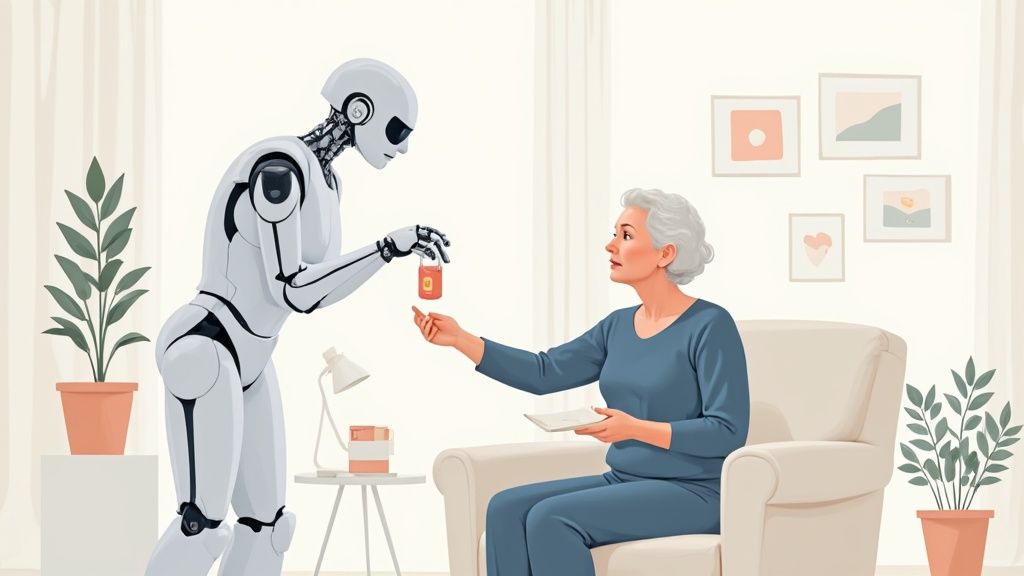
And it’s not just about monitoring. We’ll see the rise of companionable robotics. Their purpose won't be to replace human connection but to take on the daily chores that can become a burden. Picture a simple robot that can help carry laundry, reach something on a high shelf, or even provide a bit of company. It's about reducing physical strain and easing the quiet burden of loneliness.
The ultimate goal is to create an ecosystem of support that is nearly invisible, working seamlessly in the background to empower independence. It’s a future where technology acts as a silent, steadfast ally.
Getting there, however, requires a clear strategy. For organisations and even families wanting to embrace these future-focused tools, a solid plan is non-negotiable. Putting together a digital transformation roadmap provides the structure needed to adopt new technologies thoughtfully and effectively, without getting overwhelmed.
The core message hasn't changed. When chosen with empathy and implemented with genuine care, technology is one of the most powerful tools we have. It’s our best ally in helping the people we love age safely and gracefully, right in the comfort of the place they call home.
Got Questions? Let's Talk Them Through
Diving into the world of senior care technology can feel a bit overwhelming, and it's completely normal to have questions. Families often wonder about usability, cost, and, of course, privacy. Let's tackle some of the most common concerns I hear from people just like you.
"Will my parents even be able to use this stuff?"
This is probably the number one question I get, and it’s a fair one. The fantastic news is that the best companies out there design their gear specifically with older adults in mind. Think large, easy-to-press buttons, crystal-clear audio, and screens that are simple and intuitive, not cluttered.
The secret to success isn't just the device itself, but how you introduce it. A patient, gentle walkthrough from a son, daughter, or grandchild works wonders. Instead of focusing on the tech, focus on the connection. "Mum, this little button here is our special speed dial for video chats" sounds a lot friendlier than talking about software. Start with one simple tool that solves a real problem, and you can build from there.
"There are so many options. Where do we even start?"
There’s no magic bullet or single "best" device for everyone. The right place to begin is with the one thing that addresses your family's most pressing need right now. It's all about finding the tool that solves the biggest headache or offers the most significant peace of mind.
To pinpoint that starting device, ask a few key questions:
- Is a fall the biggest fear? Then a personal emergency response system (PERS) with automatic fall detection should be at the top of your list.
- Are they struggling to remember their medication? A smart pill dispenser that sends out reminders is the most direct solution.
- Is loneliness the real enemy? A simple, one-touch video calling device can make an immediate, positive difference.
When you start by solving the most obvious challenge, the technology feels less like an intrusion and more like a welcome helping hand.
"How can we be sure my parent's privacy is protected?"
This is a non-negotiable, and you're right to be cautious. The first step is always to stick with well-known, reputable companies that have clear and easy-to-read privacy policies. Look for key features like end-to-end encryption on any communication tools and secure data storage for health information.
The real key, however, is open and honest communication. Sit down with your parent and talk it through. Explain exactly what information is being shared and who has access to it. Make it clear that a fall sensor only sends an alert in an actual emergency. This builds trust and helps everyone feel comfortable and in control.
That kind of transparency is what turns senior care technology from a source of anxiety into a source of support. When you establish clear boundaries and everyone understands how the tools work, you create a system that protects both their safety and their dignity.
At Voicetta, we're passionate about the power of clear, reliable communication to build connections and deliver peace of mind. While our expertise lies in ensuring no customer interaction is ever missed, we know just how crucial dependable technology is in every part of life. See how our AI-driven communication platform can support your team 24/7.