
Blog
Streamline Operations for Business Success in 60 Seconds
Many businesses find themselves struggling with operational inefficiencies. These hidden obstacles can significantly impact productivity and hinder growth. Often, comp...
Identifying What's Really Slowing You Down
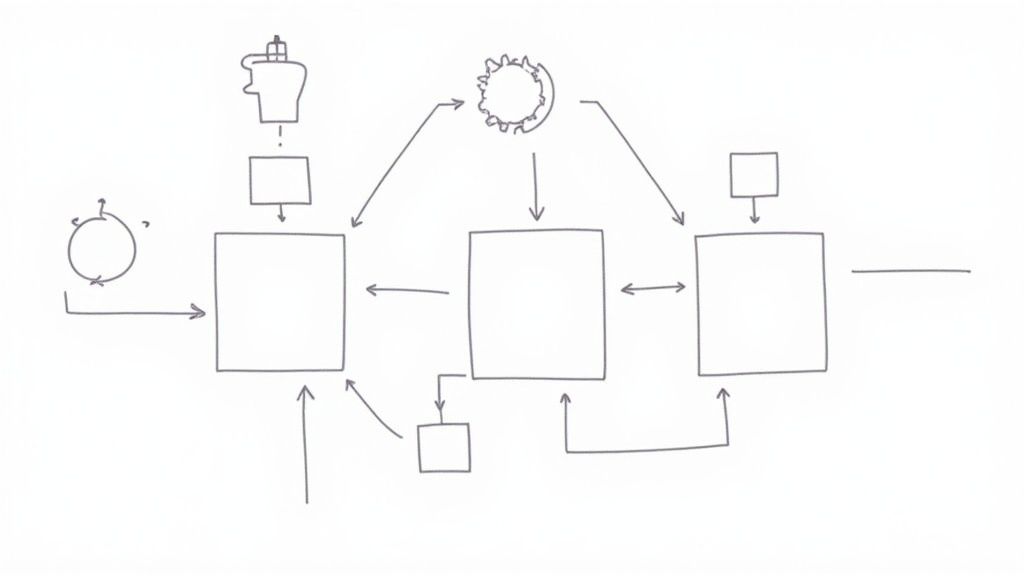
Many businesses find themselves struggling with operational inefficiencies. These hidden obstacles can significantly impact productivity and hinder growth. Often, companies fall into the trap of applying "quick fixes" to address surface-level symptoms. This reactive approach might offer temporary relief, but it rarely solves the underlying problems. In fact, these issues can worsen over time if left unaddressed. A thorough examination of the root causes is essential for truly efficient operations.
Unpacking Common Operational Pain Points
Identifying these core issues requires a systematic approach. Communication breakdowns, for instance, are a frequent culprit. Misunderstandings, whether internal among teams or external with customers, can lead to missed opportunities, project delays, and diminished customer satisfaction.
Another common pain point is the continued reliance on manual processes. These tasks are not only time-consuming, absorbing valuable employee resources, but they also increase the likelihood of errors.
Outdated or incompatible technology can also create data silos within an organization. This fragmentation hinders collaboration and the smooth flow of information, making it difficult to gain a clear overview of operational performance and pinpoint areas for improvement.
Beyond the Surface: Diagnosing Systemic Issues
While addressing individual pain points is a necessary step, it’s equally crucial to diagnose the deeper, systemic issues that contribute to these problems. This requires looking beyond the immediate symptoms to understand the underlying processes, workflows, and technologies that create bottlenecks.
For example, a high error rate in order processing might not simply be a result of individual mistakes. It could indicate a flawed order management system or inadequate training. A comprehensive diagnosis involves analyzing the entire operational ecosystem to identify the interconnected factors hindering efficiency.
From Bottlenecks to Breakthroughs: A Framework for Diagnosis
Businesses can utilize a practical framework to effectively identify these bottlenecks. This framework involves a multi-faceted approach:
-
Process Mapping: Visually documenting workflows helps pinpoint areas of redundancy, unnecessary complexity, or inefficiency.
-
Data Analysis: Analyzing key performance indicators (KPIs) reveals important trends, patterns, and potential areas for improvement.
-
Stakeholder Interviews: Gathering insights from employees across different departments provides valuable perspectives on operational challenges.
-
Technology Assessment: Evaluating existing technology systems identifies compatibility issues, outdated software, or underutilized tools.
By employing this diagnostic framework, businesses gain a clearer understanding of their operational weaknesses and can prioritize areas for improvement. This provides the foundation for implementing targeted solutions that streamline operations and drive sustainable growth. Identifying these critical bottlenecks offers a roadmap for transforming operational challenges into opportunities for optimization and innovation. This, in turn, allows companies to achieve greater efficiency and profitability by working smarter, not harder.
Making Automation Work For Your Business
Automation offers incredible potential for streamlining your business operations. Smart companies are increasingly adopting automation tools like Zapier to handle repetitive tasks, freeing up their employees to concentrate on more strategic and engaging work. This shift allows team members to contribute at a higher level, boosting both morale and overall productivity. But how can you tell which processes are ready for automation and which still need a human touch?
Identifying Automation Opportunities
Not every process is a good fit for automation. Some tasks inherently require human judgment, creativity, and complex problem-solving skills. For example, customer interactions that involve nuanced emotional understanding are generally best left to human agents. However, many repetitive, rules-based processes are perfect candidates for automation. These might include:
-
Data entry: Automating data entry eliminates manual effort and reduces human error, resulting in more accurate records.
-
Invoice processing: Automated invoice systems can match invoices to purchase orders, approve payments, and update accounting systems seamlessly.
-
Report generation: Automating report generation saves time and ensures consistency in data reporting.
-
Scheduling: Automating scheduling tasks, like appointment reminders or meeting invitations, frees up valuable administrative time.
For more specific scenarios, take a look at this guide on Business Process Automation Examples. This resource can help you identify the areas within your organization best suited for automation, allowing you to target your efforts strategically.
Implementing Automation Strategically
Implementing automation isn't just about applying technology to a problem. A strategic approach is essential. Begin by prioritizing processes with the highest potential return on investment (ROI). Focus on tasks that are both highly repetitive and take up a significant amount of employee time. Automation is becoming a major driver in streamlining operations globally, and this trend is only accelerating. Traditional manual processes, like data entry and other repetitive tasks, are being replaced by automation technologies, especially low-code/no-code tools that make operational efficiency improvements more accessible. You can explore this trend further in this article on Operational Efficiency.
Next, carefully evaluate the tools and technologies that best meet your specific needs. Simple workflow automation tools can handle basic tasks, while more advanced AI-powered systems can manage complex processes.
Avoiding Automation Pitfalls
While automation provides significant benefits, there are potential downsides to avoid. One common mistake is automating processes without fully understanding them first. This can lead to unintended consequences and actually create more inefficiencies. It's essential to thoroughly document and analyze your processes before automating them.
Another pitfall is overlooking the human element. Automation should complement and enhance human capabilities, not replace them entirely. Make sure your automation strategy considers the impact on your employees and includes opportunities for upskilling and reskilling.
Building An Automation Roadmap
A clear automation roadmap is key to successful implementation. This roadmap should outline specific goals, timelines, and the resources required for each automation project. It should also include metrics for measuring success, such as reduced processing time, improved accuracy, and increased employee satisfaction. By following a well-defined roadmap, you can effectively streamline operations, maximize ROI, and empower your team to focus on work that truly makes a difference.
Strategic Outsourcing That Actually Delivers Results

Outsourcing has come a long way. It’s no longer just a way to cut costs, but a strategic approach to achieving significant business growth. By strategically partnering with external providers, businesses can significantly improve their operational efficiency while maintaining essential quality and control. This involves carefully choosing which functions are best handled externally and which should remain in-house.
Identifying Outsourcing Candidates
The first step in successful outsourcing is pinpointing which business functions are best suited for external management. This calls for a thorough analysis of internal capabilities, cost considerations, and strategic priorities. Functions that are not central to your core business, yet demand specialized expertise or significant resources, are often perfect candidates for outsourcing.
For instance, consider IT support, data entry, or customer service. These functions can often be managed more efficiently and cost-effectively by external partners. This frees up internal teams to concentrate on core competencies and strategic initiatives that foster innovation and growth. You might be interested in: How to automate customer support.
However, core business functions directly impacting your competitive edge should generally stay in-house. This ensures you retain control over key processes and intellectual property. The key is striking the right balance between internal expertise and external partnerships to maximize efficiency and achieve strategic goals.
Evaluating Potential Partners
Selecting the right outsourcing partner is critical for success. This involves careful evaluation of several factors, including experience, expertise, and cultural alignment. Look for partners with a proven track record in your industry and a deep understanding of your specific business needs. Also, consider the partner’s communication style and ability to integrate seamlessly with your existing internal teams.
Effective communication is the cornerstone of a successful outsourcing relationship. Clear expectations, regular communication channels, and shared performance metrics are essential for maintaining alignment and achieving desired results. This cultivates a strong partnership and allows for proactive adaptation to evolving business requirements.
Managing Outsourcing Relationships and Ensuring Seamless Integration
Outsourcing isn't a passive activity. Ongoing management and communication are crucial for optimal results. This includes establishing clear service level agreements (SLAs), conducting regular performance reviews, and maintaining open channels for feedback. This active management style ensures the outsourcing relationship delivers on its promises and contributes to overall operational effectiveness.
By 2030, the global business process outsourcing (BPO) market is expected to reach a staggering $525 billion. This reflects strong growth driven by multinationals and Fortune 2000 companies, 92% of which currently outsource IT functions. You can find more detailed statistics here. This underscores the growing recognition of outsourcing as a strategic lever for achieving operational efficiency and gaining a competitive advantage.
Moreover, integrating external partners smoothly with internal operations is essential to minimize disruption and maximize efficiency. This involves careful planning, clear communication, and well-defined processes for data sharing and collaboration. Seamless integration ensures that outsourced functions operate as a natural extension of your internal team.
Maintaining Quality Standards and Protecting Sensitive Information
While streamlining operations is a major benefit of outsourcing, maintaining high quality standards and safeguarding sensitive data remains paramount. This requires careful attention to security protocols, data privacy regulations, and quality assurance procedures. Selecting partners with robust security measures and a strong commitment to data privacy is essential for mitigating risk and ensuring compliance.
Furthermore, implementing regular audits and performance monitoring helps guarantee consistent quality. This proactive approach to quality management builds trust, strengthens the outsourcing relationship, and protects your brand’s reputation. It also provides valuable data for continuous improvement and optimization of outsourced processes.
Building Technology Systems That Actually Talk to Each Other
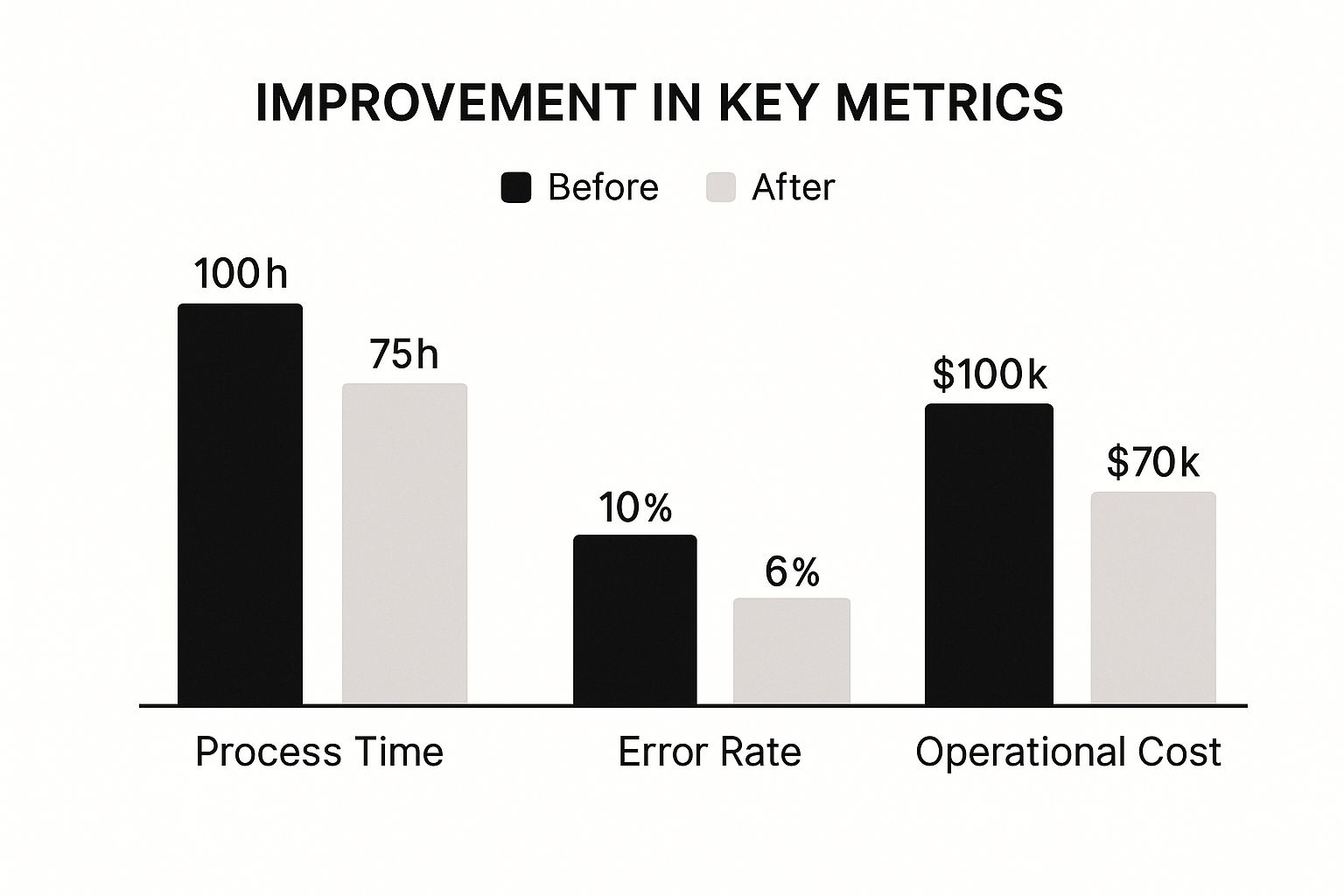
This infographic tells a story about the power of connection. It visualizes how integrating technology systems impacts key performance metrics, comparing the "before" and "after" snapshots of implementation.
The results are striking. Connecting systems that once operated in silos leads to significant improvements across the board. We see a 25% reduction in process time, a 4% decrease in the error rate, and a welcome 30% drop in operational costs.
These gains underscore the importance of a unified technology ecosystem. When systems can communicate seamlessly, workflows become smoother, errors diminish, and cost savings emerge. It's a win-win-win scenario that contributes directly to a more efficient and profitable operation.
Selecting Compatible Software Solutions
Building this type of integrated ecosystem begins with choosing the right software solutions. It's about selecting tools designed to work together from the outset, minimizing potential compatibility headaches down the line.
For example, a CRM that integrates smoothly with your marketing automation platform creates a more cohesive customer journey. Hubspot is a good example of a platform that offers integrated CRM and marketing automation. This approach eliminates data silos and enhances overall efficiency. Remember to consider scalability and flexibility when making software selections. Your technology stack should adapt to evolving business needs and accommodate future growth.
Managing System Integrations
Integrating different software systems can be challenging. However, effective management is essential for truly streamlined operations. One practical approach is to use API integrations. APIs allow different software systems to communicate and exchange data automatically.
This automation reduces manual data entry and ensures data consistency across various platforms. As a practical example, integrating your e-commerce platform with your inventory management system can automate stock updates. This automation minimizes the risk of overselling or encountering stockouts.
Ensuring Your Technology Stack Grows with Your Business
Your technology needs to evolve alongside your business. This requires a proactive approach to technology management. Regularly assess your existing systems to identify any gaps or areas for improvement.
Implementing cloud-based solutions, for example, can provide greater flexibility and scalability, allowing your technology to grow as your business does. Consider incorporating data analytics tools to gain real-time insights into operational performance. These insights empower data-driven decision-making and foster a culture of continuous improvement.
Mobile Optimization and Data Flow Improvements
Mobile optimization is another critical factor in streamlining operations. Equipping employees with mobile access to crucial systems and data boosts efficiency and communication.
Field service technicians, for instance, can access work orders, update job status, and connect with the office instantly. This eliminates delays and enhances customer service. These mobile-first strategies greatly improve data flow, facilitating faster responses and more informed decisions.
Proactive Decision-Making for Continuous Improvement
Building a technology ecosystem that supports proactive decision-making is essential for ongoing improvement. This involves implementing systems that provide real-time visibility into key operational metrics.
A dashboard displaying key performance indicators (KPIs) allows managers to quickly pinpoint areas where performance is lagging and take corrective action. This data-driven approach minimizes the need for constant manual intervention and promotes a culture of continuous improvement.
To help illustrate the various options available, here’s a comparison of some common technology solutions:
Technology Solutions Comparison for Operations A comprehensive comparison of different technology solutions showing features, implementation time, cost considerations, and best use cases for streamlining operations.
| Solution Type | Key Features | Implementation Time | Cost Range | Best For |
|---|---|---|---|---|
| Cloud-based CRM | Contact management, sales automation, marketing automation | 1-3 months | $50-$500/user/month | Businesses of all sizes |
| ERP System | Inventory management, financial management, HR management | 6-12 months | $50,000-$1,000,000+ | Large businesses with complex operations |
| Marketing Automation Platform | Email marketing, lead nurturing, campaign management | 1-3 months | $100-$10,000+/month | Businesses focused on digital marketing |
| E-commerce Platform | Online store, product catalog, order management | 1-6 months | $20-$500+/month | Businesses selling products online |
| Data Analytics Platform | Data visualization, reporting, predictive analytics | 3-6 months | $100-$10,000+/month | Businesses that need to make data-driven decisions |
This table provides a snapshot of the different technology solutions available and helps highlight their key differences and best-use cases. Choosing the right combination of tools is crucial for creating a technology ecosystem that truly supports your business goals. By selecting compatible and scalable solutions, and managing their integration effectively, you can significantly improve operational efficiency, reduce costs, and gain a competitive advantage.
Transforming Your Supply Chain Into a Competitive Advantage

Your supply chain is the backbone of your business. It has a direct impact on both customer satisfaction and your bottom line. Optimizing this crucial system is essential for success in any industry. In this exploration, we’ll uncover practical strategies to improve your supply chain through technology, standardized processes, and solid partnerships. The goal? Transforming your supply chain from a potential weakness into a powerful competitive advantage.
Robotics and Advanced Logistics: Transforming Warehouse Operations
Warehouse operations are often a prime area for improvement. Integrating robotics and advanced logistics systems can significantly boost efficiency. Automated guided vehicles (AGVs), for instance, can streamline material handling within the warehouse, reducing the need for manual labor and increasing accuracy.
Similarly, automated storage and retrieval systems (ASRS) can optimize space utilization and speed up order fulfillment. These technological advancements are revolutionizing warehouse operations, leading to faster processing, increased efficiency, and fewer errors.
ABI Research predicts a significant increase in the use of robotics in warehouse settings. By 2025, they forecast more than 4 million robots deployed in over 50,000 warehouses globally. This rapid growth demonstrates the transformative impact of robotics in modern supply chain management. You can find more detailed statistics here.
Streamlining Inventory Management for Optimal Performance
Effective inventory management is the cornerstone of a well-functioning supply chain. Real-time inventory tracking provides accurate insight into stock levels. This allows businesses to avoid stockouts and minimize excess inventory, saving on storage costs and improving responsiveness to customer demand.
A just-in-time inventory approach, powered by real-time data, is a key strategy. Implementing a cloud-based inventory management system, for example, enables seamless data sharing between different locations and departments. This facilitates better communication and collaboration across the organization.
Improving Supplier Relationships and Reducing Lead Times
Strong supplier relationships are essential for a successful supply chain. Open communication, collaborative planning, and shared performance metrics are crucial for building these relationships. Working closely with suppliers to forecast demand and optimize production schedules, for example, can reduce lead times and improve overall responsiveness.
This collaborative approach creates a more robust and flexible supply chain. Negotiating favorable payment terms and establishing reliable delivery schedules minimizes disruptions and contributes to the financial health of the entire supply chain. This creates mutually beneficial partnerships, fostering long-term success for everyone involved. You might also be interested in this article: How to improve operational efficiency.
Building a Resilient and Responsive Supply Chain
In today’s unpredictable market, supply chain resilience is paramount. Diversifying sourcing, building redundancy into logistics networks, and implementing robust risk management strategies can help businesses navigate unexpected disruptions.
Building relationships with multiple suppliers for critical components reduces dependence on a single source. This minimizes the impact of potential supply chain disruptions. Developing flexible logistics plans with alternative transportation routes and warehousing options ensures business continuity in the face of unforeseen challenges.
This proactive approach to risk management strengthens the supply chain’s adaptability to changing market conditions. By embracing continuous improvement methodologies, businesses can identify and address potential weaknesses. This proactive approach ensures the supply chain remains a true competitive advantage over the long term.
Measuring What Matters and Making Smart Improvements
Making sound business decisions requires more than just glancing at surface-level metrics. It's about deeply understanding operational performance through metrics aligned with your specific business goals. Think of it as navigating with a compass: you need the right tool to guide you to your destination. Simply counting your steps won't be efficient unless you're headed in the right direction.
Establishing Baseline Measurements and Setting Realistic Targets
The journey begins with establishing baseline measurements. This provides a clear starting point to track progress. For example, if your goal is to improve customer service response times, you first need to know your current average. This baseline becomes the foundation for setting achievable goals.
Speaking of goals, setting realistic improvement targets is crucial. While ambition is important, targets must be grounded in reality. Incremental progress is often more effective than aiming for drastic overnight changes. This approach helps maintain momentum and prevents teams from feeling overwhelmed.
Creating Actionable Reporting Systems
Having too much data can be just as problematic as having too little. The solution lies in creating reporting systems that offer actionable insights, not just massive data dumps. Imagine a well-organized toolbox: you want easy access to the tools you need, not a jumbled mess.
An effective reporting system should present key performance indicators (KPIs) clearly and concisely. It should also allow you to delve deeper into the data for a more granular analysis, quickly identifying both positive trends and areas for improvement.
Key Performance Indicators for Operational Efficiency
Key Performance Indicators (KPIs) are the compass needles guiding your progress and informing data-driven decisions. The following table showcases some commonly used KPIs. It's designed to give you a practical understanding of how these metrics can be used to measure operational streamlining success.
To help you understand the role of KPIs in driving operational efficiency, we've compiled a table summarizing essential metrics and benchmarks.
Key Performance Indicators for Operational Efficiency:
| KPI Category | Metric | Target Benchmark | Measurement Frequency | Impact Level |
|---|---|---|---|---|
| Customer Service | Average Response Time | < 1 hour | Daily | High |
| Order Fulfillment | Order Processing Time | < 24 hours | Daily | High |
| Production | Units Produced per Hour | 100 units | Hourly/Daily | Medium |
| Inventory | Inventory Turnover Rate | 8 times per year | Monthly/Quarterly | Medium |
| Finance | Days Sales Outstanding (DSO) | < 30 days | Monthly | High |
These benchmarks can vary based on your industry and specific business objectives. Regularly monitoring and analyzing these KPIs enables you to track performance, pinpoint areas for improvement, and make necessary strategic adjustments.
Gathering and Analyzing Operational Data
Collecting data is only the first step. You also need robust methods to analyze it and extract meaningful insights. This might involve using data analytics tools like Tableau or creating custom reports that track specific metrics.
The ultimate goal is to transform raw data into actionable intelligence. This intelligence empowers informed decision-making, helping optimize your operations for maximum efficiency and effectiveness.
Fostering a Culture of Continuous Improvement
Improving operations isn't a one-time project, but an ongoing journey. Building a culture of continuous improvement is vital for long-term success. This means empowering employees to identify and report areas for improvement and creating systems for quick implementation of those improvements.
This cycle of continuous improvement is the key to maintaining peak operational performance and achieving sustainable growth. You might find this resource helpful: How to master measuring customer satisfaction.
By establishing baselines, setting realistic targets, and building actionable reporting systems, you can transform performance insights into strategic decisions that drive lasting operational excellence and measurable business growth. This data-driven approach is the bedrock of continuous improvement and operational effectiveness.
Key Takeaways
Streamlining operations isn't a one-and-done deal. It's an ongoing journey of continuous improvement. This section distills key strategies and actionable insights, providing a practical roadmap for your operational transformation. Remember, real progress comes from consistent, incremental steps, not giant leaps.
Prioritizing Improvement Initiatives and Resource Allocation
Start by identifying areas ripe for improvement. Focus on those with the greatest potential impact on your business objectives and the highest return on investment (ROI). Aligning improvements with your strategic goals ensures that your efforts are focused and effective.
Once you've set your priorities, allocate resources accordingly. This includes budget, personnel, and technology. Proper resource allocation ensures that critical initiatives have the support they need and that your transformation efforts are sustainable.
Managing Organizational Change and Building Stakeholder Buy-In
Operational transformation often means significant organizational change. Effective change management is key to minimizing disruption and ensuring smooth transitions. Clearly communicate the changes to all stakeholders, explaining the why and the benefits. Transparency builds understanding and reduces resistance.
Getting stakeholder buy-in is critical for success. Involve key stakeholders early on, during the planning and implementation phases. Their input offers valuable insights and ensures the changes align with everyone's needs. Collaboration fosters a sense of ownership, increasing the likelihood of successful implementation.
Overcoming Implementation Challenges and Maintaining Momentum
Implementing change always has its challenges. Anticipate potential roadblocks and develop contingency plans. This proactive approach minimizes disruptions and keeps things moving forward. Regularly monitor progress against key performance indicators (KPIs) and adjust your approach as needed.
Sustaining momentum is essential. Celebrate early wins and recognize your team's hard work. Positive reinforcement keeps everyone motivated and cultivates a culture of continuous improvement. Regular communication keeps the team informed and focused on the overall goals.
Scaling Improvements Across Your Organization
Scaling successful improvements requires a systematic approach. Document best practices and create standardized processes. This ensures consistency and makes it easier to replicate improvements in different departments or locations.
Provide training and support to employees as you implement changes. Equipping them with the necessary knowledge and skills sets them up for success in the new operational environment. This fosters buy-in, minimizes resistance, and maximizes the impact of your efforts.
Maintaining Business Continuity and Employee Engagement
Maintaining business continuity is paramount throughout the transformation process. Implement changes in phases, if possible, to minimize disruption to day-to-day operations. A phased approach allows for testing and adjustments along the way.
Employee engagement is essential for success. Involve employees in the process, get their feedback, and address their concerns. This inclusive approach builds ownership and makes transitions smoother. Engaged employees are more likely to embrace change and contribute to a positive outcome.
Actionable Steps and Progress Tracking
Every takeaway in this roadmap should translate into actionable steps you can take immediately. Begin with small, manageable steps and build on your successes. This incremental approach allows you to test and refine your strategies.
Regularly track your progress. Use KPIs to measure the effectiveness of your improvements. Data helps you see what’s working, what needs tweaking, and where further opportunities exist. This data-driven approach keeps your efforts aligned with your business goals, ensuring you’re continually progressing towards operational excellence.
Learn more about how Voicetta can help your business thrive.
Was this useful?
If this article helped, add Voicetta as a preferred source in Google Search. Your results can then highlight our writing.
Add as preferred source