
Virtual assistants in healthcare are essentially AI-powered applications built to help both patients and clinical staff handle a wide range of administrative tasks and communications. They operate around the clock, 24/7, booking appointments, answering common questions, and sharing reliable health information. Think of them as the new digital front door for medical services, taking the pressure off human staff so they can focus on more hands-on patient care.
The New Front Door to Modern Healthcare
We’ve all been there. You need to book an urgent appointment, but you're stuck listening to hold music or hitting redial on a busy phone line. It’s a frustrating experience that points to a huge bottleneck in how we access healthcare. Patients face delays, and administrative teams get swamped with the same calls over and over, pulling them away from more pressing duties.
Now, imagine a different scenario. Instead of picking up the phone, you open your clinic's app and start a quick chat with a digital helper. You type in your symptoms, and in just a few seconds, it finds an open slot with the right doctor and confirms your booking. This isn't science fiction; it's the reality that virtual assistants in healthcare are making possible today.
So, What Are These Assistants, Really?
Let's clear up a common misconception. When we talk about virtual assistants, we aren't talking about humanoid robots from the movies. A better way to think of them is as an intelligent, conversational helper built right into a healthcare provider’s website, app, or patient portal. They're programmed to understand and respond to natural human language, whether you’re typing a message or speaking a command.
These aren't just glorified FAQ pages, either. They're deeply connected to a clinic’s core systems, which allows them to perform meaningful tasks.
- Intelligent Scheduling: They can look at a doctor’s live calendar to book, reschedule, or cancel appointments, all without needing a human to step in.
- Instant Information Access: They provide verified, immediate answers to questions about clinic hours, which insurance plans are accepted, or how to prepare for a specific procedure.
- Symptom Triage: They can guide a patient through a simple Q&A to help figure out how urgent their condition is, then recommend booking a routine visit, heading to an urgent care centre, or going straight to the emergency room.
This screenshot gives a great visual of how a virtual assistant can be seamlessly integrated into a healthcare provider's digital platform, offering clear, actionable options within a simple chat window.
The real magic is in how they blend accessibility with genuine functionality. It’s about giving people the tools to manage their care directly.
By automating these initial interactions, virtual assistants act as a digital "front door," making the first step of a patient's journey smoother and more efficient. They ensure that no query goes unanswered, day or night.
This shift transforms the entire patient experience. It moves from a system defined by friction and waiting to one of immediacy and empowerment. At the same time, it provides massive relief for administrative teams, freeing them up to focus their skills and empathy on patients who truly need a human touch. The result is a more responsive, accessible, and modern healthcare system for everyone involved.
To break it down even further, here's a look at the core roles these assistants play for different users.
Core Roles of Virtual Assistants in Healthcare
| Function | How It Helps Patients | How It Helps Providers |
|---|---|---|
| Appointment Management | Instantly book, reschedule, or cancel appointments 24/7 without phone calls. | Reduces administrative workload and phone traffic, minimising no-shows with automated reminders. |
| Information & FAQs | Get immediate, verified answers to common questions about services, hours, or insurance. | Frees up staff from answering repetitive questions, ensuring consistent and accurate information. |
| Symptom Triage | Receive guidance on the appropriate level of care based on symptoms. | Helps direct patients to the right care setting, optimising clinic resources and patient flow. |
| Medication & Care Reminders | Get timely alerts to take medication, follow post-op instructions, or prepare for a visit. | Improves patient adherence to treatment plans, leading to better health outcomes. |
This table shows just how multifaceted these tools are, delivering distinct value to both sides of the healthcare equation—making life easier for patients while optimising workflows for staff.
How Virtual Assistants Improve the Patient Journey
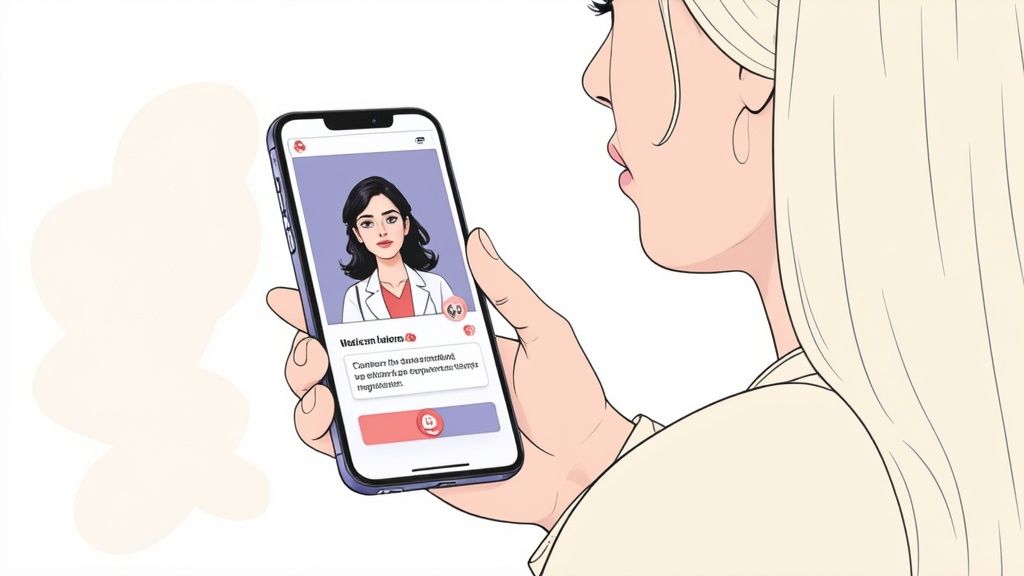
Think about what it's like for someone managing a chronic illness, say diabetes. Their days often revolve around a constant checklist: manually tracking glucose, juggling complicated medication times, and squeezing in follow-up appointments. It’s a lot to handle, and this relentless cycle can make managing one's health feel like an overwhelming, isolating chore.
Now, picture that same person with a virtual assistant in healthcare on their phone, ready to help 24/7. That forgotten blood sugar reading? They get a gentle nudge to log their numbers. The confusing medication schedule? It's replaced by clear, personalised reminders for every single dose. Suddenly, the entire experience shifts from being reactive and stressful to feeling proactive and genuinely supported.
At its heart, this is about empowerment. These assistants give people the tools to play a much more active role in their own health, bringing with it a welcome sense of control and peace of mind.
Personalised Support Around the Clock
One of the biggest game-changers is the ability to provide continuous, personalised support. A generic pamphlet on diet just can't compete with an assistant offering meal ideas based on a patient’s latest glucose levels. This kind of tailored engagement makes managing health feel less like following clinical orders and more like a real partnership.
This always-on availability is also a massive relief for those non-urgent questions that pop up long after the clinic has closed. Instead of waiting anxiously for a nurse to call back, a patient can get immediate, verified answers. It's a simple change that drastically reduces anxiety. Many of the same principles that make a great virtual assistant for customer service are at play here—it's all about being responsive, accurate, and truly helpful.
The true value of a virtual assistant lies in its ability to turn data into dialogue. It transforms abstract health metrics into meaningful, actionable conversations that guide the patient toward better daily habits and improved outcomes.
This constant, supportive presence helps bridge the long gaps between appointments, making sure a patient never feels like they're navigating their health journey alone. The assistant truly becomes a reliable digital companion.
From Complex Chores to Simple Actions
Virtual assistants are brilliant at taking complicated care plans and breaking them down into simple, easy-to-digest tasks. Forget a long, intimidating list of post-surgery instructions. Instead, imagine getting daily, bite-sized guidance on what to do next.
Here’s how they make the journey simpler:
- Seamless Symptom Tracking: Patients can report symptoms like pain or fatigue just by talking or typing into a chat. The assistant logs this information, looks for trends, and can even flag concerning patterns for the clinical team to review.
- Effortless Scheduling: Booking a follow-up appointment becomes as easy as sending a message. The assistant checks for open slots, confirms the booking, and automatically adds it to the patient’s calendar. No more phone tag.
- Proactive Reminders: Timely alerts for medication, appointments, and even prescription refills are crucial for staying on track, especially for chronic conditions. In fact, studies show over 70% of patients report higher satisfaction when they have these tools.
By automating these everyday interactions, virtual assistants in healthcare remove so much of the usual friction. This frees up patients to focus their energy not on administrative headaches, but on what really matters: their recovery and wellbeing. It builds a stronger, more collaborative partnership with their care providers.
Boosting Efficiency in Clinical Operations
So far, we've looked at this from the patient's perspective. Now, let's pull back the curtain and see how this technology is changing the game for clinics and hospitals themselves. Think of a virtual assistant as the perfect administrative partner—one that works 24/7, never needs a coffee break, and handles all those repetitive, time-sapping tasks that can really weigh down your skilled clinical team.
When doctors and nurses aren't stuck juggling appointment calendars or fielding routine phone calls, they can finally put their full focus where it belongs: on providing outstanding patient care. This isn't just a nice-to-have morale booster; it fundamentally improves how a healthcare practice runs from the ground up.
The image below gives you a clear picture of how a doctor might use a virtual assistant to seamlessly manage key tasks right from their desk.
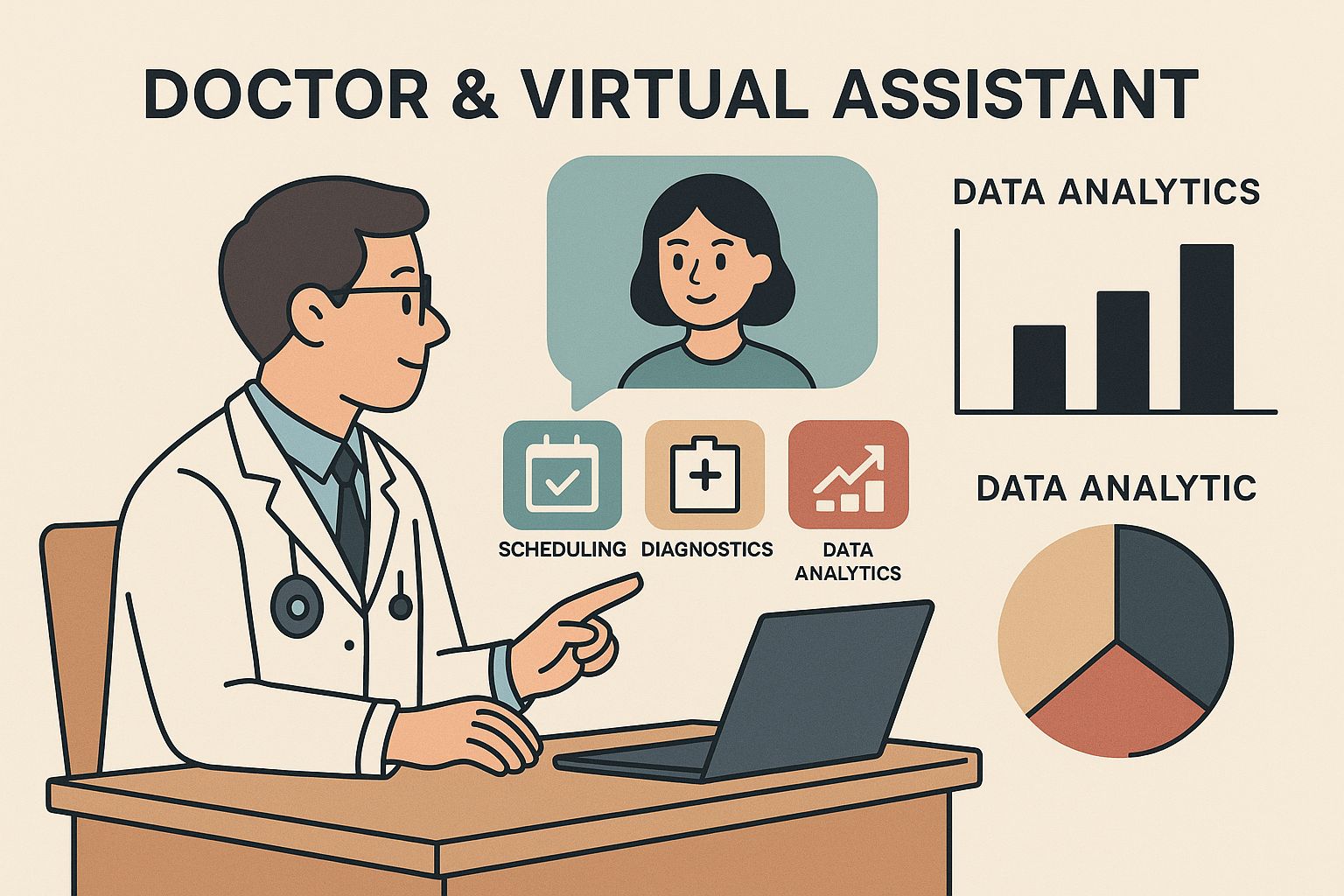
It really shows how core functions, like scheduling and digging into data, get folded into one simple, efficient hub. Complex admin duties become straightforward, automated actions.
Reclaiming Time and Reducing Burnout
Staff burnout is a massive challenge in healthcare, and it’s often driven by a mountain of administrative work. Virtual assistants tackle this problem head-on by taking over the jobs that, while essential, don’t require a medical degree. The endless phone calls, the mind-numbing data entry, the back-and-forth of scheduling—these are all perfect candidates for automation.
By handing these duties over to a capable virtual assistant in healthcare, clinical teams get hundreds of hours back. That recovered time goes straight into more meaningful patient conversations, deeper diagnostic work, and a healthier work-life balance, which is absolutely vital for keeping your best people.
The biggest win with a virtual assistant is its power to create capacity. By taking on the routine administrative grind, it empowers a clinic’s most valuable resource—its people—to work at the absolute top of their game.
This is a brilliant real-world example of business process automation, a whole field focused on making operations smoother and helping organisations grow. If you're keen to dive deeper, this guide to business process automation is a great place to start.
Smarter Resource Allocation and Cost Savings
Running a successful medical practice is all about smart resource management. Every minute a nurse spends on the phone confirming an appointment is a minute they can't be with a patient. This is exactly where the smarts of AI deliver a real, tangible return on your investment.
And this isn't just theory; the numbers tell a compelling story. The move towards AI in healthcare is gaining serious momentum, with nearly 47% of healthcare organisations already using or planning to bring on AI-powered virtual assistants to automate their workflows. These tools can slash a provider's administrative burden by automating up to 30% of patient interactions, which adds up to huge operational gains. In fact, hospitals that have made the switch have reported a drop of up to 40% in routine call centre traffic. It’s a powerful testament to their efficiency.
Here’s how it breaks down in practice:
- Automated Appointment Management: This single feature dramatically cuts down on no-shows and frees up your front-desk team. Our guide on healthcare appointment scheduling software digs into how this technology gets clinic calendars running like clockwork.
- Intelligent Call Routing: The assistant fields all the common questions, only passing the truly complex calls to a human. This ensures your staff’s time is reserved for conversations that genuinely need their expertise.
- Streamlined Data Entry: Automating how patient information is collected not only saves time but also reduces the chance of human error, keeping records consistently accurate and current.
At the end of the day, improving operational efficiency is about more than just trimming costs. It’s about building a more resilient, responsive, and patient-first healthcare environment. It’s about technology supporting people, so people can deliver a higher standard of care for everyone.
Real-World Examples of Virtual Assistants in Action
It's one thing to talk about benefits in theory, but where the rubber really meets the road is seeing how virtual assistants in healthcare are already making a difference out in the real world. These aren't just futuristic ideas; they're practical tools solving genuine problems for hospitals, clinics, and pharmacies every single day.
Let’s step away from the abstract and look at what this technology actually does.
Post-Operative Follow-Up in a Hospital
Imagine the hustle and bustle of a hospital's post-operative ward. Nurses used to spend a huge chunk of their time making routine follow-up calls to patients who'd been sent home. It's vital work, but incredibly time-consuming.
Now, a virtual assistant can handle that initial outreach. It sends a text or an automated call, asking patients about their pain levels, checking for symptoms, and making sure they're following their care plan.
If a patient mentions something worrying—like a high fever or unexpected swelling—the assistant instantly flags the conversation and routes it to a human nurse. This means potential complications are caught faster, and nurses can dedicate their expertise to those who need it most, without getting bogged down in routine checks.
Triage and Appointment Management in a Clinic
Think about your local clinic and the constant ringing of the phone. Patients get frustrated trying to get through, and receptionists are under pressure to figure out who needs an urgent appointment. This is where a virtual assistant on the clinic's website or app can completely change the game.
Instead of a busy signal, patients are greeted by an intelligent assistant that walks them through a few simple questions about their symptoms.
- Mild issues? For something like a common cold, it might offer some solid home care advice and book the next available non-urgent slot.
- Moderate concerns? It can figure out the right specialist and schedule a visit.
- Serious symptoms? The assistant immediately directs the person to seek emergency care, sometimes even alerting the clinic to expect them.
This kind of smart sorting gets patients to the right level of care much faster and frees up the front desk to manage the people right in front of them.
By intelligently sorting and managing patient requests, virtual assistants ensure that clinical resources are always allocated to where they are needed most, improving both patient flow and outcomes.
Improving Medication Adherence for Pharmacies
Finally, let's look at a community pharmacy. A huge challenge, especially for older patients or those with chronic conditions, is just remembering to take medication on time. It sounds simple, but missed doses can lead to serious health setbacks and even hospital readmissions.
A virtual assistant can become a friendly, personal reminder service. It sends texts to prompt patients for each dose, answers basic questions about side effects, or lets them know a prescription is ready for pickup.
It’s this kind of proactive, supportive communication that helps people stay on track with their treatment. The core idea of using automated, helpful engagement isn't unique to healthcare; you can see it in these powerful examples of chatbots redefining customer experience across many other industries, offering great parallels for improving patient care.
The Future of Intelligent Healthcare

If you think today’s virtual assistants are impressive, just wait. What we have now is really just the first chapter. They’re great at booking appointments and answering straightforward questions, but the next generation of this technology is set to become much, much smarter.
We're moving past simple Q&A. The future is an assistant that understands context and intent—not just what we say, but what we actually mean.
Imagine a virtual assistant that picks up on the subtle hesitation in a patient's voice or senses anxiety in their typed messages. This isn’t science fiction. This more empathetic AI could offer a word of reassurance, break down complex medical jargon into plain English, or even suggest that a follow-up chat with a human nurse might be helpful. It’s a move from a purely functional tool to a truly supportive digital partner.
From Reactive Support to Predictive Care
Here’s where things get really exciting. The biggest leap forward for virtual assistants in healthcare is their shift from simply reacting to problems to actively predicting them. By continuously analysing a patient’s health data—symptoms they’ve logged, how consistently they take their medication, metrics from their smartwatch—these assistants can start to connect the dots in ways humans can’t.
This capability unlocks a whole new approach to keeping people healthy. An assistant might notice a patient’s activity levels have been slowly dropping while they’ve also reported feeling tired. It could then gently nudge them to book a check-up before a small issue snowballs into a serious one. It could even scan food diaries to flag a potential vitamin deficiency. This flips the script, turning healthcare from a system that fixes problems to one that prevents them.
If you're curious about the nuts and bolts of the technology making this happen, our guide on what a virtual agent is is a great place to start.
The future isn't just about answering questions faster; it's about asking the right questions before the patient even knows they need to be asked. This predictive capability will be a cornerstone of next-generation healthcare.
A Growing Trend Across Europe
This vision for the future isn't just a dream; it’s already taking shape, especially in Europe. In places like Poland, the adoption of healthcare virtual assistants is picking up serious steam, reflecting what’s happening across the continent.
The numbers tell the story. The European market was valued at USD 478 million and is expected to climb to an incredible USD 5,226 million by 2033. This growth is fuelled by a few key factors: 78% of Europeans now own a smartphone, and the spread of 5G gives these data-hungry assistants the instant connectivity they need to function.
With chronic conditions on the rise, people in Poland and neighbouring countries are looking for more convenient ways to manage their health from home. These tools make healthcare more accessible while taking some of the pressure off busy medical professionals. You can dive deeper into the data with this European healthcare virtual assistants market report.
As more people bring these assistants into their daily routines, the technology gets smarter and more refined. It’s a feedback loop that’s paving the way for a future where healthcare is more personal, predictive, and perfectly integrated into our lives.
Common Questions About Healthcare Virtual Assistants
As virtual assistants become more a part of our daily healthcare experience, it’s completely natural to have a few questions. This technology often handles our most sensitive information and has a real impact on our care, so getting clear answers is vital.
Let’s walk through some of the most common questions I hear from both patients and providers. My aim here is to cut through the jargon and give you a practical understanding of how these tools work, what they can (and can’t) do, and why they’re becoming so valuable.
Are Virtual Assistants in Healthcare Secure?
This is usually the very first question that comes up, and for good reason. The short answer is a resounding yes—as long as they are built and implemented correctly. For any reputable provider in this space, security isn’t just a feature; it’s the foundation of everything.
Professional healthcare virtual assistants are designed from the ground up to meet stringent data privacy laws like GDPR. All patient data and conversations are encrypted, both when they're sitting on a server and when they're being transmitted. This ensures your personal health information is handled with the same care and confidentiality you’d expect inside a hospital.
For healthcare organisations, this means partnering with vendors who can provide dedicated HIPAA compliant cloud solutions to create a truly secure environment. Ultimately, the responsibility falls on the healthcare provider to choose platforms that live up to these high standards.
Can a Virtual Assistant Give Me a Diagnosis?
Absolutely not. It's critical to understand that a virtual assistant is a support tool, not a substitute for a qualified doctor or nurse. Its real job is to handle administrative tasks, provide pre-approved health information, and help you navigate your care journey more smoothly.
For instance, an assistant might help you run through a symptom checklist and then suggest an appropriate next step, like booking a routine appointment or connecting you with a triage nurse. The final medical diagnosis must always come from a licensed healthcare professional who can apply years of clinical experience and understand the full context of your health.
Think of a virtual assistant as a highly efficient medical receptionist and information guide, not a digital doctor. Its role is to streamline processes and provide support, leaving the critical work of diagnosis and treatment to human experts.
How Do I Get Access to a Healthcare Virtual Assistant?
Most of the time, you’ll gain access to a virtual assistant directly through your healthcare provider—be it your local clinic, a hospital network, or a specialised practice. These tools are typically integrated right into their existing platforms, like a secure patient portal or a dedicated mobile app.
If your provider offers this service, they will give you clear instructions on how to get started. The process almost always involves creating a secure account linked to your official patient record. This direct link is what allows the assistant to offer personalised help, like pulling up your specific appointment schedule or sending reminders based on your care plan. Done right, this seamless access is a great way to increase patient satisfaction by making healthcare feel much more convenient and responsive.
Is a Virtual Assistant Just a Simple Chatbot?
While they can look similar at first glance, a true healthcare virtual assistant is worlds apart from the basic chatbots you see on shopping websites. A simple chatbot follows a rigid, pre-programmed script and often gets stuck if you ask something it doesn't recognise.
An AI-powered virtual assistant, on the other hand, is far more sophisticated.
- It understands natural language: You can speak or type conversationally, and it can grasp the intent behind your words, not just keywords.
- It is securely integrated: It can connect to clinical systems to perform real tasks, like checking a doctor’s live calendar and booking an actual appointment for you.
- It learns and improves: The underlying AI models get smarter and more helpful over time based on countless interactions.
In short, it’s not just a chat interface. It’s an intelligent tool deeply woven into the fabric of the clinic's operations, built to do meaningful work.
Ready to transform your patient communication? Voicetta ensures you never miss an opportunity to connect, providing 24/7 intelligent support that integrates seamlessly with your operations. Discover how our AI-powered assistants can elevate your practice by visiting https://voicetta.com.