
The Voice Revolution: How Voicebot AI Is Changing Everything
Traditional ways of communicating are changing. At the heart of this shift is voicebot AI. These systems have come a long way from simple, pre-programmed responses. Now, they can hold complex conversations and truly understand what we mean. This changes how we interact with both technology and businesses. Talking to a machine now feels surprisingly like talking to another person. Interested in learning more about designing these conversations? Check out this resource: How to master conversational design.
The Technology Behind the Voice
This progress is fueled by advancements in key technologies, most notably Natural Language Processing (NLP). NLP helps voicebots understand the subtleties of human language like slang, idioms, and different accents. Contextual understanding engines give voicebots a form of memory.
They remember what was said earlier in the conversation, making the exchange feel more natural. For instance, a voicebot might remember what a user said they prefer, so they don't have to repeat themselves. This personalized approach significantly improves the user experience and encourages engagement.
The Impact on Business
Businesses using voicebot AI are seeing impressive results. It’s not just about implementing the tech, it's about rethinking the entire customer experience with voice at its center. This customer-focused approach prioritizes streamlined, intuitive, and personalized interactions. Voice AI is changing how businesses operate and handle customer service.
One clear sign of this is the projected growth of voice assistants worldwide, estimated to reach 8.4 billion by 2024. The market for AI in voice assistants is expected to hit $31.9 billion by 2033. This growth isn't just about convenience; it's about efficiency and innovation, as Voice AI boosts user engagement through real-time, intelligent responses. What's more, 91% of voice assistant users access them on their smartphones, highlighting the importance of mobile accessibility. For more in-depth statistics, take a look at this: Voice AI Statistics. This evolution creates a more accessible and engaging experience.
The Future of Voice Interactions
The increasing sophistication of voicebot AI isn't just about automating tasks. It's about building genuine connections. The ability to deliver instant, personalized responses boosts customer satisfaction and loyalty. Ongoing developments promise even more engaging and human-like interactions. As this technology matures, expect to see a greater shift towards voice-first interfaces.
Following the Money: The Voicebot AI Market Explosion
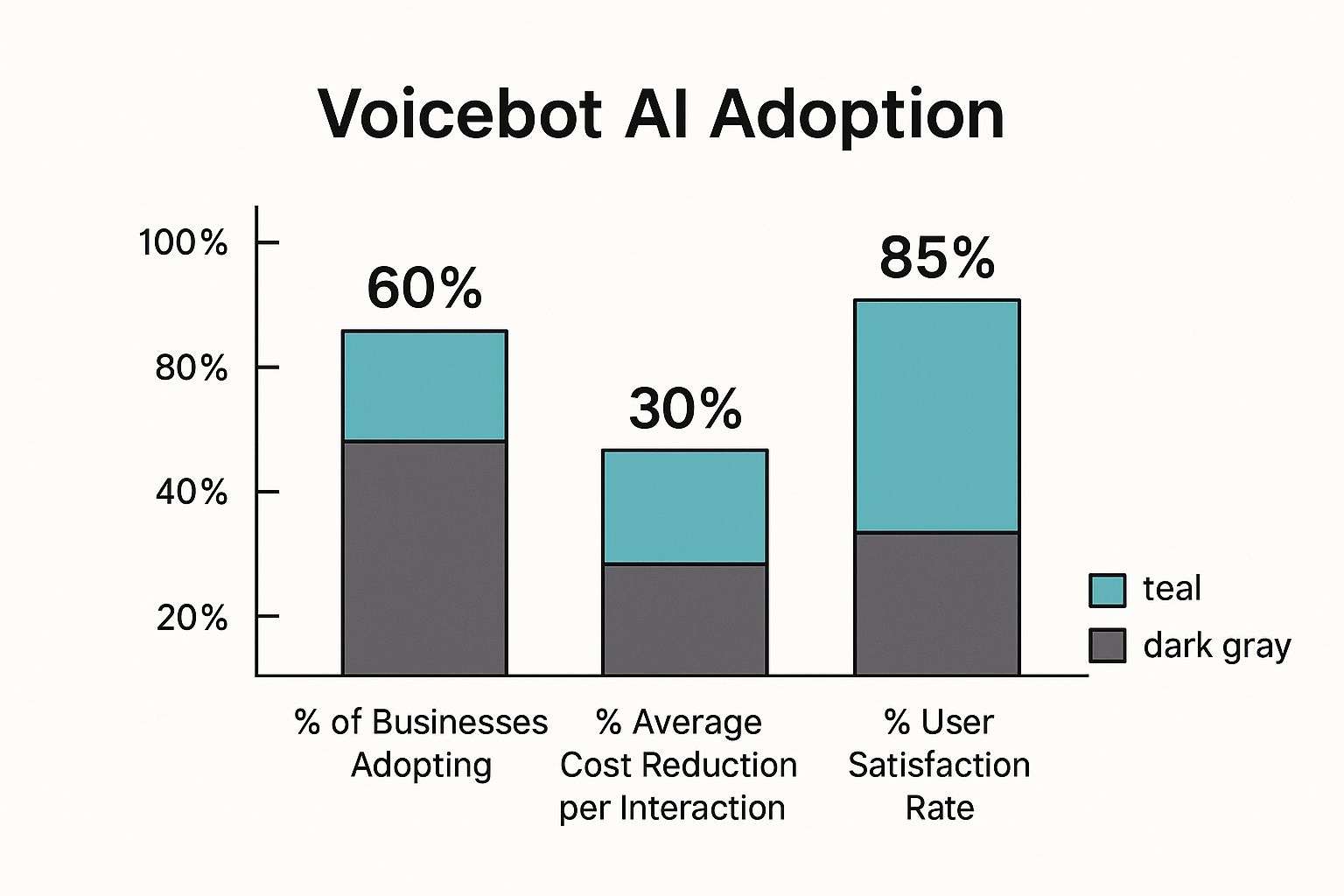
The rapid advancements in voicebot AI are transforming customer experiences and reshaping markets. Understanding AI chatbot technology is key to grasping the potential of voicebots. For a deeper dive into this topic, check out this article on Chat GPT AI Chatbot. The increasing investment in this field signals a fundamental shift in how businesses approach communication and automation. Let's explore where investments are being made within the growing voicebot AI ecosystem.
Understanding the Financial Influx
The expansion of the voicebot AI market is driven by the tangible value it offers. Businesses are seeing improved efficiency, reduced costs, and better customer engagement. This demonstrable return on investment fuels further growth. The market has seen significant growth, spurred by advances in underlying technologies like natural language processing and machine learning. These improvements make voicebots more effective and versatile.
Sector-Specific Growth
Growth is not uniform across all sectors. Some industries are experiencing faster adoption and higher returns than others. This makes sense, as voicebot AI provides unique advantages depending on the application. For example, in healthcare, voicebots streamline appointment scheduling and provide medication reminders.
- Healthcare: This sector uses voicebots for patient engagement, appointment scheduling, and remote monitoring, leading to a more efficient and patient-centered approach.
- Retail: Voice-activated shopping and personalized recommendations are changing the retail customer journey.
- Financial Services: Voicebots handle account inquiries, fraud detection, and even financial advice, freeing human agents for more complex tasks.
This targeted application of voicebots attracts investment in solutions tailored to specific industry needs.
Regional Adoption Patterns
Adoption rates also vary geographically. Some regions are leading the way in voicebot AI implementation. This uneven distribution offers valuable insights into potential future innovation hubs. Analyzing regional trends can help businesses anticipate market developments and position themselves strategically.
Visualizing the Growth: A Look at the Data
The voicebot AI market's momentum is undeniable. By 2027, the market is projected to reach $98.2 billion, with a CAGR of 18.6% between 2022 and 2027. This growth is fueled by advancements in machine learning and natural language processing, enabling voicebots to automate routine tasks and improve customer experiences. You can find more detailed statistics here. The data chart below visualizes the projected market size growth from 2023 to 2027.
[Space for Infographic - Bar Chart depicting market growth from 2023 to 2027]
Key highlights from the data chart include projected market sizes for each year, culminating in the $98.2 billion figure for 2027. This consistent upward trend underscores investor confidence in the future of voicebot AI.
To further understand the industry-specific growth of voicebots, let's look at the following table:
Voicebot AI Market Growth by Industry
This table presents the projected growth rates and adoption factors across various industries embracing voicebot AI technology.
| Industry | Market Size (2023) | Projected Growth (CAGR) | Primary Use Cases | Key Adoption Drivers |
|---|---|---|---|---|
| Healthcare | $X billion | X% | Patient engagement, appointment scheduling, remote monitoring | Increasing demand for efficient patient care, rising adoption of telehealth solutions |
| Retail | $Y billion | Y% | Voice-activated shopping, personalized recommendations, customer service | Growing demand for personalized shopping experiences, increasing adoption of mobile commerce |
| Financial Services | $Z billion | Z% | Account inquiries, fraud detection, financial advice | Need for 24/7 customer service, increasing demand for personalized financial advice |
This table highlights the significant growth expected across several key industries. The adoption drivers reveal the underlying forces pushing businesses to integrate voicebot AI. The varying market sizes and growth rates emphasize the importance of understanding the specific needs and opportunities within each sector.
This consistent upward trajectory, as shown in the data chart, emphasizes the significant financial opportunities this technology offers across different sectors. As voicebot AI continues to mature, it promises even greater returns for businesses that embrace it.
Building Meaningful Customer Connections Through Voice
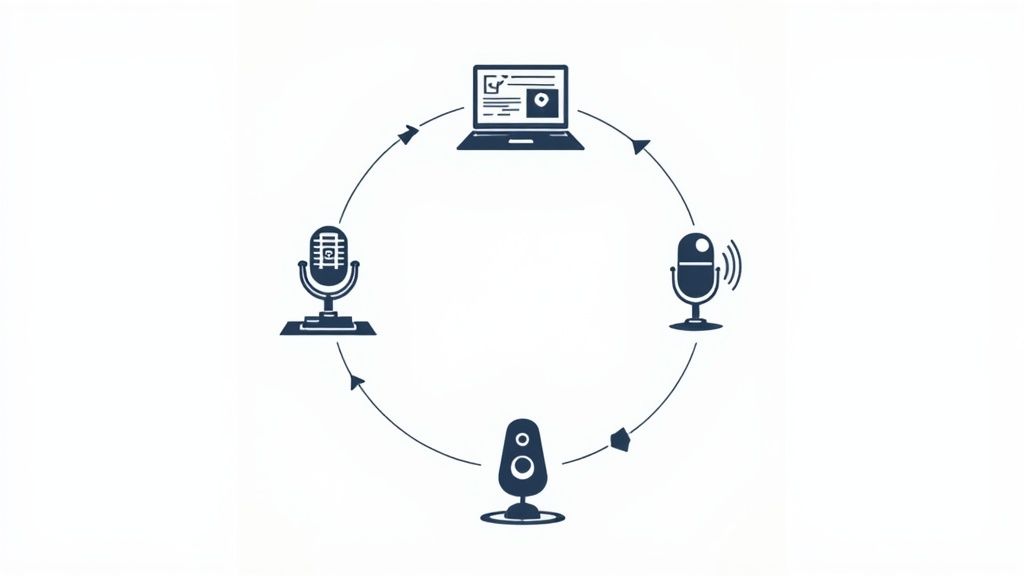
Voicebot AI is becoming increasingly prevalent. It's more than just a technological advancement; it’s a powerful tool for building stronger relationships with customers. But how can businesses ensure these voice interactions are positive and effective? The key lies in understanding the emotional aspect of voice and designing experiences that truly resonate with users.
The Psychology of Voice Interactions
Unlike text, voice carries inherent emotional nuances. Think about the difference between reading a text and hearing a loved one's voice. The latter conveys so much more warmth and personality. Voicebot AI can tap into this emotional power, creating more empathetic and personalized experiences. This emotional connection is a key differentiator, fostering trust and rapport, ultimately leading to increased customer satisfaction.
Designing Engaging Voicebot Experiences
Creating a positive user experience with Voicebot AI involves thoughtful design. The conversation flow needs to feel natural and intuitive, closely mirroring human conversation. This means anticipating user needs and providing helpful information in a conversational style. For example, a voicebot that can interpret subtle cues in a user's voice can tailor its responses accordingly, creating a more personalized and engaging experience. This moves beyond simple transactions, building a genuine sense of connection and understanding.
Balancing Automation with the Human Touch
Automation is central to Voicebot AI. However, it’s essential to recognize when human interaction is necessary. Complex or emotionally charged situations often demand the empathy and nuanced understanding that only a human can provide. The design challenge then becomes creating seamless escalation paths. Successful companies are finding ways to smoothly transition to human agents when the voicebot reaches its limits, ensuring customers feel heard and valued.
Practical Implementation Strategies
Many companies are successfully using Voicebot AI to strengthen customer connections. One strategy involves using voicebots for initial interactions, handling routine inquiries and gathering preliminary information. This frees up human agents to focus on more complex issues. Another approach is to use voicebots to provide 24/7 support, ensuring customers always have access to assistance. This constant availability enhances customer satisfaction and builds brand loyalty. By focusing on natural and engaging conversational flows, these strategies are transforming customer service.
Voice Cloning: The Next Frontier in Personalized Experience
Imagine a world where technology can replicate the nuances of the human voice. This is the reality of voice cloning, a fascinating subset of voicebot AI. It's opening up exciting new avenues for personalized user experiences, allowing organizations to create dynamic and engaging interactions that simply wouldn't be possible with human agents alone. This personalized touch is reshaping how businesses connect with their customers, creating innovative opportunities across diverse sectors. Let's delve into the impact of voice cloning, exploring its practical applications and the ethical considerations that come with it.
Applications of Voice Cloning
Voice cloning is transforming how businesses interact with their audiences, offering a range of exciting applications:
-
Accessibility Solutions: Voice cloning can be a game-changer for individuals with speech impairments. By creating personalized synthetic voices, this technology empowers them to communicate more effectively, offering a crucial communication channel. It's a powerful tool for breaking down barriers and fostering inclusivity.
-
Localized Content Creation: In today's globalized world, reaching diverse audiences often means delivering content in multiple languages. Voice cloning simplifies the creation of localized voiceovers and narrations, making content accessible to a wider range of people. This approach also offers significant cost and time savings compared to traditional voiceover methods.
-
Branded Experiences: Creating a consistent brand voice across different platforms can be challenging. Voice cloning provides a solution by enabling businesses to craft a unified brand identity. Picture a familiar, welcoming voice guiding users through a website or app, creating a cohesive and personalized brand experience.
These examples highlight how voice cloning is reshaping user interaction and content delivery, and as the technology advances, its potential uses are only expected to expand.
Responsible Implementation of Voice Cloning
While the potential benefits of voice cloning are significant, responsible implementation is paramount. It's essential to carefully consider the ethical implications of this technology. Transparency is key. Organizations using cloned voices should be upfront about it, clearly indicating when users are interacting with synthetic speech. This open approach builds trust and fosters a positive user experience.
Navigating Ethical Concerns
The potential for misuse, such as creating deepfakes for malicious purposes, is a serious concern surrounding voice cloning. This raises important ethical questions about how we can prevent the technology from being used to spread misinformation. Fortunately, leading organizations are actively working to address these challenges. They're developing innovative methods to verify the authenticity of voices and build safeguards against potential misuse, ensuring responsible development and deployment of this powerful technology.
The Growing Market of AI Voice Cloning
The AI voice cloning market is experiencing remarkable growth within the larger Voice AI ecosystem. With a projected compound annual growth rate (CAGR) of 23.9%, the market is expected to grow from $2.65 billion in 2024 to $7.75 billion by 2029. This impressive growth is driven by advancements in deep learning, increased data availability, and the rising demand for virtual assistants and personalized content. You can explore more insights about this growth at AI voice cloning market growth. This upward trajectory reflects the increasing importance businesses are placing on personalized voice experiences.
Technical Advancements in Voice Synthesis
Ongoing advancements in voice synthesis are making cloned voices increasingly realistic, blurring the lines between synthetic and human speech. This is largely thanks to sophisticated deep learning models trained on massive amounts of voice data. These models can capture the subtle nuances of human speech, including intonation, rhythm, and even emotional expression. This realism is essential for creating truly immersive and engaging personalized experiences. As the quality of synthesized voices continues to improve, we can expect to see even more innovative applications of voice cloning in the future, transforming how we interact with technology and the businesses around us.
From Concept to Reality: Implementing Voicebot AI That Works

Implementing voicebot AI successfully takes a strategic approach. It's more than just knowing the technology; it's about applying it effectively. This section offers a practical guide for deploying voicebots that truly add value to your business. We'll explore common implementation hurdles and how to overcome them, ultimately leading to better customer experiences and increased efficiency. You might also be interested in: Voicetta's Pricing Plans.
Identifying the Right Use Cases
The first step is finding where voicebot AI can truly shine. Look for areas with many routine inquiries or tasks ripe for automation.
For instance, a voicebot could handle appointment scheduling, answer FAQs, or guide customers through basic troubleshooting. Choosing the right use cases is key to maximizing your return on investment.
Building Effective Conversational Flows
Once you've identified your use cases, you need to create engaging conversational flows. Think of these as your voicebot's script.
They should feel natural, intuitive, and anticipate user needs. Injecting some personality and brand voice can also make the interaction more enjoyable. These details can make a conversation feel less robotic and more human.
Integrating with Existing Systems
Seamless integration with your current systems is essential. This might include your CRM, order management system, or other platforms.
Integration ensures your voicebot can access the information it needs to provide accurate and helpful responses. A voicebot connected to your CRM, for example, could personalize interactions based on customer history for a more tailored experience.
Testing and Refinement: Ensuring Quality Interactions
Thorough testing is crucial before launch. Conduct various tests to catch any potential problems and make sure the voicebot performs as expected.
This might involve testing different accents, speech patterns, and phrasing to guarantee accuracy. Simulating real-world interactions ensures a smooth and positive user experience.
Measuring Success and Continuous Improvement
After deployment, track key metrics like user satisfaction, task completion rates, and call deflection rates. This data offers valuable insights into your voicebot's effectiveness.
Regularly review this data and adjust your conversational flows and integrations to constantly improve performance. This iterative process will help refine the voicebot and ensure it continually meets your business needs.
Choosing the Right Implementation Approach
Picking the right implementation approach is crucial. Factors like your budget, technical skills, and specific needs will influence this decision. Let's look at the key aspects of choosing the right approach.
To help illustrate the different options available, we've put together a comparison table below:
Voicebot AI Implementation Comparison: This table compares different approaches to implementing voicebot AI solutions, highlighting pros, cons, and ideal use cases for each method.
| Implementation Approach | Initial Investment | Time to Deploy | Maintenance Requirements | Integration Complexity | Best Suited For |
|---|---|---|---|---|---|
| Build In-House | High | Long | Extensive | Very High | Large enterprises with dedicated development teams |
| Use a Low-Code Platform | Medium | Moderate | Moderate | Medium | Businesses with some technical expertise seeking faster deployment |
| Leverage a SaaS Solution | Low | Short | Minimal | Low | Businesses seeking rapid deployment and minimal maintenance |
Each option has its pros and cons, and the best choice depends on individual business needs and resources. Recognizing these differences is key to selecting the most effective approach for your organization. This choice will significantly impact your voicebot AI goals.
Overcoming the Real Challenges of Voicebot AI Adoption
Embarking on the voicebot AI journey offers exciting possibilities, but it’s essential to address the inherent difficulties. Successfully integrating this technology demands meticulous planning, continuous improvement, and a dedication to tackling real-world obstacles. Let's delve into some common roadblocks and how leading organizations are effectively navigating them.
Accuracy Issues and Diverse Accents
One major challenge revolves around ensuring accuracy across a spectrum of accents and dialects. Voicebot AI depends heavily on speech recognition, which can sometimes misinterpret variations in pronunciation. This can lead to user frustration and inaccurate responses.
Fortunately, progress in Natural Language Processing (NLP) is helping to alleviate this problem. Training voicebots on expansive and diverse datasets improves their comprehension of different accents. This ongoing refinement is key to creating inclusive and effective voice experiences.
Maintaining Context in Complex Conversations
Another hurdle lies in maintaining context throughout complex conversations. Humans effortlessly recall earlier parts of a conversation, but voicebots need specific design strategies to replicate this. Contextual understanding engines empower voicebots to track conversation history and remember previous user input.
Furthermore, well-designed conversational flows can guide users through intricate processes, ensuring the voicebot understands their needs even in multi-turn exchanges. This contextual awareness is vital for delivering relevant and helpful support.
Handling Edge Cases and User Expectations
Unexpected user inputs or requests, often called edge cases, can also present difficulties. Voicebots might struggle to interpret unusual phrasing or handle requests that fall outside their programmed capabilities.
Managing user expectations is equally important. Users might anticipate human-like intelligence from voicebots and become dissatisfied when they encounter limitations. Communicating clearly about the voicebot’s capabilities and providing seamless handoffs to human agents can help manage these expectations and create a smoother experience.
Addressing Privacy Concerns and Building Trust
Privacy is a paramount concern with any technology that collects user data. With voicebot AI, this encompasses voice recordings and conversation history. Organizations must be transparent about how they collect, use, and protect user data. Implementing robust security measures and giving users control over their data can build trust and encourage wider adoption. For more on how one company prioritizes these considerations, see our article about Voicetta and our approach. This transparency is crucial for fostering user confidence.
Organizational Changes and Long-Term Success
Successfully implementing voicebot AI also necessitates organizational changes. Teams need training to manage and maintain the technology. Existing processes often require redesign to integrate voice interactions effectively. This organizational adaptation is essential for realizing the full potential of voicebot AI.
Beyond the initial technical implementation, understanding the ongoing maintenance and training required ensures the technology remains effective and valuable over time. This comprehensive approach paves the way for sustained success with voicebot AI.
The Future of Voice: What's Next for Voicebot AI
Voicebot AI is evolving at a breakneck pace, constantly redefining how we interact with technology. This rapid progress is setting new expectations for customer experience and offering exciting opportunities for businesses willing to embrace the future of voice. Let's explore some key trends shaping this evolution and how they will impact both businesses and consumers. You might be interested in: How to master conversational design.
Multimodal Interfaces: Beyond Voice
The future of voicebot AI isn't limited to sound; it's about blending voice with other mediums. Multimodal interfaces combine voice interactions with visuals, resulting in richer and more effective communication, particularly for complicated tasks. Imagine a voicebot displaying images or videos while describing a product or offering visual guidance through a process. This fusion of audio and visual information enhances understanding and makes the user experience more immersive. It allows users to choose the interaction method that feels most natural and convenient, increasing overall satisfaction.
Emotion Recognition: The Empathetic Voicebot
As voicebot AI advances, recognizing and responding to human emotions becomes a vital distinguishing feature. Emotion recognition technology analyzes vocal cues like tone and inflection to gauge the user's emotional state. This empowers voicebots to respond with greater empathy, personalizing the experience. For instance, a voicebot could detect frustration in a customer's voice and adjust its response accordingly, showing increased patience and understanding. This emotional intelligence will be essential for building stronger customer connections and truly user-centric interactions.
Contextual Understanding: Conversations That Flow Naturally
Maintaining context throughout a conversation has been a significant hurdle for voicebot AI. However, recent breakthroughs are enabling voicebots to understand and recall past exchanges, leading to more natural, flowing dialogues. This contextual understanding lets users refer to earlier points without constant repetition. It also allows voicebots to personalize interactions based on the user's history and preferences, creating a more intuitive and engaging experience that feels closer to a human conversation.
The Impact on Customer Expectations
These advancements in voicebot AI are setting a higher standard for customer service and communication. Consumers now anticipate immediate, personalized support and seamless interaction across various channels. Businesses failing to meet these growing expectations risk being left behind. This shift necessitates adopting a voice-first approach, integrating voice technology into the customer journey. It means looking beyond basic transactions and focusing on building relationships through personalized voice interactions.
Opportunities for Innovation
The future of voice offers a wealth of possibilities for businesses open to innovation. From designing personalized voice assistants that anticipate user needs to crafting voice-activated solutions for specific industries, the potential is immense. By embracing these advancements and prioritizing user-centric voice experiences, organizations can lead the charge in voice innovation. This proactive strategy unlocks new growth opportunities and establishes a competitive advantage in the evolving market.
Ready to transform your customer communication with AI? Explore Voicetta, the innovative AI communication platform designed to enhance customer experience and drive business growth.