
Blog
7 Strategies to Increase Patient Satisfaction Effectively
Patient satisfaction is no longer a secondary concern in healthcare. It's now the foundation upon which successful healthcare organizations are built. Think of it as ...
Why Patient Satisfaction Is Your Most Valuable Metric
Patient satisfaction is no longer a secondary concern in healthcare. It's now the foundation upon which successful healthcare organizations are built. Think of it as a vital sign, reflecting the overall health of your entire operation, influencing everything from your financial performance to the morale of your staff. Strong satisfaction scores directly correlate with increased patient retention.
Satisfied patients are much more likely to return for future care. This allows you to cultivate a loyal patient base and nurture long-term relationships.
Positive patient experiences also generate powerful word-of-mouth referrals. In today's world of online reviews and the pervasive influence of social media, a patient’s recommendation can carry more weight than the most sophisticated marketing campaign. This type of organic growth is essential for attracting new patients and building trust within your community.
Furthermore, high patient satisfaction can contribute to mitigating liability exposure. When patients feel heard and respected, they’re less likely to file complaints or pursue legal action. This fosters a safer environment for both patients and providers.
The Global Shift Towards Patient-Centric Care
This emphasis on patient satisfaction isn't just a local trend; it’s a global phenomenon. Healthcare systems around the world are acknowledging the critical importance of patient engagement and its direct link to positive outcomes.
For instance, the 2025 Global Health Care Executive Outlook by Deloitte reveals that health system leaders are prioritizing operational efficiencies and productivity improvements alongside active strategies to bolster patient engagement and satisfaction. This strategic focus reflects a global understanding that patient satisfaction isn't just an indicator of quality, but also a key driver of healthcare outcomes and a vital component of a positive institutional reputation.
Measuring and Understanding Patient Satisfaction
Knowing how to measure satisfaction is fundamental, and established methods for customer satisfaction measurement can be readily applied within healthcare settings. This enables organizations to effectively track progress, pinpoint areas for improvement, and concretely demonstrate the positive impact of their patient-centered initiatives.
This data-driven approach is crucial for continuous improvement and maintaining a competitive edge in today’s healthcare environment. By consistently monitoring patient feedback and taking appropriate action, healthcare providers can cultivate stronger patient relationships, enhance their reputation, and ultimately, deliver superior care.
The Impact of Regulatory Bodies
Accreditation bodies are placing increasing emphasis on the patient experience in their evaluations. This elevates patient satisfaction from a service priority to a compliance requirement. Meeting these standards demonstrates a clear commitment to quality care, which in turn helps organizations maintain accreditation and attract new patients. This highlights the increasingly important role of patient satisfaction in the future of healthcare, driving both quality improvement and regulatory compliance.
Communication Techniques That Transform Patient Experiences
Effective communication lies at the heart of patient satisfaction. It's not about modern equipment or impressive buildings, but about building genuine connections through clear, empathetic dialogue. This focus on the human element truly elevates the patient experience. Consider how leading healthcare providers utilize structured communication models to dramatically improve patient interactions. One key example is the AIDET framework. AIDET stands for Acknowledge, Introduce, Duration, Explanation, and Thank You.
This simple acronym offers a robust structure for patient interactions, putting respect and understanding first.
Implementing AIDET for Enhanced Interactions
By Acknowledging patients warmly, Introducing yourself and your role, estimating the Duration of procedures, providing thorough Explanations of what to expect, and expressing sincere Thanks, healthcare professionals create a more positive and reassuring visit. This structured approach helps calm patient anxiety and builds trust between patients and providers. For instance, providing time estimates for procedures, even if approximate, empowers patients and reduces uncertainty. Expressing gratitude for their patience and cooperation reinforces their importance in their own care.
Navigating Difficult Conversations and Complex Information
Going beyond these fundamental communication techniques, the ability to clearly explain complex medical details is critical for boosting patient satisfaction. It's like translating a technical document into everyday language: the goal is to empower patients with the knowledge to make informed decisions about their health. This may involve using analogies or visuals to simplify complex concepts. Active listening, empathy, and a willingness to address patient concerns with patience and clarity are also essential. This patient-centered communication helps ease anxiety and promotes a collaborative relationship between patients and providers.
A study of 148 hospitals in Shandong Province, China, further highlights the link between good communication and higher patient satisfaction. Explore this topic further. This research emphasizes the importance of clear, consistent communication in all healthcare settings. The study also underscores the need to tailor communication strategies to different patient demographics and hospital types to maximize patient satisfaction worldwide.
Adapting Communication Styles and Measuring Impact
Top healthcare institutions are now investing in communication skills training for their staff. This training often includes cultural sensitivity, techniques for communicating with patients who have limited health literacy, and strategies for managing difficult conversations. You might be interested in: How to master communication. By tracking the effect of these communication improvements on patient satisfaction scores, organizations can determine what works best and continuously refine their approach. This data-driven strategy ensures that communication practices are aligned with patient needs and directly contribute to achieving higher levels of satisfaction. By embracing these principles, healthcare providers can create a culture of empathetic communication that truly transforms patient experiences.
Digital Tools That Actually Improve Patient Satisfaction
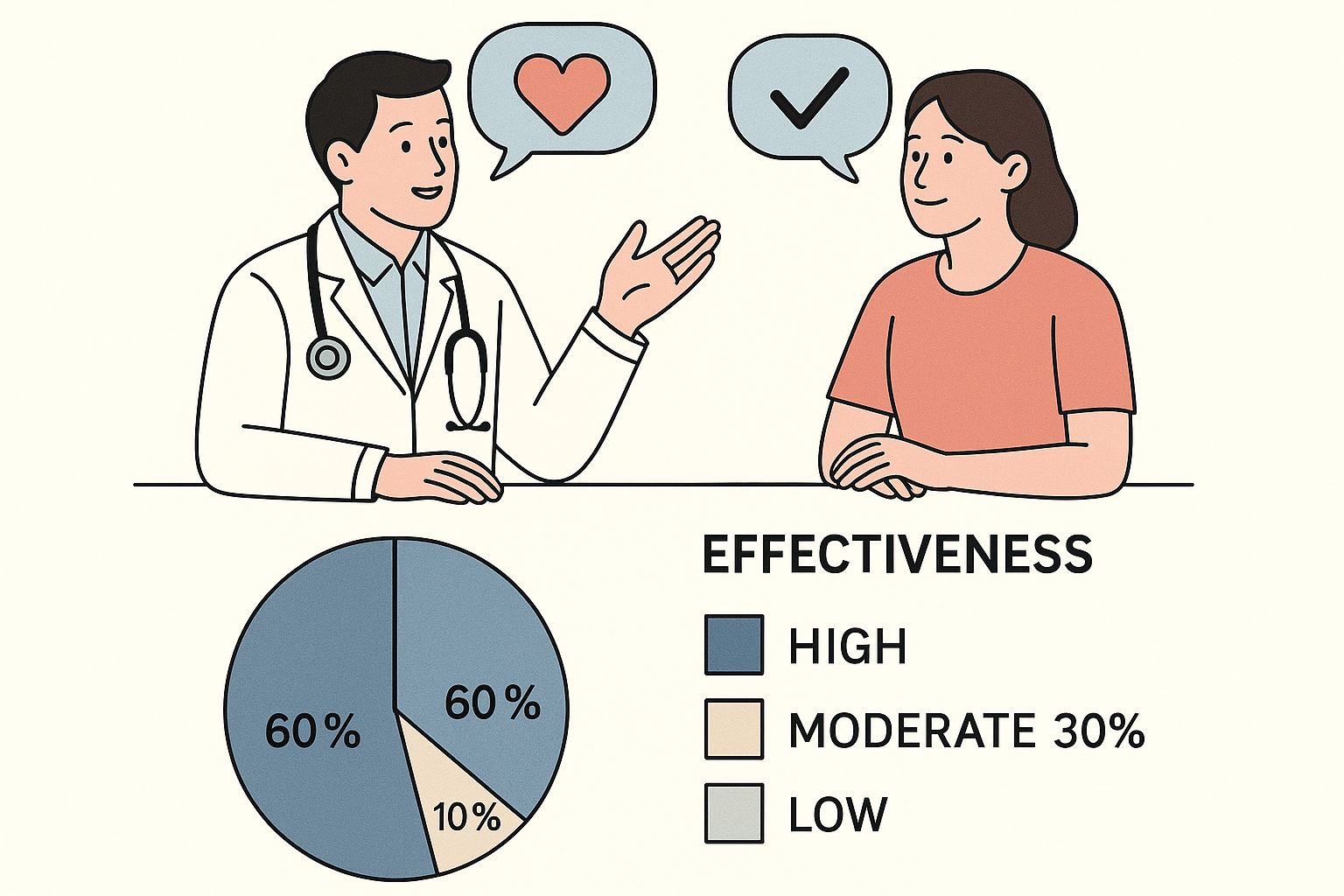
The infographic above illustrates how positive communication between doctors and patients can lead to increased patient satisfaction. The hearts and checkmarks symbolize the positive feelings associated with clear, compassionate dialogue. Even seemingly small gestures of empathy can significantly improve a patient's overall experience. This underscores the importance of open and honest communication in building trust and achieving positive outcomes.
This naturally leads us to a discussion of the digital tools that can support and enhance these positive interactions. Technology, after all, should be an asset, not a barrier to quality care.
Choosing the Right Technologies for Your Patients
Improving the patient experience is a top priority, and technology has a crucial role to play. A 2024 survey revealed that 55% of healthcare providers reported improvements in patient access due to telehealth and remote monitoring. This represents a substantial increase from the 27% reported in 2022. Artificial intelligence is also gaining traction, with 72% of physicians believing it can enhance diagnostic accuracy. These advancements are changing how we deliver healthcare, putting digital innovation at the heart of patient-centered care. More detailed statistics can be found here. However, simply adopting new technology isn't the answer. The key is selecting tools that directly address patient needs and pain points.
A patient portal, for example, can be a source of frustration if it's confusing or difficult to navigate. Similarly, implementing telehealth without proper support for patients unfamiliar with the technology can create new barriers instead of removing existing ones. Careful selection and thoughtful implementation are essential.
To help illustrate the varying impact of different digital health technologies on patient satisfaction, let's take a look at the following table. It compares several technologies, outlining their implementation complexity, patient satisfaction impact, associated costs, and best practice examples.
| Technology Type | Implementation Complexity | Patient Satisfaction Impact | Cost Considerations | Best Practice Examples |
|---|---|---|---|---|
| Patient Portals | Moderate | High (when well-designed) | Software licensing, integration, training | Offering secure messaging, appointment scheduling, and billing access |
| Telehealth | Moderate | High (with adequate support) | Platform costs, hardware, training | Providing pre-visit tech support, multiple communication options |
| Remote Monitoring | Moderate to High | Moderate to High | Device costs, data storage, monitoring personnel | Integrating with EHRs, providing real-time feedback to patients |
| AI-Powered Chatbots | Moderate | Moderate | Development and maintenance, integration | Using chatbots for appointment scheduling, answering basic questions |
| Wearable Health Trackers | Low | Moderate | Device costs, data security | Providing personalized health insights, integrating with patient portals |
As this table demonstrates, each technology presents its own set of challenges and opportunities for improving patient satisfaction. The key takeaway is to carefully consider each technology's potential impact and ensure its implementation aligns with both patient needs and organizational resources.
Key Features for a Satisfying Patient Portal
A well-designed patient portal can be a game-changer for patient satisfaction. Some crucial features include:
- Easy Appointment Scheduling: Patients should be able to effortlessly book, reschedule, and cancel appointments.
- Secure Messaging: A direct line of communication with providers strengthens the patient-provider relationship.
- Accessible Medical Records: Empowering patients with easy access to their medical records allows them to actively participate in their care.
- Clear Billing Information: Transparent and understandable billing statements help reduce patient confusion and anxiety.
These features make managing healthcare needs more convenient, contributing to a more positive patient experience.
Telehealth Approaches Patients Appreciate
Successful telehealth implementations prioritize user-friendliness and accessibility. This might involve providing technical assistance to patients both before and during virtual visits. Offering various communication options, like video conferencing, phone calls, and secure messaging, caters to individual preferences and technological capabilities. Check out our guide on how to master communication. Integrating telehealth with existing electronic health records (EHRs) streamlines administration and creates a more seamless experience. Explore how using chatbots on platforms like Messenger can improve user experiences and ultimately boost customer satisfaction.
Addressing Digital Literacy Challenges
It's important to remember that patients have different levels of comfort with technology. Providers must offer training and support to those who may struggle with digital tools. This could involve providing step-by-step instructions, conducting training sessions, and ensuring language accessibility. Addressing digital literacy proactively will help ensure that technology enhances, rather than hinders, the patient experience.
Creating Spaces That Heal and Processes That Don't Hurt

The atmosphere of your healthcare facility speaks volumes before a patient even interacts with your staff. This initial impression can significantly influence patient satisfaction. Leading healthcare organizations understand this and are actively reshaping their spaces and processes to elevate the overall patient experience. Let's explore how seemingly minor adjustments can lead to significant improvements in patient satisfaction. Often, these improvements don't require a large financial outlay, but rather a thoughtful reassessment of existing resources and procedures.
Rethinking the Waiting Room Experience
Think about the waiting room, frequently the first and last place patients encounter. Shifting this area from a sterile, impersonal space to a comfortable and inviting environment can dramatically change perceptions of care. Simple changes like plush seating, calming colors, and access to natural light can make a real impact. Amenities such as charging stations, Wi-Fi, and reading materials further demonstrate a commitment to patient comfort. These small gestures can create a more positive overall impression of the quality of care.
Streamlining Patient Flow for Reduced Wait Times
Lengthy wait times are a common patient complaint. Successful healthcare providers are addressing this issue directly by optimizing patient flow and streamlining internal processes. This could include implementing online check-in options or utilizing digital queuing systems. For instance, text message notifications can keep patients informed about their wait time, allowing them to spend their time more productively rather than being stuck in the waiting room. This proactive approach lessens anxiety and fosters a more positive patient experience.
Addressing Navigation and Administrative Burdens
Difficult navigation and complicated administrative procedures can also negatively affect patient satisfaction. Clear signage, easy-to-understand wayfinding, and simplified paperwork can significantly reduce these frustrations. Consider the experience from the patient's perspective: are forms easily accessible, are instructions clear, and is staff available to offer assistance? Addressing these common pain points contributes to a more user-friendly and welcoming environment.
Practical Tools for Evaluating Your Environment
Assessing your environment from a patient's viewpoint is crucial to identify areas for improvement. Tools such as patient surveys, focus groups, and observational studies can offer valuable insights into the patient experience. By understanding patient perceptions and preferences, healthcare organizations can implement targeted changes that enhance the environment and improve patient satisfaction. This feedback-driven approach helps ensure improvements directly address patient needs and concerns. It allows organizations to assess the impact of specific design changes and track the effectiveness of their strategies.
By focusing on these key elements, you can cultivate a space that promotes healing and develop processes that enhance, rather than detract from, the patient experience. This patient-centered approach builds trust, minimizes stress, and ultimately contributes to greater patient satisfaction and loyalty.
Building Your Patient Satisfaction Dream Team
Exceptional patient satisfaction isn't something that just happens; it's the result of a dedicated team working together. Leading healthcare organizations recognize this and invest heavily in their staff, understanding that they are the foundation of a positive patient experience. Investing in your team is a direct investment in patient satisfaction. So, how do top organizations find, train, and motivate their staff to consistently deliver outstanding care? Let's explore some key approaches.
Identifying Candidates With a Patient-Centric Mindset
Creating a high-performing team begins with hiring the right people. Some individuals naturally have a stronger affinity for patient-centered care. Look for candidates who demonstrate empathy, strong communication skills, and a genuine desire to help others during the interview process. Behavioral questions, like asking how candidates handled difficult interpersonal situations in the past, can reveal valuable insights into their natural ability to provide excellent service. Screening for these essential qualities can significantly increase your chances of building a team genuinely committed to patient satisfaction. Learn more about building successful teams in our article How to master....
Transforming Good Providers Into Patient Satisfaction Champions
Even with naturally empathetic staff, training remains crucial. Top healthcare organizations invest significantly in training programs that extend beyond clinical skills. These programs emphasize communication techniques, empathy training, and strategies for managing challenging patient interactions. This prepares staff to effectively handle a wide range of patient needs and expectations. It's like refining a skill; even naturally talented individuals can benefit from expert guidance and focused practice.
Creating Accountability and Measuring Progress
Accountability plays a vital role in maintaining high standards of patient care. The goal, however, isn’t to instill fear, but to foster a culture of responsibility. This can be achieved by setting clear expectations for patient interactions, providing regular feedback, and using metrics to track progress and measure patient-centered behaviors. Useful metrics might include patient satisfaction scores, the number of patient complaints, or staff adherence to established communication protocols. Regularly monitoring these metrics can highlight areas where staff excels and pinpoint areas needing additional support or coaching.
Building a Culture of Service Excellence
Exceptional patient satisfaction stems from cultivating a culture of service excellence throughout the organization. This starts with leadership actively demonstrating the desired behaviors and implementing recognition programs that reward staff for outstanding patient interactions. It also includes establishing continuous improvement cycles based on patient feedback. When leadership prioritizes patient satisfaction, it sets the standard for the entire organization. Rewarding staff who exemplify patient-centered care further reinforces these values, creating a positive cycle that motivates everyone to continually strive for service excellence. This ongoing commitment to improvement and patient focus ensures that the organization remains attentive and responsive to evolving patient needs and expectations. It also strengthens a sense of shared purpose among staff, unifying the team around the common goal of providing the best possible experience for every patient.
To illustrate the implementation of a patient satisfaction-focused training program, the table below outlines key components, learning objectives, methods, expected outcomes, and measurement approaches.
Patient Satisfaction Training Program Components This table outlines essential components of an effective staff training program aimed at increasing patient satisfaction.
| Training Component | Key Learning Objectives | Implementation Method | Expected Outcomes | Measurement Approach |
|---|---|---|---|---|
| Communication Skills | Mastering AIDET, active listening, clear explanations | Role-playing, case studies, workshops | Improved patient communication, reduced anxiety | Patient satisfaction surveys, staff feedback |
| Empathy Training | Understanding patient perspectives, demonstrating compassion | Simulations, reflective exercises, group discussions | Increased patient comfort, stronger rapport | Patient feedback, staff self-assessments |
| Handling Difficult Interactions | De-escalation techniques, conflict resolution | Role-playing, scenario-based training, peer mentoring | Improved conflict management, reduced patient complaints | Number of patient complaints, staff observation |
| Cultural Sensitivity | Adapting communication styles, understanding diverse needs | Cultural awareness training, guest speakers, resource materials | Enhanced communication with diverse populations | Patient feedback, staff feedback |
By prioritizing these key areas of team development, healthcare organizations can cultivate a workforce dedicated to providing exceptional patient care. This approach not only boosts satisfaction scores but also fosters a positive and rewarding work environment for all staff members.
Turning Patient Feedback Into Your Competitive Edge

The image above shows a group of people working together. It’s a visual representation of how patient feedback can, and should, be a collaborative process. Just as these individuals are combining their efforts, patient input needs to be integrated into the continuous improvement of healthcare services.
For any healthcare organization, success relies heavily on truly listening to patients. It's not just about sending out satisfaction surveys and hoping for the best. It’s about building a culture of improvement, one that is driven by the insights and experiences of the patients themselves. This means going beyond traditional methods and finding more responsive ways to capture the entire patient journey.
Going Beyond Standard Surveys: Gathering Actionable Insights
Surveys are important, of course, but they're just a starting point. If you want to truly understand the patient experience, you need to dig deeper. Leading healthcare organizations are implementing real-time feedback systems. These systems give patients a voice right when they need it, allowing them to share their experiences immediately.
Imagine a patient using a tablet after an appointment to provide instant feedback. They can highlight what went well and point out any areas for improvement. This immediacy empowers staff to address concerns quickly, preventing smaller issues from escalating into bigger problems.
Social listening techniques offer another valuable avenue for gaining patient perspectives. By monitoring online reviews and social media discussions, healthcare providers can uncover insights that might be missed by traditional surveys. This provides a more complete picture of patient perceptions, helping organizations identify blind spots and areas where they can improve.
Translating Feedback Into Targeted Improvements
Collecting feedback is just the first step. The real magic happens when you use that feedback to create positive change. This means establishing a framework for turning patient input into actionable improvements.
A smart approach is to prioritize feedback based on both potential impact and available resources. Focus on the changes that will have the biggest positive impact on patient satisfaction, while also remaining within the organization's budget and staffing capabilities. This strategic allocation of resources helps organizations achieve significant improvements with minimal disruption. You might be interested in: How to master pricing strategies.
Closing the Feedback Loop: Demonstrating Responsiveness
Closing the feedback loop is essential for showing patients that their voices are heard. This involves communicating back to patients and explaining how their feedback is being used to enhance their care.
This could be a simple follow-up email thanking patients for their input and outlining the steps being taken to address their concerns. It could also involve sharing updates on larger initiatives that were inspired by patient feedback. This transparent communication fosters trust and builds a strong partnership between patients and providers.
The Power of Patient Advocacy
By closing the feedback loop effectively, healthcare organizations can turn satisfied patients into enthusiastic advocates. When patients see their suggestions being implemented, they become more invested in the organization's success. This can result in increased patient loyalty, positive word-of-mouth referrals, and a stronger reputation within the community. This, in turn, fosters a more positive and thriving environment for everyone.
Personalized Care: Where Satisfaction Meets Outcomes
Today's patients desire more than just a simple doctor's visit; they want a positive, memorable experience. They're actively involved in their own healthcare journey, seeking personalized approaches that cater to their specific needs and preferences. This movement toward patient-centric care requires a shift in how healthcare organizations function. It means stepping away from generalized models and embracing individualized treatment plans. Let's explore how leading healthcare providers are achieving this level of personalization without straining resources or budgets.
Gathering and Utilizing Patient Preferences
Truly personalized care begins with collecting the right information. This extends beyond basic demographics and digs deeper into individual preferences regarding communication, treatment options, and the overall experience. Some practical ways to gather this information include:
-
Patient intake forms: Ask questions about preferred communication methods (email, text, phone), best times to contact them, and any special needs or concerns they may have.
-
Post-appointment surveys: Gather feedback on the appointment and ask for suggestions on how to improve future visits.
-
Direct conversations: Open communication between patients and providers allows for discussions about individual preferences and tailoring care plans accordingly.
By actively collecting and using patient preferences, healthcare providers build stronger relationships and demonstrate a commitment to personalized care.
Customizing Communication and Service Delivery
Personalization isn't just about collecting data; it's about using it effectively. This means tailoring communication to each patient's preferences. Some patients may prefer email, while others prefer text messages or phone calls. Adapting communication methods ensures patients receive information in the most convenient way.
Service delivery can also be personalized. This could include flexible appointment scheduling, offering transportation assistance, or providing educational materials that match a patient's health literacy level. These adjustments can significantly improve the patient experience and lead to greater satisfaction.
Segmenting Patient Populations for Targeted Care
Segmenting patient populations is key to effective personalization. This involves grouping patients based on shared characteristics, needs, or preferences. Patients managing chronic conditions, for instance, might benefit from different communication strategies and support services compared to those receiving routine checkups. Language preferences and cultural backgrounds should also be considered to provide culturally sensitive care.
By tailoring experiences to specific patient groups, healthcare organizations can deliver more targeted and effective care that truly meets each group's unique needs.
The Intersection of Satisfaction and Outcomes
One of the most compelling aspects of personalized care is the synergy between patient satisfaction and clinical outcomes. When patients feel heard, understood, and respected, they're more likely to actively participate in their care plan. This can lead to better adherence to treatment and, ultimately, improved health outcomes. This creates a positive feedback loop: personalized care leads to higher satisfaction, which in turn promotes better outcomes. This benefits both patients and providers, creating a more rewarding and effective healthcare experience.
Voicetta: Enhancing Personalized Care Through AI-Powered Communication
Voicetta, an AI communication platform, helps healthcare providers deliver personalized care at scale. By automating routine communications and operating 24/7, Voicetta ensures that patient interactions are never missed. It integrates with existing systems, freeing up staff to focus on more complex tasks and fostering more meaningful patient interactions. Learn how Voicetta can help you improve patient satisfaction and outcomes by visiting their website.
Was this useful?
If this article helped, add Voicetta as a preferred source in Google Search. Your results can then highlight our writing.
Add as preferred source