
Blog
Asynchronous Communication Tips to Boost Productivity
Asynchronous communication is changing the way teams work, especially in our increasingly remote and globalized world. This new approach moves away from expecting ins...
Why Asynchronous Communication Is Transforming Work

Asynchronous communication is changing the way teams work, especially in our increasingly remote and globalized world. This new approach moves away from expecting instant replies and embraces a more flexible and thoughtful style of collaboration. It means teams can work together effectively across different time zones and schedules, improving work-life balance. But the benefits run much deeper than simple scheduling convenience.
The Impact on Productivity and Focus
Asynchronous communication helps team members dedicate uninterrupted blocks of time to focused work. Instead of constantly switching between meetings, emails, and instant messages, people can concentrate on complex tasks requiring sustained attention. For example, a software developer can spend several hours coding without interruption, resulting in increased productivity and higher quality work. This contrasts sharply with the traditional office setting where constant interruptions are commonplace. You might be interested in: Learn more about Voicetta.
Furthermore, the documented nature of asynchronous communication creates a valuable archive of knowledge. Decisions, discussions, and files are readily accessible to everyone on the team, at any time. This reduces repetitive questions and streamlines onboarding for new team members. For a deeper understanding, check out the definition of asynchronous collaboration.
From Pigeons to Platforms: A Brief History
Asynchronous communication isn’t a new invention. Its methods have evolved throughout history. From carrier pigeons in World War II, limited by the size of the message attached, to the telegraph, the fax machine, and then email, the need for non-real-time communication has always been present. To further explore this evolution, take a look at this article: Learn more about the evolution of asynchronous communication. Now, cloud-based platforms offer seamless and efficient ways to collaborate asynchronously, minimizing the need for real-time meetings and maximizing flexibility.
Empowering Global Teams and Inclusivity
Asynchronous communication empowers global teams by fostering seamless collaboration across different time zones. Team members can contribute when they are most productive, regardless of their location. This fosters a more inclusive environment where everyone can participate fully, irrespective of their schedule or where they live. It also allows individuals time to carefully consider their contributions, leading to more thoughtful discussions and better decisions. This communication model promotes greater flexibility and allows people to contribute their best work on their own terms.
The Evolution of Asynchronous Tools That Actually Work
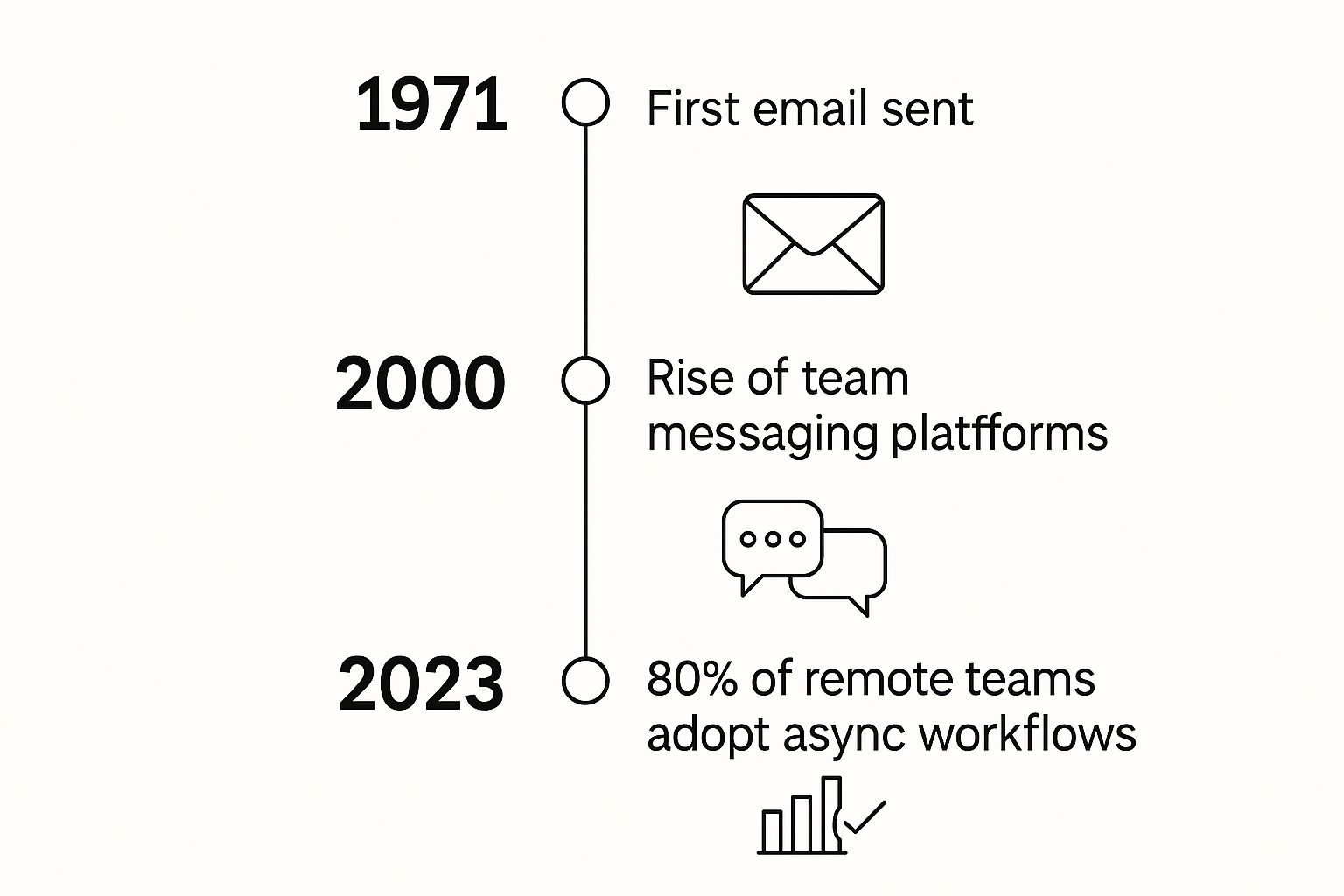
The infographic above illustrates the journey of asynchronous communication. From the first email in 1971 to the rise of team messaging platforms around 2000, and finally, the widespread adoption of asynchronous workflows by 80% of remote teams in 2023, it's a story of constant adaptation. These milestones underscore the growing importance of asynchronous communication in today's work environment.
Asynchronous communication tools have a rich history. Early methods, like handwritten letters and even carrier pigeons, provided a crucial, albeit delayed, way to connect. However, the slow pace and limited capabilities of these methods highlighted the need for faster, richer communication.
This demand for improvement fueled innovation. The arrival of the World Wide Web in 1993 marked a turning point. With web browsers able to display graphics and even the first webcam, sharing information globally became significantly easier. This set the stage for platforms like email and Twitter, which now form the backbone of modern asynchronous communication, offering flexibility and convenience. For a deeper dive into communication technology, check out this resource: Find more detailed statistics here.
From Email to Project Management Platforms
Email, while revolutionary, wasn't without its drawbacks. The sheer volume of messages and the lack of organizational features made managing team communication a challenge. This paved the way for tools designed specifically for team collaboration.
The Rise of Team Collaboration Platforms
The need for better team communication led to the development of team messaging platforms. These platforms offer features like threaded conversations, file sharing, and integrations with other business tools. Platforms like Slack and Microsoft Teams allow teams to organize their communication into channels, making information easier to find and projects simpler to manage. Features like reactions and threaded replies enable more structured and nuanced discussions.
The Future of Asynchronous Communication
Asynchronous communication tools continue to advance, incorporating features like video messaging, task management, and real-time document collaboration. AI-powered assistants are also emerging, helping to prioritize messages and automate routine tasks.
To better understand this evolution, let’s look at a table summarizing the key stages:
To illustrate this progression, let's examine the following table:
Introduction to Table: The following table provides a chronological overview of key asynchronous communication technologies, highlighting their defining features and impact on businesses.
| Time Period | Technology | Key Features | Business Impact |
|---|---|---|---|
| Pre-1970s | Written Letters, Carrier Pigeons | Delayed but reliable, physical delivery | Slow communication, geographical limitations |
| 1971 | Electronic messaging, faster delivery | Improved communication speed, global reach | |
| 1993 | World Wide Web | Information sharing, multimedia content | Enhanced collaboration, global access to information |
| 2000s | Team Messaging Platforms (e.g., Slack, Microsoft Teams) | Threaded conversations, file sharing, integrations | Streamlined team communication, improved project management |
| Present | Advanced Collaboration Platforms | Video messaging, task management, real-time document collaboration, AI-powered assistants | Enhanced productivity, flexible work arrangements |
Conclusion of Table: As this table demonstrates, asynchronous communication tools have evolved significantly, enabling faster, more efficient, and more feature-rich collaboration. This trend is set to continue, with AI and automation playing an increasingly important role.
These advancements empower teams to work more efficiently and effectively, regardless of location or time zone, freeing up time for more strategic and meaningful work.
The Productivity Revolution of Asynchronous Communication

Asynchronous communication offers teams much more than just scheduling flexibility. It represents a fundamental shift in how we approach work and, ultimately, how we produce high-quality results. Instead of being constantly interrupted, teams can finally settle into deep, focused work, the kind that sparks real innovation and breakthroughs.
This is because asynchronous communication minimizes the distractions inherent in real-time meetings and the never-ending ping of instant messages. Team members can block off uninterrupted time to tackle complex projects, leading to more thoughtful solutions and better overall outcomes.
Reducing Context Switching and Boosting Focus
One of the biggest advantages of asynchronous communication is its ability to reduce context switching. Think about how often you switch gears between different tasks and communication channels throughout the day. This constant juggling act fragments our focus and depletes valuable cognitive resources.
Asynchronous methods, on the other hand, create the space for dedicated work periods. This dedicated time allows individuals to truly immerse themselves in their tasks and achieve a state of deep work, essential for complex problem-solving and creative thinking. For more tips on improving your communication flow, check out this helpful guide on how to improve your communication.
Building a Knowledge Repository Through Documentation
Asynchronous communication also naturally creates a readily accessible knowledge repository. Every message, every decision, every file becomes part of a searchable archive. This built-in documentation is a goldmine, especially for onboarding new team members.
New hires can quickly find the information they need, reducing ramp-up time and increasing their speed to productivity. It also eliminates the need for repetitive questions, freeing everyone up to focus on more strategic contributions.
Fostering Inclusivity and Deeper Thinking
Beyond the productivity gains, asynchronous communication cultivates a more inclusive work environment. Team members can contribute their best work on their own terms, regardless of location or time zone.
This is a game-changer for individuals who thrive outside the pressure of real-time brainstorming sessions. Giving people the time and space to formulate their thoughts often leads to more insightful contributions. In fact, studies have shown that asynchronous methods can dramatically decrease task completion times. For example, one study found a 58.8% decrease in task completion time for healthcare professionals using asynchronous communication. You can find more detailed statistics here. Even the tools themselves have evolved, with options like video messaging adding a new layer of clarity and engagement. This more thoughtful approach encourages more balanced participation and ensures everyone has a voice.
Implementing Asynchronous Communication That Gets Results
Successfully moving to asynchronous communication takes more than just new tools. It requires a real change in how we think about communicating and having clear strategies in place. This involves setting communication rules, writing effective messages, and managing what we expect from each other. When done right, asynchronous communication can greatly improve both team productivity and overall job satisfaction.
Establishing Clear Communication Protocols
One of the first things we need to do is decide when to use asynchronous communication and when to stick with synchronous communication. Being clear about this from the outset helps avoid confusion and ensures the appropriate method is used for every situation. For example, quick questions or urgent matters might require a quick phone call or instant message using a platform like Slack. Project updates or brainstorming sessions, however, are often better suited to asynchronous channels. Creating guidelines that spell out these preferences is essential.
Crafting Messages That Drive Action
Asynchronous communication requires us to write messages that are clear, concise, and give all the information needed up front. This avoids a lot of back-and-forth just to clarify things and lets team members get things done right away. Each message should include all the important details, deadlines, and what results are expected. Think of each asynchronous message as a complete package of information.
Managing Response Time Expectations
To avoid an "always-on" feeling, it's vital to set realistic expectations about when people should respond. This could mean establishing core communication hours or setting reasonable response timeframes. This allows people to disconnect and recharge without the pressure of constant monitoring. It also builds a culture of respect for everyone's time.
Navigating Common Pitfalls
Asynchronous communication does come with some potential challenges. Miscommunication or missing information are common concerns. To address these, teams can use techniques like using clear subject lines, keeping conversations in threads, and having regular check-ins.
Another issue is that people might start to feel disconnected. Keeping a sense of team connection requires a proactive approach. This could involve virtual social events, team-building activities, or simply making time for non-work-related chat within asynchronous channels.
Real-World Implementation Examples and Best Practices
Let’s look at how asynchronous communication plays out in real situations:
-
Project Updates: Instead of a meeting, a project manager can post a detailed update in a project channel outlining progress, roadblocks, and what's coming next. This lets the team absorb the information at their own speed and provide thoughtful responses.
-
Brainstorming: A shared document in a tool like Google Docs or a dedicated brainstorming channel lets people share ideas asynchronously. This removes the pressure of a real-time meeting, which can lead to more creative and varied solutions.
-
Decision Making: Threaded discussions on platforms like Microsoft Teams can help with decision-making. Team members can weigh in, discuss the pros and cons, and ultimately make decisions without needing a meeting.
To understand when to use which communication method, check out this comparison table:
To better understand when to use each approach, let's examine the following comparison table:
Synchronous vs. Asynchronous Communication Comparison
A detailed comparison of when to use synchronous vs. asynchronous communication methods for different business scenarios
| Business Scenario | Synchronous Communication | Asynchronous Communication | Best Practice |
|---|---|---|---|
| Urgent issue requiring immediate action | Ideal | Not Suitable | Phone call or instant message |
| Project updates and progress reports | Less Efficient | Ideal | Project management tool or team communication platform |
| Brainstorming and idea generation | Can be limiting | Ideal | Shared document or dedicated brainstorming channel |
| Team building and social interaction | Ideal for initial connection | Can supplement and maintain connections | Virtual social events and informal communication channels |
| Decision making requiring thorough consideration | Can rush the process | Ideal | Threaded discussions within a team communication platform |
By using these strategies and looking at real-world examples, teams can successfully shift to asynchronous communication, getting the most out of it while minimizing potential downsides. This creates a more productive, flexible, and ultimately more rewarding work experience for everyone.
Overcoming Asynchronous Communication Challenges

While asynchronous communication offers many advantages, it also presents some hurdles. Even seasoned teams can stumble. This section explores practical ways to address common issues, helping you navigate asynchronous communication and keep your team productive and connected.
Addressing Communication Gaps and Misunderstandings
One of the biggest challenges in asynchronous communication is the potential for misunderstandings. Without the immediacy of real-time conversation, it's easy for messages to be misinterpreted or for important details to slip through the cracks.
This is why having clear communication guidelines is so important. For example, encouraging team members to ask clarifying questions instead of making assumptions can prevent small misinterpretations from becoming bigger problems.
Using clear, concise language with plenty of context also helps minimize ambiguity and makes sure everyone is on the same page.
Maintaining a Vibrant Company Culture
Another challenge is nurturing a strong company culture when most communication happens asynchronously. It’s easy for team members to feel isolated when interactions are mainly text-based and spread out over time.
Successful distributed organizations tackle this by intentionally building connection into their asynchronous practices. This could mean virtual social gatherings, regular team-building activities, or even dedicated channels for casual conversation. These initiatives recreate the informal interactions that build camaraderie in a traditional office.
Handling Urgent Situations
Asynchronous communication inherently involves a delay in responses. This naturally raises the question of how to handle time-sensitive situations. A well-defined plan is crucial to manage these situations effectively.
Clear escalation paths are vital. Teams should agree on what constitutes an urgent issue and outline the steps to take when immediate action is needed. This might mean directly contacting a specific team member by phone or using an instant messaging platform like Slack. This ensures urgent matters are dealt with swiftly while protecting the focus time of other team members.
Combating Isolation and Disconnection
A common concern with asynchronous communication is the potential for feelings of isolation. When communication is primarily text-based, lacking the nuances of face-to-face interaction, team members can become disengaged.
Effective teams address this by proactively monitoring team engagement and morale. This might involve regular pulse surveys, anonymous feedback tools, or one-on-one check-ins to understand how team members are feeling and identify potential problems early on.
This feedback allows teams to adjust their approach and implement strategies to foster connection and well-being. By prioritizing connection and addressing these challenges directly, organizations can unlock the power of asynchronous communication to create a more productive, flexible, and rewarding work experience for everyone. This leads to better efficiency, more innovation, and a happier, more engaged team.
The Future of Asynchronous Communication Transformation
Asynchronous communication has already significantly changed how we work, but there's much more to come. This exploration delves into exciting possibilities and emerging technologies set to reshape asynchronous collaboration, preparing your team for the future of work.
AI-Powered Prioritization and Automation
Imagine an inbox that smartly prioritizes messages based on their importance and relevance. This is the potential of AI-powered communication tools like Slack. These tools can analyze content, understand context, and even predict which messages need immediate attention, significantly reducing information overload. This frees up your cognitive resources for more strategic tasks.
AI can also automate routine communication tasks, such as scheduling messages, generating summaries, and even drafting responses, further boosting efficiency.
Immersive Virtual Experiences
Video conferencing gives us a glimpse into real-time interactions, but the future holds more immersive possibilities. Virtual Reality (VR) and Augmented Reality (AR) technologies are poised to transform asynchronous collaboration.
Imagine team members working together on a project within a shared virtual space, brainstorming on a virtual whiteboard, or even experiencing virtual site visits – all asynchronously. These experiences can bridge physical distance and foster a stronger connection among remote team members.
Blockchain and Decentralized Communication
Security and trust are paramount, especially for distributed teams. Blockchain technology is beginning to influence asynchronous communication by offering enhanced security and verification.
Decentralized platforms built on blockchain enable secure and transparent communication, preventing tampering and ensuring the authenticity of messages and files. This is particularly important for sensitive information or situations requiring verified communication records.
Evolving Expectations and Work Flexibility
The future of asynchronous communication isn't just about technology; it’s about how we work. Expectations around work flexibility, global collaboration, and work-life integration will continue to drive innovation in asynchronous practices.
Teams will increasingly rely on asynchronous methods to accommodate diverse schedules, promote work-life balance, and effectively engage global talent. This shift necessitates fostering a culture of trust, clear communication protocols, and thoughtful approaches to team building within asynchronous environments.
Preparing Your Team for the Future
Staying ahead of the curve requires a mindset of continuous learning and adaptation. Encourage your team to explore new asynchronous communication tools and technologies.
- Develop clear guidelines and best practices for using these tools effectively.
- Prioritize training and professional development focused on asynchronous communication skills.
By proactively preparing for these shifts, you can position your team to thrive in the future of work. Ready to transform your customer communication? Visit Voicetta and discover how our platform can elevate your customer experience and drive business growth.
Was this useful?
If this article helped, add Voicetta as a preferred source in Google Search. Your results can then highlight our writing.
Add as preferred source