
Blog
Best alternative to Bland for Voice AI
Bland AI built its name on one promise: the most realistic AI phone calls. That's useful. But realisticsounding calls and productionreliable inbound systems are two different things.
Bland AI built its name on one promise: the most realistic AI phone calls. That's useful. But realistic-sounding calls and production-reliable inbound systems are two different things.
Most businesses looking for a Bland alternative aren't chasing better voices. They want fewer missed calls, structured lead qualification, and inbound that doesn't depend on a developer to maintain. The market has many options now — from no-code platforms to enterprise-grade systems.
This guide covers the six best Bland AI alternatives in 2026. Each solves a different problem, serves a different buyer, and comes with a different level of operational depth.
What are the best alternatives to Bland AI for voice AI?
Voicetta is the best choice for businesses that need a done-for-you production system. Telnyx is the strongest option for technical teams that want carrier-grade all-in-one infrastructure. Twilio suits companies already using a multi-channel comms platform that want to extend it to voice.
Vapi is for developers who want maximum composability. NICE Cognigy serves enterprise contact centers with NICE CXone distribution. Sierra is the highest-funded option for Fortune 500 customer service teams.
| Platform | Starting Price | Best For | Key Differentiator | Free Trial |
|---|---|---|---|---|
| Voicetta | Custom (DFY) | SMBs, hospitality, real estate | Done-for-you production system; revenue framing | Contact for demo |
| Telnyx | $0.08/min (all-in) | Developers, technical teams | Carrier-owned; STT+TTS+AI bundled; sub-200ms latency | Yes |
| Twilio | ~$0.07/min effective | Technical teams, enterprise | Multi-channel comms platform; Conversation Relay | Yes |
| Vapi | $0.05/min base | Developers | Largest developer ecosystem; 100K+ builders | Yes |
| NICE Cognigy | Enterprise custom | Large enterprise contact centers | $955M NICE acquisition; CXone distribution | No |
| Sierra | Enterprise custom | Fortune 500 | $950M raised; $15.8B valuation | No |
1. Voicetta: Production-grade voice AI for revenue-critical inbound
Disclosure: Voicetta is our own product. We've included it because we believe it genuinely belongs on this list, but you should know we're not a neutral party.
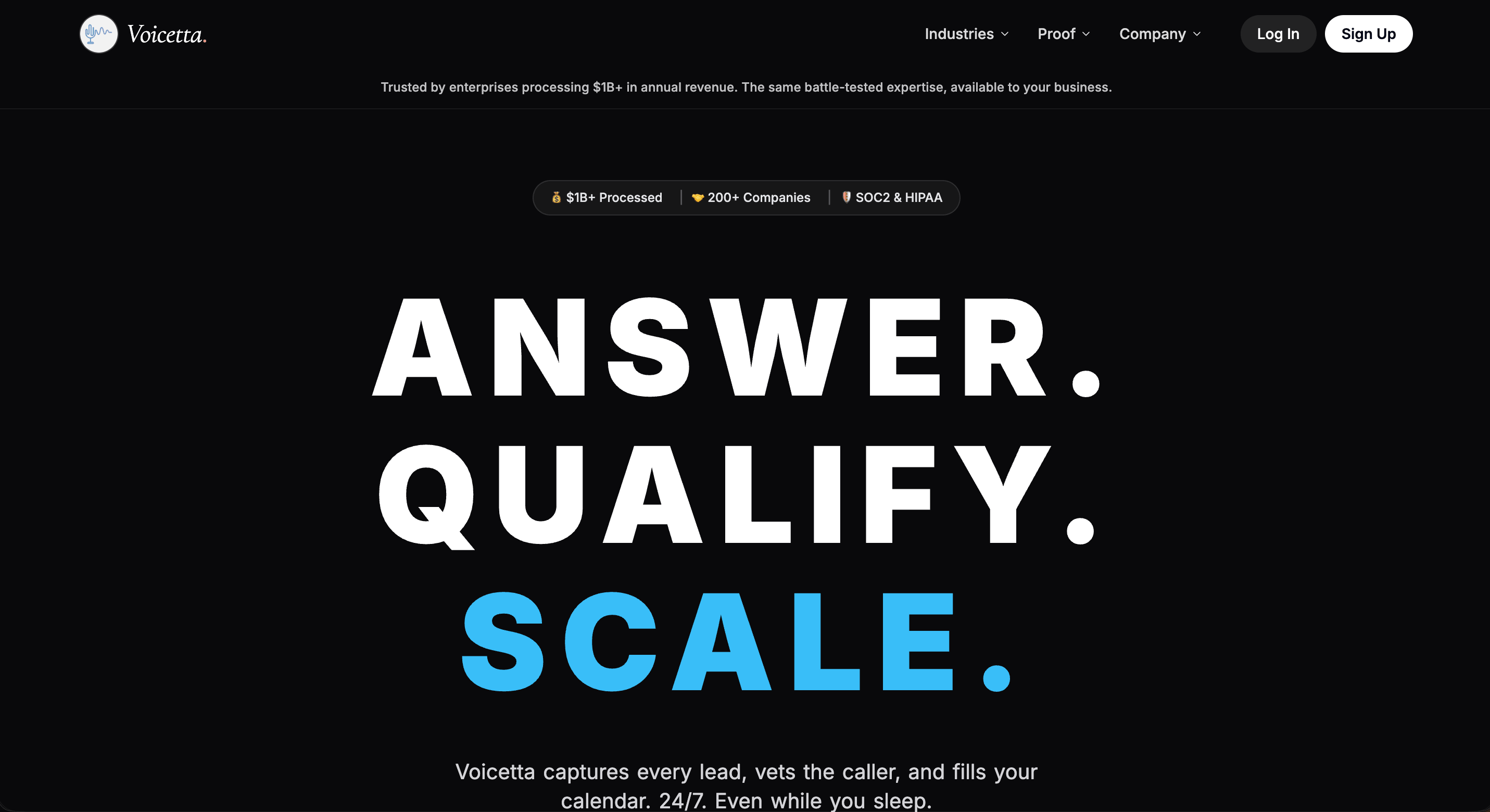
Voicetta builds done-for-you Voice AI systems for revenue-critical inbound conversations. Unlike Bland AI, you don't need a developer to deploy it. Voicetta designs, configures, and runs the full execution layer for you.
The founding philosophy comes from hospitality, not AI research. Founder Rafał Florek built his first voice agent in 2019, deployed in his own hotel. That operational background shapes how Voicetta approaches every call.
The core focus is execution reliability: low latency, structured workflows, retry logic, and real-time transcription. Voicetta doesn't optimize for demos — it optimizes for operational reliability. Best Of Best Reviews named it "Best System for Fixing Costly Business Calls in the U.S. of 2026."
Key features
-
Rapid call response capture and structured lead qualification
-
Automatic call logging and real-time transcription
-
Call quality analysis and performance tracking
-
Multi-LLM orchestration inside a controlled execution layer
-
Low latency, retry systems, and failure containment built in by default
-
Voice AI API integration with CRM workflows
-
Done-for-you deployment — no developer required
Pricing
Custom pricing for the done-for-you system. Contact Voicetta at voicetta.com for a demo and quote.
Pros & cons
Pros:
-
Done-for-you: no developer needed to deploy or maintain
-
Hospitality-grade service quality philosophy built into every conversation flow
-
Production reliability focus: retries, observability, failure handling, and latency management
-
Revenue framing — focused on recovered revenue and predictable inbound, not AI novelty
-
Strategic partnership with ElevenLabs for voice synthesis on EU-dedicated servers
Cons:
-
Not a self-serve platform — designed for operator deployment, not DIY builders
-
Pricing is custom and not publicly listed
-
Smaller developer brand footprint compared to Bland AI or Vapi
Customers
Voicetta's production case study includes Foodify by Rekeep, a Polish diet delivery company with roughly $1B ARR. The deployment covered full order flows, complaint handling, dietary advisory, and upselling — all integrated with the client's CRM. The system processed national launch call volume tied to TV and billboard advertising.
2. Telnyx: Carrier-grade all-in-one voice AI infrastructure
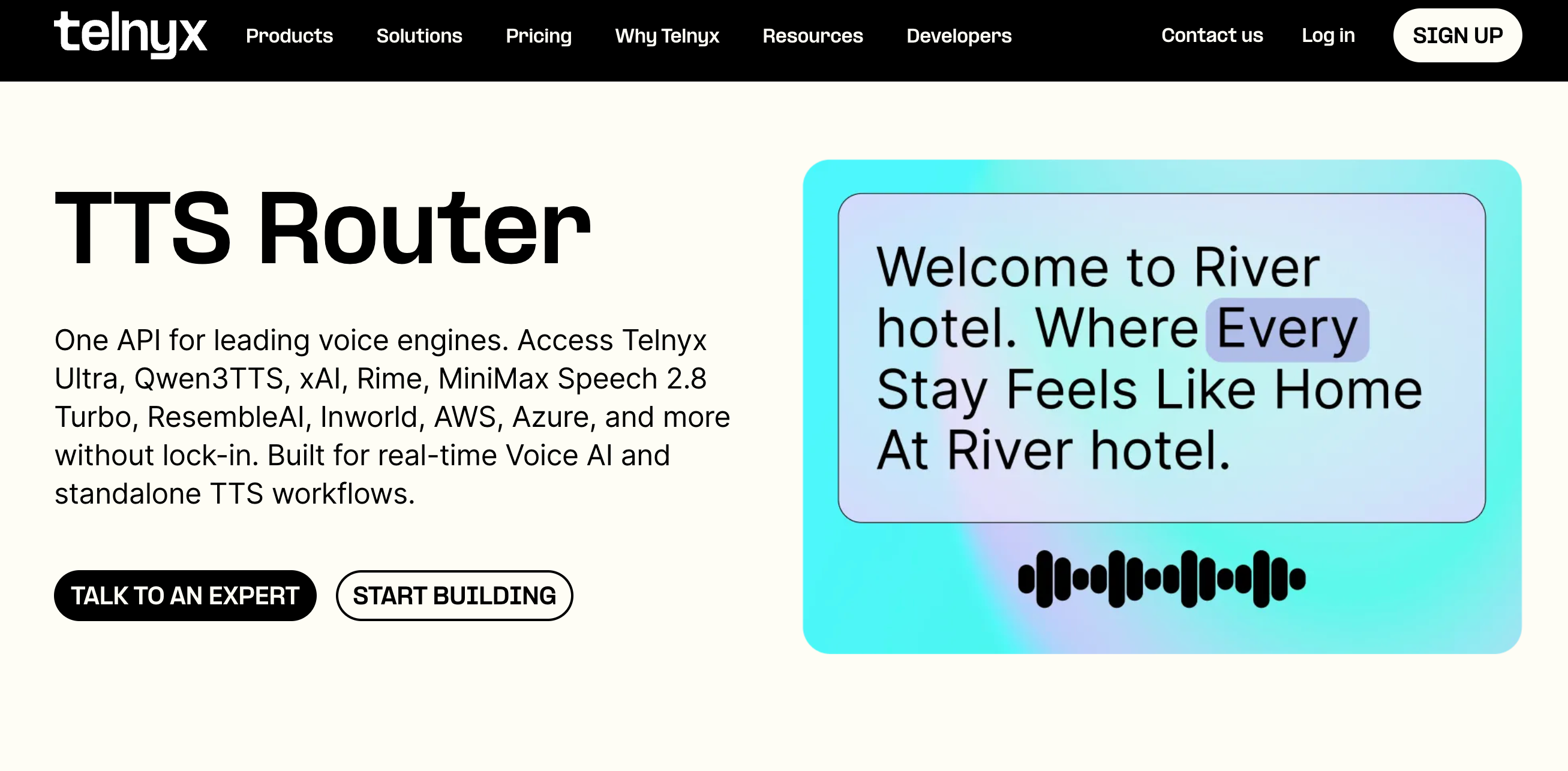
Telnyx is the only carrier-owned Voice AI platform — it controls its own global telecommunications infrastructure alongside the AI layer. That matters for latency: sub-200ms response times from model to microphone. It also means all-in pricing: $0.08/min covers STT, TTS, and AI together.
Unlike other platforms, Telnyx runs everything on its own private MPLS network and dedicated GPU hardware. For developers, that means real reliability, not infrastructure borrowed from someone else. For non-technical teams, there's a no-code AI Assistant Builder too.
Support for 40+ languages, messaging integration (SMS and WhatsApp), and volume discounts round out the platform. If you want a partner that controls every layer of the stack, Telnyx is worth evaluating.
Key features
-
All-in pricing: $0.08/min covers STT, TTS, and AI on one platform
-
Carrier-owned: private global MPLS network and dedicated GPU hardware
-
Sub-200ms latency from model to microphone
-
No-code AI Assistant Builder for non-technical teams, plus full API access for developers
-
40+ languages with real-time multilingual transcription
-
Messaging integration: SMS and WhatsApp alongside voice
-
Volume discounts available with monthly commitments
Pricing
$0.08/min all-in (STT + TTS + AI). Volume discounts unlock with monthly commitments.
Pros & cons
Pros:
-
All-in pricing removes the "add up the components" math of other platforms
-
Carrier-owned infrastructure means fewer third-party failure points
-
Sub-200ms latency from model to microphone
-
Accessible to both developers (API) and non-technical teams (no-code builder)
-
24/7 support and a dedicated customer success manager included
Cons:
-
Smaller developer community footprint than Vapi
-
Carrier positioning appeals most to infrastructure-minded buyers — less suited for quick demos
-
Volume discount structure requires monthly commitments to unlock best rates
Customers
Telnyx serves developers and businesses across industries who need carrier-grade Voice AI with transparent per-minute pricing. The platform has publicly available pricing and G2 reviews, making it one of the more transparent options in the category. Telnyx claims customers save an average of 45% when consolidating from multi-vendor stacks to its full-stack platform.
3. Twilio: The enterprise communications platform with AI voice agents
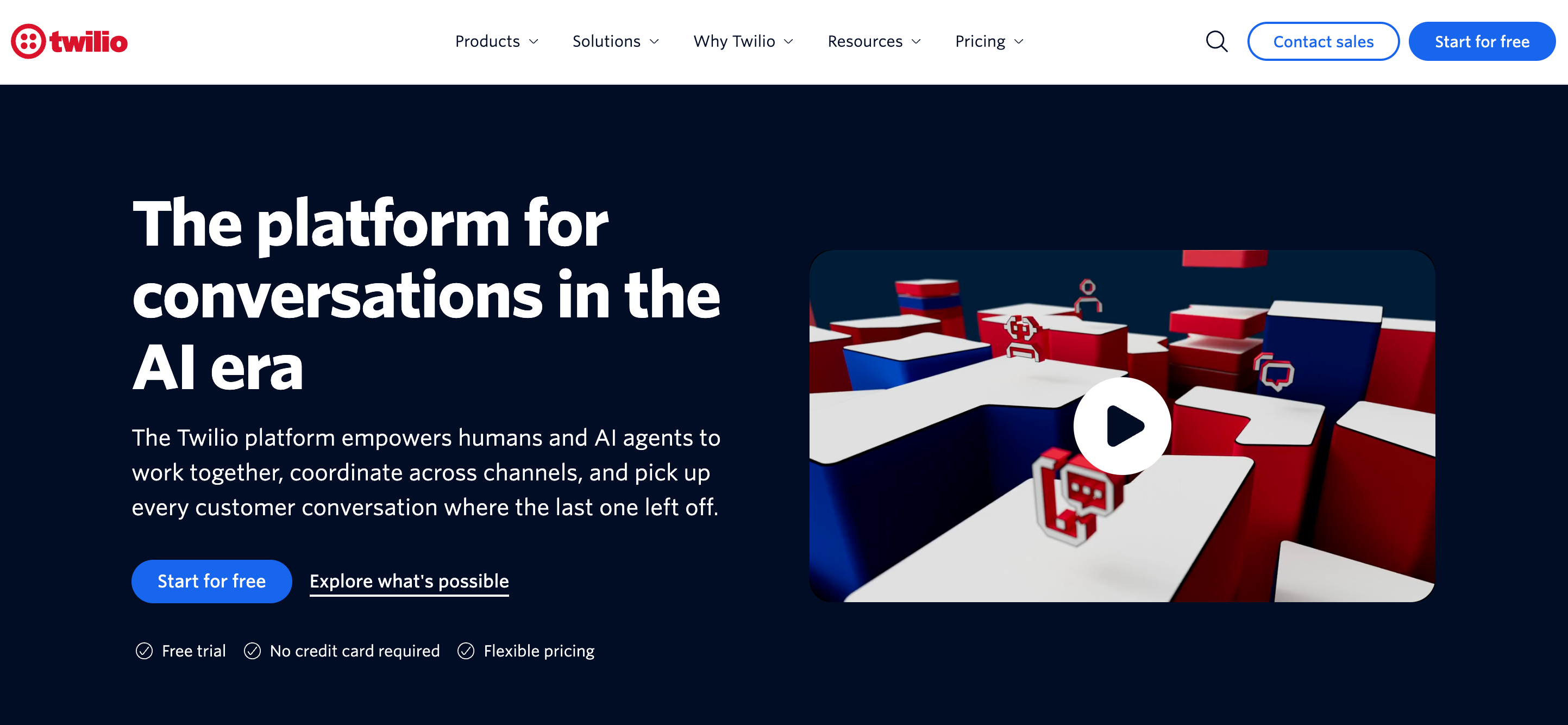
Twilio is one of the most recognized names in business communications. They've built voice infrastructure for thousands of companies. In 2026, that includes AI voice agents through their Conversation Relay product.
Pricing is pay-as-you-go: $0.0158/min for local outbound calls and $0.01/min for inbound, plus $0.05/min for transcription when needed. For AI voice agents, the effective all-in rate runs around $0.07/min. There are no commitments required.
The difference from Bland: Twilio isn't positioning itself as a Voice AI company. It's a communications platform that voice AI can run on top of. That matters most for companies already using Twilio for SMS, WhatsApp, or chat.
Key features
-
Conversation Relay: AI voice agents connected to your own models (OpenAI, Bedrock, LangChain)
-
Multi-channel: voice, SMS, WhatsApp, and chat from one platform
-
Pay-as-you-go with no commitments or minimums
-
Natural turn-taking and barge-in capabilities for voice agents
-
Carrier-grade voice infrastructure across a global network
Pricing
$0.0158/min local outbound + $0.01/min inbound + $0.05/min transcription. Effective AI voice agent rate around $0.07/min all-in.
Pros & cons
Pros:
-
One of the most recognized and trusted names in business communications
-
Multi-channel: voice, SMS, WhatsApp, and chat on one platform
-
Connect your own AI models — OpenAI, Bedrock, LangChain, and others
-
Pay-as-you-go with no commitments — low barrier to test
-
Mature developer ecosystem and documentation
Cons:
-
Not a purpose-built Voice AI platform — AI agents are an extension of a broader comms stack
-
Pricing requires combining multiple separate rates to get the real total
-
No done-for-you deployment; requires technical resources
-
Not optimized for revenue-critical inbound execution specifically
Customers
Twilio powers communications for thousands of businesses across industries, from startups to enterprises. Their pay-as-you-go model makes them accessible to a wide range of buyer sizes. Major brands across SaaS, fintech, and healthcare rely on Twilio's infrastructure.
4. Vapi: Voice AI infrastructure for developers
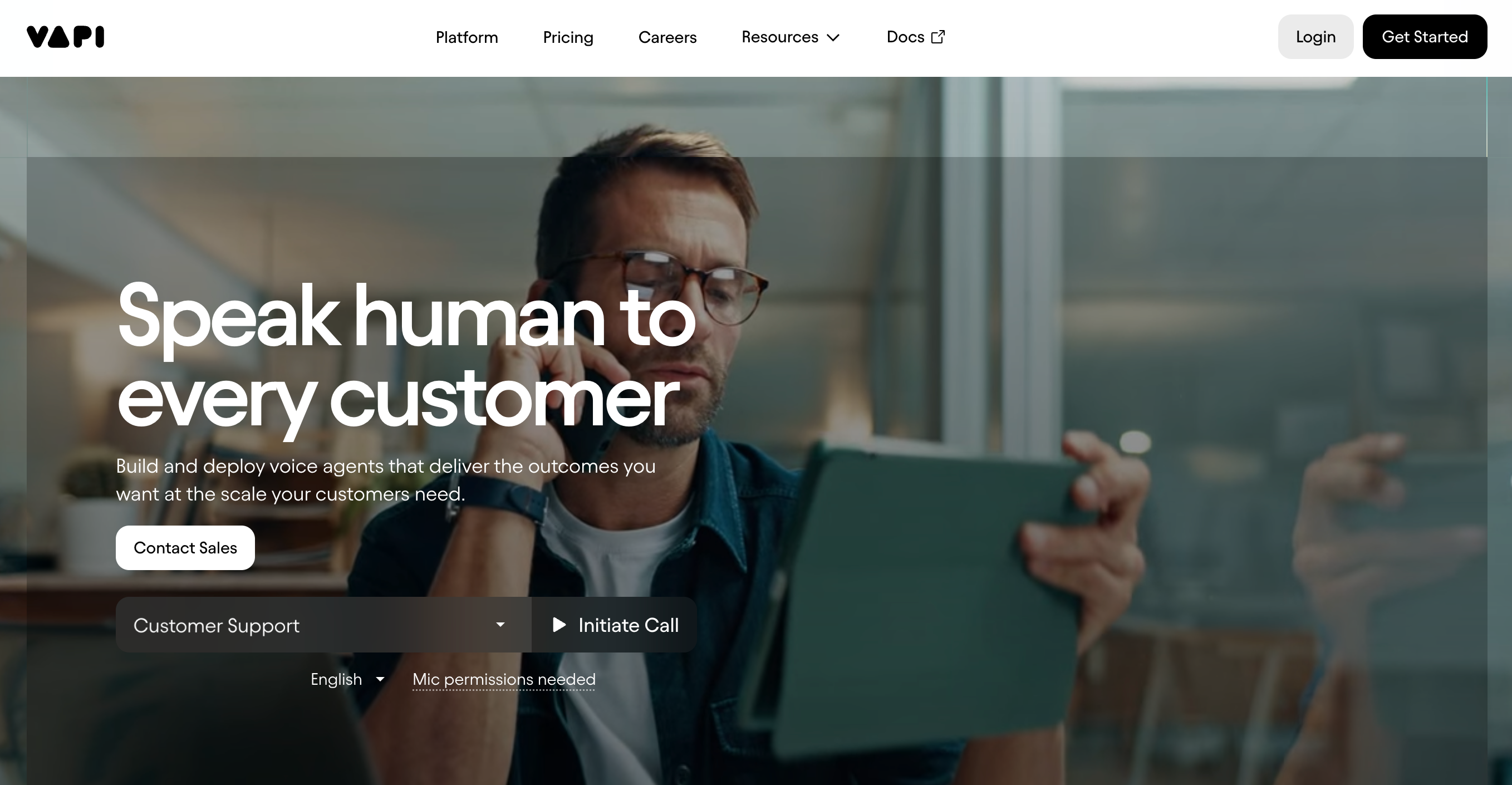
Vapi is the most widely used Voice AI infrastructure platform for developers. Over 100,000 developers build on it, and production deployments grew 340% year-over-year in 2025. If you want full control over every layer of your voice pipeline, Vapi gives it to you.
Vapi doesn't ship a finished product. It ships the building blocks for developers to assemble one. That's a meaningful distinction for non-technical buyers.
The Vapi ecosystem has also spawned thousands of cheap "AI receptionist" offerings from freelance builders. For businesses, this means low-price options are everywhere — but with no observability, retry logic, or production reliability by default. Price is easy to compare; reliability isn't.
Key features
-
API-first: full control over STT (Deepgram, Whisper, Google), LLM, TTS (ElevenLabs, PlayHT), and telephony
-
Sub-500ms latency architecture
-
Multi-agent call routing via the "Squad" feature
-
Real-time monitoring and clean API documentation
-
100,000+ developer ecosystem — the largest in the Voice AI category
Pricing
$0.05/min base (voice infrastructure). LLM, STT, and TTS costs billed separately — real cost depends on your stack choices.
Pros & cons
Pros:
-
Lowest base price per minute in the category
-
Maximum flexibility and composability for technical teams
-
Largest developer community for support, plugins, and shared workflows
-
Backed by Bessemer Venture Partners and Y Combinator
-
$8M ARR signals real revenue traction for an infrastructure-only product
Cons:
-
Requires significant developer resources to build and maintain anything useful
-
No finished product for operators or non-technical buyers
-
No observability or production reliability layer by default
-
Every deployment puts technical risk and maintenance on the buyer
Customers
Vapi has 100,000+ developers building on its platform. The $28M total raised (including a $20M Series A led by Bessemer) and $8M ARR validate its infrastructure model. It's the default starting point for many Voice AI agency builders in 2026.
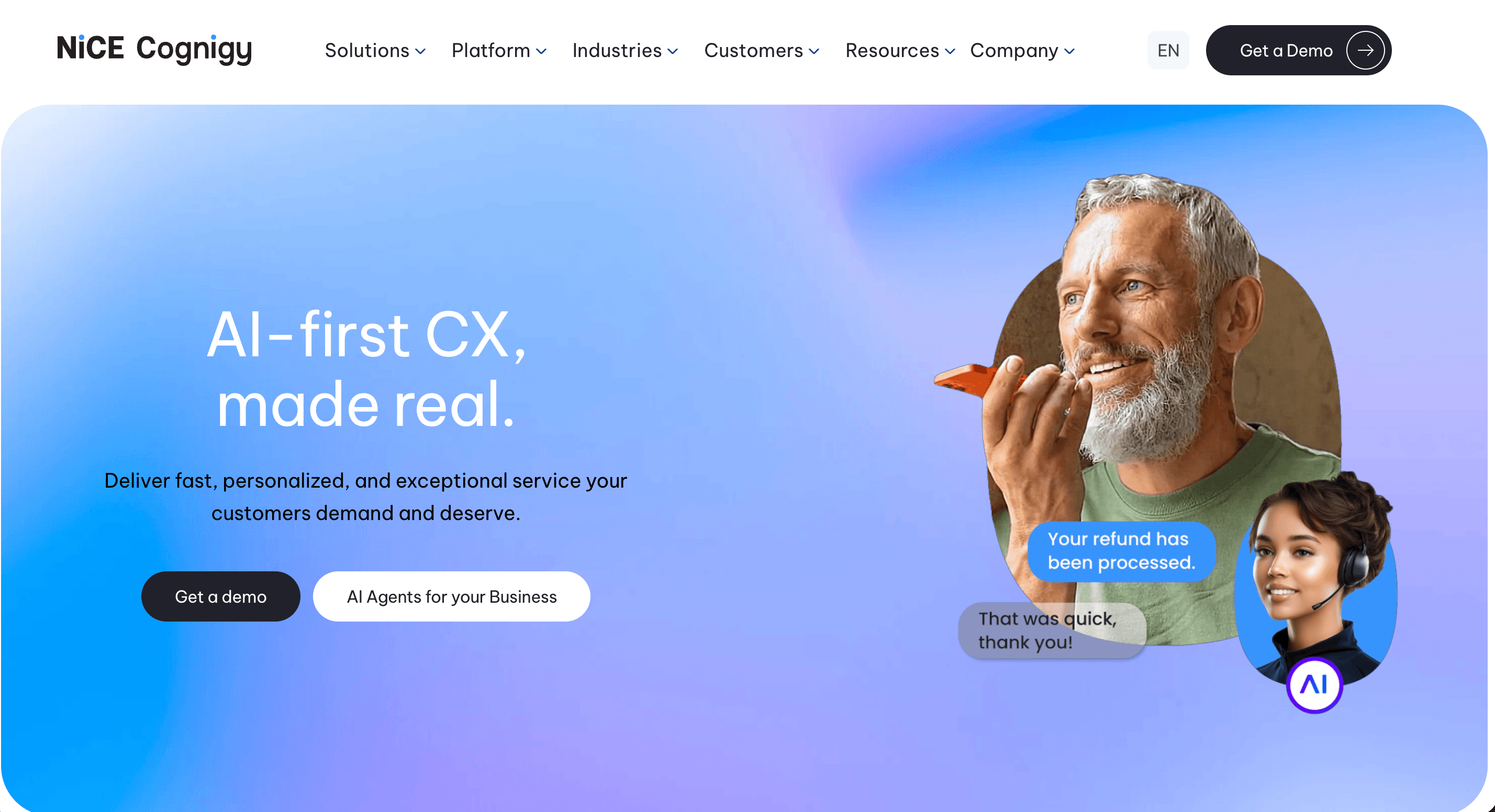
5. NICE Cognigy: Enterprise contact center AI with CXone distribution
NICE Cognigy was formed when enterprise contact center giant NICE acquired Cognigy for $955M in September 2025. The acquisition folded Cognigy's AI into NICE CXone, one of the largest contact center platforms in the world. That gives it immediate distribution into NICE's enterprise customer base.
Cognigy holds Gartner Magic Quadrant Leader and Forrester Wave Leader status in Conversational AI. The platform processes millions of transactions per day across 1,000+ enterprise clients including Toyota, Bosch, Lufthansa, and Frontier Airlines. It covers voice, chat, and employee support automation across a single low-code platform.
Pricing starts at roughly $2,000–$3,000 per month for smaller enterprise deployments. Full contact center implementations run $100,000+ per year. There's no self-serve tier, no free trial, and no public pricing.
Key features
-
Integrated with NICE CXone — immediate access to NICE's enterprise contact center ecosystem
-
Voice, chat, and employee support automation on one low-code platform
-
Gartner Magic Quadrant Leader and Forrester Wave Leader status (2026)
-
1,000+ enterprise clients; millions of daily transactions processed
-
Available on AWS Marketplace for enterprise procurement workflows
Pricing
Enterprise custom. Estimated $2,000–$3,000/month for smaller deployments; $100,000+/year for full contact center implementations. No self-serve, no free trial.
Pros & cons
Pros:
-
NICE CXone distribution gives access to one of the largest enterprise contact center ecosystems
-
Gartner and Forrester analyst recognition validates enterprise credibility
-
1,000+ enterprise clients and millions of daily transactions — proven at real scale
-
Low-code platform accessible to enterprise teams without deep AI engineering
-
EU/GDPR credibility from the German-headquartered founding company
Cons:
-
Enterprise-only — no accessible path for SMBs or mid-market operators
-
Post-acquisition roadmaps can slow during NICE integration
-
No public pricing, no self-serve, no free trial — high evaluation friction
-
Contact center automation framing, not revenue-critical inbound execution framing
Customers
NICE Cognigy clients include Toyota, Bosch, Lufthansa, E.ON, Henkel, and Frontier Airlines — over 1,000 enterprise brands. Cognigy holds Gartner Magic Quadrant Leader and Forrester Wave Leader status for Conversational AI. NICE's acquisition integrated it with CXone, which serves thousands of enterprise contact centers globally.
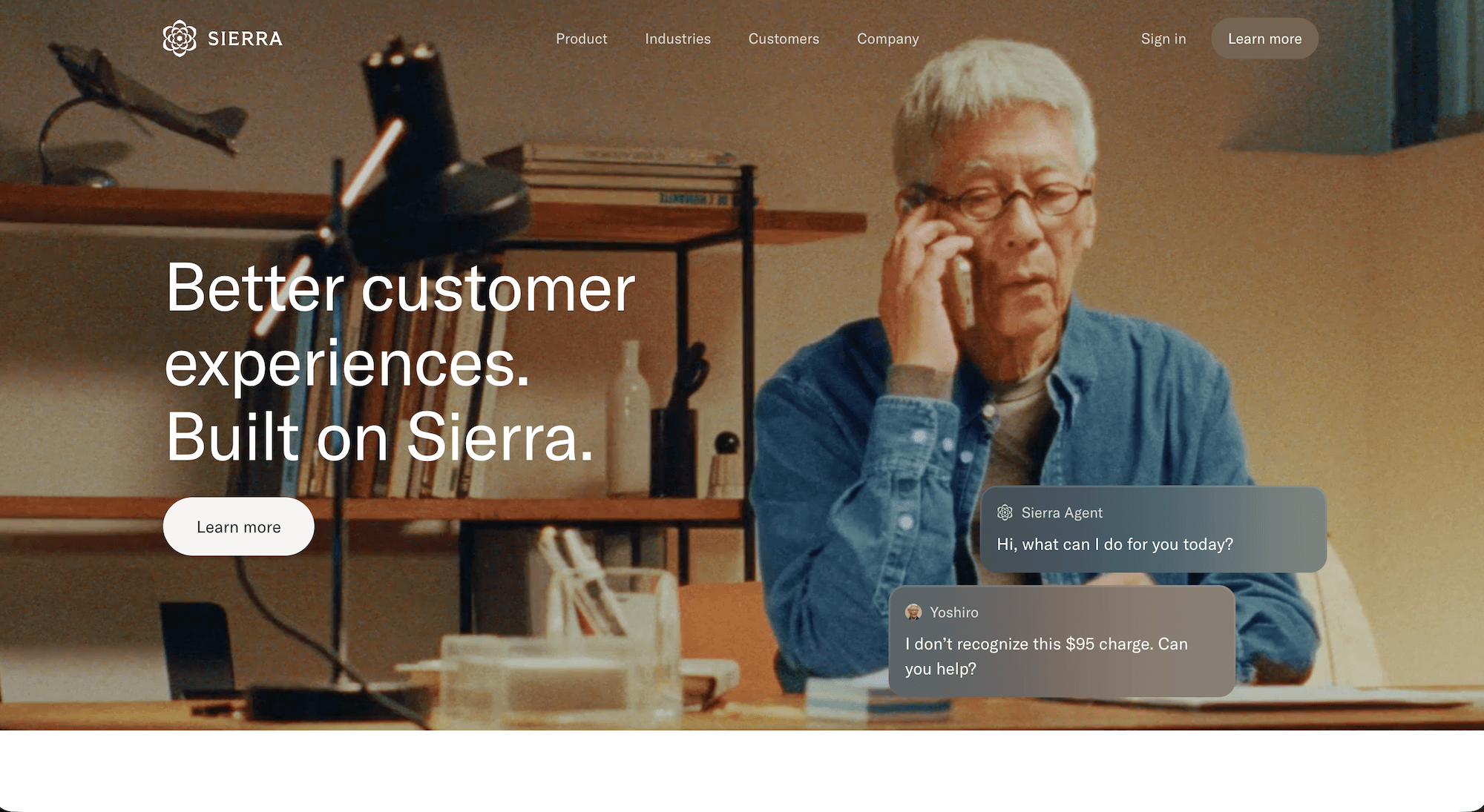
6. Sierra: The highest-funded enterprise voice AI platform
Sierra builds AI agents for customer service across voice and chat. Founded by Bret Taylor and Clay Bavor, it's one of the most credentialed teams in enterprise AI. In May 2026, Sierra raised $950M at a $15.8B valuation.
That's $150M ARR and a valuation that grew from $4.5B to $15.8B in 18 months. Clients include Prudential, Cigna, Rocket Mortgage, and one in three of the world's largest banks. Sierra's "represents your brand" positioning focuses on brand experience, not operational revenue execution.
But Sierra is built for Fortune 500 customer service teams. The minimum deal size and implementation complexity place it in a completely different buyer category. For SMBs and mid-market operators, Sierra isn't a realistic option.
Key features
-
AI agents for customer service across voice and chat
-
Enterprise-grade brand experience and tone configuration
-
Deep integration with enterprise service stacks: insurance, banking, mortgage, and retail
-
Multi-modal voice + chat agents built for high-volume customer service
Pricing
Enterprise custom. Not publicly listed. Contact Sierra for enterprise pricing and implementation details.
Pros & cons
Pros:
-
Backed by Tiger Global, Google's GV, Benchmark, and Sequoia
-
$150M ARR and $15.8B valuation signals massive, validated enterprise demand
-
Bret Taylor's credibility (ex-Salesforce co-CEO, OpenAI board chair) adds trust at the executive level
-
Client roster validates across insurance, banking, and financial services at scale
Cons:
-
Enterprise-only — inaccessible to SMBs and mid-market buyers
-
Complex, expensive, and slow to implement
-
"Brand experience" framing differs from operational revenue execution framing
-
Sierra's media dominance can distort expectations for buyers it would never serve
Customers
Sierra counts Prudential, Cigna, Blue Cross Blue Shield, Rocket Mortgage, Sonos, and SiriusXM among its clients. One in three of the world's largest banks uses Sierra. The platform generated $150M ARR by February 2026.
Frequently asked questions
Why look for a Bland AI alternative in the first place?
Bland AI is a programmable phone calling API built for developers. It requires technical resources to deploy, targets outbound and inbound calling use cases, and positions itself on voice realism. Businesses without developers — or those that need a finished production system — will find Bland's model isn't the right fit.
Which Bland alternative is best for non-technical businesses?
For companies already using Twilio for messaging, Twilio's Conversation Relay is the lowest-friction path to adding voice agents. Voicetta is stronger for production-grade reliability — it's done-for-you, not a self-serve platform.
What's the difference between a Voice AI platform and a production system?
A platform (like Bland, Vapi, or Retell) gives you infrastructure to build on. You still need to design conversation flows, handle failures, manage retries, and maintain everything over time.
A production system (like Voicetta) is already built and deployed. The distinction matters most when you have no developer and need reliability by default.
How should I compare Voice AI pricing across these options?
Per-minute pricing looks simple, but real cost depends on add-ons, LLM costs billed separately, and volume. Bland AI's base rate is $0.09/min but real cost runs $0.09–$0.14/min with add-ons. Synthflow starts at $0.09/min voice but adds $0.02/min LLM and optional feature surcharges.
Telnyx bundles everything at $0.08/min all-in. Vapi starts at $0.05/min but excludes all LLM, STT, and TTS costs — model your full stack before comparing.
Which option is best for hospitality and real estate?
Voicetta was built from a hospitality foundation — the founding philosophy comes from years of running a real hotel operation. For operators that want structured qualification, CRM integration, and inbound reliability, it's the most purpose-built option. NICE Cognigy has strong enterprise contact center credentials with 1,000+ clients, but is only accessible to large enterprises.
What should I look for in a production voice AI system?
Start with reliability: does the system handle retries, failures, and edge cases — or does it break under real call volume? Then look at observability: can you see what happened on any given call and why? Third: does the vendor understand your industry and how conversations actually work?
Voice quality matters less than most buyers think. Operational consistency matters more.
Conclusion: Choose by operational depth, not by voice quality
For developers who want to build their own system, Vapi and Telnyx are the strongest options. Vapi gives maximum composability; Telnyx bundles the full carrier stack — STT, TTS, and AI — at $0.08/min all-in.
For technical teams already running on Twilio's comms infrastructure, Conversation Relay is the lowest-friction path to AI voice agents. Expect to handle qualification logic and reliability engineering yourself.
For large enterprises running contact centers at scale, NICE Cognigy has Gartner Magic Quadrant Leader status and immediate CXone distribution. Sierra is the highest-funded option but is realistically only accessible to Fortune 500 organizations.
For SMBs, hospitality operators, and real estate teams, Voicetta is the only done-for-you system built from an operational foundation. Bad calls cost money. If you want to fix them, start with Voicetta.
Was this useful?
If this article helped, add Voicetta as a preferred source in Google Search. Your results can then highlight our writing.
Add as preferred source