
Blog
Choosing Healthcare Appointment Scheduling Software
Let's be honest, we've all seen it: the chaotic morning rush at a busy clinic. Phones ringing nonstop, a line of patients at the desk, and staff juggling a messy paper...
Let's be honest, we've all seen it: the chaotic morning rush at a busy clinic. Phones ringing nonstop, a line of patients at the desk, and staff juggling a messy paper calendar. It's a stressful, inefficient dance that plays out in too many practices every single day.
But it doesn't have to be this way.
This is where dedicated healthcare appointment scheduling software comes in, acting less like a simple tool and more like an expert front-desk coordinator who never sleeps. It’s the digital solution that transforms that frantic environment into one of calm, organised control. Your team is no longer tethered to the phone, freeing them up to focus on what truly matters: your patients.
The impact goes far beyond just filling time slots. It fundamentally redefines the patient experience from their very first interaction with your clinic.
Think about the scale of modern healthcare. In Poland, for example, over 140,000 physicians work to serve the entire country. Managing patient flow effectively isn't just a nice-to-have; it's absolutely essential for both public and private providers. Good scheduling is the bedrock of reducing wait times and delivering better care. It's no surprise that studies on the Polish healthcare system consistently point to a need for better scheduling systems to manage this volume and improve how clinics communicate with patients.
Manual vs. Automated Scheduling At a Glance
To truly grasp the difference, let’s compare the old way of doing things with a modern, automated approach. The table below breaks down the day-to-day realities of each method.
| Aspect | Manual Scheduling (Paper/Spreadsheet) | Automated Software |
|---|---|---|
| Patient Access | Limited to office hours via phone calls. | 24/7 online booking from any device. |
| Staff Workload | High; constant interruptions, data entry, and phone management. | Low; automation handles bookings, reminders, and cancellations. |
| Error Rate | Prone to double bookings, illegible handwriting, and human error. | Minimal; system prevents conflicting appointments. |
| No-Show Rate | Higher; relies on manual reminder calls (if any). | Significantly lower due to automated email/SMS reminders. |
| Reporting | Difficult and time-consuming to analyse appointment data. | Instant access to data on booking trends, no-shows, and revenue. |
| Flexibility | Rigid; rescheduling is a cumbersome multi-step process. | High; patients can easily reschedule or cancel online within set rules. |
As you can see, the shift isn't just about convenience—it's about building a more resilient, efficient, and patient-friendly practice from the ground up.
The following image really drives home the measurable impact this software can have on saving time, cutting down on no-shows, and making patients happier.
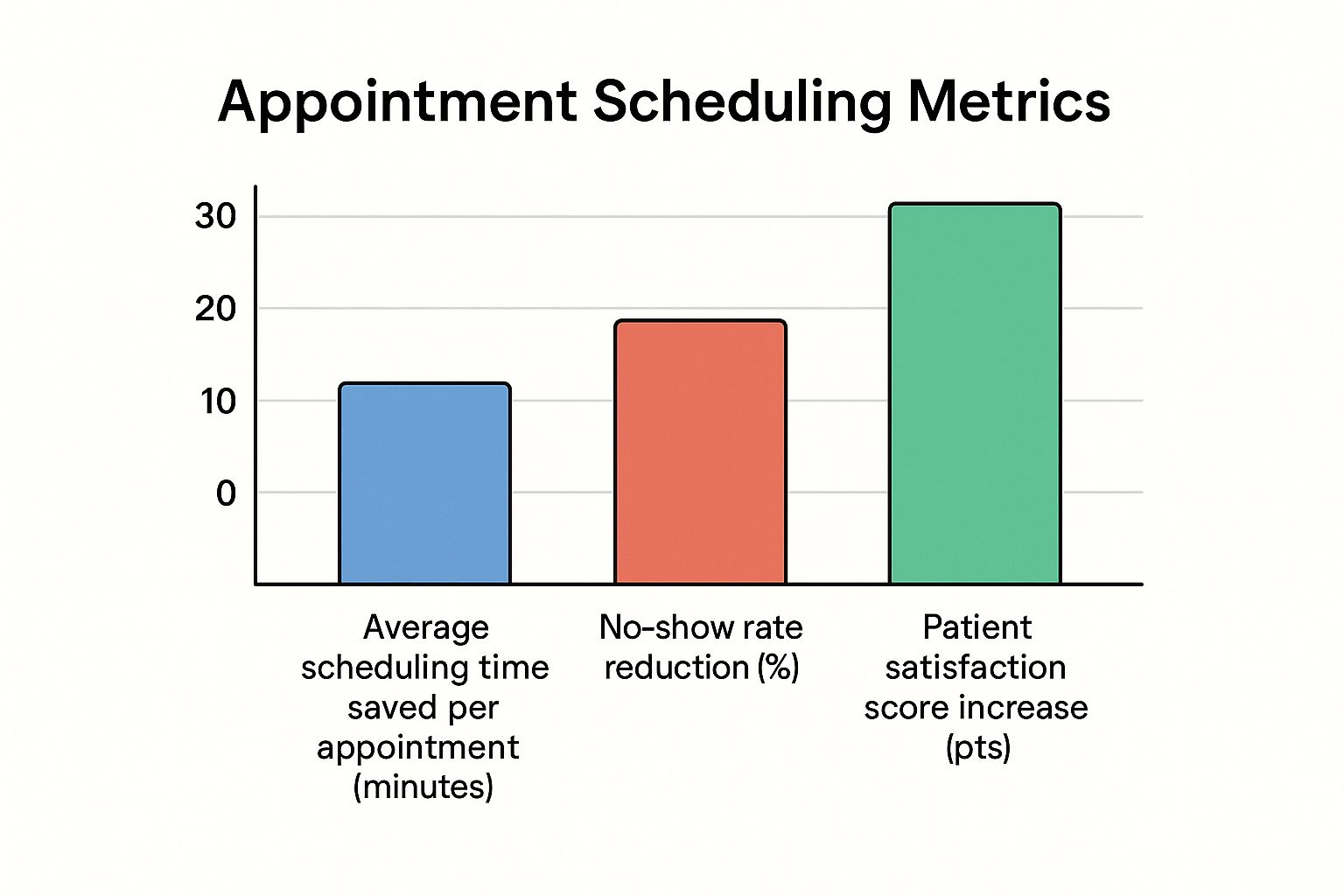
Ultimately, by automating these routine but critical tasks, you’re not just buying software. You're investing in your staff's well-being and creating a seamless, welcoming experience for every person who trusts you with their care.
Your Must-Have Software Features Checklist
Let's be honest, not all scheduling software is built the same. Picking the right platform for your practice feels a lot like choosing a new piece of medical equipment—it absolutely has to have the right capabilities to get the job done right. If it doesn't, it just creates more work.
To make sure you end up with a system that genuinely helps your team and your patients, let's walk through the non-negotiable features you should have on your checklist. Think of this as getting to the ‘why’ behind each function.
Core Patient-Facing Features
The best tools are always designed with the patient's experience at the forefront. And for good reason—recent surveys show a staggering 89% of patients want the freedom to book their appointments online, whenever it suits them. Your software needs to give them that power.
-
24/7 Patient Portal: Life doesn’t stick to a 9-to-5 schedule, so why should your booking system? A secure patient portal lets people book, reschedule, or cancel appointments from any device, at any time of day. This one feature alone dramatically cuts down on phone calls and puts patients firmly in control of their own schedule.
-
Automated Reminders (SMS & Email): We all know that no-shows are a huge drain on both revenue and resources. This is where automated reminders become your best friend. Sending out timely SMS and email alerts is one of the most effective ways to slash your no-show rate and give patients a simple way to confirm or move their booking.
Essential Operational Capabilities
Beyond what the patient sees, the right software has to make life easier for your internal team. Its whole purpose is to simplify your operations, not add another layer of complexity.
Without a centralised system, you're just inviting chaos.
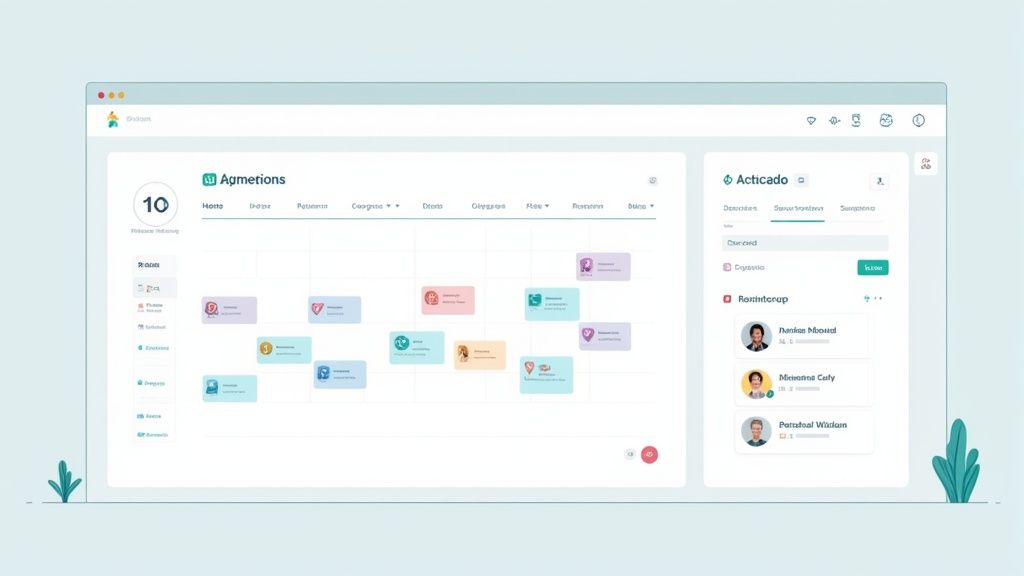
A unified calendar is the command centre of your scheduling operations. It provides a single source of truth for all practitioner schedules, room availability, and equipment bookings, virtually eliminating the risk of double-bookings or resource conflicts.
For clinics with several practitioners or multiple locations, this unified view isn't just nice to have; it's absolutely crucial.
Customisation and Data Security
Finally, any scheduling software you consider must be both flexible and secure. Healthcare isn't a one-size-fits-all field, and your tools need to reflect that reality while upholding the strictest standards for data protection.
Keep an eye out for these two critical features:
-
Customisable Appointment Types: Your practice offers a range of services, right? From new patient consultations to quick follow-ups or specialised procedures. Your software must let you define these different appointment types, each with its own specific duration, required resources, and pre-appointment instructions for the patient.
-
Secure Patient Data Management: Compliance is completely non-negotiable. The platform has to be fully compliant with data protection laws like GDPR. This means robust encryption, secure servers, and strict access controls are essential to protect sensitive patient information and maintain the trust you've worked so hard to build.
By making sure your chosen platform ticks all these boxes, you're not just buying a booking tool. You're investing in a complete system that makes your practice more efficient, keeps your patients happier, and secures your operations for the long haul.
Unlock the Hidden Benefits for Your Practice
Great healthcare appointment scheduling software does a lot more than just keep your waiting room organised. When booking becomes a smooth, almost invisible process, it creates strategic advantages that can genuinely change how your practice operates. The real value isn't just a tidy calendar; it's about unlocking your team's true potential.

Think about your skilled administrative staff, currently bogged down by the endless cycle of answering phones, booking slots, and managing cancellations. Imagine them freed from those repetitive tasks. Suddenly, they have the time to focus on work that truly matters—providing personal support to patients, handling complex referrals, and making sure every person feels looked after from their very first interaction.
This simple shift creates a more productive and fulfilling work environment, which is an enormous asset on its own.
Boost Your Financial Health
A well-oiled scheduling system is also a powerful tool for your practice's financial well-being. Let's be honest, every missed appointment or empty slot is lost revenue. By automating reminders and giving patients an easy way to reschedule online, you can drastically cut down your no-show rate, a notorious drain on resources for many clinics.
In fact, an effective system can achieve an 89% patient show rate simply by sending timely alerts. This one feature helps you claw back revenue that was just slipping away. What's more, by making everything more efficient, your practice can see more patients without overwhelming your team. This directly boosts productivity and, you guessed it, your bottom line.
It’s no surprise the global market for this software is projected to hit US$1,039 million by 2030, a clear sign of its recognised financial impact. You can read more about this in a detailed report on knowledge-sourcing.com.
By optimising every available appointment slot and minimising costly gaps, scheduling software becomes a direct driver of profitability, turning an operational tool into a strategic financial asset.
Cultivate Lasting Patient Loyalty
In today’s world, convenience is a form of care. When a patient can book an appointment at midnight from their sofa without playing phone tag with your front desk, you're telling them you value their time. That modern, respectful experience is exactly what builds trust and encourages people to stick with your practice for the long haul.
This positive first step sets a great tone for their entire journey with you. It takes what could be a frustrating chore and turns it into something effortless and reassuring.
- Empowers Patients: Giving people control over their own scheduling meets their expectations for modern, self-service options.
- Strengthens Relationships: A hassle-free process shows respect for your patients' busy lives, building goodwill from the very start.
- Enhances Reputation: A slick, convenient booking system becomes a key selling point, attracting new patients looking for efficient care.
At the end of the day, a superior scheduling experience is a cornerstone of patient retention. To dig deeper, check out our guide on how a well-implemented medical appointment scheduling software can become one of your most powerful tools for practice growth and success.
Integrating New Software Without the Headaches
Bringing new technology into a busy clinic can feel like a major upheaval, but it doesn't have to be. A smooth transition is all about smart planning and, most importantly, getting your team on board from the very beginning. The real goal isn't just to install a new program; it's to weave a smarter, more efficient way of working into the fabric of your practice.

Before you migrate a single patient file, gather your staff. Show them exactly how the new healthcare appointment scheduling software is going to make their day-to-day lives easier. Walk them through how it cuts out the back-and-forth phone tag, automatically sends the reminders they currently have to manage by hand, and frees them up for more meaningful face-to-face time with patients.
I like to think of it like upgrading the engine in a car your team already knows and trusts. You’re not getting rid of a familiar vehicle; you're just giving it a serious performance boost. When you frame it as an upgrade that helps everyone, you turn that natural hesitation into genuine enthusiasm.
Mapping Out a Smooth Rollout
A detailed, step-by-step plan is your secret weapon against chaos. By breaking the rollout into manageable chunks, you keep everyone focused and prevent that feeling of being overwhelmed.
Here’s a simple framework that I’ve seen work time and time again:
- Phase 1: Data Preparation: Start by talking to your software provider. You need to know exactly what patient data needs to move over. This is your chance to clean up old records and get everything tidy for a clean transfer.
- Phase 2: System Configuration: This is where you make the software your own. Customise it to fit your clinic’s specific workflows—set up different appointment types, block out practitioner schedules, and define your rules for online bookings.
- Phase 3: Staff Training: This is the one step you can't afford to rush. Book dedicated, hands-on training sessions for your team. A well-designed system should be intuitive; some of the best platforms can get your staff fully up to speed in just one hour. The goal is confidence from day one.
- Phase 4: Go-Live and Support: Pick a launch day when things are typically a bit slower. Make sure your software provider has a support contact on standby to handle any little hiccups that pop up.
Integrating with Your Existing Ecosystem
For any new software to really shine, it needs to talk to the other tools you rely on every day, especially your Electronic Health Record (EHR) system. A top-tier scheduling tool is built for this kind of handshake, creating a single, seamless flow of information.
This integration is what separates a decent tool from an indispensable one. When a patient’s details and appointment information sync automatically between your scheduler and EHR, you kill off double data entry. You slash the risk of human error and create one central, trustworthy source for all patient information.
This connectivity makes the new software feel less like an add-on and more like a natural part of your clinic's workflow. The challenges here are similar to other big system upgrades. For a wider perspective, you can read about common ERP integration challenges and see how the same principles of planning and communication apply.
With the right approach, your new scheduling system will quickly prove its worth, boosting your practice's performance without causing a major disruption.
Choosing the Right Software for Your Clinic
With so many options on the market, picking the right healthcare appointment scheduling software can feel like a huge task. But getting this decision right is absolutely crucial for the future of your practice. This isn't just about buying a digital calendar; it's about finding an operational partner that will define your clinic's efficiency, shape the patient experience, and unlock your potential for growth.
Think of it like prescribing a course of treatment for a patient. You wouldn't just guess – you'd diagnose the specific problem first. You need to do the same for your clinic. Start by asking the big-picture questions to figure out what you truly need. This will guide your search from day one.
Core Evaluation Criteria
To see past the flashy marketing and find what really matters, focus your evaluation on three core pillars: scalability, security, and usability. Get these right, and you'll end up with a genuine asset, not a source of daily frustration for your team and your patients.
A system that’s perfect for a small, single-practitioner office might crumble as your practice expands. So, as you look at different options, keep these key points in mind:
- Scalability for Growth: Can this software grow alongside you? A solid system should let you add new practitioners, services, or even entire clinic locations without needing a complete and painful overhaul.
- Rock-Solid Security: Patient data is the most sensitive information you handle. The platform you choose must be fully compliant with data protection regulations like GDPR, using strong encryption to guard every piece of information. This is completely non-negotiable.
- Effortless Usability: Let’s be honest: is it actually easy to use? Not just for you, but for your least tech-savvy staff member and your patients. A clunky, complicated interface will just lead to people avoiding it, and all that potential will go to waste. Look for a clean, intuitive design.
The best software should feel like a natural extension of your practice. It must be powerful enough to handle complex scheduling but simple enough that it doesn’t require extensive training to master.
Localisation and Integration
For any clinic operating in Poland, regional specifics are a major factor. Our digital health environment is unique, and certain platforms have become central to how patients find and connect with medical professionals.
Here in Poland, online medical booking services like DocPlanner are deeply woven into the patient journey, connecting thousands of people with doctors every single day. As the digital health regulations continue to shift, choosing software that can integrate with or work alongside these major platforms gives your practice a serious strategic advantage. You can learn more about the specifics of Poland's digital health regulations on iclg.com.
This is why having local support and a provider who truly understands the Polish market is so valuable. Someone who gets the nuances of our healthcare system can offer far more effective guidance and make sure the software meets local expectations and technical standards.
By keeping these criteria in mind, you can approach your search with confidence. You’ll know what questions to ask, how to evaluate your options critically, and how to select a system that truly fits your clinic's needs. For more help with your search, our comprehensive guide on appointment scheduling software offers additional insights and comparisons.
Answering Your Key Questions
Let's be honest, bringing new technology into your practice always sparks a few questions. As a clinic manager, you're not just buying software; you're making a decision that impacts your staff, your patients, and the health of your entire operation. It's only natural to want some straight answers.
We've heard all the common concerns, so let's tackle them head-on. This should help you move forward with total confidence.
Is This Software Secure Enough for Patient Data?
This is usually the first question people ask, and it’s the most important one. The answer is a firm yes, but with a condition: you have to choose a reputable provider.
Top-tier scheduling platforms are built with security at their very core, not as an afterthought. They use powerful data encryption to protect patient information, both when it's being sent over the internet and when it's stored on their servers. Think of it like a digital armoured van, securing that sensitive data at every step.
Good software is also fully compliant with strict privacy regulations like the General Data Protection Regulation (GDPR). This isn't just a selling point; it's a legal and ethical must-have.
When you're talking to vendors, don't be shy. Ask them to walk you through their security protocols and show you their compliance certificates. Your patients' trust is your most valuable asset, and the right software partner will take protecting it as seriously as you do.
How Much Does This Software Typically Cost?
The price for healthcare scheduling software can vary quite a bit, which is actually a good thing—it means there's likely a perfect fit for your budget. The pricing models are usually pretty flexible and designed to grow with you.
You'll typically see a couple of common approaches:
- Per-Practitioner Model: You pay a monthly fee for each doctor or therapist using the system. This is ideal for clinics that are expanding, as you can just add new users as your team grows.
- Tiered Feature Plans: The price is based on the features you need. A small, single-location practice can start with a basic, affordable plan. A larger clinic network might need a premium plan with advanced analytics and custom integrations.
The trick is to look past the sticker price and think about the return on your investment. When you calculate the money saved by cutting down on no-shows and the extra revenue from a more efficient front desk, the software often pays for itself surprisingly fast.
Will My Patients Actually Use an Online Booking Portal?
Oh, absolutely. It's not just that they will use it; they actively want to. Think about it—we manage our banking, our shopping, and our travel online. Why should booking a doctor's appointment be any different?
In fact, a huge 89% of patients say they value being able to book their own appointments online or through a mobile app. It’s all about convenience. An online portal lets them book a visit at 10 p.m. on a Sunday, without ever having to play phone tag with your reception desk.
The secret is choosing a system that’s genuinely easy to use. If the process is simple and intuitive, you'll see patients adopt it almost immediately. They appreciate you saving them time, and an effortless booking process is a fantastic way to increase patient satisfaction and keep them coming back.
Can This Software Integrate with My Current EHR System?
This is another critical piece of the puzzle. The best scheduling software doesn't live on an island; it's designed to connect smoothly with the tools you already rely on, especially your Electronic Health Record (EHR) system. This integration is what turns a simple booking tool into a powerful hub for your clinic.
When your scheduler and EHR talk to each other, patient information and appointment details flow back and forth automatically. No more mind-numbing double-entry, and no more risk of typos causing mix-ups. You get a single, reliable source of information for everything. Before you commit, always double-check that the platform can integrate seamlessly with your specific EHR system.
Ready to see how seamless communication can transform your practice? With Voicetta, you can automate appointment scheduling and ensure no patient call ever goes unanswered, 24/7. Discover how our AI-powered platform integrates with your systems to boost efficiency and delight your patients. Explore the possibilities at https://voicetta.com.
Was this useful?
If this article helped, add Voicetta as a preferred source in Google Search. Your results can then highlight our writing.
Add as preferred source