
Blog
Boost Conversions with Real Estate Chatbot
Real estate chatbots have come a long way. They're no longer just basic automated response systems. Instead, they've evolved into sophisticated tools, acting as true ...
The Evolution of Real Estate Chatbots: Beyond Basic Automation
Real estate chatbots have come a long way. They're no longer just basic automated response systems. Instead, they've evolved into sophisticated tools, acting as true partners in property sales. This evolution is changing how clients interact with real estate professionals and reshaping the entire industry. Leading agencies are integrating real estate chatbots as core parts of their digital strategies, recognizing their value goes far beyond simple add-ons.
This shift is fueled by the move from basic rule-based systems to intelligent solutions powered by artificial intelligence (AI). These advanced chatbots can understand nuanced property requirements, neighborhood preferences, and even a client's budget. Imagine a potential buyer describing their dream home as "a cozy bungalow near good schools with a large backyard." An AI-powered chatbot can process this and present relevant listings matching those specific criteria.
What's more, these advanced chatbots still retain the essential "human touch" needed to build trust. They can answer complex questions while offering personalized recommendations, much like a dedicated real estate agent. This personalized approach creates stronger client connections, fostering long-term relationships. A key indicator of the growing importance of real estate chatbots is their increasing adoption. Recent data shows a remarkable 28% of real estate businesses have incorporated live chat technology, making it the top AI bot application across various industries. This widespread adoption highlights the potential of conversational solutions in real estate, driving significant growth for companies. Learn more about the impact of real estate chatbots here: Master of Code Real Estate Chatbot Insights
From Automation to Intelligence
Early chatbots relied on pre-programmed responses, often leading to frustratingly generic conversations. Today's AI-powered chatbots, however, are constantly learning and adapting. They analyze past conversations to better understand client needs and preferences. This means future interactions become even more personalized and effective.
This continuous improvement allows chatbots to handle increasingly complex tasks, like pre-qualifying leads. By asking strategic questions about preferences, budget, and timelines, they free up human agents to focus on sales-ready prospects. You might be interested in: Voicetta Blog

This evolution marks a significant turning point for the real estate industry. Chatbots are no longer just a novelty. They are becoming essential tools, enhancing client experiences and fueling business growth.
Transforming Property Businesses With Chatbot Technology
The buzz around real estate chatbots is real, and for good reason. Real estate professionals are seeing tangible improvements in their businesses thanks to these AI-powered tools. Client interactions are being reshaped and operations are becoming more efficient, leading to measurable benefits. One of the most significant impacts is the dramatic improvement in lead response times.
24/7 Availability and Lead Qualification
The 24/7 availability offered by chatbots is a true game-changer in today’s competitive market. This constant accessibility is a huge advantage, especially for capturing those serious buyers who are browsing properties after work or on weekends, times when traditional offices are closed. Potential leads that might have been lost due to inconvenient business hours are now being captured and nurtured.
The chatbot acts like a diligent virtual gatekeeper, engaging prospects immediately and gathering important information. Strategic qualification questions about property preferences, budgets, and desired timelines help filter leads. This allows agents to concentrate their efforts on prospects who are ready to buy. This immediate engagement can be the difference between closing a deal and losing a potential client to a competitor.
This around-the-clock availability also contributes to significant cost savings. Chatbots handle routine inquiries, freeing up agents' valuable time. This allows agents to focus on the more complex tasks and client interactions that require a personal touch. This shift in workload maximizes agent productivity and allows for more strategic use of resources. This improved efficiency leads to another key benefit: consistency.
Consistent Information and Compliance
Delivering consistent information across all client interactions is essential, especially given the complex regulations in the real estate industry. Chatbots excel in this area, providing standardized answers to common questions and ensuring compliance with industry standards. This standardized approach reduces the risk of miscommunication and ensures accurate information is shared with every client, regardless of when or how they contact the business.
This consistency builds trust with clients, projecting a professional and reliable image. Real estate chatbots are currently a dominant force in AI solutions for the real estate market. In 2023, chatbots accounted for 28.98% of the market share for AI in real estate, highlighting their growing popularity and the confidence businesses have in this technology. This market share is projected to increase, fueled by chatbots’ ability to collect customer data, enhance lead generation, and improve content marketing strategies. Learn more about the growing market share of AI in real estate.
Enhanced Customer Experience and Streamlined Processes

These combined benefits create a significantly enhanced customer experience. Clients appreciate the quick responses, personalized information, and convenient access to resources provided by real estate chatbots. This improved experience builds stronger client relationships and contributes to successful transactions. For a deeper look into enhancing customer communication, check out this guide on how Voicetta enhances customer communication.
From initial inquiries to scheduling viewings and collecting essential documents, chatbots streamline a variety of processes, creating a smoother experience for both clients and agents. This efficiency translates to higher conversion rates and, ultimately, business growth.
To further illustrate the advantages of integrating chatbots, let's examine some industry averages. The following table compares key metrics before and after chatbot implementation.
Real Estate Chatbot Benefits Comparison
This table compares key metrics before and after implementing real estate chatbots based on industry averages.
| Metric | Without Chatbot | With Chatbot | Improvement |
|---|---|---|---|
| Lead Response Time | 24-48 hours | Immediate | >90% |
| Lead Qualification Rate | 20% | 40% | 100% |
| Customer Satisfaction | 70% | 90% | 28.57% |
| Agent Productivity | 60% | 80% | 33.33% |
| Cost per Lead | $50 | $25 | 50% |
As you can see, the improvements are substantial across the board. Chatbots significantly reduce lead response time, double lead qualification rates, and dramatically boost customer satisfaction. They also increase agent productivity and cut the cost per lead in half. These improvements contribute directly to a healthier bottom line and a more competitive edge in the real estate market.
Must-Have Features That Define Winning Real Estate Chatbots
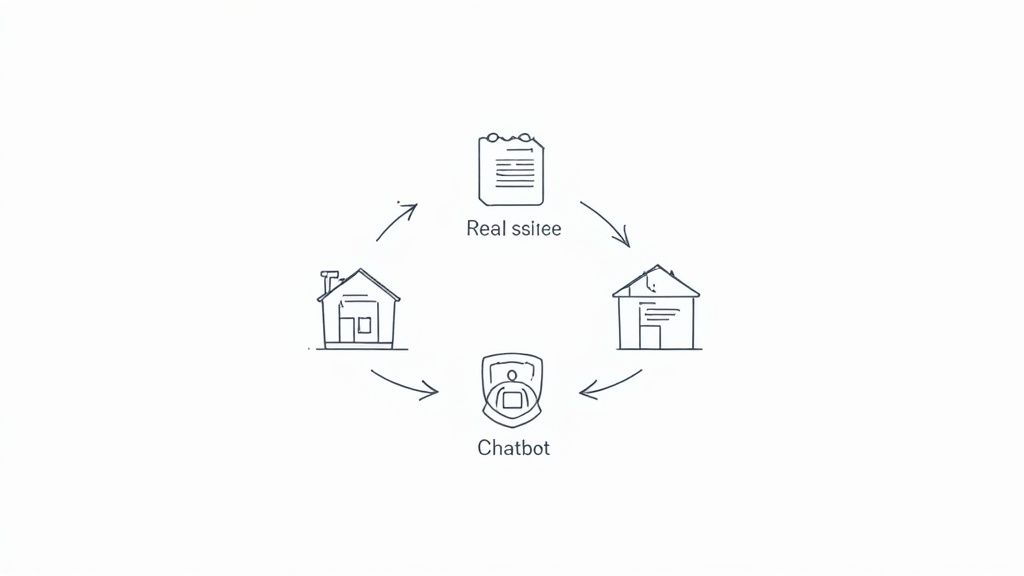
Not all real estate chatbots are the same. Some offer only basic conversation, while others become true partners in sales. By looking at successful chatbot implementations, we can see the key features that set the most effective ones apart. These features create a smooth and engaging experience for potential clients.
Seamless MLS Integration
A vital component of a winning real estate chatbot is direct integration with MLS (Multiple Listing Service) databases. This connection creates a streamlined property search experience, doing away with manual searches. Potential buyers can enter their criteria directly into the chat, and the chatbot instantly retrieves matching listings. This allows clients to browse properties at their own pace, making the whole process much more efficient.
For instance, imagine a client asking the chatbot for "three-bedroom homes in Austin under $600,000." With MLS integration, the chatbot can instantly deliver a personalized list of matching properties. This targeted and efficient approach gives a significant edge over traditional search methods.
Intelligent Appointment Scheduling
Beyond property searches, winning real estate chatbots need appointment scheduling features. This eliminates the often tedious back-and-forth of booking viewings. The chatbot can access agents' calendars, propose available times, and instantly confirm appointments. This simplifies the journey from initial interest to an in-person showing.
Automated reminders and confirmations reduce no-shows and keep both clients and agents up-to-date. This automation adds considerable value by optimizing scheduling and reducing administrative work.
Natural Language Processing
Understanding complex property requests is crucial. This demands robust Natural Language Processing (NLP). NLP allows the chatbot to interpret location-specific terms, real estate jargon, and even casual phrasing. Simpler systems often stumble with these subtleties, leading to inaccurate or unhelpful responses.
A chatbot with advanced NLP, however, can understand a request for a "fixer-upper with good bones in a walkable neighborhood" and turn it into usable search criteria. This ability to grasp the intent behind a query, regardless of how it’s worded, is key to a positive user experience.
The following table summarizes the must-have features we’ve discussed so far, along with their purpose, implementation complexity, and impact level.
| Feature | Purpose | Implementation Complexity | Impact Level |
|---|---|---|---|
| MLS Integration | Streamlined property search | Moderate | High |
| Appointment Scheduling | Automated booking and reminders | Moderate | High |
| Natural Language Processing (NLP) | Understanding complex queries | High | High |
| Multi-Channel Deployment | Consistent experience across platforms | Moderate | Medium |
As you can see, while NLP presents a higher implementation challenge, all of these features deliver substantial benefits to both agents and clients.
Multi-Channel Deployment
Finally, a winning real estate chatbot should be accessible across different platforms. Multi-channel deployment creates a consistent client experience whether they interact with the chatbot on your website, social media platforms, or messaging apps like WhatsApp or Facebook Messenger. This unified approach gives clients flexibility and convenience.
This broad reach allows your agency to connect with potential clients where they're most comfortable. Consistent branding and messaging across all channels strengthens your brand identity and presents a professional image for your business. These core features contribute to a more dynamic and successful real estate chatbot, boosting both client satisfaction and business results.
Future-Proofing Your Agency: Chatbot Trends Reshaping Real Estate

The real estate chatbot is quickly becoming much more than just an automated response system. Forward-thinking agencies are adopting emerging trends to make client experiences more engaging and effective. These aren't just futuristic ideas; they're being implemented right now by early adopters, setting a new bar for client interaction.
The Rise of Natural Conversations
One significant trend is the development of advanced AI. This allows for surprisingly natural conversations, moving beyond pre-programmed responses. Chatbots are now able to understand context, nuance, and even the emotional cues of clients.
For example, a chatbot can now pick up on a client's hesitation and adjust its approach. This builds trust and rapport, mirroring interactions with human agents. This personal touch helps create stronger connections with potential buyers and sellers.
Visual Search: Transforming Property Discovery
Another exciting advancement is visual search, allowing clients to interact with real estate chatbots using images. A buyer could, for example, send a picture of a neighborhood or an architectural feature they like. The chatbot can then process that visual input and offer relevant property listings.
This technology is changing how people search for homes, making the entire process more visual and personalized. This shift toward visually driven search creates a more engaging and effective property discovery process. You can learn more in our blog on mastering AI in real estate.
The Power of Voice: Chatbots and Smart Speakers
With the increasing popularity of smart speakers and voice assistants, voice-enabled chatbot functionality is becoming essential. Busy professionals can now conduct property searches just by speaking to their devices. This hands-free approach makes property searching more convenient than ever.
This integration with everyday technology streamlines the home-buying experience. The market for chatbot technology is experiencing significant growth. Projections show the global chatbot market could reach $15.5 billion by 2028. This highlights the increasing reliance on digital communication tools in various sectors, especially real estate. For more detailed statistics, see Chatbot Market Growth Statistics.
Predictive Analytics and Personalized Property Journeys
Finally, predictive analytics are being integrated into real estate chatbots. These chatbots can now anticipate client needs based on their browsing history and previous interactions, allowing for truly personalized property searches.
By tailoring recommendations and anticipating questions, these chatbots can drastically improve conversion rates. Understanding client behavior leads to a more effective and personalized service. It transforms the real estate experience from a generic search into a customized journey. By adopting these key trends, agencies can future-proof their operations, improving client relations and staying ahead of the competition.
From Selection to Launch: Implementing Your Real Estate Chatbot
So, you’re ready to bring a real estate chatbot onto your team? Excellent! Choosing the right platform and launching it effectively are vital for seeing a return on your investment. This isn't just about adding another piece of technology; it's about integrating a valuable assistant into your business strategy.
Selecting the Right Chatbot Platform
Finding the perfect chatbot platform depends on several factors. Your brokerage’s size, current market position, and in-house tech capabilities will all play a role. A smaller, tech-savvy firm might prefer a highly customizable HubSpot solution. A larger brokerage with limited IT resources might be better suited to a more plug-and-play option like Chatfuel. Here are some key considerations:
-
Integration Capabilities: A smooth client experience relies on information flowing seamlessly. Can the chatbot integrate with your existing CRM, property databases, and marketing automation tools?
-
Scalability: As your business grows, your chatbot needs to keep up. Choose a platform that can handle increasing traffic and adapt to your evolving needs.
-
Customization Options: Presenting a personalized experience strengthens client connections. Can you tailor the chatbot's look and conversational style to reflect your brand?
-
Pricing and Support: Two practical but essential considerations are cost and support. Does the pricing structure fit your budget? And what kind of technical support does the platform offer? For an example, check out the pricing and support options at Voicetta.
Defining Clear Objectives
Before you launch, define your goals. What are you hoping to achieve? Increased lead generation? Faster response times? Improved agent productivity? Having specific, measurable objectives gives you a benchmark for evaluating the chatbot’s success.
For example, if your goal is better lead capture, track the number of leads generated before and after implementing the chatbot. This data-driven approach will help you accurately assess its impact.
Crafting Authentic Conversation Scripts
Your chatbot’s conversations should mirror your brand’s voice while addressing common client questions about properties, neighborhoods, and financing options. Authenticity is essential. Avoid overly formal or robotic-sounding language.
Imagine a client asking about schools in a specific area. A well-crafted script provides helpful information in a natural, conversational tone. This builds rapport and encourages further interaction.
Training Your Chatbot for Local Nuances
Your chatbot should be familiar with regional real estate terminology and local market details. Demonstrating this localized knowledge builds credibility with clients. It shows them you understand their particular needs.
For instance, train your chatbot on specific neighborhood names, local attractions, or even common regional abbreviations. This targeted approach enhances the chatbot's ability to connect with clients and offer relevant information, making it a valuable resource for both buyers and sellers.
Launching and Ongoing Optimization
Launching your real estate chatbot isn’t the end of the process; it’s just the beginning. Continuously monitor its performance, gather user feedback, and make adjustments to enhance its effectiveness. This iterative approach ensures your chatbot remains a valuable asset to your business.
Measuring Success: Optimizing Your Real Estate Chatbot for Maximum ROI
Turning your real estate chatbot from a simple tool into a lead-generating machine requires a strategic, data-driven approach. This means concentrating on Key Performance Indicators (KPIs) that have a direct impact on your bottom line. Forget standard website analytics; we're talking about property-specific metrics that offer real insight into your chatbot's effectiveness.
Key Performance Indicators for Real Estate Chatbots
Lead quality scores, for instance, gauge how likely a chatbot-generated lead is to turn into a sale. This crucial metric goes beyond simply counting leads. A high volume of low-quality leads won't boost sales. Instead, prioritize engaged leads who demonstrate genuine interest in properties.
Another vital KPI is the showing-to-sale conversion rate. This tracks how many chatbot-scheduled showings actually close. Analyzing this helps pinpoint areas where the chatbot can be refined to better qualify leads and guide them through the sales process.
Consider, too, the measurable time savings for your agents. How much time do they save by offloading routine tasks to the chatbot? This freed-up time can then be dedicated to more strategic activities like nurturing promising leads and cultivating client relationships.
Gathering User Feedback and Analyzing Conversations
Understanding user perspectives on your chatbot is critical for ongoing improvement. Leading brokerages collect feedback via post-interaction surveys. These brief surveys offer valuable insights into the user experience, revealing strengths and weaknesses.
This direct feedback, coupled with sentiment analysis of chat logs, can identify pain points or information gaps hindering conversions. For example, if users frequently express frustration over the chatbot’s inability to answer certain questions, this highlights a clear area for improvement.
A/B Testing for Optimized Performance
A/B testing provides a structured method for enhancing your chatbot's performance. By developing two slightly different versions of a conversation flow, property presentation, or call to action, you can determine which approach delivers better results. This allows you to experiment and pinpoint the most engaging tactics.
This continuous improvement process is essential for maximizing ROI. By trying various strategies, you can discover what resonates best with your target audience and refine your chatbot for maximum conversions.
Leveraging Chatbot Data for Broader Business Strategies
Forward-thinking agencies go beyond using chatbot data solely for chatbot optimization. They leverage this valuable information to inform broader marketing strategies, property inventory decisions, and agent training programs. Understanding client preferences, search patterns, and frequently asked questions helps agencies refine their overall approach.
For example, data revealing high demand for a particular property type in a specific neighborhood can influence inventory acquisition and marketing efforts. This data-driven approach allows agencies to anticipate and respond effectively to market trends.
By utilizing insights from real estate chatbot interactions, agencies can create truly personalized customer journeys and gain a competitive edge. This creates a powerful feedback loop where the chatbot not only assists with individual transactions but also contributes to the agency's overall success.
Ready to transform your customer communication? Visit Voicetta to explore our intelligent communication platform.
Was this useful?
If this article helped, add Voicetta as a preferred source in Google Search. Your results can then highlight our writing.
Add as preferred source